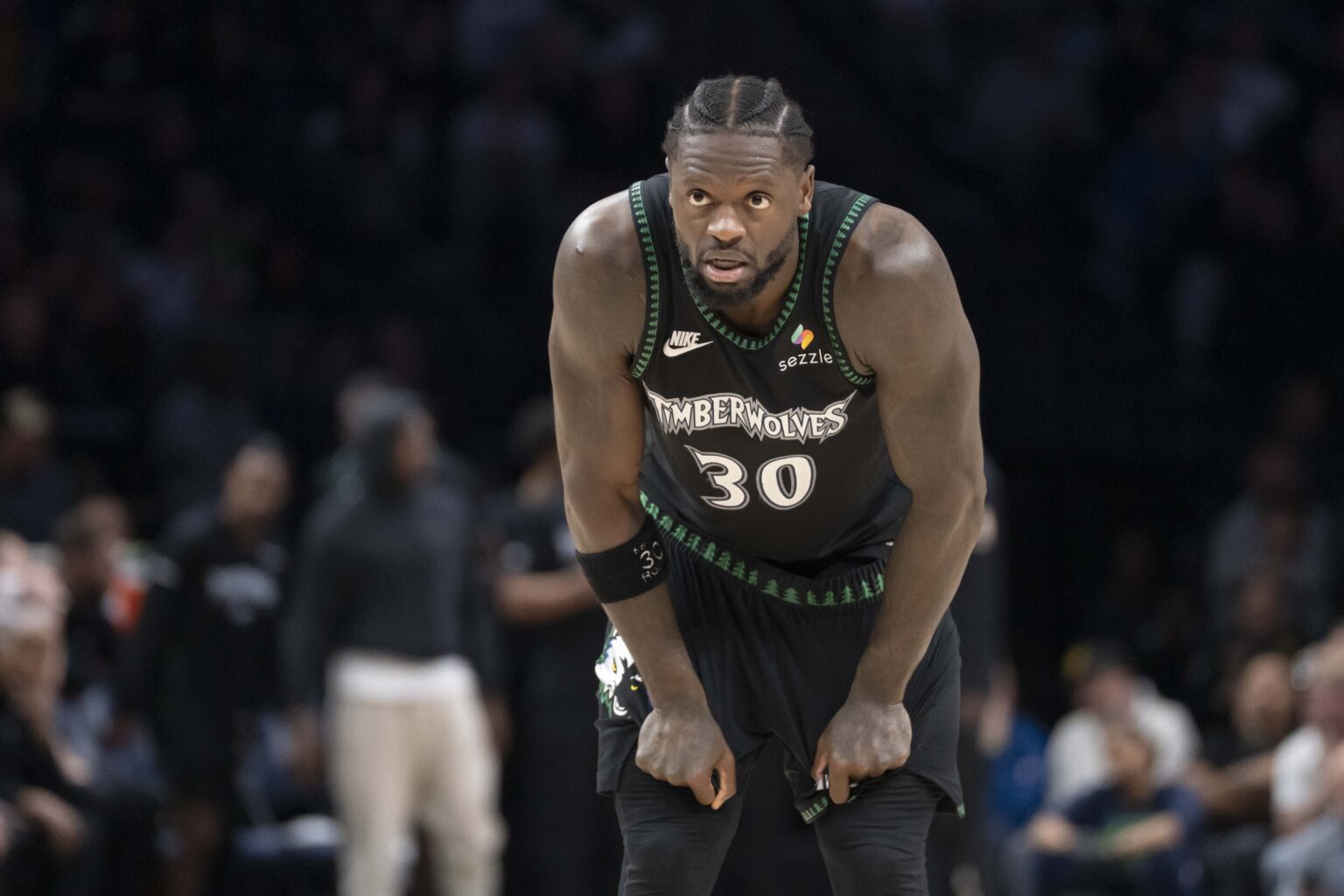
The Minnesota Timberwolves didn’t necessarily dominate the game from start to finish. Still, they were the team that made the winning plays when it mattered most, grinding out a 102-92 victory over the Boston Celtics.
This wasn’t pretty basketball. Both teams struggled to find any offensive rhythm, with missed shots piling up and possessions often ending in frustration. But while Boston leaned heavily on isolation scoring and couldn’t buy consistent perimeter shooting, Minnesota managed to separate late.
Behind a strong bench spark and a clear edge on the glass, the Timberwolves quietly took control in the second half. Let’s dive into the five major takeaways.
1. Bench Production Won Minnesota The Game
Minnesota’s second unit flipped the game. The Timberwolves bench poured in 40 points, led by Naz Reid’s +26 impact in just 26 minutes (11 points, 7 rebounds) and a massive 23-point burst from Bones Hyland on 8-14 shooting.
Compare that to Boston’s bench, which managed just 26 points and struggled to generate consistent offense outside of Payton Pritchard (10 points). The Celtics simply didn’t have the same shot creation or energy from their reserves, and in a low-scoring, grind-it-out game, that disparity becomes magnified quickly.
2. Minnesota’s Rebounding Edge Set The Tone
The Timberwolves controlled the glass from start to finish, finishing with a 56-53 rebounding advantage, including 44 defensive boards. Rudy Gobert (14 rebounds, 4 blocks) anchored the interior, while Ayo Dosunmu (8 rebounds) and Jaden McDaniels (6 rebounds) provided strong support from the perimeter.
More importantly, Minnesota limited second-chance opportunities at key moments. While both teams grabbed double-digit offensive rebounds (MIN: 12, BOS: 13), the Timberwolves did a better job converting possessions into stops. That defensive rebounding allowed them to slow the game down and avoid giving Boston extra chances in a game where neither team was shooting efficiently.
3. Celtics’ Shooting Woes Finally Caught Up
Boston’s offense never found rhythm, finishing just 34-95 from the field (35.8%) and an even worse 9-33 from three (27.3%). Jayson Tatum struggled mightily, shooting 6-16 overall and 2-7 from deep, while Jaylen Brown needed 26 shots to get his 29 points.
The inefficiency disrupted their entire offensive flow. Boston recorded only 17 assists on 34 made field goals, a clear sign of stagnant ball movement. When the threes aren’t falling and the offense turns isolation-heavy, it becomes extremely difficult to sustain scoring over four quarters, especially against a physical defense like Minnesota’s.
4. Ayo Dosunmu’s All-Around Impact Stood Out
Dosunmu didn’t lead the game in scoring, but he had a noticeable impact. He scored 17 points, shot 7-13, had 8 rebounds, and notched 6 assists. He had strong two-way play the entire game. His defense was noticeable and created problems for Minnesota.
Selecting the analytics, the decision-making was the most impressive. In a poorly played game with a large amount of missed shots and broken possessions, Dosunmu was the only one to continually make the right decision. That amount of control minimized the offensive droughts for Minnesota that Boston was suffering through.
5. Defense And Physicality Were Key
This was a defensive struggle, and Minnesota played into that more fully. The Timberwolves held Boston to only 36.4% shooting and constantly made them take tough shots, all while racking up 7 blocks and contesting every shot in the paint. Beyond his 4 blocks, Gobert altered a multitude of shots by just being on the court.
Boston had defensive moments too (9 steals), but they were never able to do it for long without support on the offensive end of the court. Minnesota’s defense was just more physical than Boston’s (especially in winning second-effort plays, closing out possessions, and being disciplined). In a game where neither team shot over 42.9%, the team with the more consistent and better defense was always going to win.