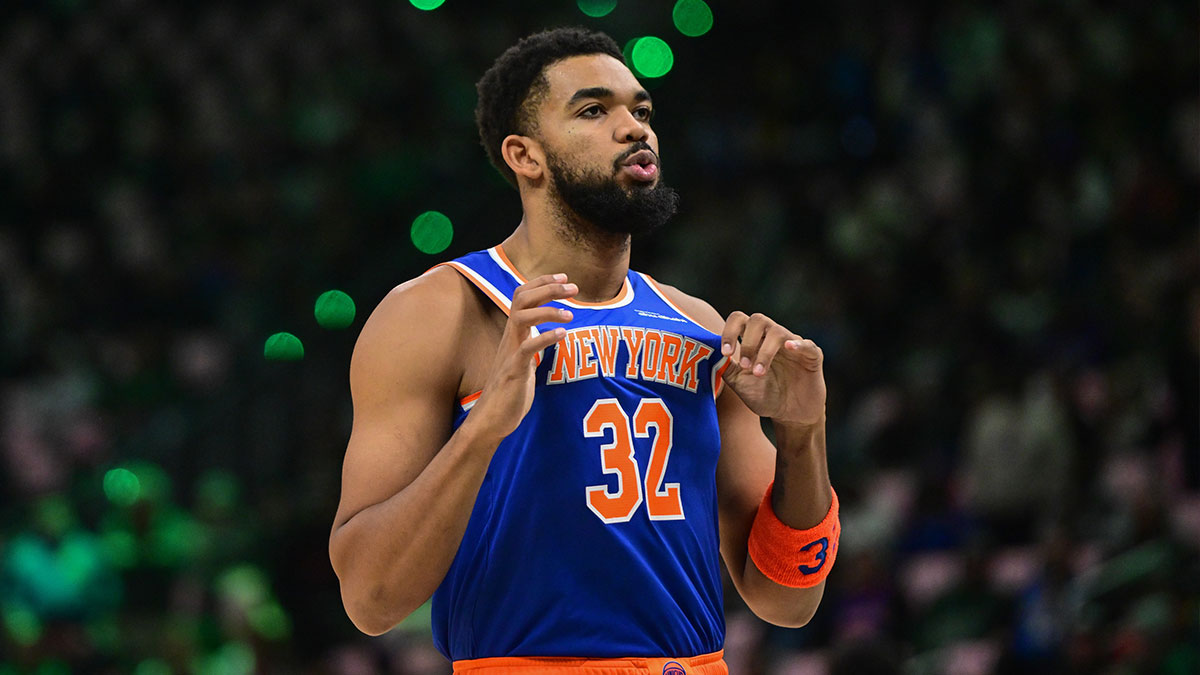
The New York Knicks walked into this matchup riding a seven-game winning streak, playing some of their most complete basketball of the season. Then came a hard, unexpected reality check. The Charlotte Hornets flipped the script entirely, controlling the game for long stretches and handing New York a 114-103 loss that never quite felt as close as the final score suggests.
Charlotte dictated tempo early, built a lead that stretched as high as 21, and never allowed the Knicks to establish rhythm. Despite efficient scoring from key starters, New York was overwhelmed on the glass, outpaced in transition, and outgunned from three. For a team trending upward in the standings, this loss exposes some underlying cracks that had been masked during the win streak.
1. Charlotte’s Perimeter Firepower Changed Everything
The Hornets didn’t just shoot well; they stretched the game beyond New York’s defensive comfort zone. Charlotte knocked down 16-41 from three (39.0%), compared to the Knicks’ 11-29 (37.9%), but the volume and timing made the difference.
Kon Knueppel was the breakout story, finishing with 26 points on 9-14 shooting and a scorching 6-10 from deep, while also adding 11 rebounds and 8 assists. LaMelo Ball added 22 points and 4 triples, and Brandon Miller chipped in 21 points with 4 made threes of his own. That trio combined for 12 made threes, constantly forcing defensive rotations and opening driving lanes.
New York simply couldn’t keep up with that spacing. Even when they defended initial actions well, Charlotte’s ball movement (28 assists) consistently generated second-side opportunities. It wasn’t just shot-making; it was offensive organization at a high level.
2. The Rebounding Disparity Was Decisive
If there was one stat that defined the game, it was this: Charlotte 43 rebounds, New York 24. That’s not a small gap; that’s domination.
The Hornets also grabbed 12 offensive rebounds, doubling the Knicks’ total (5), which created multiple second-chance opportunities. Knueppel (11 boards) led from the perimeter, while Miles Bridges added 5, and the team collectively crashed the glass with intent.
For New York, this was a glaring issue. Karl-Anthony Towns managed just 3 rebounds in 22 minutes, and no Knick recorded more than 7. Even Josh Hart, typically a strong rebounder, finished with 7, but it wasn’t enough to offset the overall lack of physicality. Possession basketball matters, and Charlotte owned it.
3. Jalen Brunson Produced, But Efficiency Was Mixed
Jalen Brunson did what he usually does: produce. He finished with 26 points and 13 assists, controlling much of New York’s offense and generating quality looks for teammates.
But the efficiency wasn’t quite there. Brunson shot 10-23 from the field and 0-6 from three, which limited his overall scoring impact. Without the three-point threat, Charlotte was able to sag slightly and crowd driving lanes late in possessions.
To his credit, Brunson kept the Knicks competitive offensively, but this was one of those nights where production didn’t fully translate to control. The Hornets never felt threatened down the stretch, even with his playmaking.
4. Knicks’ Supporting Cast Failed To Shift Momentum
New York got solid contributions from OG Anunoby (17 points, 5-9 from three) and Hart (16 points, 7-11 shooting, 5 steals), but beyond that, the supporting cast lacked impact.
Mikal Bridges scored 14 points but didn’t contribute in other areas (0 rebounds, 2 assists), and Towns’ limited minutes and rebounding struggles hurt. Off the bench, Jordan Clarkson added 8 points, but there was no real spark to shift momentum when the game started slipping.
Contrast that with Charlotte, who got 17 points from Coby White off the bench and strong two-way contributions across the rotation. The Knicks’ depth, which had been a strength during the streak, simply didn’t show up in this one.
5. Charlotte Controlled the Game From Start To Finish
This win for Charlotte was one-sided. They maintained a lead for 97% of the game, with the largest lead spread being 21 points. The Knicks didn’t lead at any point.
The Hornets controlled the pace of the game and the fast break points (15-7). They also punished the Knicks with 17 points from mistakes, and even with 18 mistakes themselves, the Knicks didn’t take advantage.
This game appeared as a team trying to impose their will, and another team trying to respond. The Knicks show that being atop the standings will require more than just offensive execution. For Charlotte, this is a statement win off energy, execution, and control.