Philadelphia controlled this game from nearly the start to finish, leading for 94% of the night and building a lead as large as 16. While Miami kept things competitive with elite three-point shooting, the Sixers’ offensive balance and pace proved too much over 48 minutes.
Both teams hit 17 threes, and the Heat actually shot a slightly better percentage from deep (42.5% to 39.5%). But Philadelphia dominated the interior, scoring 50 points in the paint, winning the rebounding battle 49-45, and shooting a blistering 94.4% from the free-throw line (17-18).
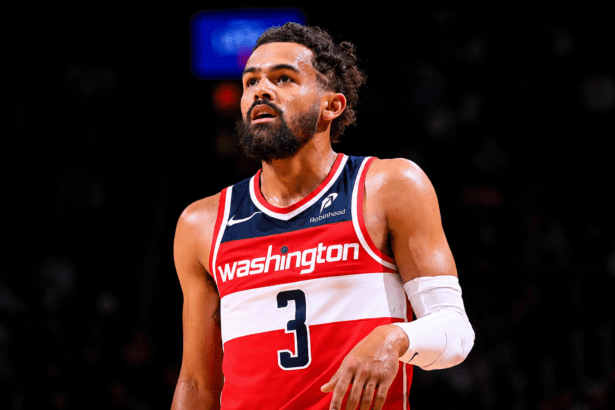
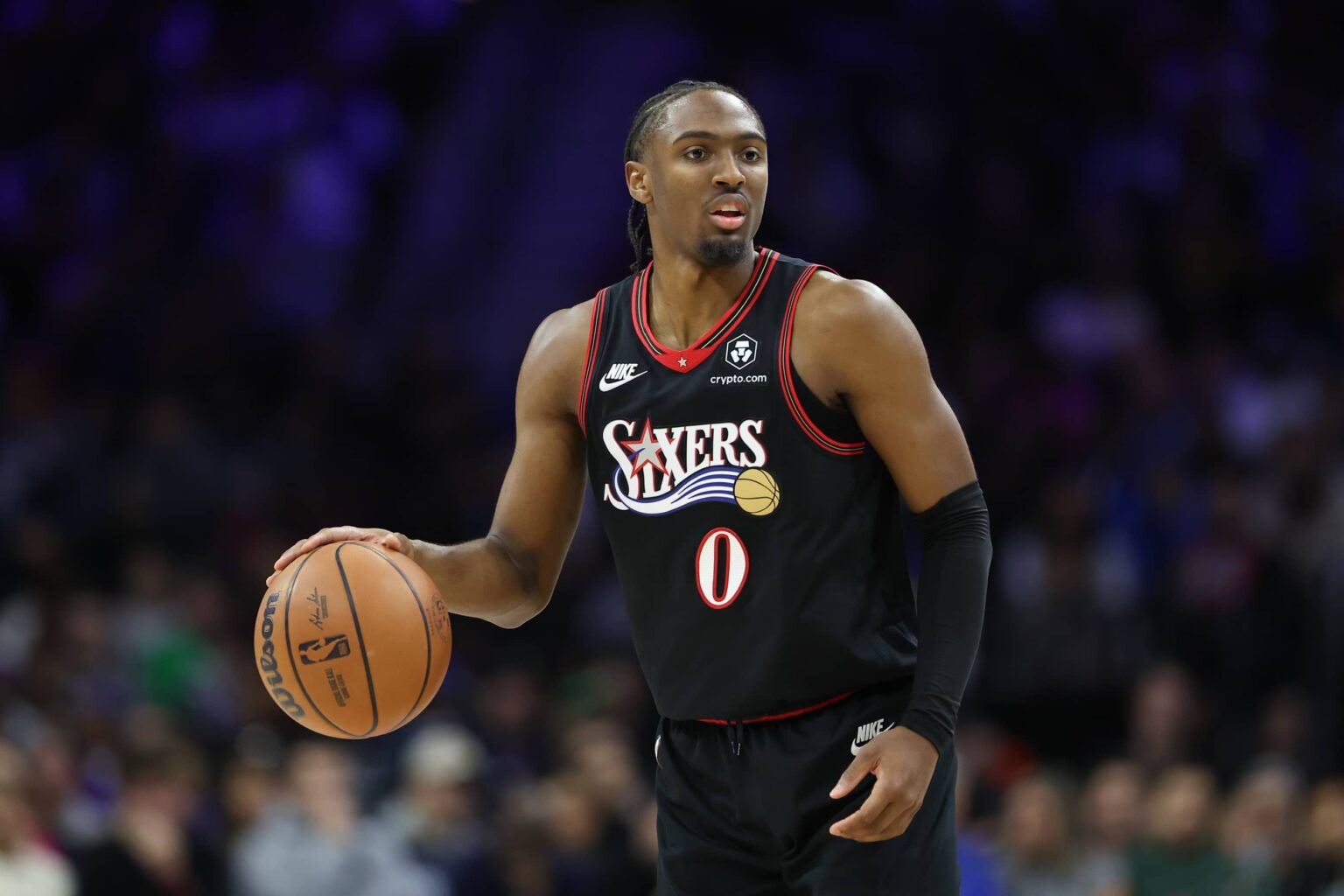
At the center of it all was Tyrese Maxey, who delivered another complete performance as he surpassed franchise legend Allen Iverson for threes made. Let’s dive into the five key takeaways of this matchup.
1. Tyrese Maxey Controlled The Game
Tyrese Maxey finished with 28 points, 11 assists, and 5 steals, orchestrating Philadelphia’s offense with confidence and poise. While his shooting line (9-26 overall, 5-12 from three) wasn’t hyper-efficient, his impact went far beyond percentages.
He pushed tempo, attacked gaps, and consistently bent Miami’s defense. When the Heat cut into the lead, Maxey either created a quality look for a teammate or forced the defense into rotation.
His +6 plus/minus doesn’t fully capture how much he dictated the rhythm of the game. It was a floor-general performance mixed with explosive scoring, the type of showing that cements star status.
2. Joel Embiid Anchored The Interior
Joel Embiid added 26 points and 11 rebounds, providing the steady inside presence Philadelphia needed. Though he shot just 8-20, he made his mark at the line, going 8-9 on free throws.
Miami struggled to contain him one-on-one, often sending help that opened space for shooters on the perimeter. Even when he wasn’t scoring efficiently, his gravity shaped the defense.
He also helped limit Miami’s interior scoring to just 36 points in the paint, a stark contrast to Philadelphia’s 50. That paint differential was one of the quiet but decisive factors.
3. Kelly Oubre Jr. And VJ Edgecombe Supplied Efficient Scoring
Kelly Oubre Jr. was the most efficient scorer with 21 points and 8 rebounds on 8-13 shooting with 3-5 from the 3-point line. He was able to attack the closeouts easily and was able to finish in transition.
On the other hand, VJ Edgecombe added to that as he finished with 19 points, 8 rebounds, and 4 assists on 8-13 shooting. He was able to create offensive spacing as he provided good two-way energy to the Philadelphia Paint.
Freeing up production along the wings means Miami can’t just focus on Maxey and Embiid. The Sixers had four starters with 19 points or more – that’s tough to defend.
4. Miami’s Shooting Kept It Close, But Not Close Enough
Miami shot an impressive 42.5% (17-40) from three, and had great contributions from all across the rotation. Bam Adebayo had a brilliant 29 points and 14 rebounds and was also 4-8 from deep.
Tyler Herro chipped in 25 points and 7 assists, and Jaime Jaquez Jr. had 19 points off the bench. Miami’s offense was far from stagnant, they moved the ball well and had 25 assists.
However, they just could not get the defensive stops they needed. Philadelphia shot 47.9% and continually exploited Miami’s defensive rotations.
5. Pace, Pressure, And Paint Points Sealed It
Philadelphia scored 29 fast break points to Miami’s 22, and laid off 11 steals as they pressured ball-players all night.
Both teams had 14 turnovers, but the Sixers were more aggressive as they scored 23 points off of Miami’s errors. That added layer of opportunistic scoring exploited the small margins.
At the end of the day, it was all about control. Philadelphia was winning for almost the entire game, outran their opponent, had the best guard talent, maintained control, and shot better at the line. Betting on success.