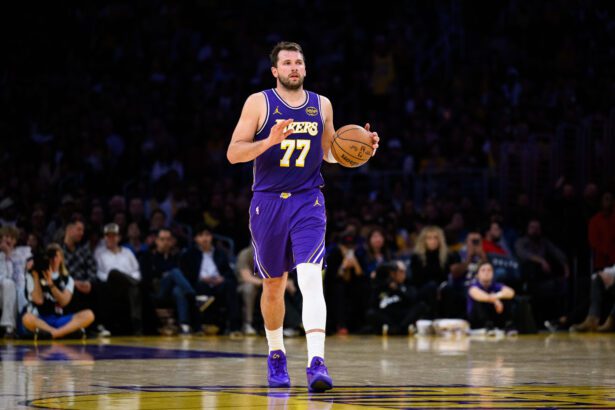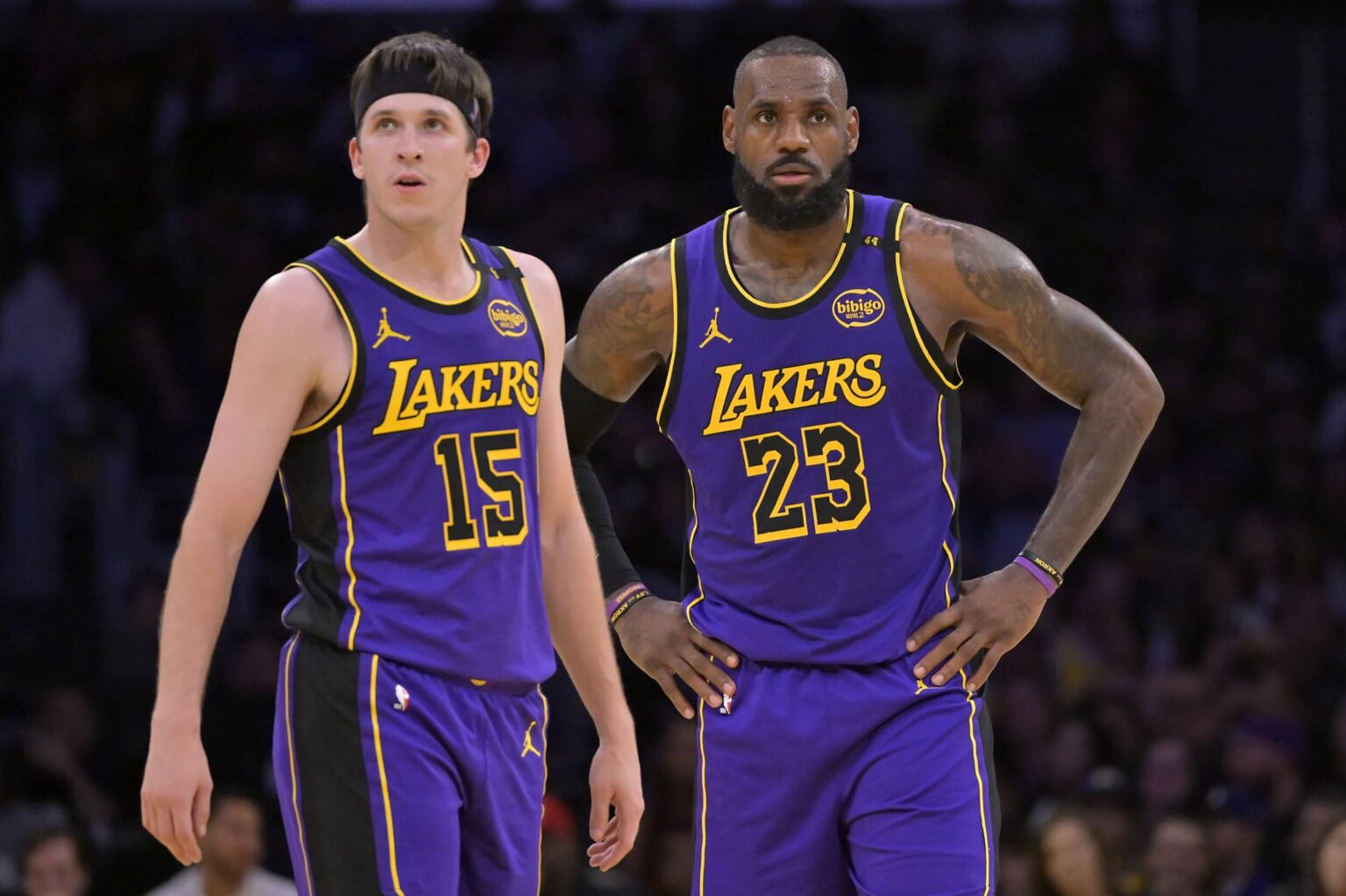
The Los Angeles Lakers are 19-7 as of December 19, and they sit in the No. 3 seed in the Western Conference. That’s a legit contender start, not some fake-hot week that’s about to cool off.
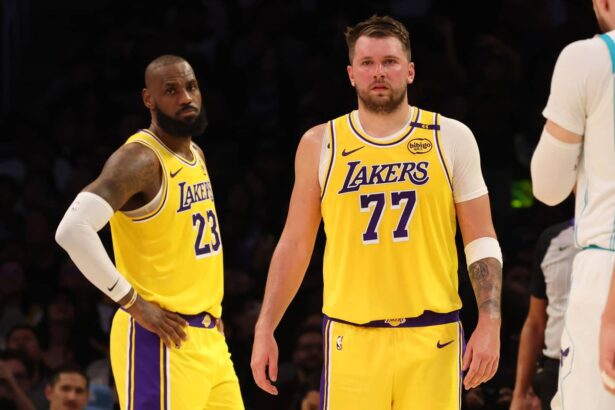
Luka Doncic is the engine behind it, and the numbers are loud. He’s at 35.2 points, 8.8 rebounds, 9.1 assists, shooting 46.3% from the field, 32.4% from three, and 81.1% at the line.
He just torched the Jazz for 45 points, 14 assists, 11 rebounds, and five steals in a 143-135 win, the kind of night that reminds the league the Lakers have a real ceiling.
But here’s why the trade market still matters for them. The Lakers can score with anybody, the issue is whether they can consistently guard playoff wings and keep teams out of track meets.
They’re allowing 117.4 points per game, which puts them in the bottom ten of the league by opponent scoring, and that’s the exact kind of flaw that gets exposed in a seven-game series.
That’s also why the reporting keeps circling the same thing: the Lakers are actively monitoring the market for a defensive wing upgrade.
Michael Scotto reported for HoopsHype that a 3-and-D type is on their wish list, with Herb Jones mentioned as one of the names they’ve had interest in, and the Lakers have made calls on him, reportedly. They’re winning now, but they’re still hunting for the wing that makes this whole thing feel inevitable.
So when you look at the roster through that lens, the “most likely to be traded” list gets pretty clear fast. If the Lakers go shopping for a real wing stopper, somebody’s minutes, contract, or long-term fit is getting moved.
1. Dalton Knecht
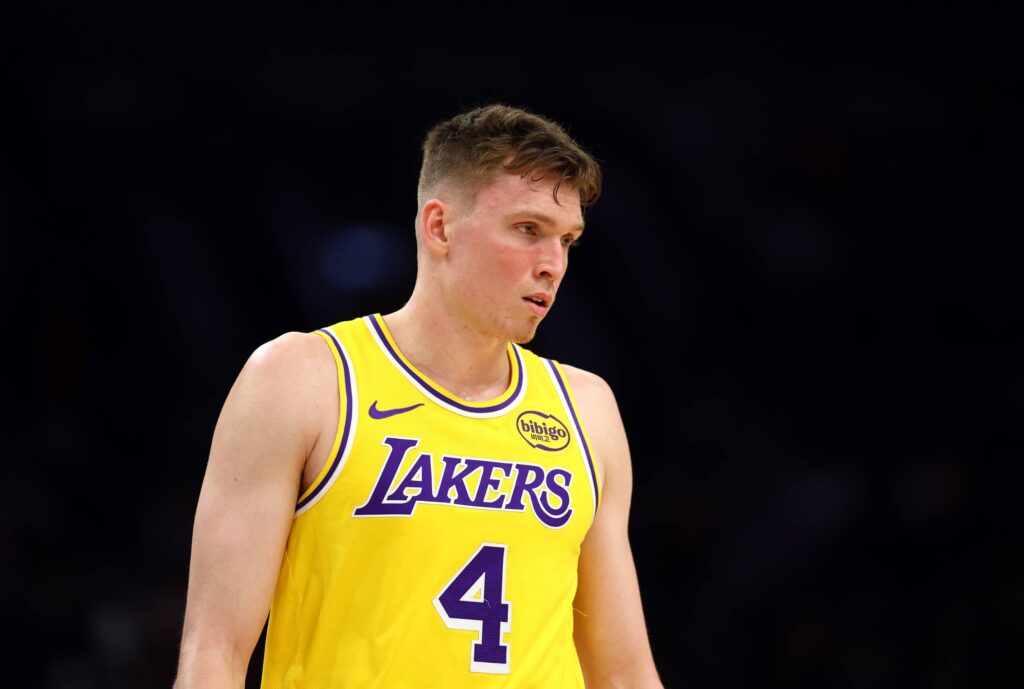
The easiest name to circle is Dalton Knecht, because the Lakers can sell him in two sentences. He’s on a cheap rookie number, about $4.0 million, and he can score. That combination is basically trade currency in the modern NBA, especially when you’re trying to add a veteran wing without gutting your rotation.
The production is modest, 6.0 points in 14.6 minutes, shooting 46.6% from the field and 35.6% from three. But the bigger storyline is the usage. He hasn’t had a real runway, and that’s not me guessing, that’s literally been the theme around him all month. He only played 56 minutes over the last month, and the Lakers even sent him to the South Bay Lakers to get real reps, with JJ Redick basically saying, “he needs to play.”
Here’s the part that matters for trade talks: The Lakers tried to trade him to the Charlotte Hornets last February, but it didn’t happen, and he has barely played since. When you see that in a legit league-wide trade, it tells you the Lakers already view him as a movable piece, not an untouchable building block.
So why would they actually pull the trigger now? Because if the Lakers are shopping for a defense-first wing, the teams on the other side usually want at least one young scorer they can talk themselves into. Knecht fits that pitch. He’s not expensive, he’s not old, and he gives a rebuilding team something to develop without committing long-term money.
As for destinations that make sense, it starts with teams that can afford to gamble on a shooter and hand him minutes. The Washington Wizards could do it because they’re always hunting for upside on cheap deals. The Brooklyn Nets could do it because they’re constantly looking for controllable young talent. The Charlotte Hornets connection already exists in the background, and even if that exact door closed last time, it’s still the same kind of team profile.
If the Lakers want a rotational upgrade, Knecht is the kind of sweetener that gets the conversation from “no” to “fine, let’s talk.”
And honestly, this is the brutal part: the Lakers don’t need him to be great. They just need another team to believe he can be great with more opportunity. That’s how deadline deals get done.
2. Rui Hachimura
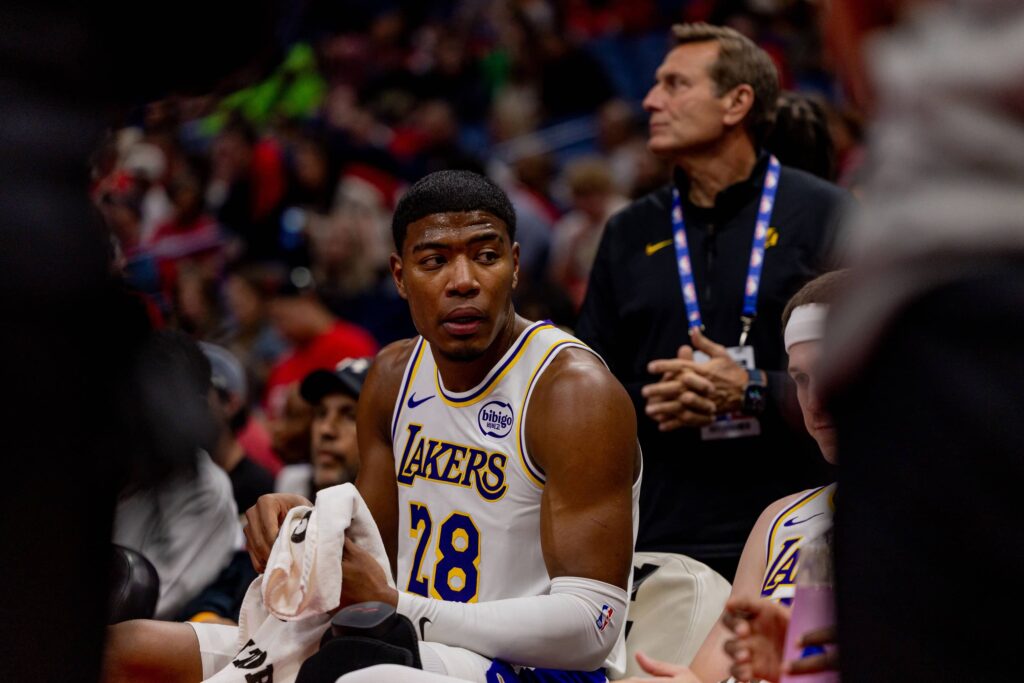
If Knecht is the “young chip,” Rui Hachimura is the “real money” chip. His salary is $18.3 million, which is exactly the type of number that makes trades possible without dragging five contracts into it. And unlike some salary filler guys, Rui can actually play.
This season, he’s at 13.3 points and 3.8 rebounds, and he’s been wildly efficient, 53.5% from the field and 45.6% from three, in 32.9 minutes a night. That shooting matters because it means you’re not trading a dead piece; you’re trading a starter-level forward who can raise a team’s offensive floor.
So why is he even here? Because the Lakers are chasing a specific archetype, and Hachimura is not that archetype. The reporting around what the Lakers want keeps coming back to defense, athleticism, speed on the wing, and 3-and-D types. Rui is more of a scoring forward. He likes to attack, he likes to get to his spots, and defensively, he’s not the kind of guy you throw at the other team’s best perimeter scorer for 40 minutes and sleep well.
The Lakers may have “outgrown” him, and since he’s on an expiring deal, he’s the best player they have in that contract bucket, outside of the obvious stars. That’s the key. Expiring contracts that can start for you are gold in February, because a team can convince itself it’s not taking on long-term risk.
This is also where the Herb Jones chatter matters. The Lakers have reportedly called the New Orleans Pelicans about him, and even if that’s a long shot, those types of conversations require real matching salary. Rui is the cleanest pathway to make the math work without sacrificing the Lakers’ entire guard rotation.
Now, “likely teams” for Hachimura depend on what direction the Lakers go. If they chase a defensive wing, the Sacramento Kings come up because Keon Ellis is being floated as a headline name in the market, and with his high salary, the Lakers could bring back bigger contracts attached to Ellis. The Pelicans come up because the Lakers have already poked around that roster. And if the Lakers pivot toward a bigger swing later, Rui is the exact kind of contract that shows up in mock packages because he’s useful, sizable, and not a pure negative.
In my opinion, the Lakers would prefer not to move him because his shooting is real, and you don’t casually dump a guy hitting 45.6% from three. But the deadline isn’t about comfort. It’s about fit. And Rui is the cleanest “fit sacrifice” on the roster.
3. Gabe Vincent
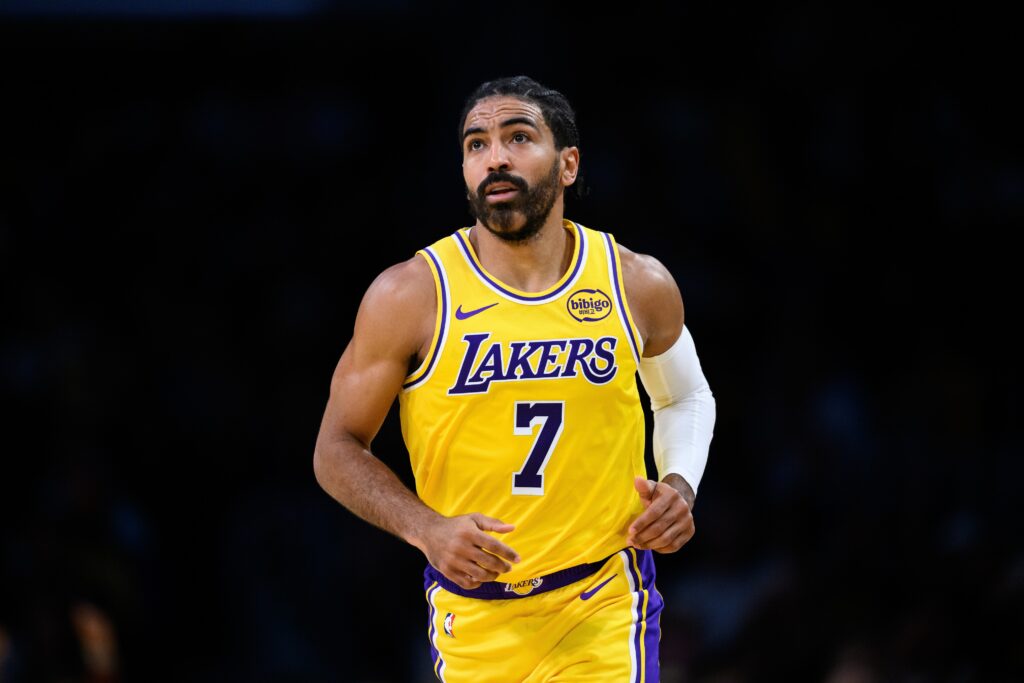
Gabe Vincent is the guy who makes the most sense in a very unsexy way. His salary is $11.5 million, he’s on an expiring deal, and he’s the exact type of contract you move when you’re trying to reshape the roster without touching your top pieces.
On the court, the numbers are rough. He’s at 4.7 points and 1.4 assists, shooting 35.0% from the field, but he is at 36.2% from three in 21.5 minutes.
That’s basically the Vincent story in a nutshell: the shot looks fine from deep, everything else is inconsistent, and if you’re the Lakers, you can’t afford inconsistent minutes in the playoffs.
The other factor is health. As of December 19, he’s out with lower back tightness, and the Lakers said he’ll be re-evaluated in about a week.
That doesn’t mean he’s untradeable, but it does mean the Lakers have to decide how much they trust him to be available when the games get mean.
What makes Vincent feel genuinely “most likely” is that credible league chatter has basically pointed at him. John Hollinger called Vincent and Maxi Kleber two potential guys the Lakers could deal, with the apron and flexibility stuff looming over them.
CBS Sports also included Vincent as a clear trade candidate type, framing it as a long-term fit issue for the Lakers.
The market for Vincent is pretty straightforward. Contenders that want guard depth and can talk themselves into him as a playoff utility piece will sniff around, especially if they can get him without giving up a premium asset. The Miami Heat connection will always exist as a narrative hook because of his Finals run, and a team like the Orlando Magic could talk itself into more shooting.
The biggest thing is the contract structure. Expiring money is always useful, even when the player is not lighting it up.
If the Lakers land a wing upgrade, don’t be surprised if Vincent is part of the outgoing math. It’s clean. It’s logical. And it doesn’t touch the stars.
4. Jarred Vanderbilt
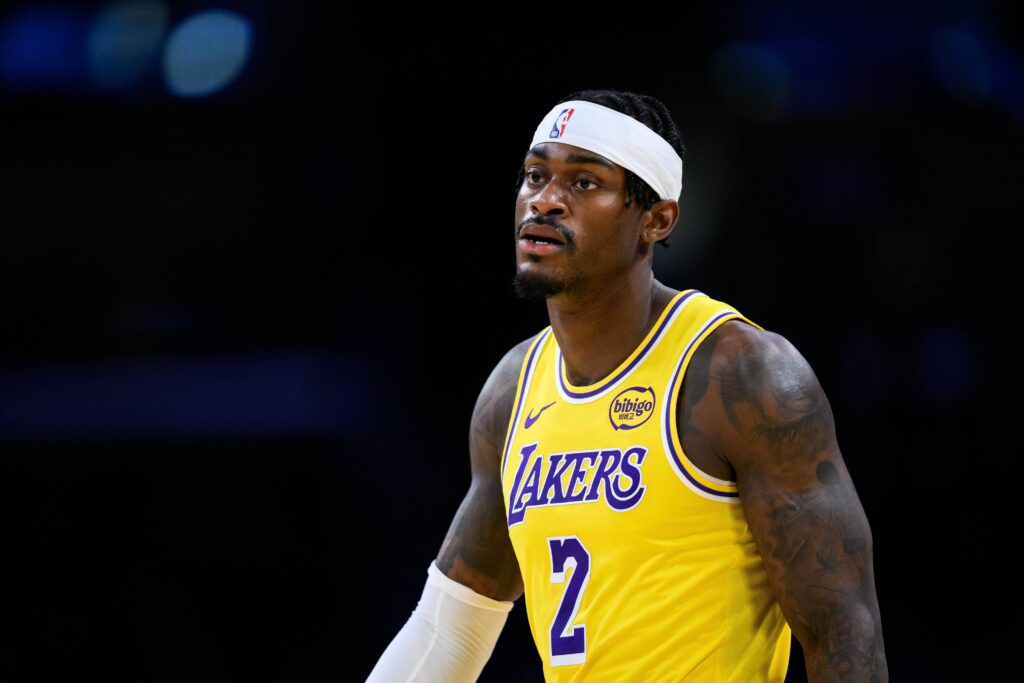
Jarred Vanderbilt is the weird one because the Lakers actually need what he does, but the Lakers also don’t want what he costs. His salary is $11.6 million this season, and unlike Vincent and Kleber, he’s not just a pure expiring situation.
That’s why he’s constantly in rumors even when nobody’s actually screaming for a Vanderbilt trade.
His on-court production is very Vanderbilt. He’s at 4.6 points, 5.6 rebounds, 1.4 assists, in 17.6 minutes, shooting 42.9% from the field and 31.6% from three. Defense and chaos are the values. The spacing is the problem.
And his role has been unstable. He literally fell out of the rotation for stretches, then popped back in and made a real impact, including Sunday’s game, where he had six offensive rebounds in 15 minutes, plus a three, a block, and two steals against the Suns.
That’s the Vanderbilt experience. If you let him do Vanderbilt things, he swings quarters. If you ask him to be a shooter, you’re playing with fire.
The Lakers would reportedly love to get out of the next couple of years of Vanderbilt money because they have cap space ambitions, but dumping that contract is not easy.
That’s why he’s “likely to be traded” in the sense that he’s the type of contract the Lakers want to move, but also “unlikely” in the sense that the league might not want to help them do it for free.
So what’s the path? Vanderbilt gets included as the extra piece in a bigger deal, where the Lakers attach a pick or a young player to make the value make sense. Or, he goes to a team that wants defense and doesn’t care about the half-court limitations.
The Detroit Pistons are an example of a team that could love his energy if they’re building a defense identity. The Utah Jazz are always a team that can take on contracts for the right price. The Washington Wizards can absorb almost anything if draft value comes with it.
If the Lakers decide the real priority is a higher-level wing defender, Vanderbilt is the internal debate: keep him because he’s one of your only “problem solvers,” or flip him because his contract blocks future flexibility. That’s a front office fork in the road.
5. Maxi Kleber
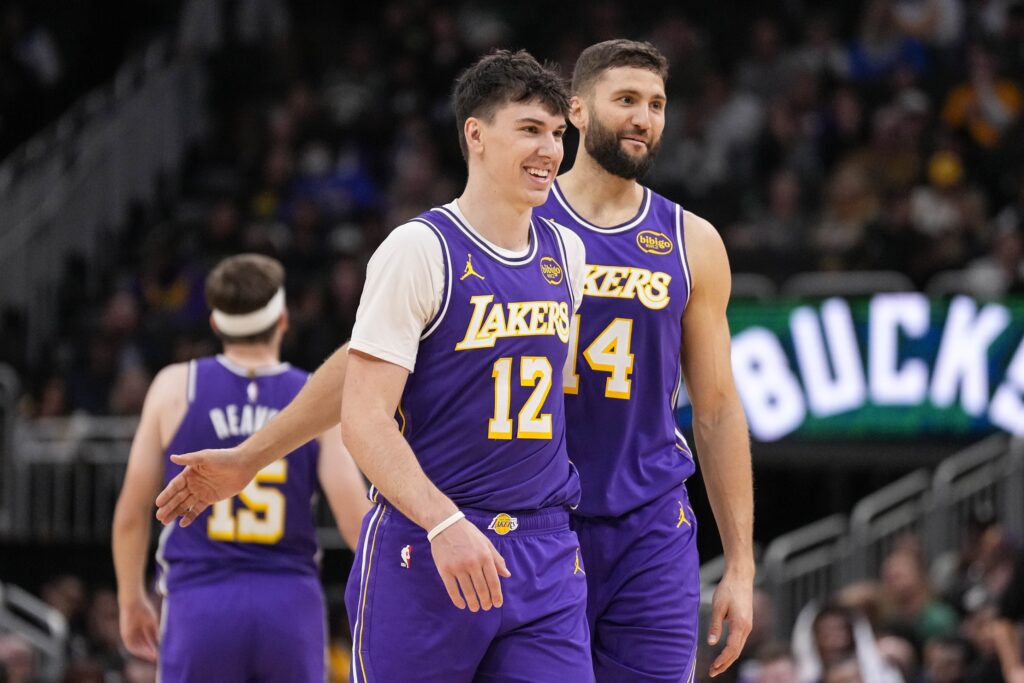
Kleber is basically the definition of “deadline contract.” He makes $11.0 million, he’s a veteran, and his money exists to be moved. And the Lakers have already been using him as part of their rotation puzzle, even if it’s been in small doses.
His stats are tiny, 1.8 points, 1.8 rebounds, 0.6 assists, 12.1 minutes, shooting 40.0% from the field and 37.5% from three. That’s not the point. The point is, he can play as a stretch big in the right matchup, and his contract makes him a plug-and-play piece in trade construction.
This is another spot where league chatter has been pretty direct. If the Lakers swing for an upgrade, Kleber is the likeliest contract they move, because the sample size is small and he’s not someone you want to rely on physically for a deep run.
And if you want a quick “real-time” reminder that he’s in the mix, he literally played in the Lakers’ win over the Jazz as part of that bench group behind the stars, which is exactly where he sits on the hierarchy. Useful, but not untouchable.
The most obvious “likely team” angle is tied to the Lakers’ wing hunting. If they keep calling about Herb Jones type players, a contract like Kleber’s becomes part of the outgoing math, especially because teams love expirings for flexibility.
The Sacramento Kings connection exists in the broader “wing market” conversation, too, because if the Lakers chase Keon Ellis’ $2.3 million deal plus other defenders, the Lakers need movable contracts to get the deal off the ground.
Kleber is the quiet one, but he might be the first domino. Because when contenders make deadline trades, they usually start by moving the contract that changes the least about their nightly identity. That’s Kleber.
If the Lakers really want to raise their ceiling around Doncic and LeBron, one of these five is almost guaranteed to be part of the price tag. The only question is whether they’re buying a real difference maker or just rearranging the chairs.