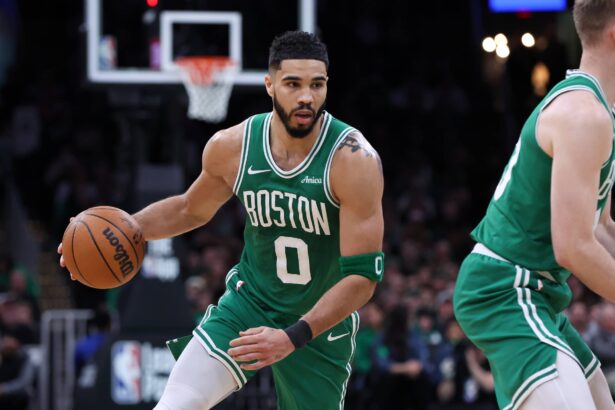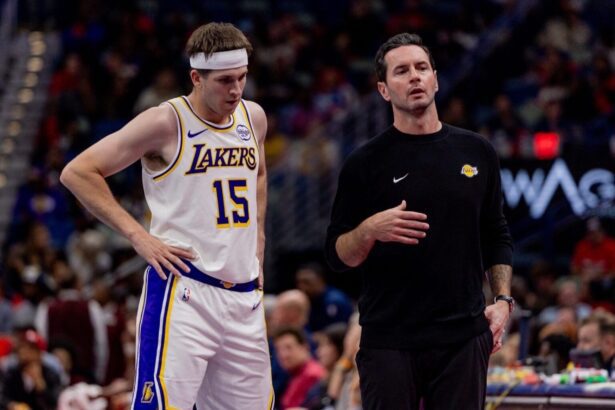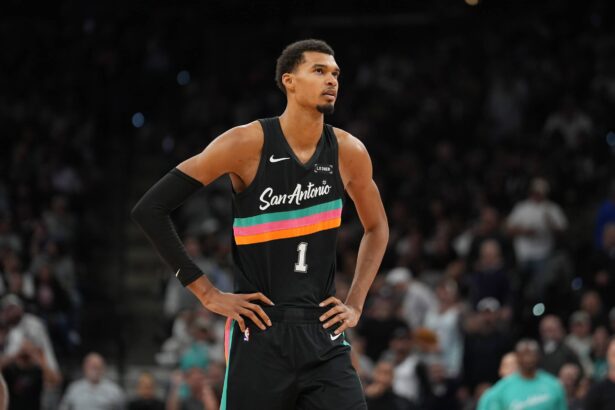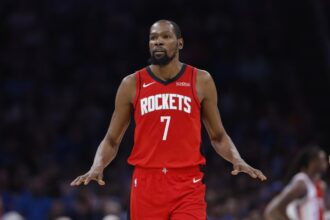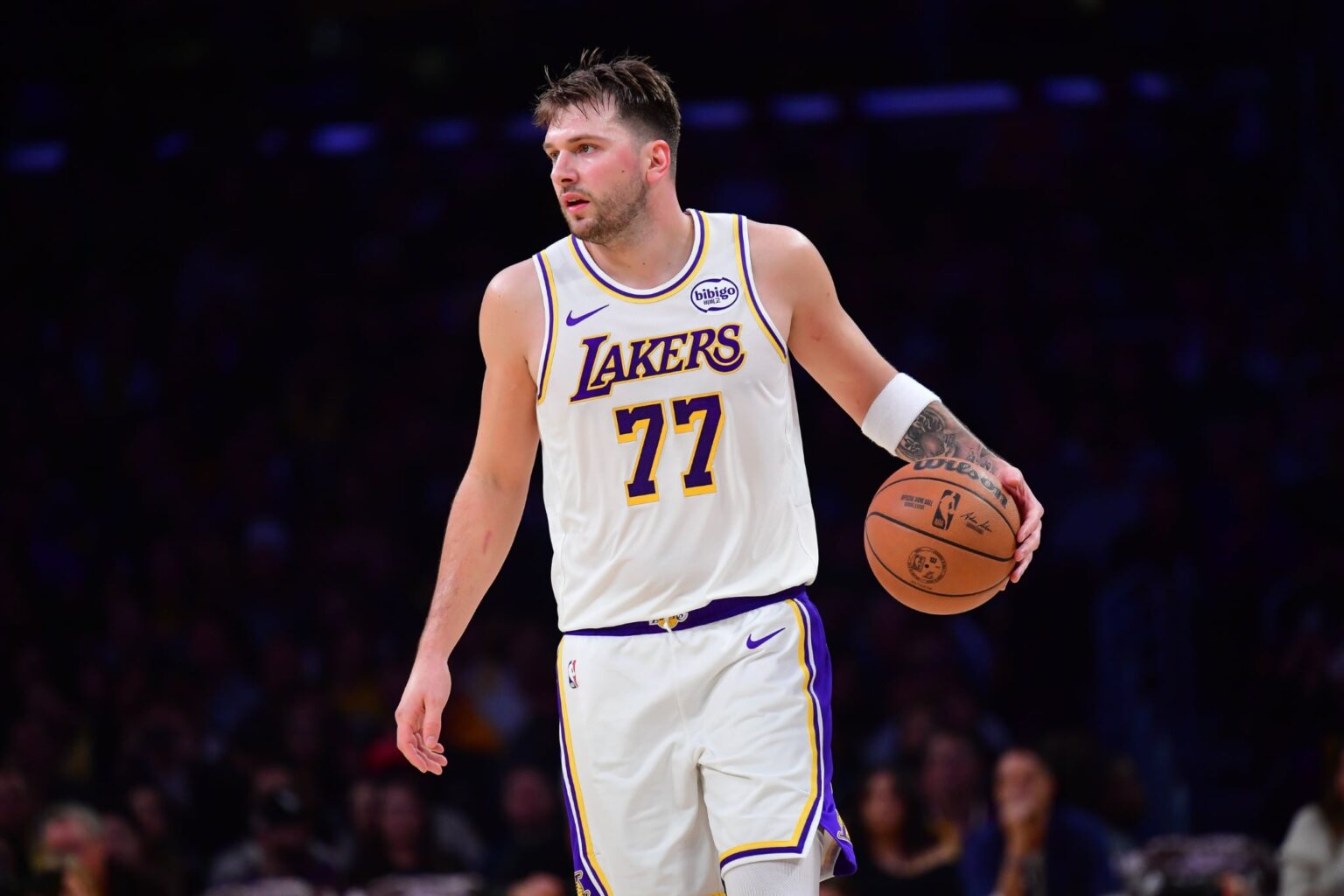
The NBA basically hit the reset button on All-Star weekend, because the “let’s pretend to play defense for 48 minutes” era is dead. For 2026, the league is going full U.S. vs. World, but with a twist that matters for how these rosters shake out and how the game itself will actually look on the floor.
First, the selection part stays familiar. There are still 24 All-Stars total, 12 from the East and 12 from the West. Starters are still five per conference, picked through the same weighted voting split: fans (50%), players (25%), and media (25%). Then the reserves are still seven per conference, selected by NBA head coaches.
One key tweak though: the NBA is doing the All-Star pool without regard to position this time, so it’s not locked into the old “two guards, three frontcourt” style math. If you’re an elite dude, you’re in, and the sorting comes later.
Now the new part: those 24 guys don’t just split East vs. West, or do the captain draft thing. They get funneled into three teams, two Team USA groups and one Team World group. The league is targeting a minimum breakdown of 16 U.S. players and eight international players for the overall pool.
If the voting and coach selections don’t naturally land on those exact minimums, the commissioner can add extra All-Stars to hit the required U.S./international balance, which could mean at least one team ends up with more than eight players.
And, importantly for us doing projections, the NBA has said the exact process for assigning players onto the two different USA teams will be determined later, so we’re working off the structure even if the “how do they divide USA 1 and USA 2” mechanism gets finalized closer to the event. For this exercise today, we’ll still divide the USA Teams into East and West.
The game format is basically a mini-tournament, not one long game. It’s a round-robin setup with four 12-minute games total. Here’s the clean way to picture it: Game 1 is Team A vs. Team B. The winner of Game 1 plays Team C in Game 2. Then the loser of Game 1 plays Team C in Game 3.
After those three games, the top two teams by record advance to the championship, which is Game 4. If all three teams go 1-1 after Game 3, point differential across each team’s two games becomes the tiebreaker. So yeah, every possession matters, because style points literally become standings points now.
That’s the setup. Same 24 All-Star selection pipeline you’re used to, but the showcase itself becomes a short-burst, high-urgency tournament built around two USA teams and one World team, with real incentives to actually compete because you can’t sleepwalk through 12-minute games.
So with the new three-team, mini-tournament format locked in, here are our predictions for how Team USA 1, Team USA 2, and Team World should look when All-Star weekend rolls around.
Team USA 1 (West)
Guards: Stephen Curry, Anthony Edwards, Devin Booker
Forwards: Kevin Durant, LeBron James, Julius Randle, Kawhi Leonard
Centers: Chet Holmgren
If you’re building a “USA 1” that’s supposed to win the whole mini-tournament, this is the cleanest way to do it: overwhelming shot creation, two-way wings who can actually guard, and one modern big who doesn’t clog anything. This group can play fast, play small, or just spam mismatches until somebody taps out.
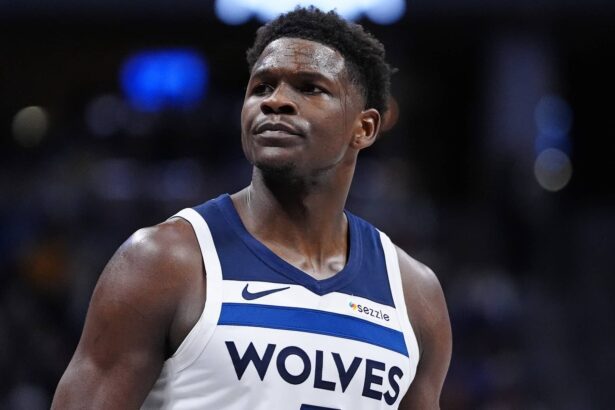
Start with the backcourt. Stephen Curry is still him, and he’s having one of those “you sure he’s 37?” seasons at 28.1 points, 4.9 assists, and he’s hitting 38.8% from three on monster volume. Anthony Edwards has turned into a true alpha scorer at 28.9 points, 5.0 rebounds, 3.8 assists, and he’s sitting at 50.0% from the field and 40.9% from three, which is nasty for a high-usage wing creator. And Devin Booker’s the glue guard here, 25.2 points and 6.5 assists, even if the efficiency from deep has been way shakier than you’d expect from him.
The forward group is basically a cheat code. Kevin Durant at 26.1 points on 52.1% shooting and 40.0% from three is just unfair spacing, it’s still point-and-click offense. LeBron James is “only” at 22.4 points, 5.7 rebounds, 6.9 assists, but the entire point of him in this format is that he can quarterback 12-minute games like they’re playoff closing lineups.
Kawhi Leonard has been ridiculous this year, 28.2 points, 6.3 boards, 3.5 assists with positive defense still attached, that’s exactly the kind of guy who flips a short game with two stops and two buckets. And Julius Randle gives you the bruising downhill pressure plus playmaking, 22.2 points, 7.1 rebounds, 5.7 assists, which matters when teams start switching everything.
Chet Holmgren as the lone center is the modern tournament pick. He’s at 17.9 points, 8.4 rebounds, and 1.9 blocks on 57.0% shooting, and he fits with literally every combo here because he can protect the rim without killing spacing. In a short format where you can’t afford a slow-footed big getting hunted, Chet makes a ton of sense.
Potential snubs are going to make people mad, especially if you’re a Lakers or Clippers watcher. Austin Reaves has a legit case on pure production, 26.6 points, 5.2 rebounds, 6.3 assists on 50.7% shooting and 36.5% from three, that’s not “nice role guy” numbers, that’s borderline star stuff. And if we’re being real, James Harden has been All-Star caliber too, 25.6 points and 8.0 assists, but roster math gets brutal when you already stacked Curry, Ant, and Booker on one USA team.
Team USA 2 (East)
Guards: Tyrese Maxey, Jalen Brunson, Donovan Mitchell, Cade Cunningham
Forwards: Jaylen Brown, Jalen Johnson, Michael Porter Jr.
Centers: Karl-Anthony Towns
The East is the “good luck guarding us” team. It’s guard-heavy, it’s pace-heavy, and it’s built to score in waves. The only question is defense, because the offense is automatic.
Tyrese Maxey at 30.5 points with 6.6 assists while shooting 40.5% from three is flat-out insane, he’s been a one-man track meet. Jalen Brunson is right there too at 28.9 points and 6.3 assists, and he’s doing it efficiently at 48.1% from the field and 38.9% from three.
Donovan Mitchell is in that same tier this season, 29.5 points, 5.5 assists, 4.7 rebounds, and he’s still bombing from deep at volume. Then Cade Cunningham is the jumbo creator that makes this team feel different, 26.7 points and a wild 9.7 assists, basically playing point guard and engine at the same time.
On the wing, Jaylen Brown is having a monster year, 29.5 points, 6.4 rebounds, 5.0 assists. That’s first-option production, not “second star” production. Jalen Johnson is the chaos piece, 23.4 points, 10.1 rebounds, 8.1 assists, which is absurd for a forward, and he changes games because he pushes pace off the glass and creates advantages before defenses are set.
And Michael Porter Jr. is the pure heater: 25.7 points and 7.5 rebounds while hitting 40.1% from three, that’s the kind of guy who can swing a 12-minute game with three jumpers in two minutes.
Karl-Anthony Towns as the center is your spacing big and your rebounding anchor. He’s at 21.0 points and 11.2 rebounds with 35.3% from three, so you get five-out looks without sacrificing size. In this format, a center who forces opposing bigs to defend in space is a weapon.
Snubs for USA 2 get messy fast because the East has way more All-Star level names than there are slots. Pascal Siakam is a brutal cut if you lean wing-heavy, he’s putting up 23.6 points, 6.9 rebounds, and 3.9 assists, which is basically automatic All-Star production.
Evan Mobley has the defense-first argument, 17.9 points, 8.7 rebounds, 4.1 assists, and 1.9 blocks, and he’s the type who swings short games with rim protection alone. And if we’re talking pure star power getting squeezed by roster math, Joel Embiid at 23.5 points, 7.0 rebounds, and 3.3 assists is the kind of name that only misses if games played and availability become the deciding factor.
Team World
Guards: Luka Doncic, Shai Gilgeous-Alexander
Forwards: Giannis Antetokounmpo, Deni Avdija, Lauri Markkanen
Centers: Nikola Jokic, Victor Wembanyama, Alperen Sengun
This is the team nobody wants to see in a “short-game tournament” because the talent is top-end, but the styles also fit together way better than people assume. It’s basically: Luka and SGA create advantages every trip, Giannis destroys the rim, Jokic plays point-center, and then you’ve got Wemby as a defensive eraser if things get weird.
Luka Doncic is putting up video game numbers: 33.4 points, 7.9 rebounds, 8.8 assists. Shai Gilgeous-Alexander is right there with him as a walking 30-piece, 31.9 points and 6.4 assists on a ridiculous 54.5% from the field, which is just unfair efficiency for a guard.
Those two together means Team World is going to live in the paint and live at the line, and defenses are going to be scrambling nonstop.
Giannis Antetokounmpo is still the ultimate pressure point, 29.1 points, 9.7 rebounds, 5.7 assists on 64.9% shooting. Lauri Markkanen is the perfect complementary star, 27.9 points, 7.2 rebounds, and he stretches everything with his shooting gravity. And Deni Avdija is the “wait, what?” inclusion that actually deserves superstar consideration, because he’s producing like one: 26.1 points, 7.1 rebounds, 6.9 assists, and he gives you size, playmaking, and tempo without needing to be a primary.
Then the bigs are just disgusting. Nikola Jokic is basically averaging a 30-point triple-double, 29.6 points, 12.2 rebounds, 11.0 assists. Victor Wembanyama is putting up 24.0 points, 11.0 rebounds, and 2.7 blocks, and that block number is exactly why a 12-minute game can swing instantly, two possessions and you’re down eight. Alperen Sengun gives you another elite hub style big at 21.8 points, 9.0 rebounds, 6.5 assists, so Team World can keep a playmaking center on the floor basically at all times.
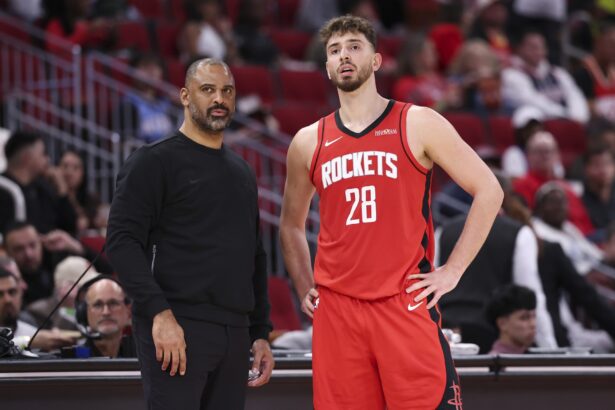
If I’m picking a team I actually trust to win this whole thing, I’m leaning Team World. They’ve got the three scariest “system breakers” in the entire pool with Jokic, Giannis, and Luka, and SGA has been the most automatic scorer of anyone not named Jokic. In a sprint format, that’s a problem.
Team World definitely has snubs. Domantas Sabonis is the usual snub, because his production is still All-Star level: 17.2 points, 12.3 rebounds, and 3.7 assists. The catch is he’s basically been hurt forever, and with that kind of availability, he wasn’t really getting in anyway.
Jamal Murray is the big “there’s no way he doesn’t make it” snub. He’s at 25.8 points, 4.5 rebounds, and 7.5 assists, and he fits perfectly next to Luka and SGA because he can play on-ball or slide off-ball and just punish teams when they load up.
Conclusion
At the end of the day, I think these selections are where things are trending anyway. If you look at how fan voting has returned and the level these guys have been playing at, this is the main picture. There might be a couple of surprise splits when the league actually divides USA 1 and USA 2, and there’s always room for one “wait, what?” steal that coaches love, but the top-end names feel pretty locked.
The one real spice is the first-time All-Star tier for me. Michael Porter Jr., Deni Avdija, and Jalen Johnson are the kind of picks that would’ve sounded wild a year ago, but when you actually look at the numbers, it’s hard to argue. MPJ giving you 25.7 points and 7.5 rebounds while hitting 40.1% from three is pure All-Star offense. Avdija at 26.1 points, 7.1 rebounds, 6.9 assists isn’t a cute story, that’s star production. And Jalen Johnson, basically flirting with a triple-double at 23.4 points, 10.1 rebounds, 8.1 assists, screams “you can’t leave me out” if the Hawks are remotely competitive.
So yeah, there will be snub debates because there always are, and one or two names might flip depending on injuries or a late-season run. But if we’re calling the landscape right now, this looks like the core group that’s going to be in the room when the All-Star teams get built.