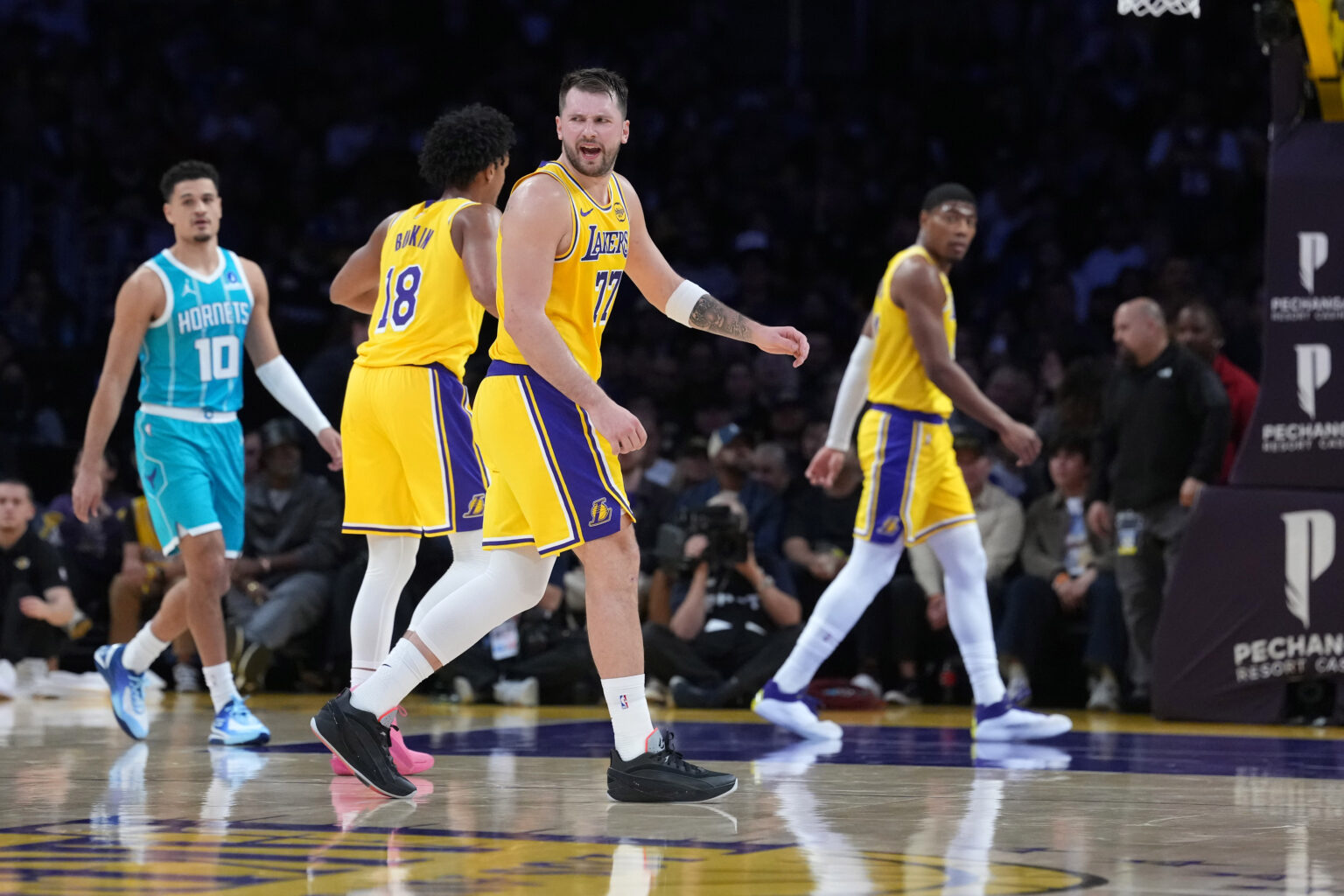
By the time the fourth quarter rolled around, the shape of the night had already hardened into something the Lakers have seen too often lately. A strong individual effort or two. A burst of early offense. And then, slowly, the floor tilts the other way as the opponent finds rhythm and space.
Thursday’s 117-135 loss to the Hornets wasn’t decided by a single run or a late-game collapse; it unraveled over two full quarters of missed assignments, lost shooters, and an offense that eventually stalled under its own weight. The box score tells part of the story: Los Angeles shot a respectable 46.2% from the field and got 68 points combined from Luka Doncic and LeBron James.
But it also shows where things went wrong. The Hornets hit 20 three-pointers at a 46.5% clip, out-assisted the Lakers 34-18, and scored 105 points after the first quarter. That combination left very little margin for recovery, no matter how loud the stars were.
1. The Lakers Still Can’t Survive A Hot Shooting Night
The most damaging number from this game wasn’t Charlotte’s final point total; it was how those points came. The Hornets knocked down 20 of their 43 three-point attempts, including nine from LaMelo Ball alone. Eight of those came after halftime, when Los Angeles needed defensive discipline most and instead lost track of shooters on drive-and-kick sequences over and over again.
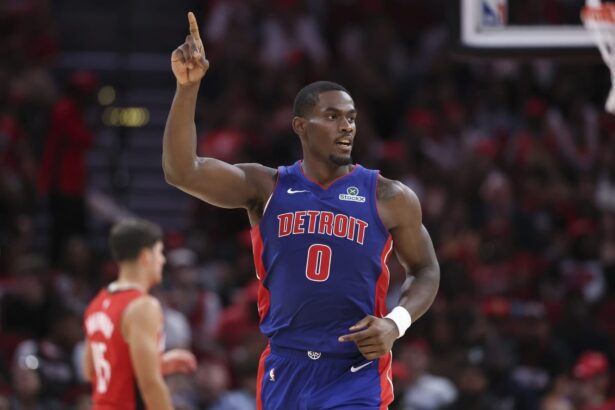
It wasn’t just Ball. Brandon Miller hit timely jumpers, Miles Bridges punished rotations by going 5-for-7 from deep, and even secondary options were comfortable letting it fly. Charlotte finished the night with a 54.3% overall shooting mark and scored 56 points in the paint, showing how easily they toggled between perimeter and interior scoring once the Lakers’ coverage started to bend.
2. Luka And LeBron Can Carry The Load, But Not The Game
There was nothing wrong with what Luka Doncic and LeBron James did individually. Doncic poured in 39 points on 15-of-26 shooting and drilled six three-pointers, including three in the opening quarter alone. LeBron added 29 points, nine rebounds, and six assists while shooting over 50% from the field. For long stretches, the Lakers’ offense was functional purely because those two refused to let it stall.
The problem was everything that followed. The rest of the roster combined for just 49 points, and the bench managed nine points on 4-of-19 shooting. When Charlotte began to separate in the third quarter, the offense became increasingly predictable, with high-usage possessions for Luka and LeBron, with fewer secondary actions producing clean looks. The Hornets were comfortable living with that math, and it showed as the lead ballooned.
3. Rebounding And Ball Movement Are Still Swing Issues
Los Angeles entered the night knowing Charlotte likes to play fast and spread the floor, but the Lakers still lost the rebounding battle 50-35. That included 14 offensive boards for the Hornets, many of which led directly to kick-out threes or easy second-chance buckets. Those extra possessions kept the Lakers from ever stringing together stops, especially in the middle quarters.
The gap in ball movement was just as stark. Charlotte recorded 34 assists on 50 made field goals, while the Lakers finished with only 18 assists total. That disparity showed up visually, one team swinging the ball side-to-side until something cracked, the other relying heavily on isolation and late-clock shot creation. Over four quarters, that difference compounded quickly.
4. The Bench Gap Is Becoming Impossible To Ignore
This game didn’t swing because of one bad rotation or a cold shooting stretch, it widened when the benches checked in. Charlotte’s reserves combined for 27 points and brought energy, rebounding, and connective passing. Los Angeles, meanwhile, got almost nothing offensively from its second unit, with multiple players failing to score despite extended minutes.
When the Lakers needed a spark to slow momentum in the second and third quarters, it never arrived. Charlotte’s lead grew to as many as 18 points, and even when the starters returned, the rhythm was gone. Over a stretch where the Lakers have now dropped four of their last five games, that bench imbalance has become less of a nightly inconvenience and more of a defining problem.