The NBA trade deadline is basically here, and the Cavaliers are already telling you what kind of week this is going to be.
They just flipped their roster again, moving De’Andre Hunter out and bringing in Dennis Schroder (plus Keon Ellis) in a three-team deal, a classic pre-deadline “reset the math” move that screams flexibility over sentiment. With Thursday, February 5, looming at 3 p.m. ET, the front office is acting like a group that wants options, not attachments.
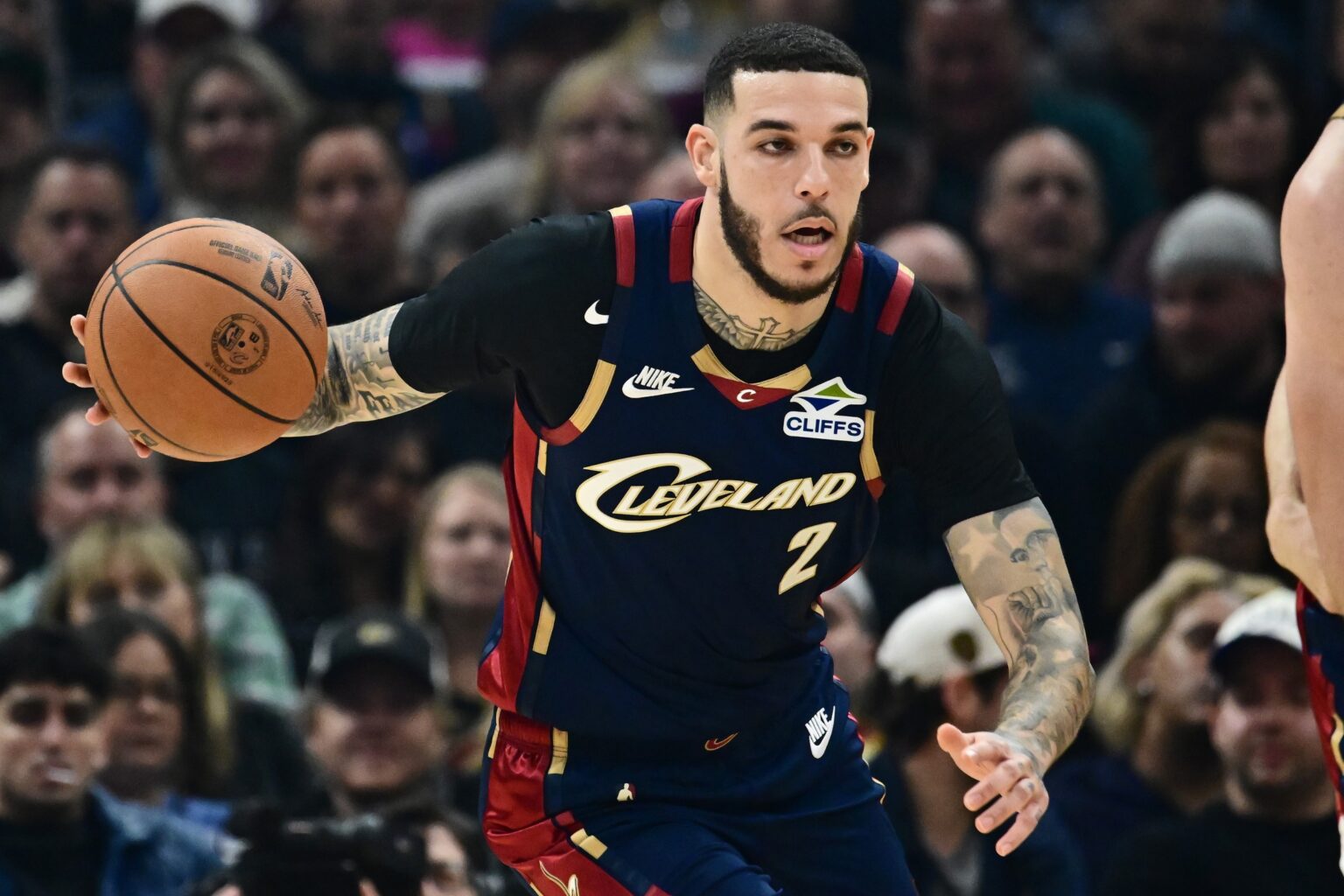
And that’s where Lonzo Ball comes in, because the reporting is getting louder by the hour. Yardbarker relayed the gist of it bluntly: the Cavs are continuing to float Ball’s deal as trade bait in conversations ahead of the deadline, with Hoops Wire sourcing and ClutchPoints reporter Brett Siegel also tied to the same idea.
“The Cavaliers are continuing to use Lonzo Ball‘s contract as bait in talks ahead of Thursday’s trade deadline, sources told Hoops Wire and also reported by ClutchPoints’ Brett Siegel.”
The contract structure is the entire point, Ball has a $10 million team option for next season, which teams around the league treat like a clean pseudo-expiring if they want cap flexibility without long-term baggage. As Yossi Gozlan relayed on X, “The Cavaliers are now a Lonzo Ball and two minimum salaries dump away from getting under the second apron. “
Ball’s first year with the Cavs has been rough, and the production makes it easy to sell him as a throw-in instead of a centerpiece. In 34 games, he’s putting up a career-low 4.6 points, 4.0 rebounds, and 3.9 assists, while shooting just 30.1% from the field.
That’s why, in this article, we’re laying out the four best landing spots for Lonzo Ball if the Cavaliers actually move him before Thursday’s deadline, the teams that can use his contract flexibility, bet on a bounce-back, and realistically put a deal on the table.
1. Orlando Magic
Cleveland Cavaliers Receive: Tyus Jones, Jase Richardson
Orlando Magic Receive: Lonzo Ball
The Magic make sense as a landing spot because they’re right in that play-in mix and they need steadier guard play without changing the identity of their roster. They’re 25-23, sitting eighth in the East, basically one good week away from climbing and one bad week away from getting swallowed.
Lonzo fits simply. The Magic already have creators and scorers, what they need is a guard who can keep the ball moving, defend his position, and play within a structure. In tight games, especially when the pace slows, the Magic’s offense can get a little sticky.
A bigger guard who’s comfortable making quick reads and initiating sets is exactly the kind of “boring” add that helps a team win two more games in March and that’s huge for seeding. The fact that the Magic are basically even in points scored and points allowed per game tells you how thin their margin is; they can’t afford sloppy possessions.
Money-wise, this is clean. Tyus Jones is on $7.0 million this season, Jase Richardson is on $3.0 million, and Lonzo is on $10.0 million, so the math lines up without the Magic touching any bigger rotation salary.
The basketball case for the Cavaliers is straightforward. If they are truly using Lonzo as contract bait, turning one salary slot into two functional pieces is the kind of deadline move teams actually do.
Jones gives them a steady, low-mistake guard option, and Richardson gives them a young flyer they can develop. Jones is averaging 3.1 points and 2.5 assists this season, while Richardson is at 5.5 points, 1.4 rebounds, and 1.2 assists on 48.9% from the field.
The Magic get a buy-low swing on a guard who fits their needs and has a team option structure that keeps them flexible, and the Cavaliers get two movable contracts plus a young prospect instead of carrying one “throw-in” deal into the summer.
2. Washington Wizards
Cleveland Cavaliers Receive: Malaki Branham, Cam Whitmore
Washington Wizards Receive: Lonzo Ball
According to Michael Scotto of HoopsHype, the Washington Wizards are interested in Lonzo Ball.
The Wizards are 13-35 and sitting 14th in the East, so this is less about chasing the play-in and more about stabilizing a roster that’s been living in constant lineup churn. The biggest reason this fit is even a conversation right now is Trae Young’s situation.
He still hasn’t debuted for the Wizards and isn’t expected back until after the All-Star break because of a sprained right knee and a bruised quadriceps. When your lead guard is sidelined and your season is already sideways, a veteran guard on a manageable number is exactly the type of “adult in the room” swing you can justify.
This framework is also clean money. Branham is at $5.0 million this season, while Whitmore is at $3.5 million, so it functions as simple matching without the Wizards having to touch their higher-salary pieces.
Moreover, last week, Michael Scotto (HoopsHype) reported the Wizards’ interest in trading for Lonzo Ball, so this idea is not fan fiction either. Without Young’s guidance for the next weeks, Ball’s leadership could come in handy for the growing group.
From the Cavaliers’ side, the logic is pretty direct: you turn one trade-bait contract into two controllable young pieces. Branham is basically a low-minutes flyer right now (4.6 points, 1.6 rebounds, 0.8 assists in 9.8 minutes). Cam Whitmore is the bigger swing, because he’s shown real scoring pop (9.2 points, 2.8 rebounds in 16.9 minutes), but there’s also a real health variable since he was diagnosed with upper-extremity deep vein thrombosis and ruled out indefinitely.
The Wizards buy stability and flexibility while they wait on Young, and the Cavaliers take two upside bets instead of one placeholder salary. The hesitation is obvious, too: if Whitmore’s availability is uncertain, you’re asking the Cavaliers to accept more risk than they might want if they’re trying to keep momentum in the East.
3. Denver Nuggets
Cleveland Cavaliers Receive: Zeke Nnaji
Denver Nuggets Receive: Lonzo Ball
The Nuggets are 33-17 and third in the West, so they’re operating in a totally different lane than most of the “Lonzo as contract bait” teams. This is about the postseason margin stuff: keeping the offense organized when the starters sit, surviving non-Jamal Murray minutes, and having another ball-handler who can play without hijacking possessions.
Murray’s been excellent this season and just made the All-Star team, but the whole point of contender roster-building is not asking one guard to carry every “connective tissue” minute.
The money is straightforward. Nnaji is at $8.2 million this season, so you’re basically paying a small premium for a role shift, not for star production. If the Nuggets view Ball as a short-term utility piece with optionality, that’s not crazy. A team option next year is basically the cleanest kind of flexibility a contender can ask for.
On the Cavaliers’ end, Nnaji is a very “coach’s swissknife” add. He’s averaging 4.6 points, 2.9 rebounds, 0.6 assists in 13.8 minutes, shooting 49.6% from the field. That’s not exciting, but it’s usable frontcourt depth on a real contract number, and that matters if the Cavaliers are trying to keep their rotation functional through injuries and rest nights.
The Nuggets get a guard they can plug into a defined role behind Murray without a long-term commitment, and the Cavaliers convert Ball into a frontcourt body they can actually play. The hesitation is also clear: if the Nuggets don’t trust Ball’s shot right now, it gets harder to play him deep into a playoff series, and then you’re basically paying $10 million for “insurance.”
4. Brooklyn Nets
Cleveland Cavaliers Receive: Haywood Highsmith, Tyrese Martin
Brooklyn Nets Receive: Lonzo Ball
The Nets are 13-35 and 13th in the East, and the direction has been obvious all season: develop the kids, stock assets, and keep the roster flexible. That’s exactly why Lonzo fits here. If you’re running a youth-heavy program, you don’t need another 20-year-old learning on the fly at point guard every night. You need someone who can help keep the offense orderly, hold the line defensively, and basically make sure your young wings aren’t playing pickup basketball for three straight quarters.
This trade is also tidy financially. Highsmith is on $5.6 million, Martin is on $2.2 million, reaching Ball’s $10.0 million.
For the Cavaliers, the pitch is simple: get two playable contracts for one. Highsmith is a plug-and-play wing defender archetype, and even if his current season usage has been complicated by a knee surgery timeline, the profile is the same, a low-usage role guy who can help a rotation. Martin is the real “this-season” stat add: 7.3 points, 2.9 rebounds, 1.9 assists in 37 games.
In this deal, the Nets add a veteran guard without sacrificing core assets, and they keep the door open on that team option flexibility. The Cavaliers get a wing defender contract and a live guard/wing depth piece, which is exactly the kind of deadline layering teams chase.
Final Thoughts
This is the type of deadline story where the player matters less than the contract. Ball’s contract is the whole pitch, and the team option lets teams treat him like an expiring without needing to call it one. If the Cavaliers are really floating him as “bait,” they’re basically shopping flexibility, not production. And honestly, that’s smart roster management.
Out of the four, the Magic framework is the cleanest basketball fit. They’re good enough to care about stability, but not so deep at guard that they can’t justify a buy-low swing. The price is light, the money matches, and Ball’s role is obvious from day one: defend, move it, keep the offense organized.
The Nuggets idea is my favorite from a contender lens, even if it’s the hardest sell. If they’re serious about tightening the rotation for April and May, adding a true secondary organizer behind Murray is the kind of move that doesn’t win headlines but wins a playoff game when the offense gets stagnant. The question is simple: do they trust the shot enough to keep him playable?
The Wizards and Nets versions are more about structure than winning. The Wizards angle works if they want a veteran floor-setter while they wait on Trae Young to get healthy, and if they’re willing to take a short-term bet without committing long-term money. The Nets angle works because they’re loaded with young players and could use an adult guard who can keep possessions sane, even in a rebuilding season.
If I’m ranking likelihood, I’d go Magic first, then Nets, then Wizards, then Nuggets. But the real takeaway is this: the closer we get to Thursday, the more Ball becomes a movable chess piece. And if the Cavaliers are really trying to squeeze value out of that contract slot, they only need one team to blink.