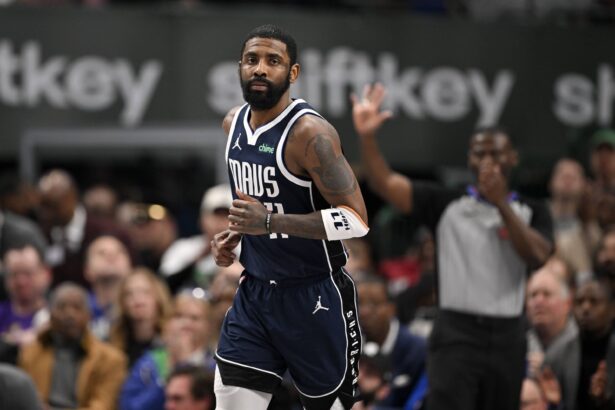
Cam Thomas just hit the open market in the most abrupt way possible. Right after the trade deadline, the Nets waived the 24-year-old guard, ending a tense stretch where his scoring pop never fully matched the team’s direction.
Even with a messy season, Thomas still produced: 15.6 points and 3.1 assists in 24 games (eight starts) after missing 20 games with a left hamstring strain.
He was on a one-year qualifying offer worth $5.9 million, basically an expiring bridge year that set him up to reach free agency. The Nets tried to move him before the buzzer, didn’t like what was out there, and chose flexibility instead.
Now we’re going to run through the best destinations for Thomas, based on role, minutes, and fit. And the early interest is already out there: Brandon “Scoop B” Robinson reported the Cavaliers, Rockets, Timberwolves, Clippers, Raptors, Knicks, and Pacers as teams he’s heard with interest once Thomas clears waivers.
Cleveland Cavaliers
The Cavaliers are a fit because they’re already a high-level team, but there’s still a very specific place where more scoring actually matters.
Start with the baseline. This season, the Cavaliers sit 8th in offensive rating (117.7) and 12th in defensive rating (114.1). That combination is why they’re 9th in net rating (+3.6). In plain terms: they’re a top-10 offense, an above-average defense, and the overall profile screams “playoff team,” not a fake regular-season heater.
Now, the part that connects directly to Cam Thomas: bench production. The Cavaliers’ bench is scoring 33.2 points per game, which ranks 22nd in the league. That’s not a disaster, but it is a clear weakness compared to the teams they’re trying to beat in May and June. When your offense is already top-10, you don’t need a new system. You need to stop the bleeding in the minutes where the stars sit.
The Harden trade is what sharpens the logic. The Cavaliers added James Harden to raise their half-court ceiling next to Donovan Mitchell. Harden is averaging 25.4 points and 8.1 assists this season, which tells you what the team is buying: control, creation, and late-game offense. But it also means the rotation is going to lean into staggered minutes and defined roles. That’s where Thomas wins: not as a primary engine, but as a “second-side attacker” who turns advantages into points.
If Harden bends the defense with pick-and-roll and forces a tag, the ball is going to spray to the wing. Thomas’ value is that he can immediately punish that rotation with a quick pull-up or a straight-line drive before the defense resets. Next to Mitchell, it’s similar: when opponents load up to take away the first drive, Thomas becomes the release valve who can still create a decent shot without the possession dying.
Houston Rockets
The Rockets are the cleanest “contender add” fit for Cam Thomas because they’re already winning at a high level, but they’re doing it in a way that leaves an obvious gap in the rotation.
Start with where they actually sit: 31-19, 4th in the West. That’s not a team shopping for upside. That’s a team protecting seeding and trying to solve specific problems before April.
The first problem is the glaring one: 29.6 bench points per game, 29th in the league. For a team with real postseason goals, that’s loud. It means the bench isn’t consistently winning its minutes with scoring. It’s surviving. And that’s exactly where Thomas can matter without needing to touch the starting five dynamic.
The second problem is how their bad nights look. When the offense gets loose, the turnovers snowball, and the whole game becomes a slog. The Hornets loss is basically the template: 18 turnovers, 27 points off turnovers allowed, and the Rockets couldn’t find a second scorer behind Kevin Durant. That’s not a “scheme” issue. That’s a “we need another guy who can just get two points” issue.
Now this isn’t some rebuilding group anymore. Durant is putting up 26.2 points per game and has been the engine for a lot of their half-court reliability. Amen Thompson is having a real breakout (17.8 points, 7.6 rebounds, 5.5 assists), which is why the Rockets can keep the defense and transition pressure intact even when lineups shift.
So the pitch for Thomas is simple, and it’s not sacrificing his tools. Just give Durant and Amen one more release valve so the bench minutes stop being a scoring drought. On a team that’s already 4th in the West, that’s the kind of small add that can swing a series.
Minnesota Timberwolves
The Timberwolves are 32-20 and sitting sixth in the West, and they look like a real playoff team on both ends. Their efficiency profile backs it up: they’re sixth in offensive rating (118.0), sixth in defensive rating (113.2), and they’re also fourth in team 3-point percentage (37.7%).
So why would they want Cam Thomas if they already shoot it and already defend? Because the one area that still feels a little thin is self-made scoring when the first option gets walled off, and the game slows down.
Their bench production is fine, but not scary: 32.8 points per game off the bench, which sits in 23rd league-wide. That’s the difference between “we survived the non-star minutes” and “we won them.”
The roster moves matter here. Mike Conley is back in the mix after being waived, which helps the second unit function with real organization. And they just added Ayo Dosunmu, who’s having a big efficiency year (15.0 points per game, 45.1% from three) and gives them another reliable two-way guard.
That combination is exactly why Thomas fits. Conley and Dosunmu can handle the “keep it clean” possessions: get into the set, move the ball, defend their position, and keep the turnover count under control. Thomas is the opposite type of tool. He’s the “the possession is dead, but it’s not dead” guy. He averaged 15.6 points in only 24.3 minutes this season, and he can get a shot off against a set defense without needing a perfect advantage created for him.
For the Timberwolves, that’s the pitch: you don’t need him to change who you are. You need him to win the handful of minutes every night where the offense gets stagnant, Anthony Edwards sits, and everything turns into tough pull-ups. Thomas can manufacture those points, and that can swing a playoff series.
Toronto Raptors
The Raptors’ problem is obvious every time an opponent goes zone: they’re daring them to shoot, and too often it works. The Raptors see a ton of zone looks because teams don’t respect their perimeter shooting, ranking 24th in three-pointers made per game (11.5).
The numbers match the eye test. The Raptors are near the bottom of the league, too, in team 3-point percentage, sitting around 34.4%. That’s why a scorer like Thomas makes sense even if he isn’t a pure sniper. He changes the geometry by forcing on-ball attention and getting into pull-ups and drives that break the shell. Against zone, “shot creation” is a skill, not a luxury.
Immanuel Quickley is clearly the guard opponents actually fear, and he leads the Raptors in made threes this season. But outside of Quickley, they don’t have a lot of guards who can reliably go get 18–22 on a random Tuesday when the offense bogs down. That’s the lane Thomas fills: not “run the team,” but “give the Raptors a second guard who can self-generate points when the game is stuck.”
The standings context makes the urgency real. The Raptors are 5th in the East at 31-22. They can’t afford long dead spells, and the bench has been more steady than explosive: 32.0 bench points per game (24th in the league).
Add a scorer who can bend a possession, and suddenly the zone problem is less crippling because the defense has to guard the ball instead of just guarding space.
New York Knicks
The Knicks are running second in the East, and they’re already one of the best offenses in the league. Their numbers are elite: third in offensive rating (120.3), third in team 3-point percentage (38.0), and fourth in net rating (6.2).
So the argument for Cam Thomas here isn’t “save the offense.” It’s upgrading the part of the offense that matters most in the playoffs: the minutes when the stars sit, the pace drops, and you still need points.
The Knicks’ bench scoring is the tell. They’re at 31.1 points per game off the bench, which is simply low compared to the league’s better second units (27th). And the rotation has been tight enough that Jordan Clarkson’s role has reportedly shrunk hard, to the point where he’s barely seeing real minutes lately.
They also just added Jose Alvarado, which helps the floor and the defense, especially with the guard depth taking hits. But Alvarado is not a bench bucket-getter. He’s a connector and a persky defender.
That’s where Thomas slots in cleanly. His value is that he doesn’t need the offense to look pretty to score. He still draws real attention because teams know he’ll keep firing, and he can get to his pull-up spots. On a roster that already has Jalen Brunson to run the main show, plus high-level spacing and finishing around him, Thomas can be simplified into a very specific job: win the early second and early fourth when Brunson sits, and punish the “load up on the stars” strategy when the game tightens.
The Knicks don’t need another decision-maker. They need a scorer who forces the defense to guard the entire 24 seconds. If Thomas is willing to embrace that role instead of chasing a bigger one, this is one of the cleanest fits on the board: great team, clear lane, and a weakness that matches his strongest skill.