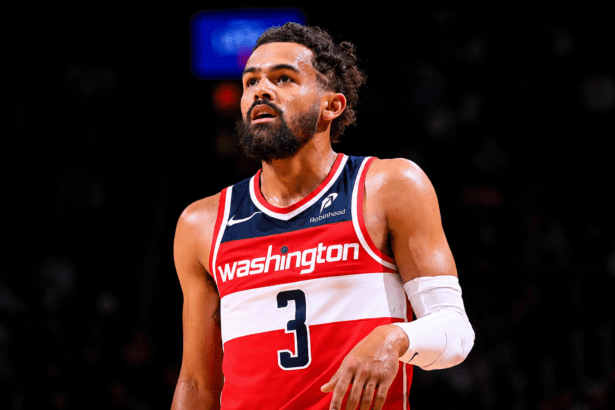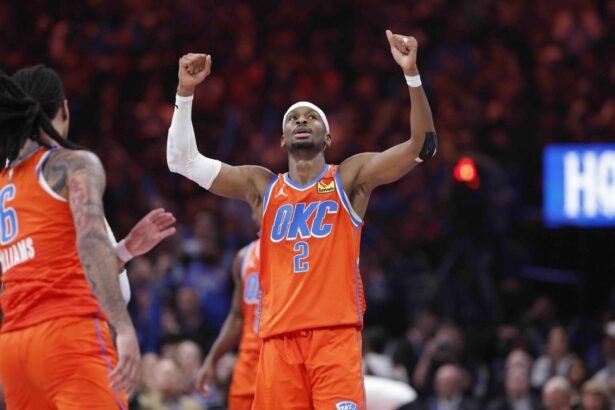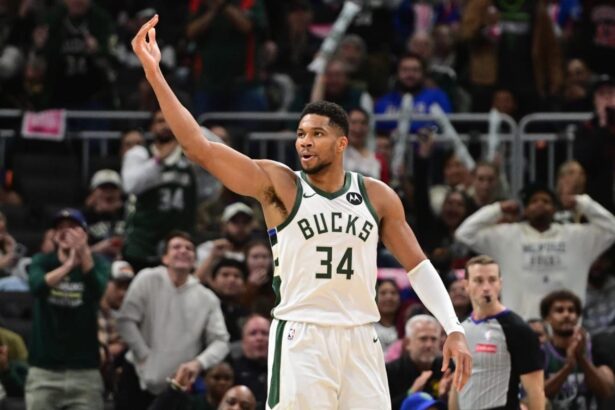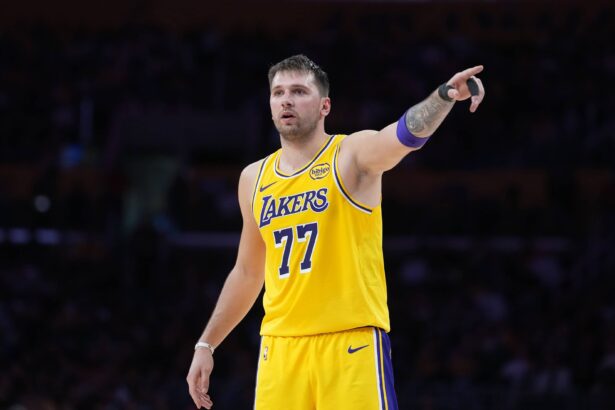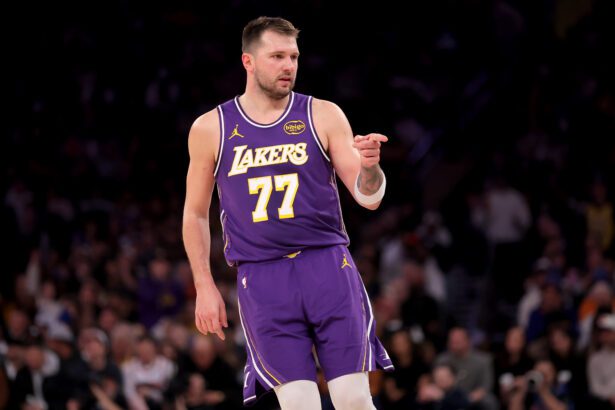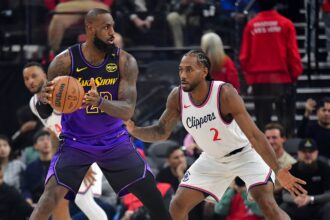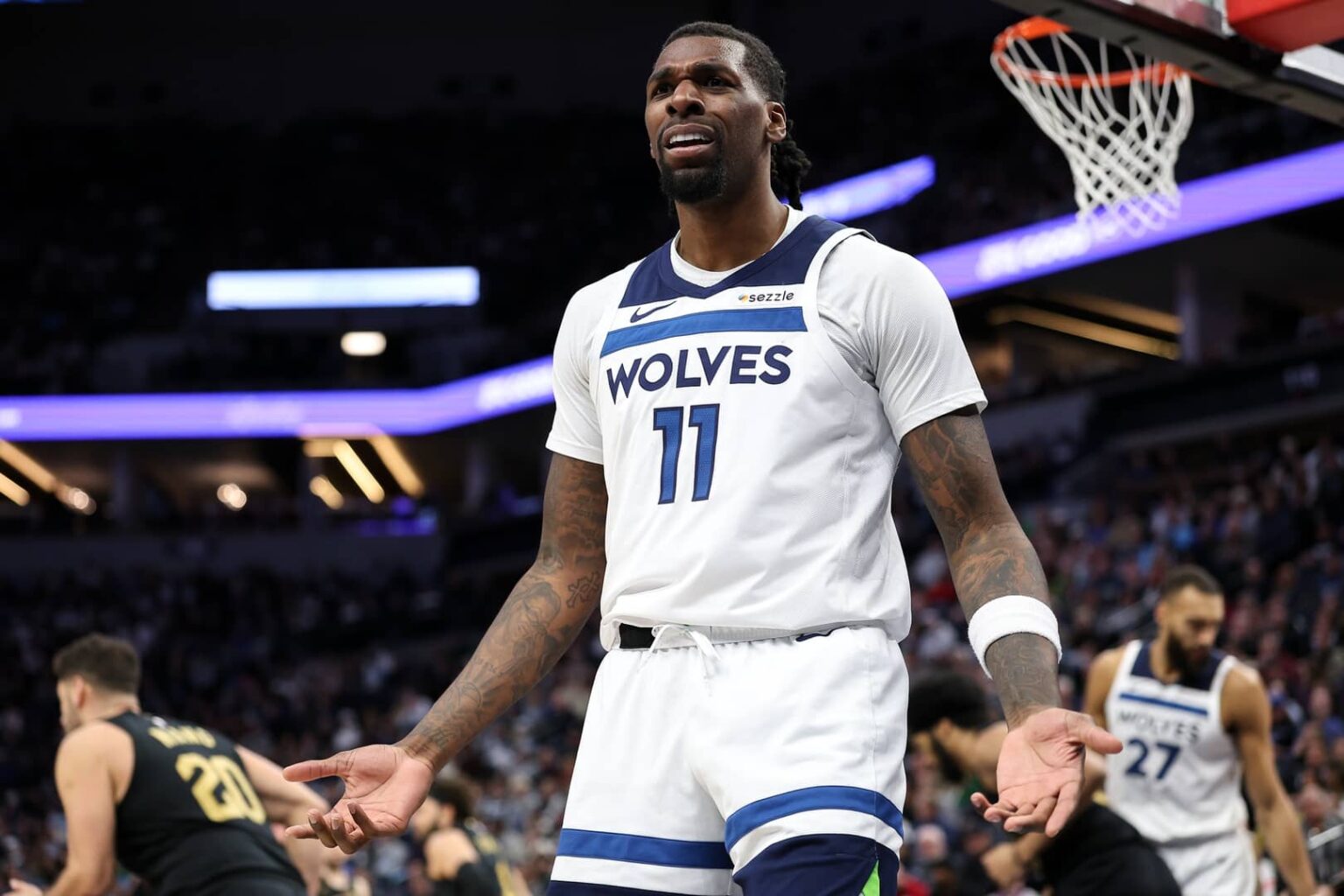
The 2026 offseason already has the obvious trade names. Giannis Antetokounmpo, Kawhi Leonard, Ja Morant, Jaylen Brown, and other stars are always going to control the rumor cycle. That is normal. Star trades bring clicks, panic, and trade machines.
But most NBA offseasons are not only built around superstars. Many real trades happen in the second layer. These are players with good contracts, strange fits, crowded rosters, timeline issues, or teams that need to restructure financial issues. Those names don’t always dominate the headlines, but they are often more realistic.
That is where this list comes in. These seven players are not all being openly shopped right now. Some have direct reporting around them. Others are more logical trade candidates because of salary, role, team direction, or roster overlap. The point is not to force fake rumors. The point is to find players who could move if their teams decide the current build has hit a limit.
Here are seven underrated trade candidates to watch in the 2026 NBA offseason.
1. Jarrett Allen
Jarrett Allen is the best underrated trade candidate of the summer because the roster logic is very easy to see. The Cavaliers are not a bad team. They went 52-30, reached the Eastern Conference Finals, and had enough talent to be one of the last four teams standing. But the Knicks swept them, and that kind of ending forces a serious roster review. The loss was not only about one bad matchup. It exposed the frontcourt question again.
Allen had a strong season. He posted 15.4 points, 8.5 rebounds, and 1.8 assists while shooting 63.8% from the field. He is still one of the most efficient centers in the league, and his job is very clear. He screens, rolls, finishes around the rim, protects the paint, and gives the Cavaliers a stable defensive base. That has value.
The contract is the bigger part. Allen’s three-year, $90.7 million extension starts in 2026-27, with a $28.0 million salary. That is fair for a starting center, but it is heavy when Evan Mobley is already starting his max contract and Donovan Mitchell is on a star deal. The Cavaliers are paying serious money to keep a two-big structure alive, as they will be the most expensive team in the league next season with a projected $212.0 million payroll.
That structure has to win the physical battle in the playoffs. If it doesn’t, Allen becomes the easiest large salary to discuss. Mitchell is the lead guard. Mobley is the long-term defensive star. James Harden’s option and next contract are a separate issue. Allen is the one player who could bring back a different type of wing, more shooting, or a package that changes the roster shape.
The Cavaliers don’t have to dump him. That would be weak asset management. Allen is too good for that. But if another team offers a starting wing, a stretch big, or two real rotation pieces, the front office has to listen. Teams always need centers who can defend, finish, and play playoff minutes. Allen is not a superstar name, but he is one of the most realistic impact players who could move.
2. Malik Monk
Malik Monk already has trade noise around him, but he still feels underrated because he is not viewed as a major offseason piece. That is probably wrong. Guards who can score, create, and change second units always have a market, especially when the contract is movable.
The Kings were already tied to Monk trade discussions during the season. Yahoo reported in December that Monk had been placed on the trade block before the deadline, while he is owed $20.2 million in 2026-27 with a $21.6 million player option for 2027-28. That is a normal trade salary in the current NBA. It is big enough to match money, but not so big that teams run away from it.
Monk’s 2025-26 season was not his best. He averaged 12.5 points, 1.9 rebounds, and 3.0 assists while shooting 43.8% from the field. Those numbers are down from his better Kings seasons, but the skill set is still clear. He can score off the dribble, play pick-and-roll, attack closeouts, and bring pace to a second unit.
The Kings’ situation is the reason he belongs here. They had a disaster of a season, going 22-60 as the 14th seed in the West, with a squad built to be competitive around Domantas Sabonis, Zach LaVine, and DeMar DeRozan as the big pieces. The Kings struggled with health, shooting, defense, and overall talent in the roster, becoming one of the most shocking stories of the season.
As the roster is widely expected to be broken up, Monk is one of the few mid-sized contracts who can bring back something useful. He is not a franchise piece. He is not a player they have to protect at all costs. If the Kings want more young players or future draft value, Monk is an obvious salary to use.
The Lakers are a team to eye in rumors, because Luka Doncic needs guards who can shoot, attack, and play off his passing. According to Sports Illustrated’s Ryan Shea, they keep eyeing Monk as a backcourt reinforcement around Doncic. That kind of interest fits the player. Monk is not a perfect defender, but his offensive fit next to a high-usage passer is real.
Monk is not the biggest name. But he is the kind of player who can move fast once the guard market opens. If a contender needs bench scoring and the Kings start to rebuild the squad, this one is easy to believe.
3. P.J. Washington
P.J. Washington is one of the most interesting names because he was almost frozen out of trade talk during the season. That was not about his value. It was about his contract. Washington’s four-year, $90.0 million extension made him ineligible to be traded during the 2025-26 season. That restriction is gone for offseason planning, so his name should come back.
Washington had a solid but uneven year. He put up 14.2 points, 7.0 rebounds, and 1.8 assists while shooting 45.0% from the field. His three-point shooting was a problem, as he fell to 32.5% from three. Still, his defensive value remained a strong point in a rebuilding year for the Mavericks.
The Mavs’ direction is the reason this could happen. Cooper Flagg is now the center of the future. That changes the frontcourt. Washington is a good player, but he overlaps with Flagg in some areas. He is a forward who wants minutes at the four, defends bigger players, and needs enough spacing around him. The Mavericks can keep him, but they also have to ask whether his contract is better as a trade piece.
The salary is not crazy. Washington sits at $19.8 million in 2026-27, then $21.4 million, $23.0 million, and $24.6 million after that. For a starting-level forward, that is not a bad number. But the length is important. He is not an expiring contract. A team trading for him has to see him as part of the next four years.
That also gives the Mavericks leverage. Washington is not dead money. He is 27, defends, rebounds, and has playoff experience. A team needing a power forward could talk itself into him fast. Washington is not a star rumor, but he is exactly the kind of contract that can move in July. The Mavericks need better and younger roster balance around Flagg’s timeline. Washington could be the piece that helps them get it.
4. Grayson Allen
Grayson Allen is not an exciting name for casual fans, but he is a very real trade candidate. The Suns need flexibility, size, and a better roster structure around Devin Booker. Allen is one of the easiest players to move because his contract is useful, and his skill set has a market.
Sports Illustrated listed Allen among the Suns’ top trade candidates this offseason, noting that he is set to make $18.1 million in 2026-27. That salary is important. It can help match for a bigger frontcourt player, but it is not so high that another team has to rebuild its payroll to take him.
Allen’s season was strange but productive. He averaged 16.5 points, 3.0 rebounds, and 3.8 assists while shooting 40.3% from the field. His three-point percentage dipped to 34.9%, which is low for him, but he also had career highs in points, assists, and three-point attempts. That matters for trade value because it shows he was more than a standstill shooter.
The question is team need. The Suns have enough guards and shooters with Jalen Green, Dillon Brooks, and Royce O’Neale. What they don’t have is the right frontcourt mix. If they want a power forward or a more physical defender, Allen is the contract that makes sense in a deal.
For another team, Allen is easy to use. He can start or come off the bench. He can play next to a star because he doesn’t need high usage. He can attack closeouts, make quick passes, and punish weak help defense. His defense is not special, but he competes enough to stay playable in many matchups.
The Suns shouldn’t move him just to move him. If the return is weak, keeping him is fine. But if Allen can help them get a bigger forward or a better defensive fit, he should be on the table. That makes him one of the better underrated names in the market.
5. Daniel Gafford
Daniel Gafford is a good trade candidate because he is useful, but his role is not locked. The Mavericks have Dereck Lively II, Cooper Flagg, and a roster that needs to get younger and more balanced. Gafford can help a lot of teams, but he may not be the best long-term use of money for the Mavericks.
The salary is very tradable. Gafford will earn $17.3 million in 2026-27, with his deal running through 2028-29. He agreed to a three-year extension worth around $54.0 million last year, specifically lower than a number that would have seen him ineligible for a trade. For a long time during the season, he was linked with the Pacers, and the Lakers were in the discussion as well.
The production dipped this season. Gafford finished 2025-26 at 9.5 points and 6.9 rebounds per game, while adding 1.1 assists, 0.8 steals, and 1.3 blocks on 65.5% from the field. That is not star production, but he is still a very solid center.
The Lakers connection is obvious. Doncic needs a vertical center who can screen, catch lobs, and finish easy points. Gafford already did that with him before. ESPN proposed a deal that had Gafford going to the Lakers for Jarred Vanderbilt, Dalton Knecht, and the No. 25 pick in the 2026 NBA Draft. That is not a report of an active deal, but it shows how simple the basketball fit is.
The Mavericks have to decide what they want from the frontcourt. Lively is younger, although very injury-prone. Flagg is the franchise piece. Gafford is good, but he can become expensive if he is only a role player in the new build under Masai Ujiri.
That is why he is a strong, underrated candidate. Centers who finish 65.5% from the field, block shots, and run the floor don’t sit on the market long. If the Mavericks want guard help, draft value, or wing depth, Gafford is one of their most logical trade chips.
6. Naz Reid
Naz Reid is the least obvious name here because the Timberwolves just paid him. There is no strong report saying the Timberwolves are shopping him, but his future might look uncertain after their playoff elimination in the second round.
Reid signed a five-year, $125.0 million contract with the Timberwolves, so he is no longer on a small-value deal. His new contract started at $21.6 million in 2025-26, then rises to $23.3 million in 2026-27. It keeps going up every year and runs through 2029-30, when he is set to make $28.4 million. That is fair for a skilled frontcourt scorer, but it is still real money for a Timberwolves team already paying Anthony Edwards, Julius Randle, and Rudy Gobert.
The player is good. Reid averaged 13.6 points, 6.2 rebounds, and 2.2 assists while shooting 45.6% from the field. He can play center, play some power forward, shoot threes, attack slower bigs, and create bench offense. That is why the Timberwolves paid him. He is not a normal backup big.
The trade logic comes from the roster. The Timberwolves already have Anthony Edwards as the max star. Julius Randle also returned on a three-year, $100.0 million contract, and Rudy Gobert remains a major salary. The frontcourt is expensive. Reid is valuable, but valuable players are also the ones who bring back pieces.
If the Timberwolves need a guard, more shooting, or a different playoff shape, Reid could be the contract teams ask about. He is younger than many veteran bigs, more skilled than most bench centers, and good enough to start for some teams. That gives him trade value.
The Timberwolves shouldn’t rush to move him. His skill set helps Edwards because he opens the floor more than a traditional center. But if the next version of the roster needs a bigger backcourt move, Reid is one of the few non-Edwards pieces who could headline a serious offer.
This is the kind of underrated candidate that can become real quickly. Not because the Timberwolves want to dump him, but because they won’t be able to move Rudy Gobert for a great package, so Reid might be the only big piece that can retrieve a good trade offer.
7. Wendell Carter Jr.
Wendell Carter Jr. is a quiet trade name, but the logic is strong. The Magic don’t need to move him because he is bad. They could move him because his value is probably higher now, and because their cap sheet is getting much tighter.
Carter just helped himself in the Pistons series. He put up 11.0 points, 7.0 rebounds, and 2.9 assists in seven playoff games, and outplayed Jalen Duren for the first six games before Duren finally had a 15-point, 15-rebound Game 7. That kind of series helps Carter’s market because teams always need centers who can hold up physically in the playoffs.
The Magic can use that value. Paolo Banchero is the main piece, and the roster still needs better offensive spacing around him. Carter is useful, but he is not a high-volume shooter and doesn’t fully open the floor for Banchero, Franz Wagner, Jalen Suggs, and Desmond Bane. If the Magic want a better offensive fit, Carter is one of the easiest contracts to move.
The money is also important. Carter made $10.9 million in 2025-26, but his salary will jump to $18.1 million in 2026-27. Then it rises again to $19.6 million in 2027-28 and $21.0 million in 2028-29. That is still a fair contract for a starting-level center, but it is no longer cheap bench money.
The Magic already have a lot of money tied to Banchero, Wagner, Suggs, and Bane. Those four players are slated to make $154.9 million combined in 2026-27, with the full team sitting at $207.9 million in guaranteed salary before smaller roster decisions. That puts the Magic close to the first apron and limits how much they can add without trading salary out.
That is why Carter makes sense as the apron-relief candidate. He is good enough to bring back value, but not too important to block the Magic from changing the roster. If the Magic can turn him into a cheaper center, more shooting, or a better offensive fit next to Banchero, this is the type of move they should study.
Final Thoughts
The biggest trade rumors will stay around superstars. That is how the NBA works. But the real 2026 offseason could also be shaped by this second group of players.
Allen could change the Cavaliers’ frontcourt build. Monk could give a contender bench scoring. Washington could help the Mavericks reshape around Flagg. Grayson Allen could be used by the Suns to fix the frontcourt. Gafford could become the center target for a team that needs rim pressure. Reid could be a surprise salary piece if the Timberwolves chase a different roster shape. Carter could be the quiet center who moves because the Magic need more offense.
None of these names needs fake drama. The basketball logic is enough. Each player has a contract, role, or team situation that makes a trade possible. That is why these players could become real trade targets once the superstar market slows down.