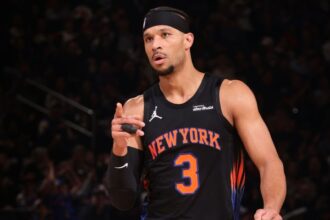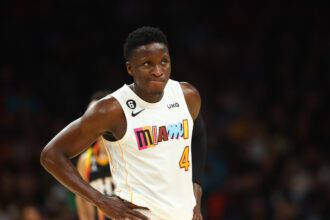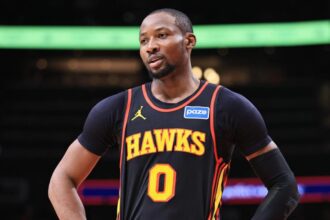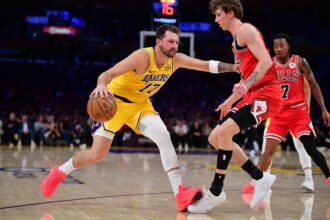
The Bulls are approaching the February 5 trade deadline from an unusual place, not desperate enough to blow it up, but not secure enough to sit on their hands either.
They’ve hovered around the play-in line most of the season at 23-24 while sitting 10th in the East, and the league-wide read on them right now is pretty clear: they want to act like buyers, not sellers.
Eric Pincus reported that, per multiple league and agent sources, the Bulls are believed to be among the more active teams seeking a deal, with the goal of boosting their postseason chances while still prioritizing young, athletic additions that fit the timeline.
That “buy while staying young” approach only makes sense if the front office truly believes the foundation is worth building around, and the Bulls have been signaling that they do. The early-season noise around a teardown has cooled, largely because the backcourt has given them a real identity:
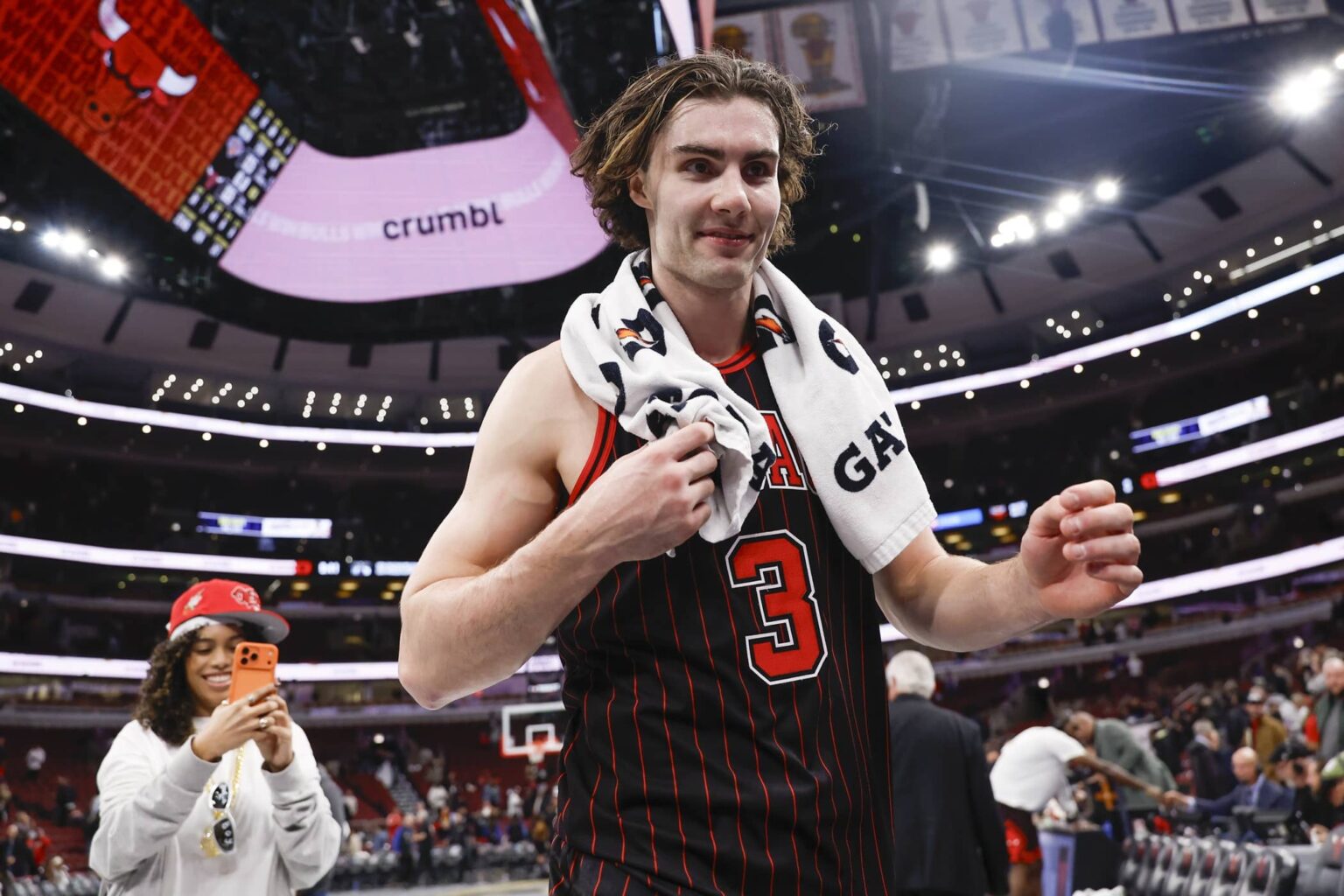
Josh Giddey has been a nightly engine, averaging 18.8 points, 8.7 rebounds, and 8.8 assists, production that forces opponents to guard the whole floor because he’s creating shots even when the offense stalls.
Alongside him, Matas Buzelis has looked like an actual long-term piece instead of a developmental project, putting up 14.8 points and 5.2 rebounds with 47.6% from the field, while already flashing the kind of length and defensive playmaking that can scale in higher-leverage games.
So the deadline isn’t just about “adding talent,” it’s about choosing what kind of team the Bulls want to be in March and April. If they’re serious about buying, the move should be targeted, something that stabilizes the rotation, helps them win playoff-style possessions, and doesn’t block the development of the Giddey-Buzelis pairing.
In that lane, the more relevant question is what a “buyer” version of this team actually looks like. That’s the premise here, and that’s why we’ll be predicting the Bulls’ most logical trade deadline moves, and the types of deals they can realistically chase before February 5.
An Aggressive Move For The Frontcourt
Coby White is exactly the type of guard who gets real traction in late-January calls: productive, plug-and-play, and on an expiring number that doesn’t force a front office to rip up its cap sheet. He’s putting up 19.0 points, 3.5 rebounds, and 4.7 assists on 45.7% from the field and 37.0% from three this season, and that combination of creation plus shooting is why his name keeps coming up in deadline conversations.
The reporting on White is loud enough to matter. Joe Cowley of the Chicago Sun-Times has had White positioned as the Bulls piece “most often discussed” in ongoing trade talks, and he’s also tied White to outside interest, including the Timberwolves. That part is important context for why a guard like White can be used to chase a frontcourt solution: if the Bulls are trying to “buy” without pretending they’re a contender, flipping one of their biggest assets for a structural defensive upgrade is the kind of move that actually changes what they are on the floor.
That’s where Mitchell Robinson enters the picture. The Knicks have a real incentive to at least listen, because Robinson is sitting on an expiring contract and his deal is one of their cleanest trade tools. Robinson’s expiring money could be a decision point for the Knicks: whether his contract slot is more valuable as trade ballast or as on-court impact. From a basketball standpoint, Robinson is still a specialist in the best sense. He’s averaging 4.9 points, 9.3 rebounds, and 1.2 blocks in 19.7 minutes, shooting 67.6%, and he’s one of the league’s nastiest possession creators because of his offensive rebounding profile. For the Bulls, that’s the pitch: you’re not just buying a center, you’re buying rim deterrence, paint physicality, and extra possessions, three things that tend to show up in playoff-style games.
The Knicks’ guard-shopping chatter is the other angle that makes this feel like more than a random trade machine idea. Ian Begley reported for SNY that Jose Alvarado remains on the Knicks’ radar. If the Knicks think they can address point-of-attack pressure and second-unit organization with a smaller guard move, it opens the door to using Robinson’s expiring slot to chase a more impactful perimeter scorer and shot-maker.
The money basically lines up clean. Robinson’s 2025-26 salary is $12.9 million, which sits right in White territory for matching purposes. Mohamed Diawara is a small add-on contract, so he functions more like a developmental flier than a necessary piece. And if you’re attaching a real pick, the Knicks’ most realistic first to dangle has been widely framed as that 2026 top-eight protected first-rounder from the Wizards.
Chicago Bulls Receive: Mitchell Robinson, Mohamed Diawara, 2026 first-round pick (via WAS)
New York Knicks Receive: Coby White
From the Bulls’ side, the logic is simple: if you’re going to lean into being buyers, stop buying guards and start buying an identity. Robinson gives them a legitimate interior presence to defend the rim and the paint, and he changes the possession battle immediately. From the Knicks’ side, it’s a cleaner way to convert an expiring center slot into a guard who can actually tilt offense, while still leaving them paths to pursue a backup point guard option that’s already been tied to them in reporting.
Controversy Bringing An Injured Star
This is the kind of deadline swing that would split the Bulls fanbase in half. Not because Anthony Davis can’t still tilt playoff series, he can. It’s because you’d be trading for him while he’s hurt, while the reporting around his recovery has been noisy, and while the Mavericks would be trying to reframe their roster around flexibility and depth instead of one massive salary slot.
First, the health part. Davis suffered ligament damage in his left hand in early January. He was expected to miss about six weeks and would be re-evaluated, with no surgery expected at the time. ESPN’s reporting went in a more severe direction, saying he was expected to undergo surgery and miss “several months,” with sources suggesting his season could effectively be over given the Mavericks’ broader situation. That contradiction is the controversy. If you’re the Bulls, you’re not buying a clean asset, you’re buying a medical timeline.
Now the money. Davis is on a max, $54.1 million in 2025-26. Dante Exum is a small add-on at $3.3 million, but he’s also been out all season. On the outgoing side, Nikola Vucevic is at $21.5 million and expiring after this season. Kevin Huerter is at $18.0 million. Isaac Okoro is at $11.0 million. Dalen Terry is at $5.4 million. That outgoing pile is basically the only way a Bulls-Davis concept even breathes under matching rules.
Basketball-wise, the fit is obvious if Davis is himself when the postseason hits. Even in a limited sample this season, he’s still at 20.4 points, 11.1 rebounds, and 2.8 assists on 50.6% from the field. Drop that next to a Bulls roster that already has guards who can create, and you’ve suddenly got a real defensive ceiling and a half-court release valve. Vucevic is still productive at 16.8 points, 9.1 rebounds, and 3.8 assists on about 50.9% shooting, but he doesn’t solve the same playoff problems that Davis does.
The “hometown” angle is always going to hover here, even if people try to downplay it. Davis has been linked to the Bulls in rumor cycles for years because it’s the hometown franchise, and even that has created pushback. Rich Paul publicly dismissed certain Davis trade chatter as “fake news,” and there have been repeated conversations in the media ecosystem about the pressure of playing at home. That’s relevant because this deal would not be quiet. It would be the loudest move the Bulls have made in a decade, and it would come with immediate expectations even if Davis doesn’t touch the floor until late March.
There’s also a pick detail that makes this framework feel like something the Bulls could actually stomach. The Bulls control a top-14 protected first from the Trail Blazers that can convey as soon as 2026 and rolls over through 2028 before converting to a second if it never conveys. That’s the kind of “real” first that can grease a superstar discussion without the Bulls nuking their own future.
Chicago Bulls Receive: Anthony Davis, Dante Exum
Dallas Mavericks Receive: Nikola Vucevic, Kevin Huerter, Isaac Okoro, Dalen Terry, 2026 first-round pick (via POR)
If you’re asking me which side I lean toward, I lean Bulls if, and only if, their medical intel says Davis is coming back in time to matter. This is a bet on a playoff ceiling, not a bet on February regular-season wins. If there’s real doubt about surgery or the return window, then you’re basically trading a huge chunk of your rotation and a valuable first for a headline and a prayer.
A Roster Aimed To Be Competitive
On paper, this roster would be built around a clear idea: win possessions with size, protect the rim, and let the guards keep the offense organized while the frontcourt does the damage defensively.
The starting group of Josh Giddey, Ayo Dosunmu, Matas Buzelis, Anthony Davis, and Mitchell Robinson would be overwhelming in the paint. Davis is still producing at an All-NBA level when available, at 20.4 points, 11.1 rebounds, and 2.8 assists with 1.7 blocks on 50.6% from the field this season. Pairing him with Robinson, who’s at 9.3 rebounds and 1.2 blocks in 19.7 minutes while grabbing an elite 4.9 offensive rebounds per game, gives the Bulls a two-big structure that can control the glass and shrink the floor. It also lets Davis roam more as a help defender, which is where he’s historically been most punishing.
On the perimeter, Dosunmu’s role would be the connective tissue. He’s at 14.5 points, 3.4 assists, and 2.7 rebounds this season, and his value in a lineup like this is that he can defend up a position, push tempo, and keep the ball moving without needing high usage. Buzelis gives the lineup its modern forward element, a scorer who can also cover ground defensively. He’s averaging 14.8 points and 5.2 rebounds with 1.4 blocks, which matters if this group is trying to turn stops into early offense. Giddey is the swing variable. His season line depends heavily on role and health, but the concept here is straightforward: a bigger initiator who can feed the frontcourt, punish switches, and make sure the offense doesn’t die late in the clock.
The second unit is where this build tries to stay competitive instead of surviving. Tre Jones would run the bench group as a stabilizer, and his production supports that profile: 12.4 points and 5.8 assists on 55.0% from the field. Patrick Williams becomes a role-specific piece, a defensive forward who can space the floor when he’s right. He’s at 6.6 points with 40.6% from three this season, which is enough to keep defenses honest if the shot volume is there. Zach Collins gives you a functional backup big at 9.7 points and 5.6 rebounds on 57.8% shooting, and he can survive in lineups that need a little more passing and spacing than Robinson provides. Noa Essengue is more developmental than rotation-reliable right now, but he’s a body you can use selectively as a change-of-pace forward.
Closing games, the interesting wrinkle is optionality. If you need maximum defense and rebounding, Davis-Robinson is a brutal interior pairing. If you need more spacing, Robinson is the one you can downshift, keeping Davis at the five with Buzelis and three guards around him. Either way, the identity is consistent: protect the rim, win the glass, and make every opponent possession feel crowded.