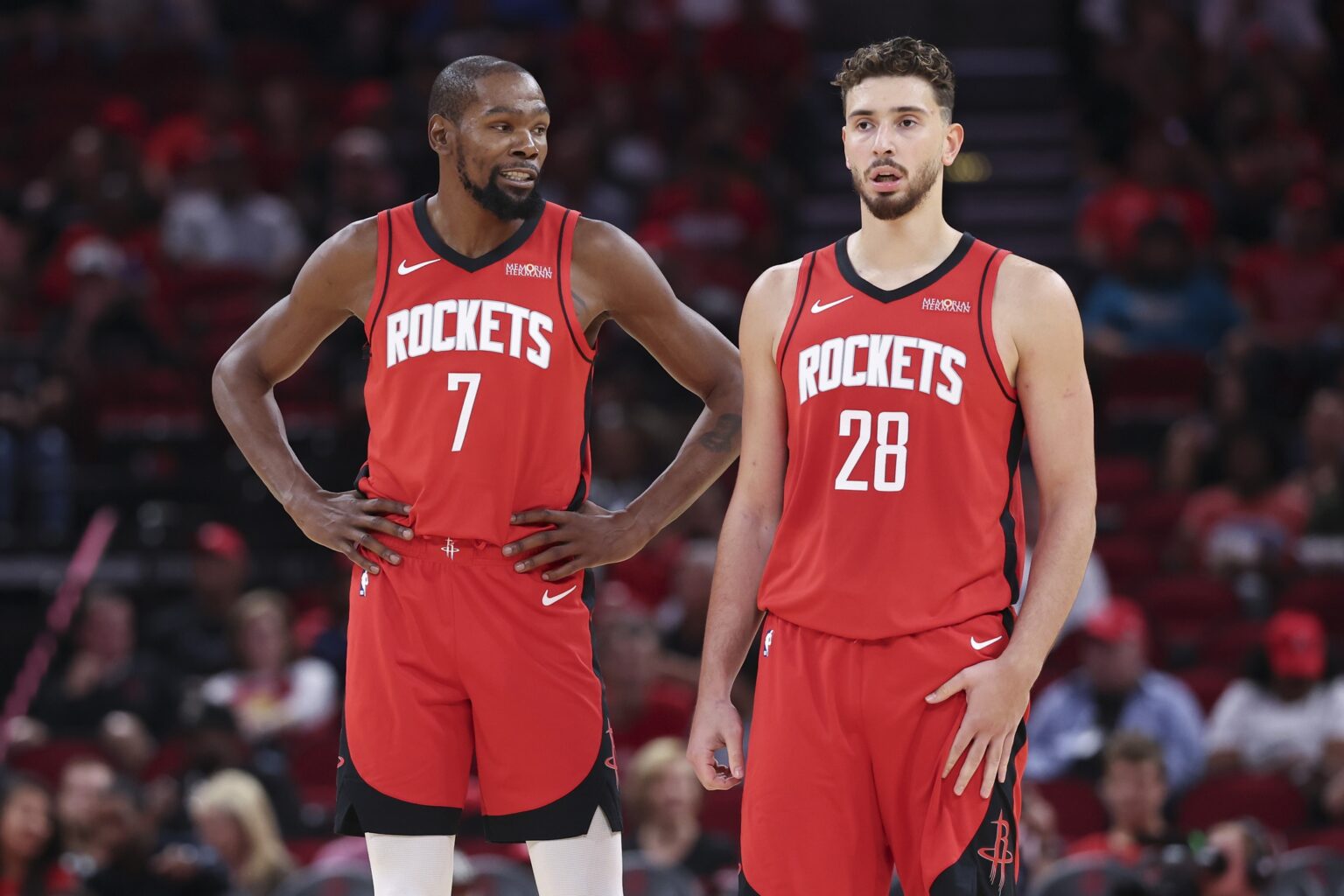
The Rockets are heading into the February 5 trade deadline with a pretty clear internal compass: don’t force a point-guard splash, and instead patch the roster where the margins actually decide playoff games.
ESPN’s Michael C. Wright said on the Howdy Partners podcast that Ime Udoka told him the Rockets are not going to get a point guard at the deadline, citing the second-apron constraints and limited maneuverability.
That stance got even more relevant this week because the roster’s most obvious hole isn’t in the backcourt anymore, it’s in the big-man rotation. Steven Adams underwent season-ending ankle surgery after suffering a Grade 3 sprain on January 18, and the team confirmed he’s out for the rest of 2025-26.
Yahoo Sports’ Kelly Iko has since reported the Rockets are weighing whether to add another center via trade or the buyout market. And the other half of the equation is obvious when you watch them: the Rockets need shooting that translates immediately, the kind that forces defenses to stop loading up on Alperen Sengun touches and drives.
So that’s the lens for this piece: five realistic centers the Rockets can target to replace Adams’ role, plus three shooters who can plug in and make an instant impact without changing the team’s identity.
1. Andre Drummond
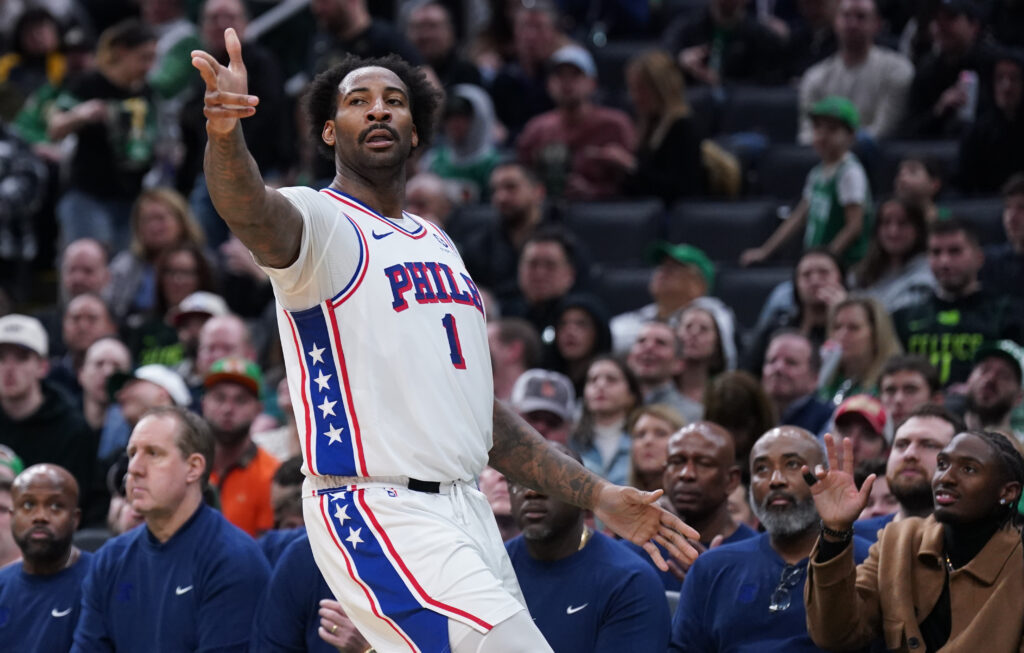
Houston Rockets Receive: Andre Drummond
Philadelphia 76ers Receive: Aaron Holiday, Josh Okogie, 2026 second-round pick
The appeal for the Rockets is simple: if Steven Adams is out of the picture, the fastest way to preserve the “bully ball” identity is to add another center who can win possessions without needing touches. Andre Drummond still does that as well as almost anyone in the league. He’s on a $5.0 million deal for 2025-26 after picking up his player option, and he’s set up to hit free agency again in summer 2026, which makes him a clean, low-risk rental for a contender.
Stat-wise, he’s been exactly what he’s always been: a walking rebound. Drummond is averaging 7.0 points and 8.9 rebounds in 2025-26 while shooting 50.0% from the field. The scoring is whatever. The value is the extra possessions, the ability to survive non-Sengun minutes, and the way he can steady a second unit that needs structure. If the Rockets want to keep playing physical and keep owning the glass, Drummond is one of the most plug-and-play solutions on the market.
The reporting angle is there, too. Keith Pompey of The Philadelphia Inquirer reported the 76ers are willing to consider trading Drummond ahead of the deadline, and the logic checks out: he’s a veteran on a small, movable number, and the 76ers can pivot to cheaper depth if they want to trim the books or re-route minutes.
For the Rockets, the outgoing money is straightforward. Holiday and Okogie are both on minimum-type one-year deals, which keeps the Rockets from touching core rotation salaries just to patch the center spot. The cost is basically a second-rounder plus two end-of-rotation contracts, and the return is a playable, matchup-proof regular-season big who can soak minutes, rebound like crazy, and let the Rockets keep their identity intact when the games get more physical.
2. Nic Claxton

Houston Rockets Receive: Nic Claxton
Brooklyn Nets Receive: Steven Adams, Clint Capela, Tari Eason, 2027 first-round pick (via Suns)
This is the cleanest “go get the right center” swing for the Rockets, because it’s not really about replacing Steven Adams one-for-one, it’s about upgrading the position with a modern playoff big who can survive any matchup. Nic Claxton is making $25.3 million in 2025-26 on his four-year, $97 million deal, so he’s not a cheap add, but the contract is tradable and the role is obvious.
The salary math works because Adams, Capela, and Eason stack into a matching bucket. Adams is at $14.1 million and is now out for the season after ankle surgery, which makes him a pure salary piece in this framework. Capela is at $6.7 million. Eason is at $5.6 million, and he’s headed for restricted free agency this summer after the sides failed to agree to an extension.
And yes, there’s a real-world obstacle: Marc Stein has reported that trade rumors involving Eason are “off target” and that the Rockets aren’t looking to move him. But for a center of that caliber, the trade might switch their stance: Eason’s RFA situation creates risk if the Rockets don’t want to pay a premium number, and packaging him with a first is the type of “serious offer” that actually gets the Nets to pick up the phone.
From the Nets’ side, the logic is simple. They’re 12-33, deep in the lottery, and Claxton is one of their cleanest “cash-out” assets. There’s already league chatter on him: Michael Scotto has reported that teams like the Pacers and Warriors have expressed interest, while also noting the Nets have viewed him as part of their future, meaning the price has to sting. That lines up with what you’d expect, a first-rounder plus real players, not just expiring fluff.
On the court, Claxton is exactly what the Rockets would be buying: 12.5 points, 7.4 rebounds, 4.0 assists, 57.9% from the field, plus the switchable rim protection that plays in May. With Adams sidelined, the Rockets lose a huge possession lever. Claxton doesn’t replicate the offensive rebounding cheat code, but he gives them a cleaner defensive ceiling, a better transition fit, and a center who can play big minutes without getting schemed off the floor.
3. Goga Bitadze
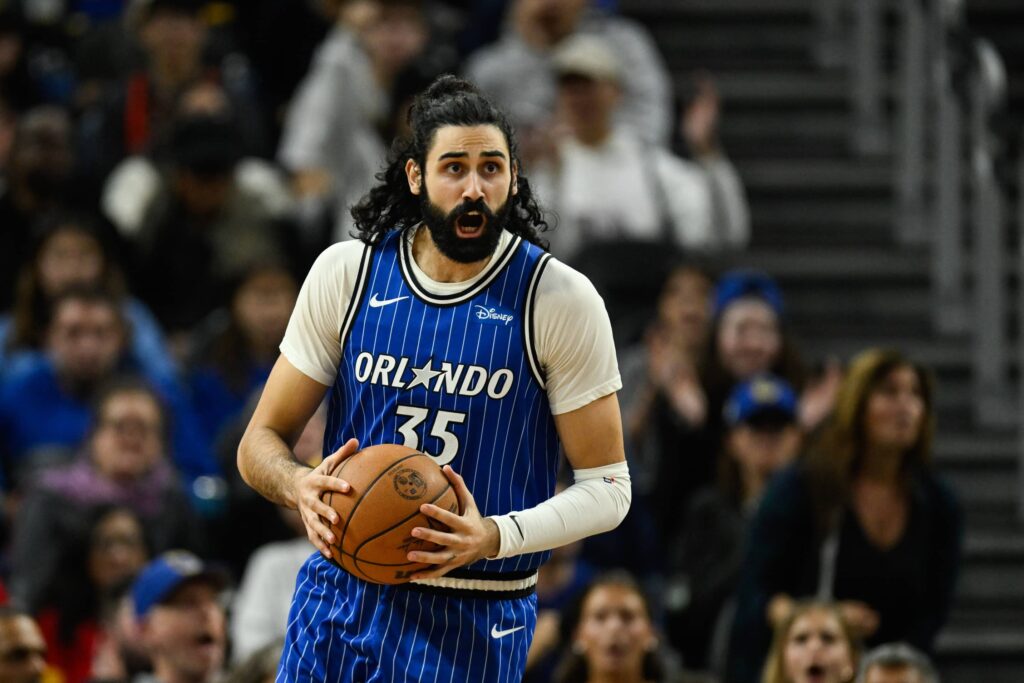
Houston Rockets Receive: Goga Bitadze
Orlando Magic Receive: Clint Capela, Aaron Holiday, 2026 second-round pick (via Bulls), 2026 second-round pick
If the Rockets are trying to survive life without Steven Adams, this is the kind of move that keeps their center rotation functional without forcing a headline swing. Goga Bitadze is on a clean, mid-sized number, $8.33 million in 2025-26, and he’s under contract beyond this season, so you’re not just renting a body for two months.
On the floor, he’s been exactly what you want from a backup five: efficient, physical, and low-maintenance. Bitadze is averaging 5.9 points and 5.2 rebounds while shooting a ridiculous 67.6% from the field. The key detail here is role volatility. He’s been in and out of the rotation at times, including a recent DNP-CD that underscores how matchup-dependent his minutes can be for the Magic.
For the Rockets, the fit is straightforward. Bitadze gives them a real center who can finish plays, protect the paint in short stints, and let them keep their physical identity even when Sengun sits. After Adams’ season-ending ankle surgery, the Rockets have been forced into more wing-heavy looks, but they may explore adding another center before the deadline. This is that solution, without touching the core.
For the Magic, the incentive is flexibility and depth. Capela’s $6.7 million number is easy to stomach, Holiday’s cap hit is in the same low-cost band, and two seconds are the type of “sweetener” that actually matters for a team balancing present competitiveness with long-term optionality. It’s not a blockbuster, it’s a practical deadline trade that solves a real need for the Rockets while giving the Magic movable pieces and picks.
4. Moussa Diabate
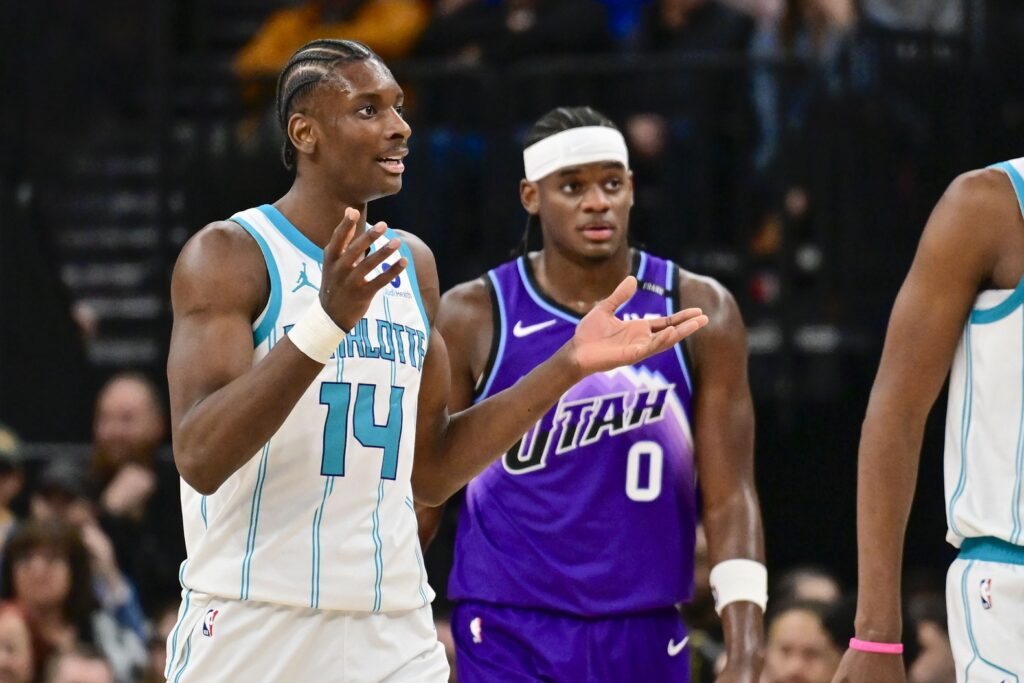
Houston Rockets Receive: Moussa Diabate
Charlotte Hornets Receive: Jae’Sean Tate, 2027 first-round pick swap rights (via Nets)
This is the cheapest way for the Rockets to chase the one thing they’re about to miss the most with Adams out: relentless rebounding minutes that don’t require plays called for them. Diabate is making $2.27 million in 2025-26, which means this is the type of deal you can do without touching any serious rotation salary.
And he’s not just “energy guy” in theory. He is averaging 8.4 points and 8.5 rebounds on 64.4% from the field this season, which is borderline absurd production for a player in this salary tier. He also just had the kind of night that front offices circle in pen: 18 points and a career-high 20 rebounds in a win over the Grizzlies. That’s the profile, he swings the possession battle.
For the Rockets, the sell is clear. Their whole identity leans on physicality, extra chances, and winning the glass, and Adams was a massive driver of that before the ankle injury ended his season. Diabate doesn’t replicate that screen-setting veteran IQ, but he does replicate the “second-effort” DNA, and that’s the point. You’re buying 12 to 18 playoff-minute insurance, not a starter.
For the Hornets, Tate is essentially a short-term flyer (cap hit around the minimum band), and the real value is the swap rights. Swaps are a sneaky asset because they don’t read like a first-round pick, but they can become one if a team’s timeline cracks. For a team sitting at 20-28, it’s the kind of small, rational gamble you can justify while keeping your books clean.
5. Nick Richards
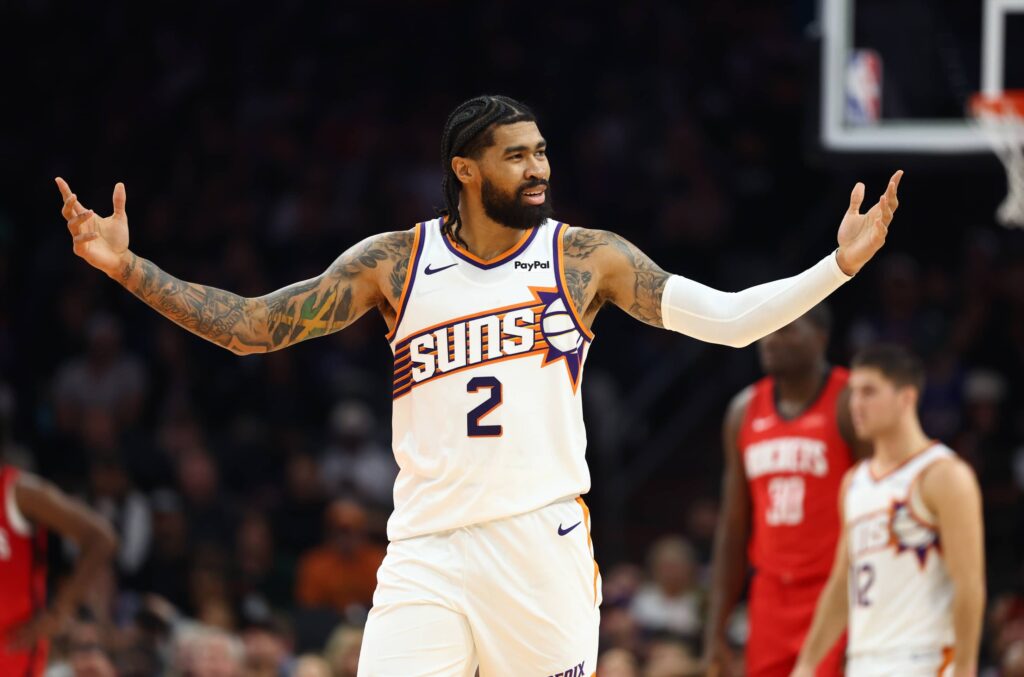
Houston Rockets Receive: Nick Richards
Phoenix Suns Receive: Josh Okogie, Jae’Sean Tate, 2026 second-round pick, 2027 second-round pick (via Grizzlies)
Nick Richards is the most “deadline boring” center on this list, which is exactly why he’s plausible. He’s on a flat $5.0 million salary in 2025-26, so the Rockets can acquire him with spare parts and picks without doing anything dramatic. Okogie and Tate are both in that same low cap-hit neighborhood, so this is realistic math for a team that’s been operating with first-apron constraints.
The “buy” here is role, not box score. Richards is only at 3.2 points and 3.3 rebounds this season because his minutes have been inconsistent. The Suns’ own game-to-game scores make that clear, his role has been muted, with multiple short-minute appearances. But when he plays, the utility is real: size, vertical finishing, and enough rim protection to survive bench stretches. There was even a recent line where he had nine rebounds and three blocks in 17 minutes against the Wizards, which is basically the exact “backup center impact” the Rockets would be looking for.
The most important point is that this isn’t trying to replace Adams’ unique skill set. It’s simply plugging the depth chart so the Rockets don’t have to fake 48 minutes of center play with small lineups.
From the Suns’ side, the argument is pretty clean: they’re 27-19, and two second-round picks plus wing depth can matter more than a buried backup center, especially if they feel comfortable with their frontcourt rotation. Also, Sports Illustrated has already floated the framework targeting Richards after the Adams injury, so this isn’t coming out of thin air as a potential deal.
Hunting For Another Shooter
The Rockets’ center problem is obvious after Steven Adams’ season-ending ankle surgery, but the quieter pressure point is still spacing. When teams load the paint and sit extra bodies, their offense can get cramped fast, especially in lineups where the weak-side shooting is more “hope” than threat.
The deadline approach we’ve been discussing makes sense for that reason: if the Rockets aren’t expected to chase a point guard, the cleanest way to juice the offense is to add a wing shooter who can live off advantage basketball and punish help.
1. Simone Fontecchio
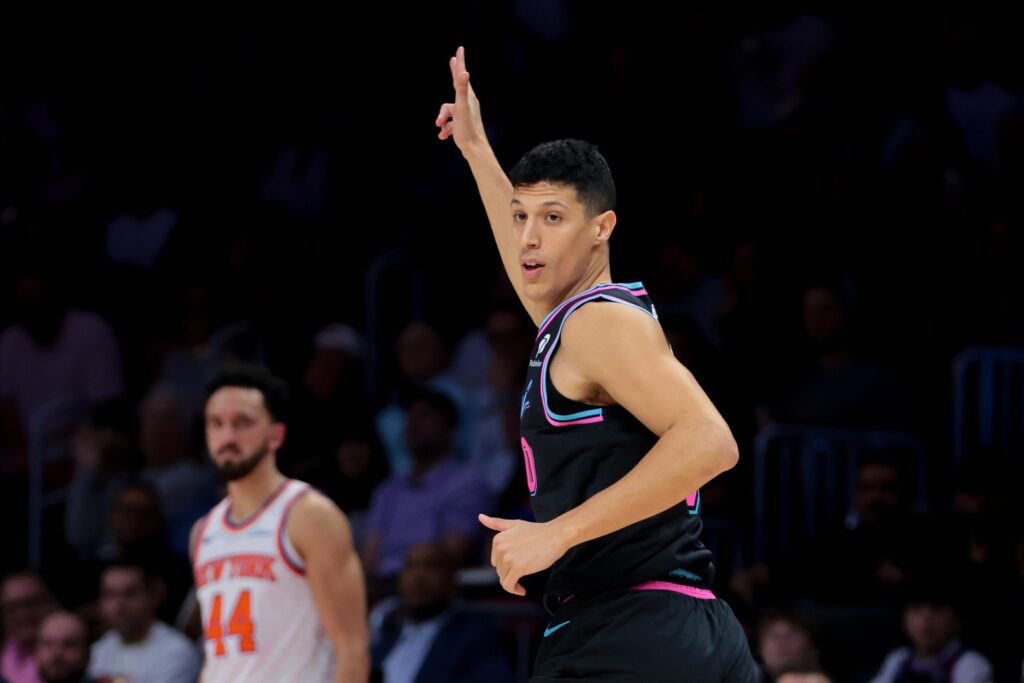
Houston Rockets Receive: Simone Fontecchio
Miami Heat Receive: Clint Capela, Josh Okogie, 2026 second-round pick, 2028 second-round pick
If the Rockets want a shooter who actually changes the geometry, Simone Fontecchio is the cleanest “plug-and-play” option in this batch because he’s a real movement spacer, not just a stationary corner guy. He’s making $8.3 million in 2025-26, which is exactly the kind of mid-tier salary you can justify for a specialist who immediately raises your offensive floor.
Production is solid and, more importantly, the three-ball is live. Fontecchio is averaging 8.7 points, 3.2 rebounds, and 1.5 assists while shooting 41.2% from the field, and he’s at 37.4% from three this season (1.8 3PM). That 3-point number matters because it’s not theoretical. Defenses have to track him on pin-downs, flare actions, and drift reads, and that’s where the Rockets have been begging for oxygen, especially when teams start loading up on drives and post touches.
The outgoing money fits neatly: Capela’s $6.7 million plus Okogie’s minimum slot makes the math work while also letting the Rockets turn two “roster-function” contracts into an actual offensive weapon. And if you’re looking for an extra nudge, Fontecchio is also approaching free agency, so the Heat could treat this as turning an expiring piece into a big-body center plus extra picks.
2. Svi Mykhailiuk
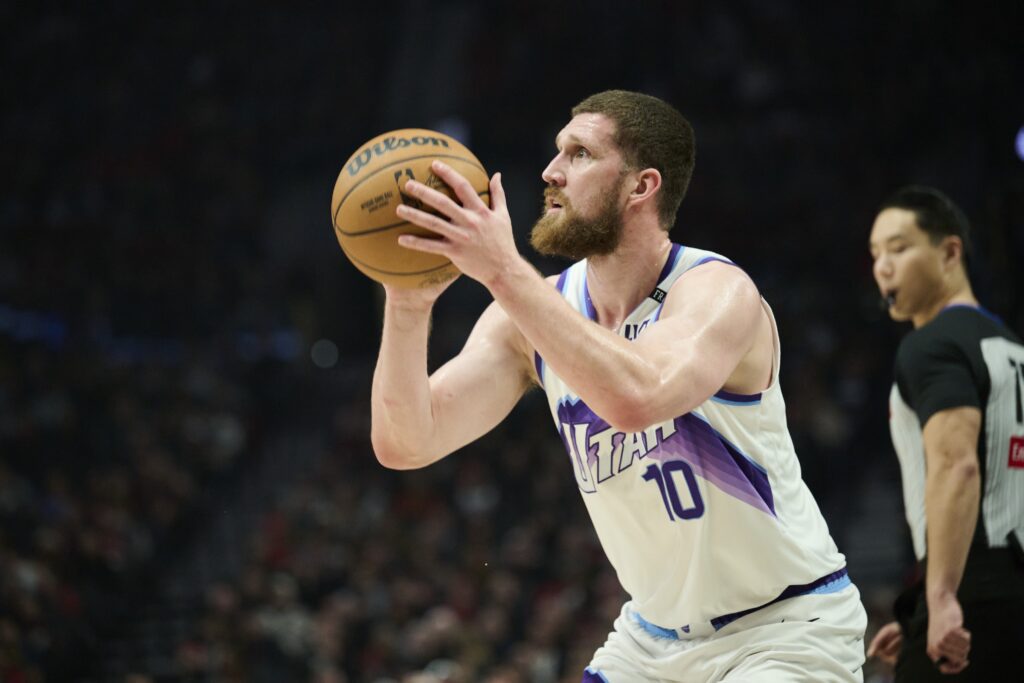
Houston Rockets Receive: Svi Mykhailiuk
Utah Jazz Receive: Aaron Holiday, Jae’Sean Tate, 2027 second-round pick (via Grizzlies), 2028 second-round pick
Svi Mykhailiuk is the “cheap pro” shooter add. He’s at $3.6 million in 2025-26, and that’s basically perfect for a contender-type deadline pickup because you’re not forced to sacrifice anything real to get the minutes.
The production screams instant utility: 8.7 points, 2.6 rebounds, 1.9 assists on 47.1% from the field, and he’s hitting 38.0% from three this season, on 1.7 3PM per game. He’s a quick-trigger guy, he runs the floor, and he’s comfortable taking the exact “swing” threes contenders generate, the ones off kick-outs and advantage reads where hesitation kills you.
From the Jazz side, this is classic deadline logic. They turn one veteran shooter into two minimum-range contracts plus extra seconds, and they keep their flexibility intact. Also worth noting: his $3.68 million deal was guaranteed, which is useful context if the Jazz wants to pivot the books without eating dead money.
3. Vit Krejci
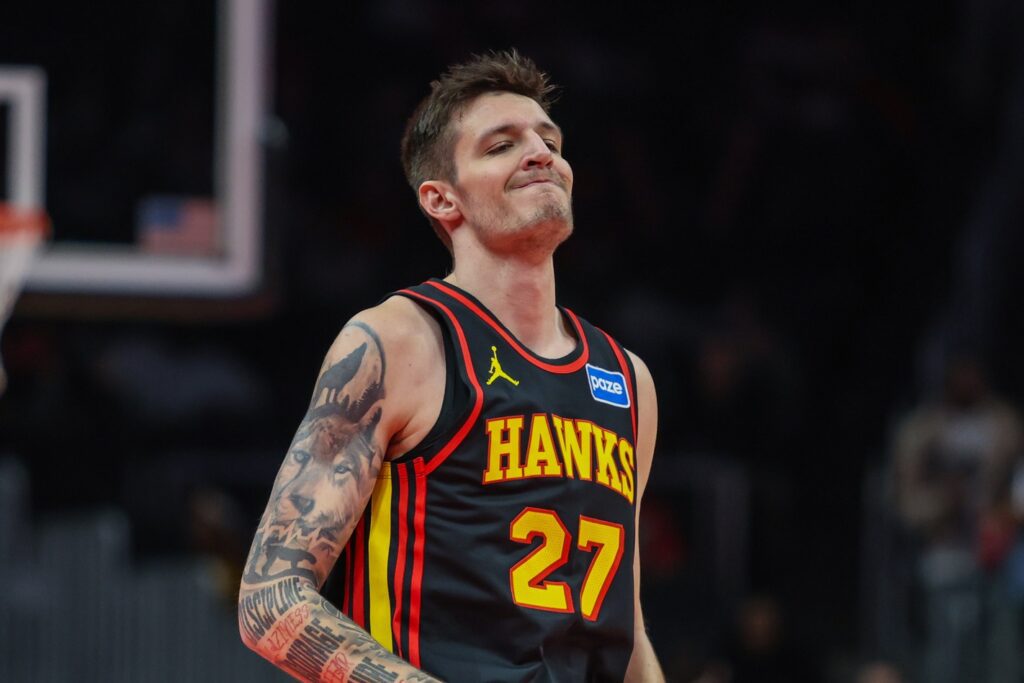
Houston Rockets Receive: Vit Krejci
Atlanta Hawks Receive: Aaron Holiday, 2029 second-round pick (via Kings), 2031 second-round pick (swap rights)
Vit Krejci is the sneaky one because he’s not just a shooter, he’s a big guard/wing body who can actually stay on the court in real games. And the contract makes him a “why not?” target: he’s at $2.3 million in 2025-26, basically a steal for a rotation-friendly spacer.
This season, he’s averaging 9.0 points, 2.1 rebounds, 1.5 assists on 46.2% from the field, and the big selling point is the jumper: 42.4% from three. That’s not “hot for a week,” either. He shoots at 42.5% from three this season on 2.2 3PM, and he was also 43.7% last year, so it tracks as a real skill, not a random spike.
Fit-wise, this is the exact archetype contenders chase: a 6’8 connector who can space, make the extra pass, and defend well enough that opponents can’t hunt him every trip. The Hawks getting Holiday plus two seconds is believable “value,” and for the Rockets, it’s the kind of low-cost shooting upgrade that doesn’t change the roster’s identity; it just makes the good stuff easier.