The Lakers are 23-11, but they’ve still had the same annoying problem show up in the games that matter most: they need more size on the wing that can defend and hit shots without getting played off the floor. That’s why the “go get a real 3-and-D wing” talk keeps circling the team, even when they’re winning.
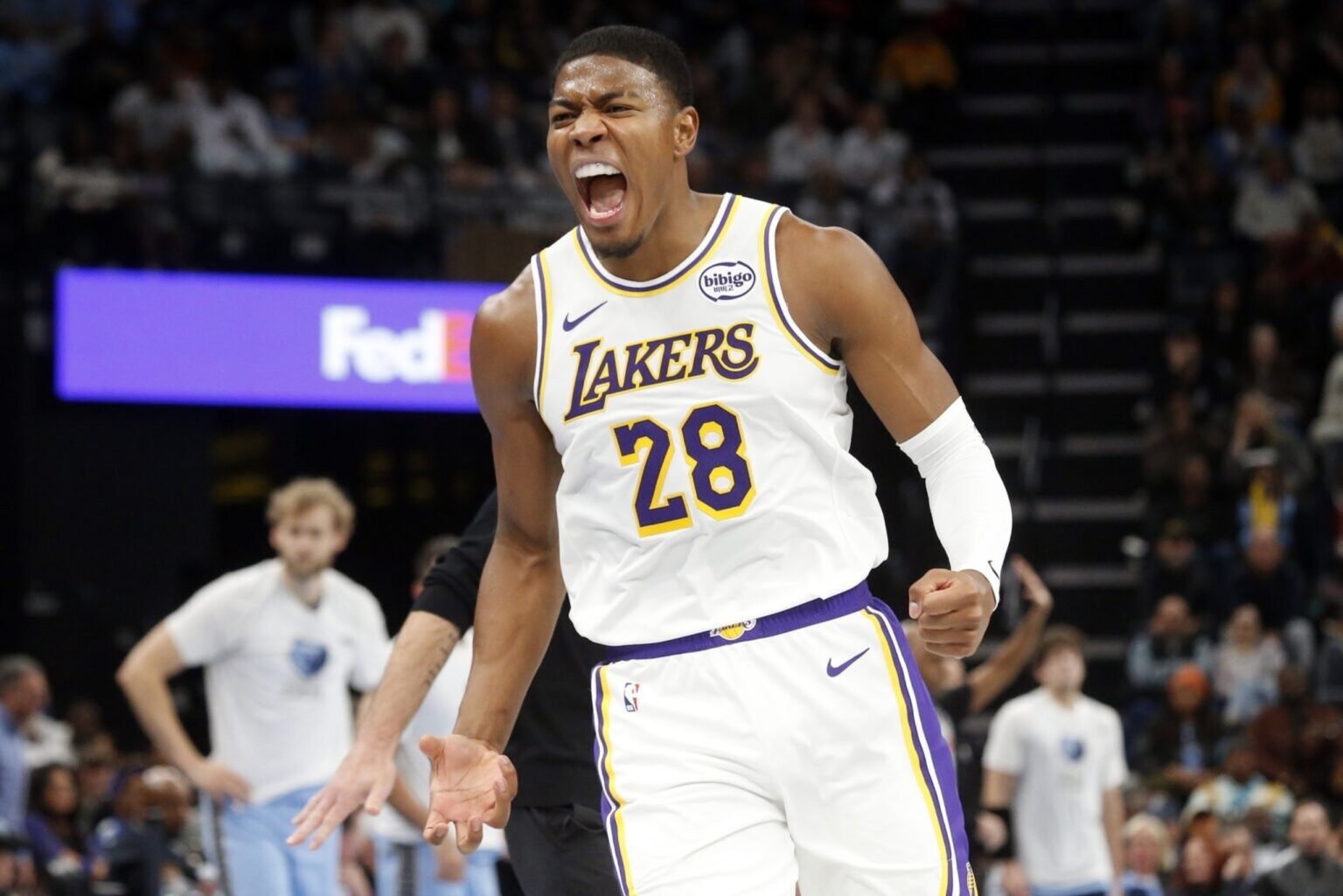
Rui Hachimura sits right in the middle of it because he’s good enough to have value, and his role is flexible enough to be moved. He’s putting up 12.7 points, 3.8 rebounds, and 0.9 assists this season while shooting 52.1% from the field and 44.5% from three, which is exactly the kind of efficient wing production teams talk themselves into at the deadline.
The rumor that actually matters for this article is what Marc Stein relayed: the Lakers are scouring the market for a two-way wing with size, but they only want to spend assets if it’s a real needle-mover. Stein specifically mentioned the Pelicans being resistant to trade interest in Herb Jones and Trey Murphy III, which tells you the profile the Lakers are chasing.
With that in mind, here are five Rui Hachimura trade scenarios, including two big rivals, that make real basketball sense.
1. The Lakers Find Their Next Big Wing
Los Angeles Lakers Receive: Jonathan Isaac, Tristan da Silva, 2026 second-round pick, 2028 second-round pick
Orlando Magic Receive: Rui Hachimura
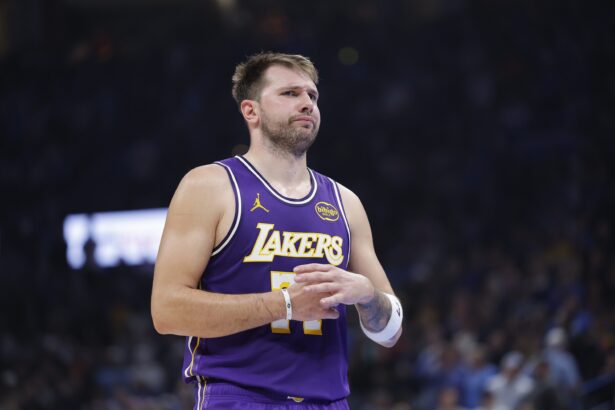
This is a Tristan da Silva trade first, and everything else is just how the math works. Da Silva is the exact kind of wing that plays clean next to Luka Doncic, big body, quick decisions, willing mover, and he actually lets it fly.
He’s at 9.5 points, 3.7 rebounds, and 1.2 assists while hitting 38.1% from three on 4.1 attempts a night, which is the difference between “nice shooter” and a real floor-spacer teams have to respect.
If Luka’s running the show, Da Silva’s job is simple: stay ready, punish help, cut when the defense turns its head, and hold his own defensively so the Lakers don’t have to overhelp every possession.
Jonathan Isaac is the bonus piece for salary matching, but he’s not a filler if he’s even somewhat healthy. In a limited role, he’s at 3.2 points and 3.0 rebounds in 10.5 minutes, plus 0.4 steals and 0.5 blocks, and the defensive impact is still the selling point.
The Lakers don’t need him to score; they need him to be a chaos defender they can deploy in matchup minutes, switch onto wings, and protect the rim behind aggressive closeouts. With Doncic creating offense, getting a defensive wild card like this is basically found money.
For the Magic, the record is 20-16, and the motivation is pretty straightforward: injuries have forced them to hunt for scoring and shooting help on the wing. When Franz Wagner isn’t available, they need another guy who can keep the offense afloat and keep the floor spaced for Paolo Banchero, who’s at 20.7 points, 8.4 rebounds, and 4.7 assists.
Hachimura fits that “plug him in and it makes sense” need, 12.7 points on 52.1% from the field and a ridiculous 44.5% from three. That shooting gives Banchero a cleaner runway and gives the Magic a simple counter when defenses load up.
They’re basically betting Rui’s spacing and scoring steadies the offense now, while the Lakers bet Da Silva is the long-term 3-and-D wing who actually fits Luka-ball.
Hachimura is on an $18.3 million deal in 2025-26, Isaac is on a $15.0 million deal, and da Silva is on a $3.8 million rookie-scale deal, so the salary match works mainly through Isaac’s contract.
2. The Lakers Finally Get A Proven Playoff Wing
Los Angeles Lakers Receive: Andrew Wiggins
Miami Heat Receive: Rui Hachimura, Gabe Vincent, 2026 first-round pick, 2032 second-round pick
The Heat are 20-16, and their season has basically screamed the same thing every night: they need more frontcourt scoring that doesn’t mess with their defensive identity. Bam Adebayo can’t do everything, and when the offense gets sticky, they’re always hunting for another clean release valve that doesn’t demand the ball every possession.
Rui makes sense for that. He’s a plug-and-play forward who can space the floor, punish smaller wings, and keep the offense from dying when the first action gets blown up.
For the Heat, moving Andrew Wiggins is about reshaping the rotation and redistributing the money into two pieces plus draft value.
Wiggins has been productive this season, 15.9 points, 4.8 rebounds, 2.9 assists, plus 47.0% from the field and 39.5% from three, and he’s also giving them 1.2 steals and 1.2 blocks.
But fit-wise, the Heat have been at their best historically when their wings are either elite high-volume scorers or absolute psycho defenders who don’t need touches. Wiggins sits in the middle. He’s good, but he’s not always essential.
Vincent coming back in this framework matters too. He’s at 4.7 points and 1.4 assists in limited action, but the real value is that he’s a known rotation guard for them, and they trust him to defend and play the system.
The 2026 pick is the real “sweetener” from the Lakers’ side, because it gives the Heat a future lever without forcing them to take a massive step back right now. The 2032 second is just extra grease.
For the Lakers, this is a pure role bet. Wiggins becomes the wing you assign to the opponent’s best scorer, so Luka Doncic doesn’t have to burn energy defending up a position all night.
Offensively, he gets the simplest version of his life: sprint lanes, cut behind ball-watching help, and take the open threes Luka creates for fun.
If Wiggins is hitting at anything close to his 39.5% clip from deep, the defense can’t cheat off him, and suddenly the Lakers have a two-way wing who actually survives the playoff scouting report.
Wiggins is on a $28.2 million deal in 2025-26, and he has a $30.2 million player option for 2026-27. That gives the Lakers a clear two-year window if he opts in, or flexibility if he opts out.
This trade works because it’s clean logic on both sides. The Heat get a forward who fits their spacing needs, a guard they know, and draft value. The Lakers gamble that Wiggins, in a simplified role, turns into a legit postseason difference-maker again.
3. The Lakers Land The Ultimate Luka Sidekick Defender
Los Angeles Lakers Receive: Herbert Jones, Saddiq Bey
New Orleans Pelicans Receive: Rui Hachimura, Dalton Knecht, 2026 first-round pick, 2031 first-round pick
The Pelicans are 8-30, and when you’re buried like that, you’re not tweaking. You’re deciding which pieces are part of the next real run, and which pieces you cash out while they still have premium value.
Herbert Jones is on a $13.9 million deal in 2025-26, and he’s locked in long-term after agreeing to a three-year, $68 million extension that runs through 2028-29, with a player option for 2029-30. Saddiq Bey is on a $6.1 million deal in 2025-26 with another year at $6.4 million in 2026-27.
This framework is basically a reset play that still lets them field a functional offense now. Rui gives them a ready-made forward scorer, Dalton Knecht gives them cheap shooting depth, and the swap structure creates future upside without needing to “win” the trade today.
For the Lakers, Herbert Jones is the dream target. He’s averaging 9.5 points, 3.7 rebounds, and 2.3 assists, but the real stat that matters is the 1.7 steals. He blows up actions. He turns clean possessions into broken ones.
And on a Luka team, that’s gold. Luka’s offense is going to be elite most nights. The problem is always the same: can you get stops when teams start hunting mismatches and spamming actions at your weakest defender? Jones is the antidote. He guards 1 through 4, he fights through screens, and he lets the Lakers get aggressive with their coverages instead of playing scared.
Saddiq Bey is the second piece, and honestly, he’s important because he gives the Lakers a totally different wing profile. Bey is at 15.1 points, 5.9 rebounds, and 2.3 assists. The three-point percentage is only 31.8% right now, but he’s still a volume shooter that defenses have to honor, and he brings real size and physicality to the rotation.
That matters because the Lakers can’t live in a world where every wing is a “small forward” who actually plays like a guard. Bey gives them a body. He also gives them a secondary scorer for those bench minutes where Luka sits, and everything starts looking like mud.
On the Pelicans’ side, Knecht is a clear developmental piece. He’s at 5.4 points and 1.8 rebounds while shooting 34.2% from three in a smaller role.
That’s not a finished product, but it’s a shooter archetype on a cheap contract, and that’s exactly what a team in their position should be collecting. Add in the pick assets, and you can sell the idea internally as: we’re staying flexible, we’re adding shooting, and we’re giving ourselves future outs.
From the Lakers’ perspective, this is the most “real contender” swing of the four. Jones, next to Luka, is a playoff cheat code because he covers for mistakes and takes the toughest perimeter assignment every single night. Bey is the depth and scoring bump that keeps the roster from collapsing when rotations tighten.
4. The Lakers Fix Their Guard Rotation In One Shot
Los Angeles Lakers Receive: Dennis Schroder, Keon Ellis
Sacramento Kings Receive: Rui Hachimura, 2026 first-round pick, 2032 second-round pick
The Kings are 8-29, and at that point you’re basically forced into uncomfortable conversations. Do you keep throwing guards at the problem and hope it stabilizes, or do you admit the roster needs a different shape? This trade is a shape change.
Rui gives them a bigger scoring forward who can soak minutes, score without needing a perfect setup, and make their lineups less guard-heavy. The first and second-rounder are there because the Kings are giving up two rotation players, including one that actually matters on defense.
For the Lakers, Dennis Schroder is the functional fix. He’s averaging 12.9 points, 3.3 rebounds, and 5.8 assists, and he’s still the type of guard who can get downhill when the offense stalls.
More importantly, he gives the Lakers a real secondary ballhandler so Luka doesn’t have to play 48 minutes of “save us” basketball. When teams blitz Luka and force the ball out of his hands, you need someone who can attack the scramble and make the next read. Schroder can do that. He’s not perfect, but he’s a real NBA initiator.
Keon Ellis is the sneaky piece. He’s at 5.7 points in 17.7 minutes, but he’s giving 1.2 steals and 0.5 blocks, which is exactly what you want from a guard whose job is to make life miserable at the point of attack.
He’s also hitting 35.9% from three, so he’s not a zero on offense. That’s the kind of role player that becomes a playoff favorite fast, because he can defend, he can run the floor, and he can knock down the open corner shot when Luka creates it.
The fit with Luka is clean. Schroder handles the “second side” possessions, the early-clock pushes, and the bench minutes. Ellis handles the dirty work, picking up 94 feet, fighting through screens, and letting the Lakers actually pressure the ball without instantly getting punished.
Schroder is on a $14.1 million deal in 2025-26, with $14.8 million in 2026-27 and $15.5 million in 2027-28, so the Lakers would be taking on a multi-year guard contract.
Ellis is on a $2.3 million deal in 2025-26, the final season of his three-year, $5.1 million contract, which keeps him as a cheap rotation bet.
5. The Lakers Turn Into A Bigger, Meaner Bench Scorer
Los Angeles Lakers Receive: Keldon Johnson
San Antonio Spurs Receive: Rui Hachimura, Adou Thiero, 2026 first-round pick, 2031 first-round pick (Lottery Protected)
The Spurs are 25-11, and that record matters because it changes how you view a trade like this. This isn’t “sell for picks.” This is “retool the edges while you’re winning.”
Keldon Johnson has been a strong bench scorer for them, but the idea here is that Rui gives them a different kind of forward, and the picks are the reason they even consider it.
If you’re a team winning now and you can also stack extra first-round value, you at least listen.
For the Lakers, Johnson is the kind of player Doncic loves. He’s averaging 13.2 points and 6.4 rebounds, and he’s shooting 41.3% from three while also sitting at 56.3% from the field.
That’s a nasty combo for a wing/forward, because it means he’s not just a standstill shooter. He finishes. He attacks space. He plays with force. Luka creates advantages, and Johnson is the guy who actually turns those advantages into points without needing a play called for him.
He is on a $17.5 million deal in 2025-26 and another $17.5 million deal in 2026-27. It’s clean, predictable money for a rotation scorer, no weird options to navigate midstream.
The Lakers also need guys who don’t get punked physically in the postseason. Johnson plays like he’s trying to run through you. He rebounds, he runs in transition, and he doesn’t hesitate on open looks. That matters when playoff defenses start rotating early and daring role players to make decisions.
For the Spurs, Hachimura is the immediate rotation fit, a bigger forward who can play next to their stars without needing constant touches. And Adou Thiero is the “hold and develop” piece. He’s been used sparingly, appearing in 15 games and averaging 5.8 minutes, so this is more about tools than production right now.
If the Spurs think they can turn him into a real defensive wing over time, that’s value.
The picks are what make this realistic. If the Spurs are already strong and they can swap one bench scorer for a different forward plus two firsts, that’s how good franchises stay good. They keep the floor high while keeping their future flexible.
This one is aggressive, but the logic is tight. The Lakers get a tougher, more efficient wing scorer who fits Luka’s game. The Spurs get a forward replacement, a young flier, and draft ammo while still sitting near the top of the conference.
Final Thoughts
If the Lakers are actually serious about upgrading around Luka Doncic, Rui Hachimura is the cleanest “value piece” they’ve got. He’s good enough that teams talk themselves into him, and his role is simple enough that he fits almost anywhere. The key is what direction the Lakers really want.
If they want the highest ceiling, the Pelicans package is the one. Herbert Jones is the exact type of playoff wing every contender begs for, and you don’t find that guy easily. It’s expensive, but it fixes the biggest postseason problem in one move.
If they want a safer middle ground, the Magic deal is the best blend of upside and depth. Tristan da Silva is the kind of young wing who can grow next to Luka, and Isaac is a defensive lottery ticket that can actually win you a couple matchups if he’s healthy.
And if they want to swing for a proven playoff archetype, the Heat one is the gamble. Wiggins can look like a steal if he locks in defensively and hits open threes, but you’re betting on the version of him that shows up when it matters.
Bottom line: the Lakers can’t afford another deadline where they make a cute move and call it a day. Rui is the piece that can actually get them a real two-way upgrade, and if they play it right, they can turn one rotation forward into a playoff swingman that changes the whole vibe.