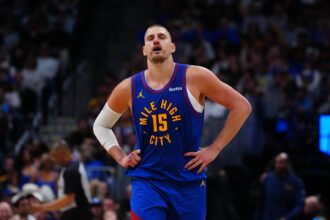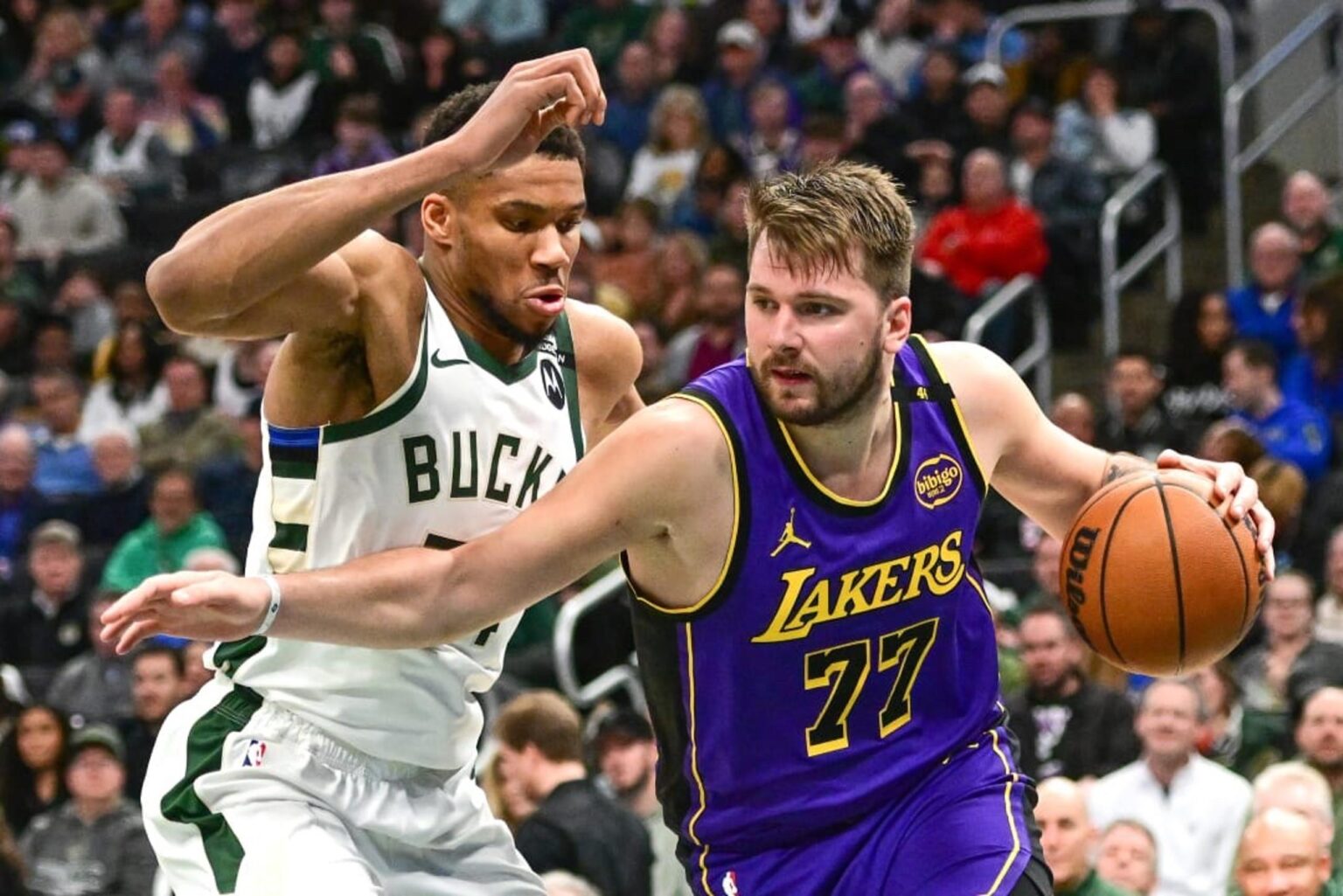
The Lakers didn’t get their Giannis Antetokounmpo fantasy at the trade deadline, and the Bucks made sure the league heard it.
ESPN’s Shams Charania reported that the Bucks told teams in the hours before the deadline that Antetokounmpo was staying at least through the rest of the season, even after multiple clubs pushed serious offers.
Charania also framed the offseason as the real decision point, with both sides expected to reexamine trade possibilities in the summer, where Antetokounmpo is eligible to sign a contract extension on October 1 and has a player option for 2027-28.
That summer angle is why the Lakers keep popping up in the conversation. On The Zach Lowe Show, The Ringer’s Howard Beck said he’d been told the Lakers are “a team to keep an eye on” from Giannis’ standpoint, basically another team of interest if the door ever opens.
‘I was told recently that the Lakers were a team to keep an eye on from Giannis’ standpoint, just as another team of interest. But again, there’s a difficulty there in terms of trade assets. They’re another team where once the summer comes, they got more on the draft capital side of things, and they got more clarity once they figure out where LeBron is or isn’t and where Austin Reaves is because he’s a free agent.’
That is not a trade request, and it is not a promise, but it’s enough to keep front offices circling. Antetokounmpo is still putting up 28.0 points, 10.0 rebounds, and 5.6 assists this season while shooting 64.5% from the field.
The standings sharpen the logic. The Lakers are 31-19 and fifth in the West. The Bucks are 21-29 and outside the East’s top 10, and that’s the point that has fueled the Giannis rumors all along.
If the Bucks decide a reset is the cleanest move, the Lakers’ offseason pitch is simple: stack first-round picks and swaps, add one real young-player centerpiece, and be flexible with the money.
It’s the kind of swing that changes a franchise overnight, and the Lakers can’t afford to treat it like pure noise. And the Bucks will demand a package that hurts, not a collection of spare parts.
The Trade That Sends Giannis To The West Coast
Los Angeles Lakers Receive: Giannis Antetokounmpo
Milwaukee Bucks Receive: Austin Reaves, Rui Hachimura, Dalton Knecht, Adou Thiero, 2026 first-round pick (swap), 2030 first-round pick (swap), 2032 first-round pick
This kind of trade only becomes believable when it’s built for the right Giannis salary.
Giannis Antetokounmpo is scheduled at $54.1 million in 2025-26, then $58.5 million in 2026-27, with a $62.8 million player option in 2027-28. If the Lakers are swinging in the offseason, the cleaner story is matching the $58.5 million salary, not the $54.1 million. That’s the whole point of the Reaves and Hachimura assumptions in this hypothetical.
Austin Reaves has a player option for 2026-27, but the league expectation in a big-money scenario is that he declines it and moves to a new deal. In this build, Reaves opts out and lands at $30.0 million per season on a three-year, $90.0 million contract, which turns him into an actual headline asset for the Bucks instead of a “nice starter.” Reaves has played at a star level this season, averaging 26.6 points, 5.2 rebounds, and 6.3 assists on 50.7% from the field, 36.5% from three, and 87.3% at the line.
Rui Hachimura is the salary lever. He’s at $18.3 million as an expiring contract, so in this scenario, the Lakers re-sign him first, then route him in a sign-and-trade at $21.0 million per season on a two-year, $42.0 million deal to push the outgoing salary closer to Giannis’ $58.5 million year. Hachimura’s production is solid rotation value: 11.9 points, 3.6 rebounds, 0.9 assists, 50.5% from the field, and 43.8% from three this season.
Dalton Knecht ($4.3 million) and Adou Thiero ($1.9 million) are there for two reasons: they keep the outgoing money functional without killing flexibility, and they give the Bucks two low-cost development bets. Knecht is at 4.6 points and 1.4 rebounds in 11.5 minutes, shooting 44.4% from the field and 31.3% from three.
That’s the skeleton: one premium “proven” piece in Reaves at a new salary, an expiring-to-renewed Hachimura number to help the match, two young pieces, and then the draft equity that makes Milwaukee feel like it didn’t just take a step back for nothing.
How This Works For The Lakers
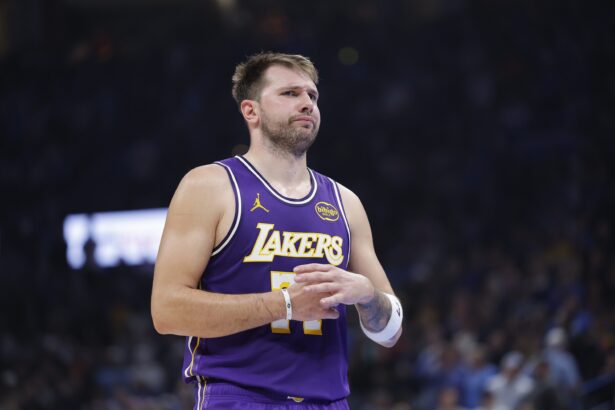
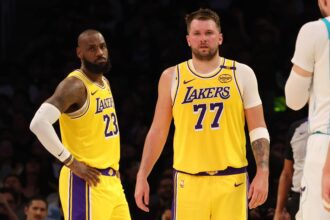
Basketball-wise, Luka Doncic and Giannis are the kind of pairing that turns every defensive scheme into a stress test.
Doncic is the league’s best at forcing decisions in slow possessions. He manipulates the big, reads the weak side early, and lives in the pass that arrives a beat before the help gets set. Giannis is the league’s best at collapsing the paint without needing the action to be perfect. Give him one shoulder advantage, and the rim is in rotation mode for the rest of the night.
The fit works because they create pressure from different places. Doncic bends you with angles. Giannis bends you with force. That combo is how you get “easy” playoff offense: rim touches, kickouts, and panic rotations that turn into corner threes.
It also explains why Reaves becomes the logical sacrifice here. In a normal build, you love having an extra creator. Next to Doncic and Giannis, the Lakers don’t need a third guy to initiate as much as they need shooting and defense that survives May.
So the rest of the roster plan becomes the boring part, but it’s the part that wins. Keep loading up on movement shooting, and the Luke Kennard fit is obvious because he’s been one of the most efficient shooters in the league this season, including 49.7% from three in the sample that got Lakers people excited about the acquisition. Keep stacking point-of-attack defense, and if Matisse Thybulle hits the buyout lane, he’s the exact “guard the best guy and don’t ask for touches” wing that matters next to stars.
Keep the hard-nosed veteran layer, too. Marcus Smart is already in this ecosystem on the two-year, $11.0 million deal that came out of his buyout situation, and that’s the type of contract you want around a two-star core: movable, playable, and playoff-intense.
Then you get into the more aggressive roster chess. If the Lakers decide they need a different kind of frontcourt partner, moving Deandre Ayton for a cheaper shooting big like Jock Landale is the type of “fit over name” decision contenders make when they’re trying to maximize spacing. Ayton has been efficient this season (13.4 points and 8.4 rebounds while shooting 67.6% from the field), but the whole argument for flipping him is that Doncic and Giannis already generate rim pressure, so you can prioritize floor spacing and defensive versatility over a traditional scoring center.
Finally, you still need bench scoring. The Lakers would be asking their stars to carry a lot, and a microwave type like Cam Thomas in the summer market is the kind of swing that can keep regular-season minutes from turning into a grind.
And if the Lakers are building for the next era, the LeBron James timeline is hanging over everything. There has been reporting connecting the Cavaliers to the idea of a future reunion if James ever leaves the Lakers. I’m not treating that as certainty. I am treating it as enough “real-world smoke” that the Lakers have to plan for a roster that is not built around James long-term.
So the upside of the Giannis swing isn’t just the superteam headline. It’s that the Lakers can pivot to a clear identity: two generational engines, then stack playoff skills around them. If you have Doncic plus Giannis, your offseason shopping list writes itself. You prioritize movement shooting and high-motor defenders because your stars already create efficient offense.
How The Bucks Reset After This
This is where the Bucks’ pick situation has to be explained cleanly, because it’s the reason “just tank” is not a clean answer.
Start with 2026. The Bucks do not simply own their 2026 first-round pick outright in a way that rewards losing. The pick is tied to the Pelicans’ swap rights. So even in a down year, the Bucks aren’t automatically guaranteed the best outcome from being bad.
Now, 2027 is the one that really scares teams away from a full bottom-out. The Pelicans are positioned to receive the more favorable of the Bucks and Pelicans first-round picks, while the Hawks are lined up for the other first-rounder if it lands in 5-30. If both picks somehow land in the top four range, the structure can flip in a way that still benefits the Pelicans. The simple takeaway is the same: the Bucks don’t control the upside of losing in a normal way.
Then the Lillard trade layers in the later years. The Trail Blazers control the Bucks’ 2029 unprotected first-round pick, plus swap rights in 2028 and 2030. So even when the Bucks look ahead and think “we’ll reset and be back later,” there are landmines on the calendar that make late-decade downturns expensive.
That’s why a “competitive reset” package matters more for the Bucks than it would for most teams. Reaves isn’t just the big name in this return. He’s the engine that keeps them from falling into the exact draft trap they’re trying to avoid. His current season production is legitimately high-end: 26.6 points, 5.2 rebounds, 6.3 assists, plus real shooting efficiency.
Hachimura is the roster tool. On an expiring number, he’s already valuable, but on the hypothetical $21.0 million sign-and-trade contract, he becomes the exact mid-sized salary teams like to reroute for more picks, more expiring money, or a different starter-type piece. And he’s not dead money while you wait: 11.9 points on 50.5% from the field and 43.8% from three is clean playoff-rotation production.
Knecht is the upside ticket. His early career role has been small, but that’s part of the point: he’s cheap, controllable, and you can develop him without needing him to be a savior.
Then the picks from the Lakers’ side matter because they finally give the Bucks something they badly need: additional chances to pivot. The 2032 first-round pick is the “real” asset, because it’s far enough out that it can become premium value if the Lakers ever dip. The swaps in 2026 and 2030 are the kind of optionality that front offices like because it’s upside without forcing a full teardown.
And that’s why this Lakers concept can stack up against other bids. The Knicks, Warriors, and Timberwolves can all talk themselves into a massive offer. But the Bucks’ reality pushes them toward a return that keeps them competitive while still adding draft ammo. A Reaves-led group with Hachimura as either a starter or a tradable piece is the kind of roster that can hover around the play-in and occasionally push into the sixth-seed range, which matters when your downside draft years are tied up elsewhere. The Bucks don’t just need talent back. They need control back.