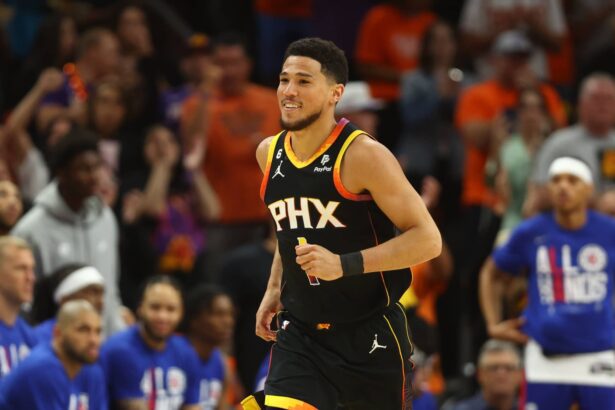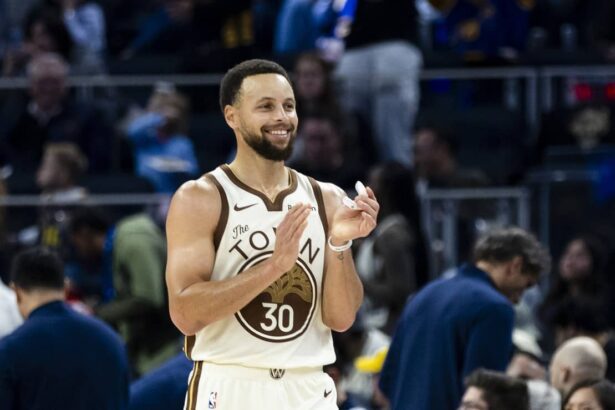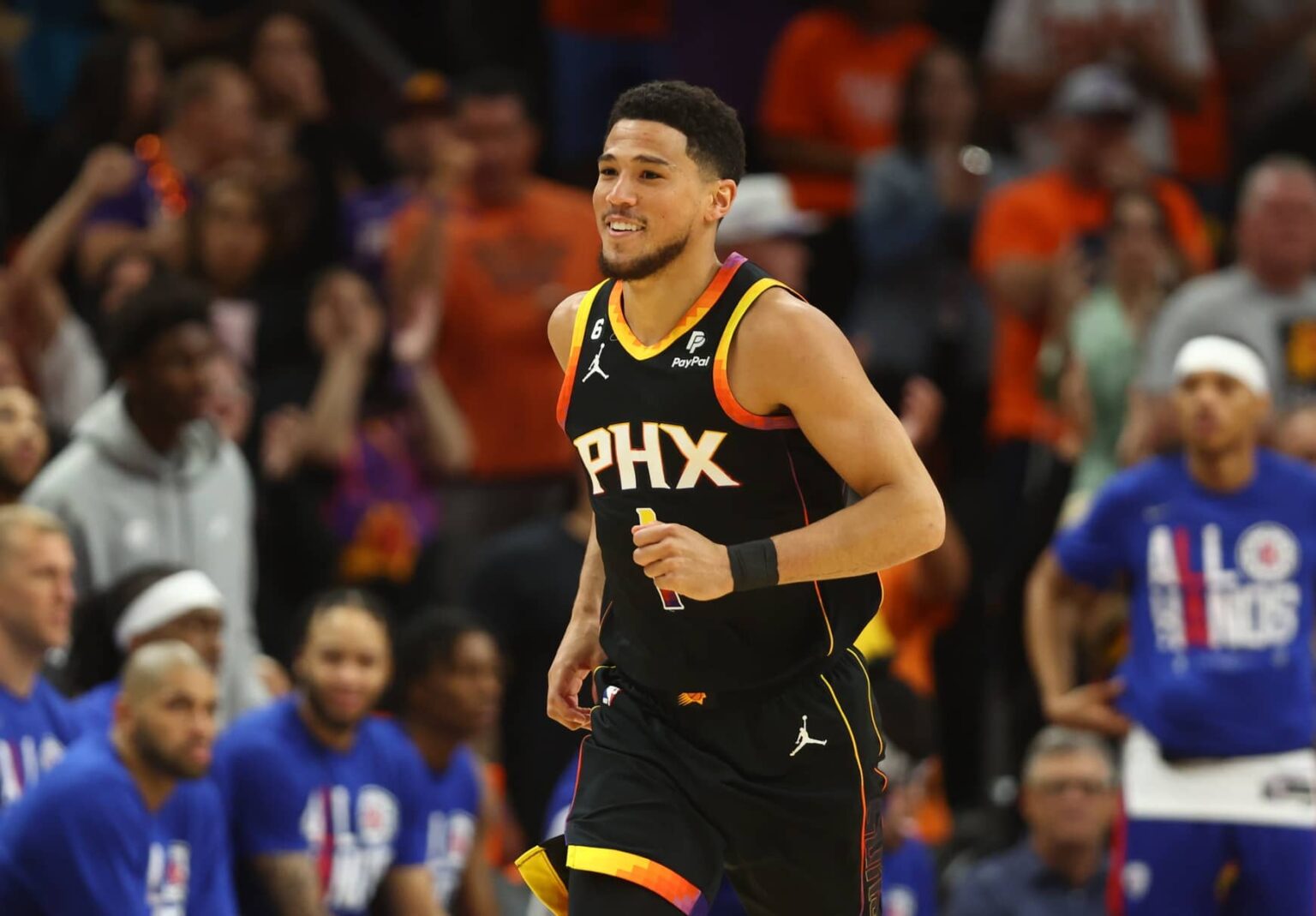
The Suns finished 45-37 and got into the postseason, but the roster still needs more defense, more size, and more low-usage players. Devin Booker had 26.1 points, 3.9 rebounds, and 6.0 assists on 45.6% from the field and 33.0% from three. Dillon Brooks had a career season with 20.2 points, 3.6 rebounds, and 1.8 assists on 43.5% from the field and 34.4% from three. Jalen Green was not as productive as expected, finishing with 17.8 points, 3.6 rebounds, and 2.8 assists on 42.2% from the field and 31.3% from three. The top-end scoring is solid, but the issue is the roster around them.
The Suns can’t think like a cap-space team. That is the first point. They are over the cap, with Devin Booker, Jalen Green, Dillon Brooks, Grayson Allen, Royce O’Neale, Ryan Dunn, Khaman Maluach, Oso Ighodaro, and other salaries already on the sheet.
That means no big free-agent dream. The Suns have to work in the cheap market. The realistic tools are the taxpayer mid-level exception, around $6.1 million, and veteran minimum deals. The full mid-level exception is possible in theory, but it would hard cap them at the first apron. That is not smart unless they dump real salary first.
4. Gary Payton II
Gary Payton II is not a shooter, so that part is ugly right away. He hit only 29.1% from three this season. But the Suns need more defense at the point of attack, and Payton still gives that.
He had 7.5 points, 3.6 rebounds, and 1.7 assists while shooting 58.3% from the field. The field-goal number is high because he doesn’t play like a normal small guard. He cuts, crashes the glass, finishes around the rim, and runs in transition.
For the Suns, that works because Booker and Jalen Green already take enough shots. Payton wouldn’t come in to create offense. He would defend guards, pressure the ball, chase loose rebounds, and give the second unit more energy.
The money has to be simple. Payton played on a $3.3 million contract with the Warriors and is an unrestricted free agent. The Suns should look at him only as a veteran minimum target. Using the full $6.1 million taxpayer mid-level on him would be too much because the shooting is too limited.
Still, as a cheap bench defender, he makes sense. The Suns don’t need more guys who want touches. They need guys who can do dirty work around Booker.
3. Nicolas Batum
Nicolas Batum is old, but he is still the type of forward the Suns could use. He doesn’t need shots, doesn’t force bad offense, and can still help in short playoff stretches.
Batum had 4.0 points, 2.5 rebounds, and 0.9 assists with the Clippers. The numbers are small, but that is the role. He plays low-usage basketball, moves the ball, spaces the floor, and understands defensive rotations.
The contract situation decides everything. Batum has a team option around $5.9 million. If the Clippers pick it up, this is over. If they decline it, the Suns can enter the conversation with the taxpayer mid-level or maybe a cheaper one-year deal.
He fits because the Suns need more size on the wing. They can’t just play small guards around Booker and Green all the time. Batum gives them a 6-foot-7 forward who can stand in the corner, make the extra pass, and not panic when the game slows down.
This is not a big move. It is a boring veteran move. But the Suns need some of those. Their roster has scoring. It needs more stable pieces.
2. Precious Achiuwa
Precious Achiuwa gives the Suns something they badly need: athleticism, size, and frontcourt depth without a huge price tag.
Achiuwa had around 10.1 points and 6.7 rebounds with the Kings. He also shot 52.8% from the field. That is solid bench-forward production, especially for a player who was on a cheap deal.
The money is the question. Achiuwa played on a $2.5 million contract and is an unrestricted free agent. If his market stays in the taxpayer mid-level range, the Suns should be interested. If another team offers more than that, they probably can’t chase him.
The fit is easy. The Suns need more size, more rebounding, and more physical defense. Achiuwa can play power forward or center, switch some matchups, run the floor, and clean up possessions. He isn’t a floor spacer, so the Suns would need to use him with enough shooting.
That is fine. Not every signing has to shoot. The Suns also need someone who can grab rebounds and take contact while being able to play 73 games per season in their big man depth chart. Achiuwa gives them that. For a team that got swept by the Thunder, that kind of physical depth is not optional.
1. Al Horford
Al Horford could actually the best fitting target if he is actually available. That is the only issue. He has a player option around $6.0 million with the Warriors, so he may just stay there.
If he hits free agency, the Suns should call fast. Horford had 8.3 points, 4.9 rebounds, 2.6 assists, and 1.1 blocks while shooting 42.6% from the field and 36.1% from three. At 40, that is still useful.
He gives the Suns a type of center they don’t really have. Horford can defend with positioning, pass from the top, shoot open threes, and play without needing touches. That helps Booker because it keeps the paint open and gives the offense another smart passer.
The money also lines up. His option is close to the taxpayer mid-level, around $6.1 million. So the Suns wouldn’t need some fake cap-space plan. It would just be a one-year veteran deal in their real price range.
The age is the obvious risk. Horford played 45 games, so the Suns can’t expect him to carry the frontcourt every night. But that shouldn’t be the idea. He would be a 20-minute playoff big, a locker-room veteran, and a stabilizer for the young bigs.
For this price range, that is probably the best the Suns can hope for.