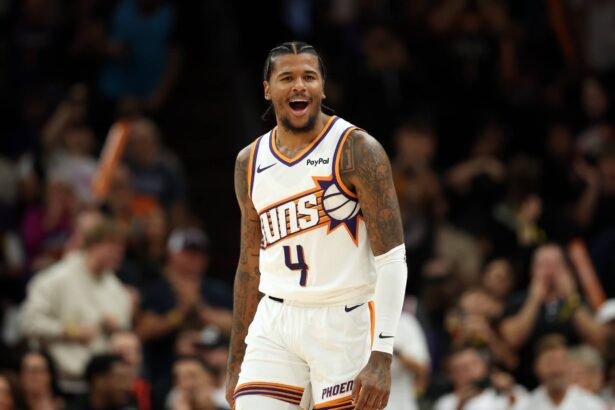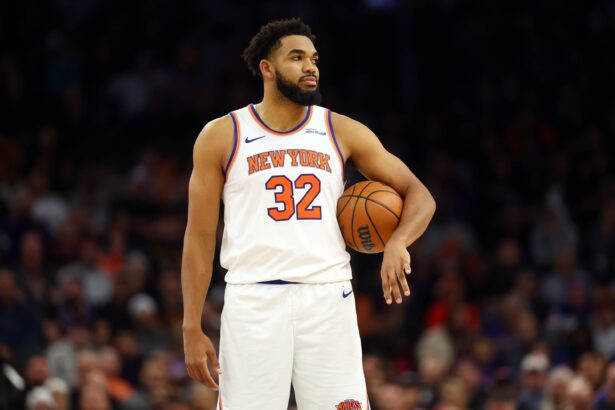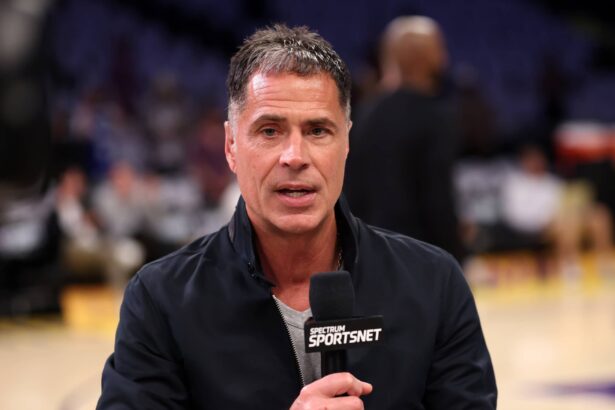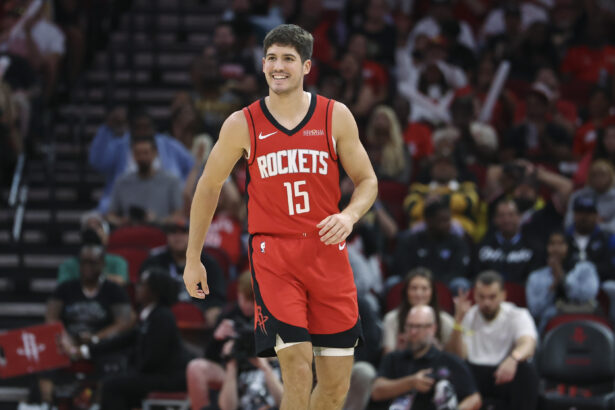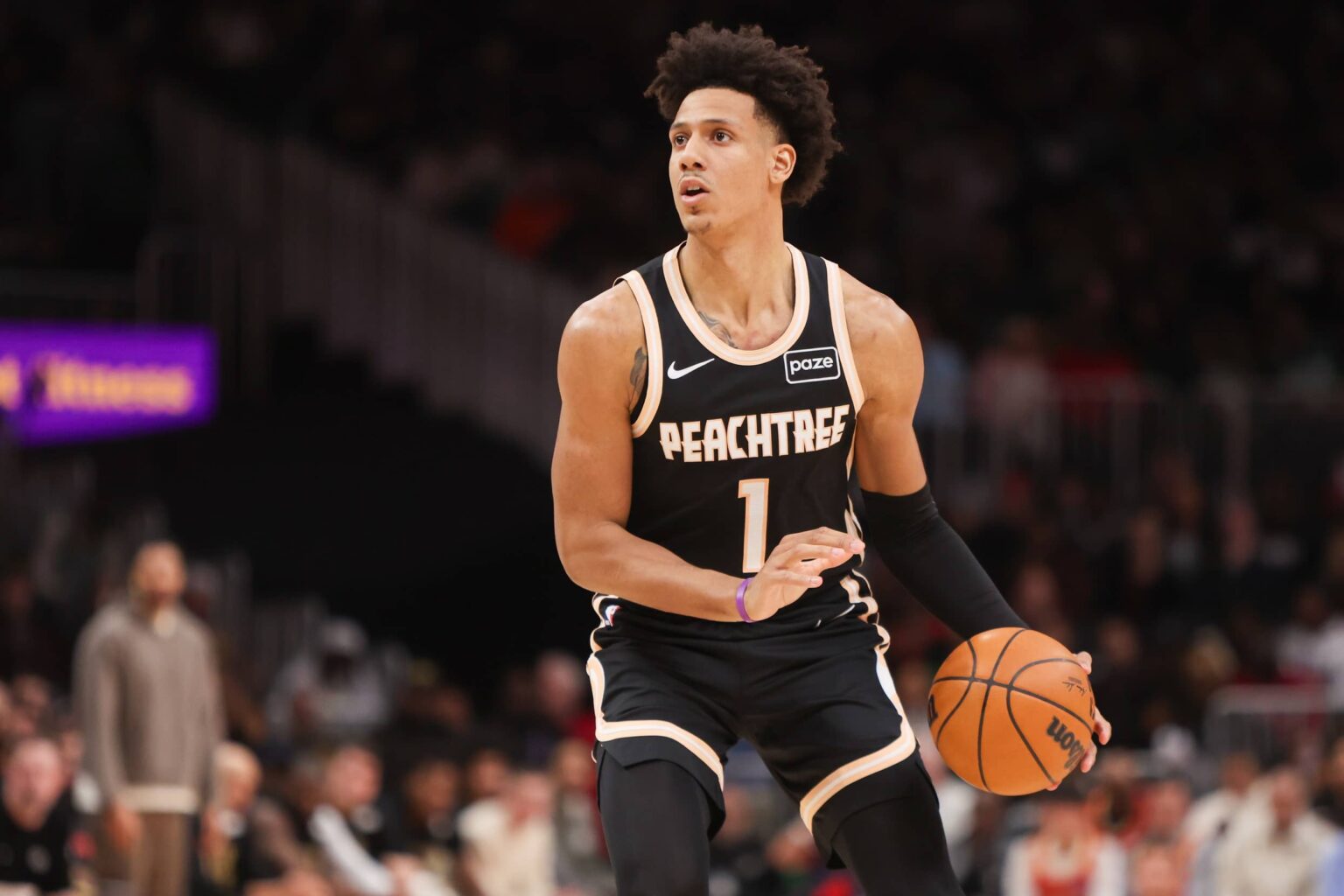
Jalen Johnson’s numbers have taken a noticeable hit since CJ McCollum arrived in Atlanta, and while the sample size is small, the shift has been sharp enough to spark real discussion around the Atlanta Hawks.
Before McCollum joined the rotation, Jalen Johnson was quietly having the best stretch of his young career. He was averaging 23.7 points, 10.3 rebounds, and 8.2 assists while shooting an efficient 52.6% from the field and 37.0% from three. He looked like a true offensive hub, operating with the ball in his hands, pushing tempo, and making reads that elevated everyone around him. The offense flowed through Johnson in a way that suggested the Hawks were comfortable letting him grow into a featured role.
Since McCollum’s arrival, that role has clearly shifted. Over the last five games, Johnson’s averages have dropped to 17.6 points, 9.8 rebounds, and 5.8 assists. The efficiency decline is even more concerning. He is now shooting just 41.3% from the field and a rough 26.9% from three-point range. That is not just a cold shooting spell. It reflects a different diet of shots, fewer touches in rhythm, and less control over the offense.
Usage tells part of the story. McCollum has carried a team-high 31.1% usage rate since joining the Hawks, while Johnson sits at 22.0%. That gap matters. McCollum has essentially stepped into the primary creation role, even though his own production has been uneven. He is averaging 17.0 points, 2.8 rebounds, and 3.6 assists while shooting 40.3% from the field and an alarming 18.5% from three. Despite the inefficiency, the offense is clearly bending toward him, often pushing Johnson into more off-ball situations.
This is where the concern creeps in. Johnson’s strengths are tied to feel, flow, and decision-making with the ball. When he is reduced to spot-up looks or late-clock bailouts, his impact drops. That does not mean the pairing cannot work. It does mean there are growing pains, something Johnson himself has acknowledged. He has spoken openly about the adjustment period, stressing communication and patience while learning how to coexist with a high-usage veteran.
The Hawks are also dealing with broader instability. The Trae Young trade reshaped the offense overnight, and integrating McCollum and Corey Kispert midseason was never going to be seamless. Five games is not enough to draw permanent conclusions. Still, the early data shows a clear trade-off: more control for McCollum has meant less freedom and effectiveness for Johnson.
The key question moving forward is balance. If Atlanta wants Johnson to remain a core piece, the offense has to swing back toward him in meaningful stretches. Otherwise, the risk is not just a temporary dip in numbers, but a long-term stagnation of a player who was just beginning to look like a centerpiece.