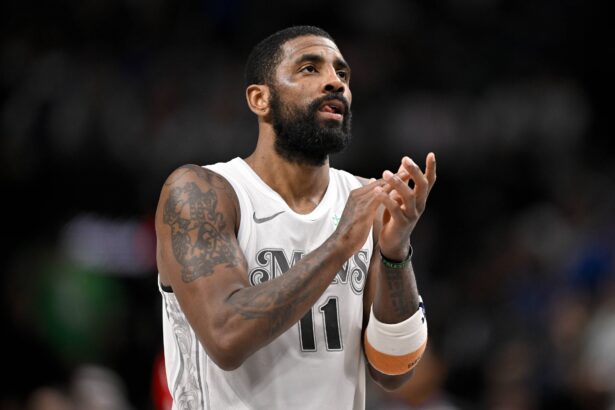
In the last month, the Spurs have gone unbeaten over an 11-game stretch and forced their way into the league’s “who’s actually hot” conversation. The Hornets have also stayed on a real run of winning, not just one good week, sitting near the top of the win board since January 1. At the very top, the Celtics and Pistons have both started the 2026 calendar year as main title contenders, setting the pace for everyone else.
This list is simple: NBA teams with the most regular-season wins since January 1, which is the start of the 2026 calendar year. It is not a power ranking, and it is not based on net rating, schedule strength, or projections. It is a results-only snapshot of who has been most consistent at winning games during this last part of the season, when rotations tighten, and every matchup starts to look like a scouting report instead of a surprise.
The order runs based strictly on total wins in 2026 so far. When teams are closely stacked, the point is still the same: the win volume tells you who has been banking results while the standings race has intensified.
15. Phoenix Suns – 15 Wins
Royce O’Neale’s walk-off three-pointer to beat the Lakers was not just a highlight. It was a snapshot of the Suns’ 2026 profile: they can still manufacture wins on nights when the roster is not clean, and the margin is thin. That win pushed them to 34-26 overall, and it stopped a small slide before it turned into a standings problem.
Since January 1, the Suns are 15-12. That is a strong chunk of wins, but it is not a step forward from their pre-2026 pace. Before, they were 19-14. The takeaway is simple: they have maintained playoff-level form, but they have not improved their baseline as the season has tightened.
The offensive story is heavy volume from deep. Since January 1, they are taking 42.4 threes per game and scoring 108.5 points per game, which is lower than the teams above them in this “wins since January 1” table. That creates a very specific identity: the Suns are comfortable living with variance, because when the threes fall, the game breaks open, and when they do not, the Suns need late-game execution to survive.
Devin Booker has been the steady lever. He is at 24.7 points and 6.1 assists per game this season, and his ability to get a quality look late is still the Suns’ simplest answer when everything else stalls. The team-level indicators point to the same middle-ground reality: an offensive rating around league average, a defense closer to the top third, and a small positive net rating. That is a good team, not a dominant one.
The Suns being 15th here is about consistency, not ceiling. They can beat anyone on a given night. The issue is they have not stacked enough “easy” wins in 2026 to climb higher than this tier.
14. Atlanta Hawks – 15 Wins
The Hawks did not drift into 15 wins since January 1. They forced it with a season-defining pivot, then backed it up with results. The clearest marker is the current line: 31-31 overall, finally back to .500 after a four-game winning streak, thanks to Jonathan Kuminga’s highlighted performances.
Since January 1, the Hawks are 15-12. Before January 1, they were 16-19. That is a real improvement in pace, and it lines up with how the roster changed. In early January, they moved Trae Young to the Wizards for CJ McCollum and Corey Kispert. That trade reset the offense away from one-guard domination and toward more shared creation, with a steadier shot diet.
The bigger swing? Jonathan Kuminga arriving and scoring 27 in his Hawks debut, then a 20-point performance last night, as the Hawks are on a 3-0 roll since Kuminga debuted for them in late February.
The numbers since January 1 show the shape of their wins. They are scoring 115.0 points per game with 29.4 assists per game. That assist rate explains why their better nights look sustainable. It is less about a single player catching fire and more about getting into the paint, making the next pass, and living with good shots.
The defense is not elite, but it has been functional enough to support winning. The Hawks have generated steals at a high clip during this stretch, and that has helped them play faster without having to be perfect in the half-court. When they get transition chances, their spacing holds up because McCollum and Kispert are legitimate shooting gravity, not theoretical gravity.
Their placement here is also a reminder: 15 wins since January 1 is strong, but it came with more losses than the top of the list. The Hawks have raised their floor, not their ceiling. If they keep playing .556 basketball the rest of the way, they will be a problem in any Play-In setting, even if they are not a true contender yet
.
13. Toronto Raptors – 15 Wins
The Raptors’ 2026 has been about stability. Not flash. Not a one-week heater. Just a team that keeps showing up with the same identity and cashing enough close games to keep climbing and be considered a “contender” in some eyes.
They have 15 wins since January 1, with a 15-10 record in that span. Overall, they are 35-25. They were 20-15 before January 1, and they have actually improved their win pace in 2026, which is the cleanest compliment you can give a good team at this point of the season.
The offensive engine is straightforward: Brandon Ingram as the primary scorer, Scottie Barnes as the possession connector. Ingram is averaging 21.9 points per game, and he gives the Raptors a real half-court shot creator when the first option is taken away. Barnes fills the gaps with versatility, 19.1 points, 8.2 rebounds, and 5.5 assists, and that blend is why the Raptors can play different styles without looking like a different team every night.
The “since January 1” team stats point to the main difference between the Raptors and a lot of mid-tier teams: they move the ball, and they defend well enough to let the offense breathe. They are at 28.9 assists per game in the 2026 calendar stretch, and they have generated enough defensive stocks to avoid long droughts. That is how you go from “good story” to “good record.”
Being 13th here, while tied on wins with teams below them, is about efficiency. The Raptors needed fewer games to get to 15 wins than the Hawks and Suns did. Over a larger sample, that kind of edge is usually the difference between being a top-six team and spending April sweating the play-in line.
12. Philadelphia 76ers – 16 Wins
The 76ers have 16 wins since January 1, going 16-13 over that span. That is the profile of a good team, not a heater. It also fits where they sit overall: 33-26, sixth in the East, living in the middle ground between the conference’s true top tier and the play-in mess.
The simplest read is this: the 76ers have not meaningfully improved since the early part of the season, they have mostly held their level. If they are 33-26 overall and 16-13 since January 1, that means they were 17-13 before January. That is basically the same pace, with less stability because the lineup has been hit by availability swings. The clearest example right now is Joel Embiid’s strained right oblique, which has him out at least three games and set for re-evaluation.
With Embiid in and out, the 76ers have leaned harder on Tyrese Maxey to carry the offense. He is at 29.1 points and 6.8 assists per game, which is a true No. 1 guard workload, not a secondary scorer line. Rookie VJ Edgecombe has also mattered more than most contenders can reasonably expect from a first-year guard, putting up 15.5 points, 5.6 rebounds, and 3.9 assists.
The issue, and why the January win total is “good but not scary,” is that the team still has to win in the margins. The defense sits at a 115.5 defensive rating, which is closer to average than elite, and nights like the recent Celtics loss exposed how fragile they can look on the glass when the matchup turns physical. The 76ers can score with anyone when Maxey is rolling, but to climb this list from 12th into the top group, they need Embiid’s availability and a more reliable defensive baseline.
11. Los Angeles Lakers – 16 Wins
The quickest way to explain the Lakers’ 2026 is that they can look unbeatable on back-to-back nights, then spend a week searching for their floor. Sunday’s 128-104 win over the Kings was their second straight blowout and the back-to-back snapped a three-game losing streak in that first Warriors matchup, with Luka Doncic and LeBron James leading the scoring.
They have 16 wins since January 1 (16-13), which puts them in this tier mostly because they have played more games than some of the teams around them. The bigger story is the split: the Lakers are 36-24 overall, but they were 20-11 before January 1 and 16-13 since. That is a clear drop in win pace, even if the total win count still looks strong.
The on-court profile explains why. Since January 1, the Lakers have scored 114.9 points per game on 49.8% from the field, and they are not a pure volume-three team (32.9 threes attempted per game). When they are right, it is because they are scoring efficiently inside the arc and getting enough playmaking (26.0 assists per game) to avoid stagnation. When they are wrong, the margin is thin because they are not taking 40-plus threes to swing the math, and they are not bludgeoning teams on the glass (40.8 rebounds per game).
The encouraging part is what the blowouts showed: they can still create separation with shot quality and ball movement. The concern is sustainability. Their 2026 results have been good, not dominant, and that is why 16 wins lands them at No. 11 instead of pushing them toward the top group.
10. New York Knicks – 16 Wins
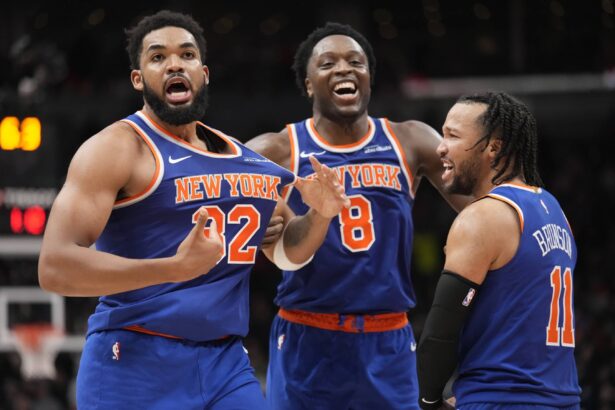
The Knicks’ 2026 form is not a mystery. They defend hard enough to travel, and they have enough creators to bury teams when the game turns into a half-court grind. The 114-89 win over the Spurs was a clean example: Mikal Bridges and Jalen Brunson controlled the scoring, and Karl-Anthony Towns tilted the glass.
They also have 16 wins since January 1 (16-12), but they got there in fewer games than the Lakers, which is why they sit one spot higher on a wins-based list. Overall, the Knicks are 39-22. The split matters: they were 23-10 before January 1 and 16-12 in 2026. That is a step down in winning percentage, even though the raw win count stays near the top.
The numbers since show what has changed. Their scoring has dipped to 112.6 points per game with a 46.3% field goal rate. They are still taking threes at volume (39.1 attempts per game) and making them at a solid clip (36.3%), but the overall offensive output has not been as sharp as their season-long profile suggests.
So why are they still stacking wins? Because their shape travels. Since January 1, they are still rebounding well (45.9 per game) and moving the ball (26.9 assists), which keeps them from living on isolation alone. And when their defense turns a game into a possession battle, they can win without scoring 120.
9. Los Angeles Clippers – 17 Wins
The Clippers are the clearest “calendar-year team” in the league because the before-and-after split is extreme. They are 28-31 overall, which reads like a lost season at first glance. Then you look at 2026: 17-10 since January 1. That means they were 11-21 before January 1 and have played like a top-tier win pace since.
This is exactly why they sit above the 16-win teams. It is not about “better team” optics. It is about banked results in 2026.
Their 2026 team stat line is also coherent. Since January 1, the Clippers are scoring 112.1 points per game on 48.6% shooting, with 23.4 assists per game and 8.6 steals per game. They are not winning by bombing threes (31.7 attempts, 35.7%), they are winning by generating efficient looks and getting enough defensive events to avoid long dry spells. The defense has been real too, at least in terms of activity: 4.7 blocks per game in 2026 is a big number for a perimeter-oriented roster.
The recent 137-117 win over the Pelicans fit the pattern. Kawhi Leonard led the scoring, and they got useful production up and down the rotation, including John Collins returning from injury. That depth piece matters because it explains why the run has held for two months instead of two weeks.
A lot of their success was based on the James Harden–Ivica Zubac pairing, both gone now, so it’s very likely they’ll start to drop in the standings again. They’ve gone 5-4 since the trade deadline, and will likely retool around Darius Garland rather than compete for the postseason.
8. Houston Rockets – 17 Wins
Rebounding and defense are the Rockets’ clearest identity, and it has shown up since January, even with Steven Adams going down: 47.7 rebounds per game, plus 6.2 blocks, while only scoring just 108.3 points per game in that stretch. That combination usually means one thing. They are comfortable winning games that do not look pretty, because they trust their ability to let Kevin Durant work and shrink the margin with defense.
The bigger context is that the Rockets are 37-22 overall and third in the West. The 17-win run has kept them in the top tier of the conference even as the schedule has tightened. It is also a slight step down from their pre-2026 pace: a 20-10 start before the calendar flipped. That is still good. It just is not the same clip.
Their profile is built on defense. The Rockets are running fourth in defensive rating this season. That lines up with why a lower-scoring January-to-now stretch can still translate into wins. They do not need 120 every night if they can end possessions with a stop and then punish teams on the glass the next trip.
If you want the most important swing factor, it is Alperen Sengun’s availability and load. The Rockets are 33-19 with him this season, which tells you how central his on-court ecosystem is to their ability to win consistently. When the Rockets are right, they get rim pressure and second chances without sacrificing the defensive floor. That is the formula behind a 17-win calendar-year stretch even without headline offense.
7. Minnesota Timberwolves – 17 Wins
The Timberwolves have been a real “results” team in 2026, and the win over the Nuggets was the cleanest example: they closed, they got contributions across the rotation, and it moved them up the West board. They sit fourth in the conference at 38-23; this is not a fake hot stretch bolted onto a mediocre season.
In the since-January table, the Timberwolves have 17 wins in 27 games, and the stat line screams offense: 119.6 points per game on 49.5% from the field, with 14.3 made threes per game and 38.4% from deep. That is not “one guy got hot.” That is a team-level shot quality profile, and it is why their 2026 wins have held for weeks instead of days.
Anthony Edwards is the obvious lead driver. He is averaging a career-high 29.6 points per game this season. But the more important takeaway for this specific ranking is that the Timberwolves have won with depth and lineup flexibility, which is usually the separator between a good regular-season run and a sustainable one. The Nuggets game featured meaningful bench scoring and multiple secondary creators making plays.
There is also a defensive baseline under all of it. The Timberwolves are sixth in defensive rating, which helps explain why they can survive nights when the threes cool off. Put it together, and you get a simple conclusion: the 17 wins are not a fluke. The Timberwolves are winning with a top-four record, high-end scoring, and enough defense to keep their floor intact.
6. Oklahoma City Thunder – 18 Wins
The Thunder have 18 wins since January 1, and it reads like business as usual for a team that has lived at the top of the league all season. They are 47-15 overall and first in the West. If you back into the split, this also frames their year correctly: 18-10 in the 2026 stretch after a 29-5 start before January, which is why they built a cushion and why every “small dip” still looks like elite winning.
The most honest explanation is defense. The Thunder run first in defensive rating. That is the kind of backbone that travels, holds up on short rest, and keeps you from dropping games you “should” win. It also matches the eye test: big steals and blocks numbers in the 2026 sample, which usually signals constant pressure at the point of attack plus real rim protection behind it.
Shai Gilgeous-Alexander is still the nightly constant. In the win over the Mavericks, he scored 30 and extended his streak to 123 straight games with 20-plus points, while the Thunder won again with their defense setting the tone.
In terms of what translates, the Thunder have the cleanest case of anyone in this tier. A top-ranked defense, a superstar half-court scorer, and enough two-way depth to win even when the offense is not sharp.
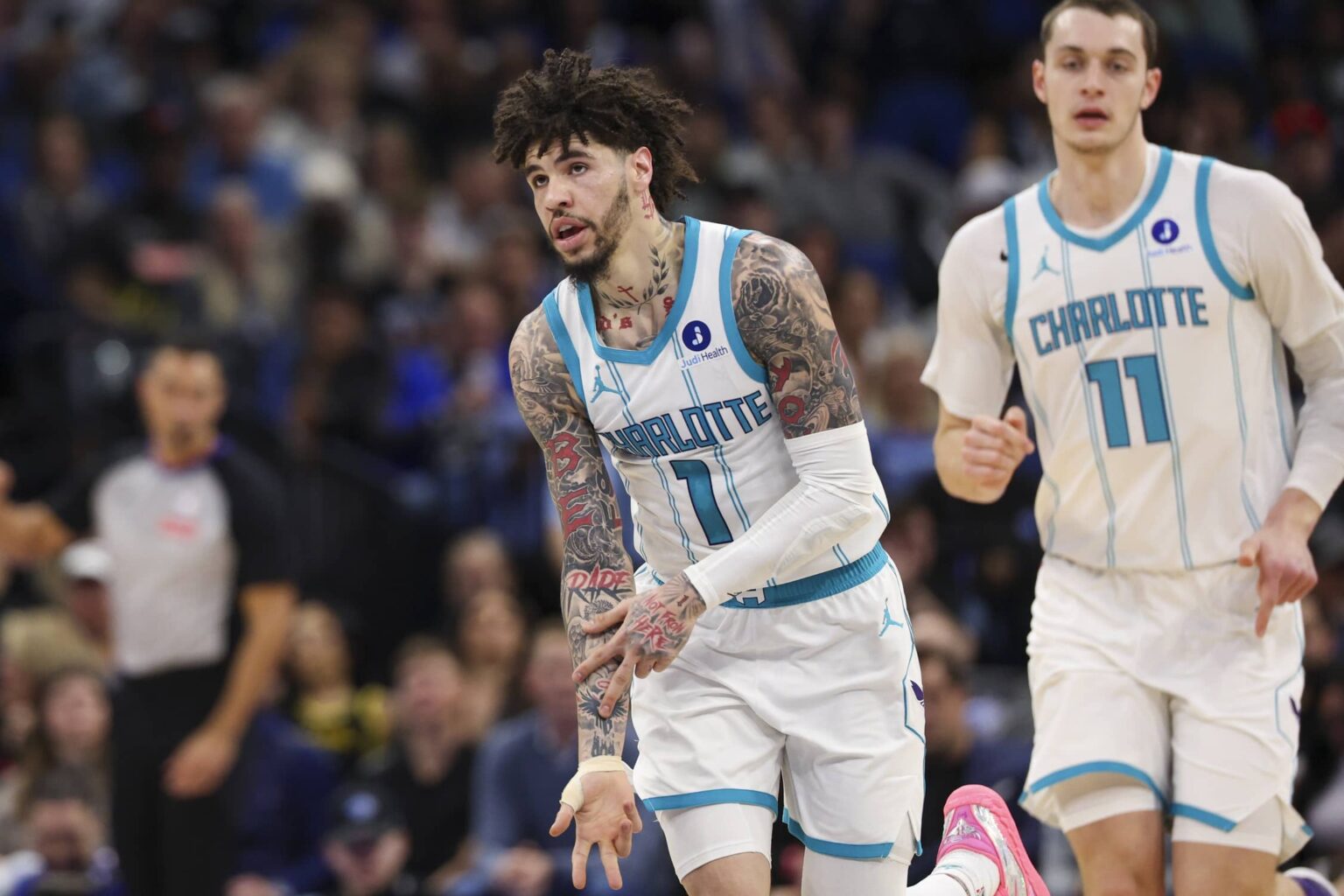
5. Charlotte Hornets – 19 Wins
A nine-game winning streak in early February forced a scouting-report update on the Hornets. It was their longest run in decades, and it fit the bigger picture: this has been one of the league’s most improved teams in the 2026 calendar year.
Since January 1, the Hornets are 19-9, which is why they’re sitting in this top-five tier on the “wins in 2026” board. Their overall record is 30-31, and that split tells the whole story: they were 11-22 before the calendar flipped, then played winning basketball for two straight months.
The team-level stat line explains how they’ve stacked results. Since January 1, the Hornets are scoring 116.4 points per game while launching 43.2 threes per game and hitting 39.3% from deep, plus 17.0 makes per night. That is a very specific identity: high-volume, high-efficiency spacing that can swing games fast, even when the half-court gets messy.
LaMelo Ball has proven he can win with the right talent around him. He’s at 19.4 points and 7.3 assists per game, and the passing is what keeps their shooting diet clean instead of desperate. Brandon Miller has been the nightly scorer at 21.0 points per game, with Kon Knueppel (19.3 PPG) right behind him. His three-point volume (3.5 makes per game) is a huge piece of why opponents can’t load up on Ball.
The honest limitation is where the Hornets are in the standings. At 30-31, they’re still 10th and around the play-in line, which means the early-season hole wasn’t fully erased. But if you’re grading only 2026, they’ve been one of the most consistent “win a lot of games without being perfect” teams in the league.
4. Cleveland Cavaliers – 19 Wins
The Cavaliers are the cleanest “two-way, win-any-style” team on this list outside the top two. Their 2026 record since January 1 is 19-8, and it’s paired with a stat profile that looks like playoff basketball: efficient scoring, heavy ball movement, and constant defensive activity.
Zoom out, and the improvement is obvious. The Cavaliers are 37-24 overall, and they were 18-16 before January 1, then turned into a 70%-win team in the calendar year stretch with the James Harden trade. That’s not random variance. That’s a team settling into its best version.
Since January 1, they’re at 118.7 points per game on 49.4% shooting, with 29.3 assists per game. That assist number is a key to what Harden is bringing: fewer empty isolations, more “good shot every trip” possessions. On the other end, 9.1 steals and 5.4 blocks per game is a lot of disruption for a contender-level team, not a gimmick defense gambling for highlights.
The roster balance is the separator. Donovan Mitchell is at 28.5 points and 5.8 assists per game, still the primary bucket-getter. James Harden has been the second creator at 19.3 points and 8.1 assists, and even a short absence (fractured right thumb) didn’t derail the run. Evan Mobley (17.6 points, 8.7 rebounds) and Jarrett Allen (15.4 points, 8.6 rebounds on 63.7% shooting) give them rim pressure and rim protection without sacrificing spacing and pace.
That’s why they’re No. 4. The Cavaliers haven’t just won a lot in 2026; they’ve done it with a profile that usually holds up when matchups get tighter.
3. San Antonio Spurs – 19 Wins
The Spurs didn’t stumble into this spot. They went on an 11-game winning streak, looked unbeatable for weeks, then finally got clipped when the Knicks turned the game into turnovers and chaos. That swing is basically their 2026 in one sentence: high ceiling, still learning how to survive a night when the opponent punches first.
Since January 1, the Spurs are 19-8. Their overall record is 43-17, second in the West, so the calendar-year stretch has been more “hold elite form” than “massive jump.” If you do the split, they were 24-9 before January 1 and 19-8 after, basically the same win pace with slightly more volatility as the schedule tightened and some stars missed time.
The team stats since January 1 show why they keep stacking wins anyway. They’re scoring 115.6 points per game, rebounding well (46.5), and moving it (28.1 assists). Defensively, 6.0 blocks per game is a signature number, and it matches what opponents feel when they get into the paint.
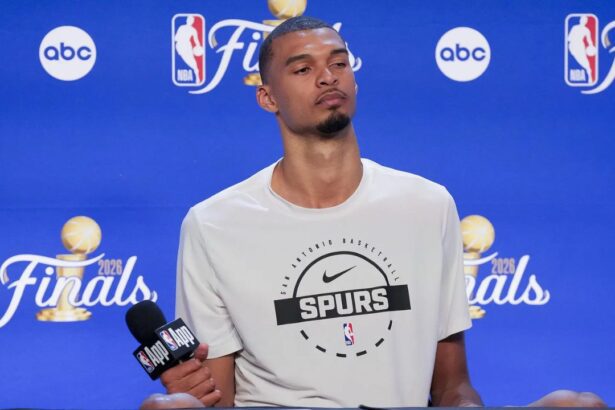
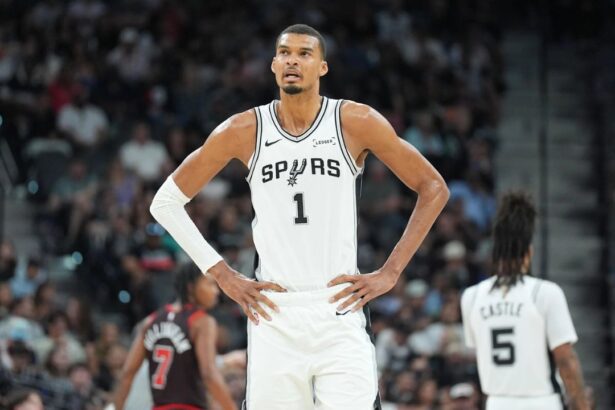
Victor Wembanyama is the anchor of everything: 23.7 points and 11.2 rebounds per game, and he’s the reason their defense can be aggressive without getting punished at the rim with 2.9 blocks. Stephon Castle has been the big “2026 difference,” giving them a second organizer at 16.5 points and 6.8 assists per game, which keeps possessions from turning into Wembanyama-or-bust offense. De’Aaron Fox (18.4 points) rounds out the perimeter scoring, and while his production has gone down since the start of the year, the Spurs look like a team that can beat anyone in a seven-game series.
They’re No. 3 because the wins are real, the streak was real, and the underlying profile is strong. The only question is whether the “bad night” version can get rare enough to survive four playoff rounds.
2. Boston Celtics – 20 Wins
The Celtics hit 40 wins last night with a game that looked like a deep-team flex, not a superstar carry. Neemias Queta posted 27 points and 17 rebounds against the 76ers, Jaylen Brown added 27, and Derrick White controlled stretches with 21 points and eight assists.
The Celtics are tied for the most wins in the 2026 calendar year at 20, and they have done it with lineup solutions, not just one recurring script. The 2026 record is 20-8, which is why they are first on the “wins since January 1” table. Overall, they are 40-20 and second in the East, which is astonishing considering they are still missing Jayson Tatum.
The most concrete “why” is that Jaylen Brown has played like a first-option scorer for a full season. He is averaging 29.3 points, 6.9 rebounds, and 4.7 assists. White has been the stabilizer next to him, at 17.1 points, 4.5 rebounds, and 5.7 assists. And the context piece that can’t be ignored is availability. The Celtics have navigated the whole season without Tatum, which has forced them to win with structure and depth rather than star redundancy.
They have not improved their pace in 2026 so much as they have protected it. That is the point. The Celtics are not “hot.” They are reliable. In a season where a lot of teams spike for two weeks, the Celtics have stacked 20 calendar-year wins while still looking like the same team night to night, which is exactly what you want from a real contender.
1. Detroit Pistons – 20 Wins
The Pistons keep winning the same way: they take your comfort away. Even in the 106-92 win over the Magic, they opened 0-for-15 from three, then flipped the game with pressure and pace in the second half. Cade Cunningham finished with 29 points, 11 assists, and six rebounds, and the Pistons’ third and fourth quarters were decisive.
That win is part of why they sit here with 20 wins in the 2026 calendar year. More importantly, it is not empty volume. The Pistons have the best record in the league since January 1 at 20-6. They have also been more efficient than the Celtics at 20 wins, which is why the “since January 1” table flatters them even beyond the raw W column.
Zoom out, and it matches the full season picture. The Pistons are 45-14 overall and first in the East, best in the entire league also. That means they were already elite before the calendar flipped, then stayed elite after it did. If you split it out, they were 25-8 before January 1 and 20-6 since, basically holding a Finals contender win pace for the entire season, not catching a midseason wave.
The profile explains why it is sustainable. They are scoring 115.0 points per game while generating defensive stops at the highest level, 11.4 steals, and 6.7 blocks per game in the same stretch. That is a rare combination because it lets them win both clean games and ugly games. When the offense is normal, they can outscore you. When it is choppy, they can still win by forcing mistakes and getting run-out points.
The Cunningham piece is the simplest differentiator. He is at 25.5 points, 5.8 rebounds, and 9.8 assists this season, with 46.0% from the field, 33.2% from three, and 81.0% from the line. That is a real No. 1 option workload with MVP consideration, and it is why the Pistons’ 2026 wins read like a top seed, not a feel-good story.