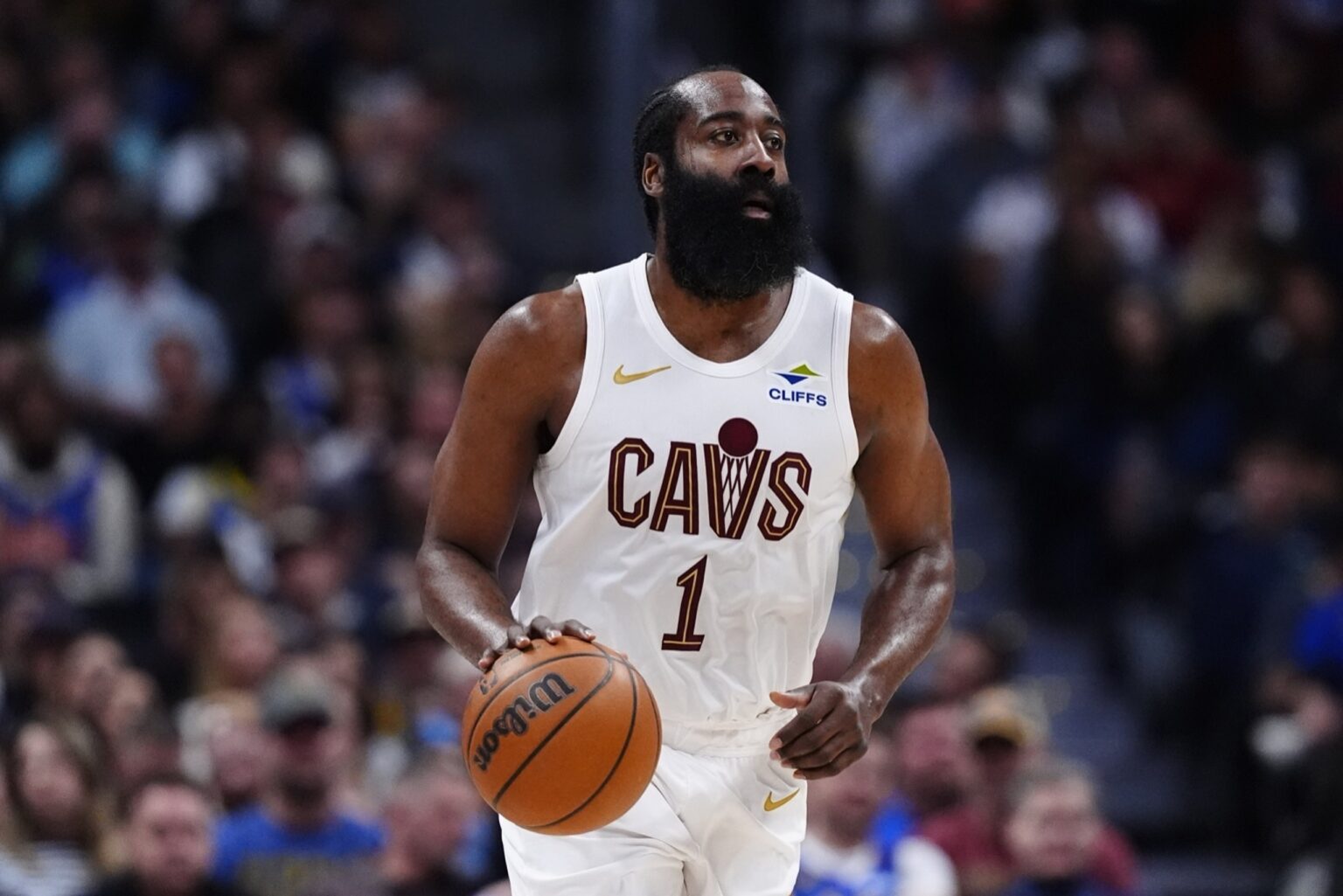
This was a nasty loss. After taking control of the series early with a 2-0 lead, Cleveland walked into Game 3 and got punched in the mouth by a Toronto team that played sharper, faster, and with way more urgency. The final score, 126-104, reflects that.
The Raptors shot the lights out, dominated key stretches, and never really let the Cavaliers breathe once they grabbed momentum. A 126-104 final doesn’t even capture how lopsided this felt at times.
Here are the four biggest reasons Cleveland got run off the floor.
1. Toronto’s Shooting Was Absolutely Nuclear
You’re not beating anyone, let alone a desperate playoff team, when they shoot like this.
Toronto put up a ridiculous 50-87 from the field (57.5%) and an absurd 14-23 from three (60.9%). That’s not just efficient – that’s borderline unfair. Every defensive mistake Cleveland made got punished immediately, and even decent contests didn’t matter at times.
RJ Barrett was on a heater, going 12-19 overall and 6-8 from deep for 33 points, while Scottie Barnes matched him with 33 points on 11-17 shooting. That’s two stars scoring 66 combined points on hyper-efficiency – you’re already in trouble there.
Then it got worse. Jamison Battle came off the bench and didn’t miss, going 5-5 from the field and 4-4 from three for 14 points. As a team, Toronto had multiple players shooting above 60%. Cleveland simply had no answers.
Meanwhile, the Cavs? Just 44.4% from the field and 31.1% from three (14-45). That’s a massive gap, and it showed every possession.
2. Turnovers Completely Killed Cleveland’s Flow
This is where the game quietly got out of hand.
Cleveland coughed it up 22 times. That’s not a typo – twenty-two turnovers in a playoff game. You’re basically gifting extra possessions at that point, and Toronto took full advantage.
James Harden alone had 8 turnovers, Donovan Mitchell added 3, and multiple players were loose with the ball under pressure. These turnovers came in moments where Cleveland could’ve stabilized the game.
Toronto, on the other hand, played clean basketball with just 12 turnovers. That difference led directly to a 23-8 advantage in points off turnovers.
When you combine elite shooting with extra possessions, you get… this kind of blowout.
3. The Cavs’ Stars Were Inefficient And Outplayed
Cleveland needed its stars to match Toronto’s firepower; instead, they got outclassed.
Donovan Mitchell finished with 15 points on 7-16 shooting, including 1-7 from three. He never found a rhythm and struggled to impose himself.
James Harden had a decent scoring line (18 points, 5-13, 3-10 from three), but the 8 turnovers completely overshadowed it. His decision-making just wasn’t sharp, and Toronto’s defense clearly bothered him.
Evan Mobley put up 15 points and 7 assists, but it came on 4-13 shooting, and he couldn’t anchor the defense the way Cleveland needed.
Compare that to Barnes (33, 11 assists) and Barrett (33 on elite efficiency), and it’s not even close. Toronto’s stars dictated the game; Cleveland’s reacted to it.
4. Defense Completely Fell Apart, Especially In The Paint
For a team built on defense, this was a rough watch.
Toronto scored 60 points in the paint, consistently breaking down Cleveland’s interior defense. Whether it was Barnes attacking downhill, Barrett getting to his spots, or role players cutting freely, the Cavs had no resistance.
Even with Jarrett Allen (3 blocks) and Mobley on the floor, the rotations were late, the communication was off, and the physicality just wasn’t there.
It wasn’t just inside, either. The Raptors combined that interior dominance with elite perimeter shooting, forcing Cleveland into impossible defensive choices.
Add in 29 assists for Toronto, compared to Cleveland’s 23, and you’re looking at a team that was carving up the defense possession after possession.