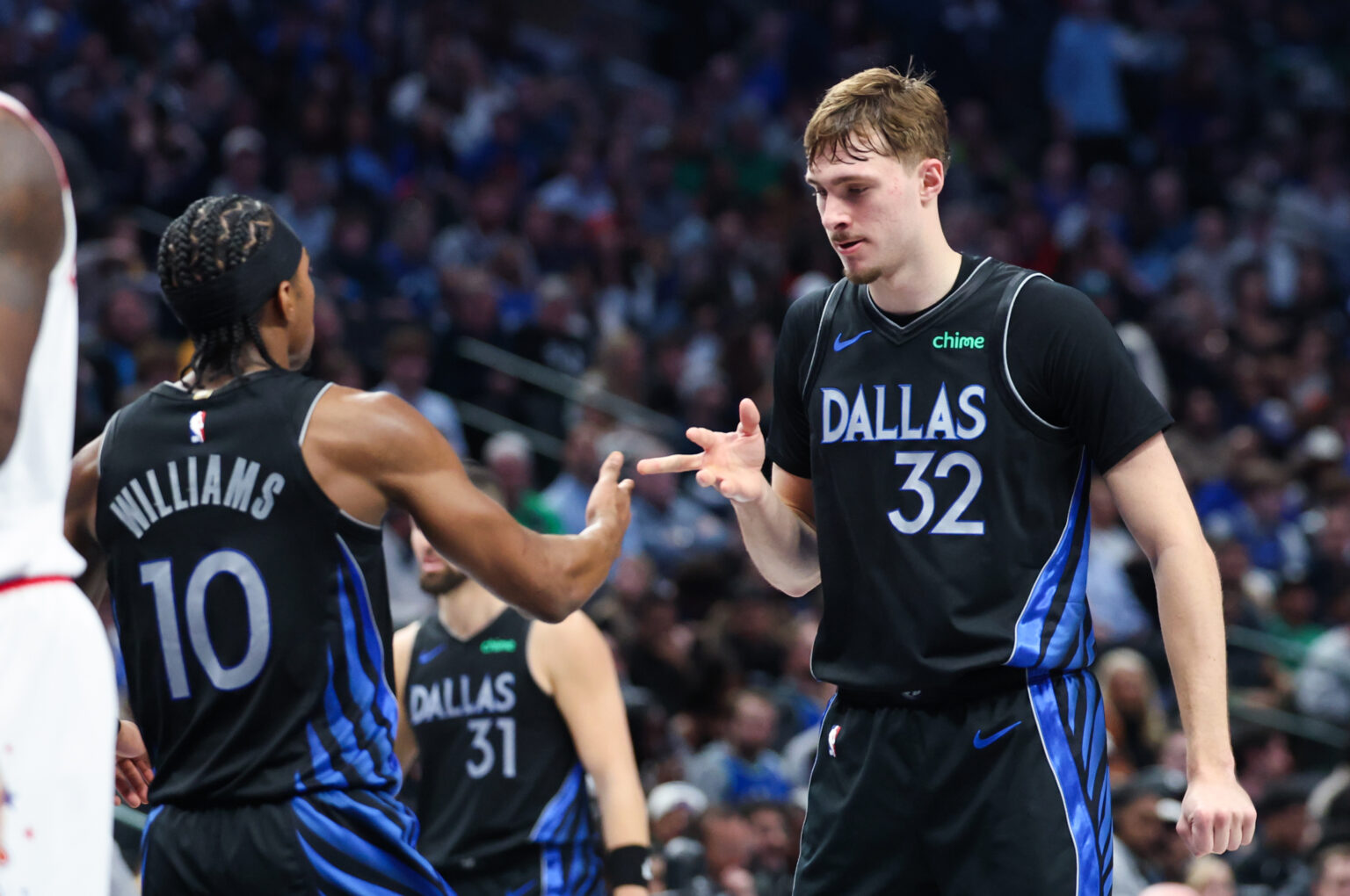
For most of the night, the Mavericks played like a team tired of hearing about their recent slide, and intent on ending it themselves. Dallas rode a scorching shooting performance and a surprisingly sturdy defensive effort to a 110-104 win over the Rockets on Saturday, controlling the tempo for long stretches and answering every Houston push with poise. The victory snapped a four-game skid and continued a quiet trend at American Airlines Center, where Dallas has now taken six of its last seven.
The game tightened late, as expected against a Rockets group that refuses to go away easily, but the Mavericks never fully lost their footing. Anthony Davis anchored the interior, Max Christie provided the shot-making jolt, and Dallas survived a chaotic night that included early injuries on both sides. When it ended, the numbers told a simple story: the Mavericks made shots, protected the paint, and forced Houston into one of its least efficient offensive outings of the season.
Dallas Got Scorching Hot From The Field
The Mavericks shot with confidence, rhythm, and consistency. Dallas finished the night at 55.0% from the field, their most efficient performance in weeks, while holding Houston to 38.7% shooting, its second-worst mark of the season. Max Christie was the clearest example of the difference, pouring in 24 points on 10-of-13 shooting and knocking down 4 of 6 from three, consistently punishing late closeouts.
What made the shooting night more impressive was the variety. Anthony Davis went 9-of-15 largely inside the arc, Brandon Williams scored 15 points on 7-of-10, and the ball rarely stuck. Dallas recorded 24 assists and consistently found the open man when Houston loaded up. Even without a huge three-point volume (just 8 made threes), Dallas’ efficiency forced Houston into a constant scramble.
Defensively, the shot quality Dallas allowed mattered just as much. Houston went 10-of-41 from three (24.4%), with multiple stretches of empty possessions fueled by strong rotations and interior deterrence. Kevin Durant scored 34 points, but even his production came on volume (14-of-26) rather than easy rhythm. Everyone else struggled to find space.
Anthony Davis Naturally Controlled The Game
Anthony Davis didn’t dominate loudly, but he controlled the game in ways that mattered. He finished with 26 points and 12 rebounds, added five blocks, and altered countless other shots without overextending himself. With Houston’s frontcourt thinned early, Davis consistently sealed deep, scored efficiently, and forced help that opened the floor for others.
Perhaps most important was how Davis protected the rim while staying disciplined. Dallas recorded 10 blocks, and Davis was responsible for half of them. Houston still grabbed 17 offensive rebounds, but many of those came away from the restricted area, and second-chance opportunities didn’t translate into easy points. The Rockets scored 54 points in the paint, but that number came on effort rather than efficiency.
Davis’ presence also stabilized Dallas during the tense closing minutes. As Houston cut a 17-point fourth-quarter lead down to five, Davis didn’t rush shots or chase stats. He stayed patient, trusted spacing, and allowed others, namely Christie, to finish the job. It was a veteran performance that didn’t need to be flashy.
Max Christie Had Huge Moments
With just over a minute left and Houston threatening to flip the game, Max Christie produced the moment that swung everything back to Dallas. After the Rockets trimmed the lead to 106-101, Christie attacked off the bounce and finished a strong dunk through traffic, a simple play that carried enormous weight. It stopped the momentum and forced Houston to play from behind again.
Christie’s night went beyond that moment. He scored 24 points, hit four threes, grabbed seven rebounds, and played within himself throughout. His shooting efficiency stood out, but so did his shot selection. Christie rarely forced attempts, instead capitalizing on defensive breakdowns created by Davis post-ups and drive-and-kick action.
On a roster that has searched for consistency outside its stars, Christie’s performance felt sustainable rather than fluky. Entering the night shooting 45.9% from three, he continued to show that his spacing isn’t accidental. Against a Rockets defense that thrives on physicality, Christie’s composure mattered.
Dallas Overcame Some Adversity
This was not a clean win. Dallas lost P.J. Washington Jr. after one quarter with an ankle sprain, Houston lost Alperen Sengun barely a minute into the game, and the rebounding numbers were lopsided. The Rockets won the offensive glass 17-2 and scored 15 second-chance points, yet still couldn’t turn that advantage into control.
Dallas compensated by winning elsewhere. The Mavericks dominated the defensive boards (45 defensive rebounds), scored 66 points in the paint, and turned defense into offense with 21 fast-break points. Even with 16 turnovers, Dallas managed to keep Houston from stringing together sustained runs.