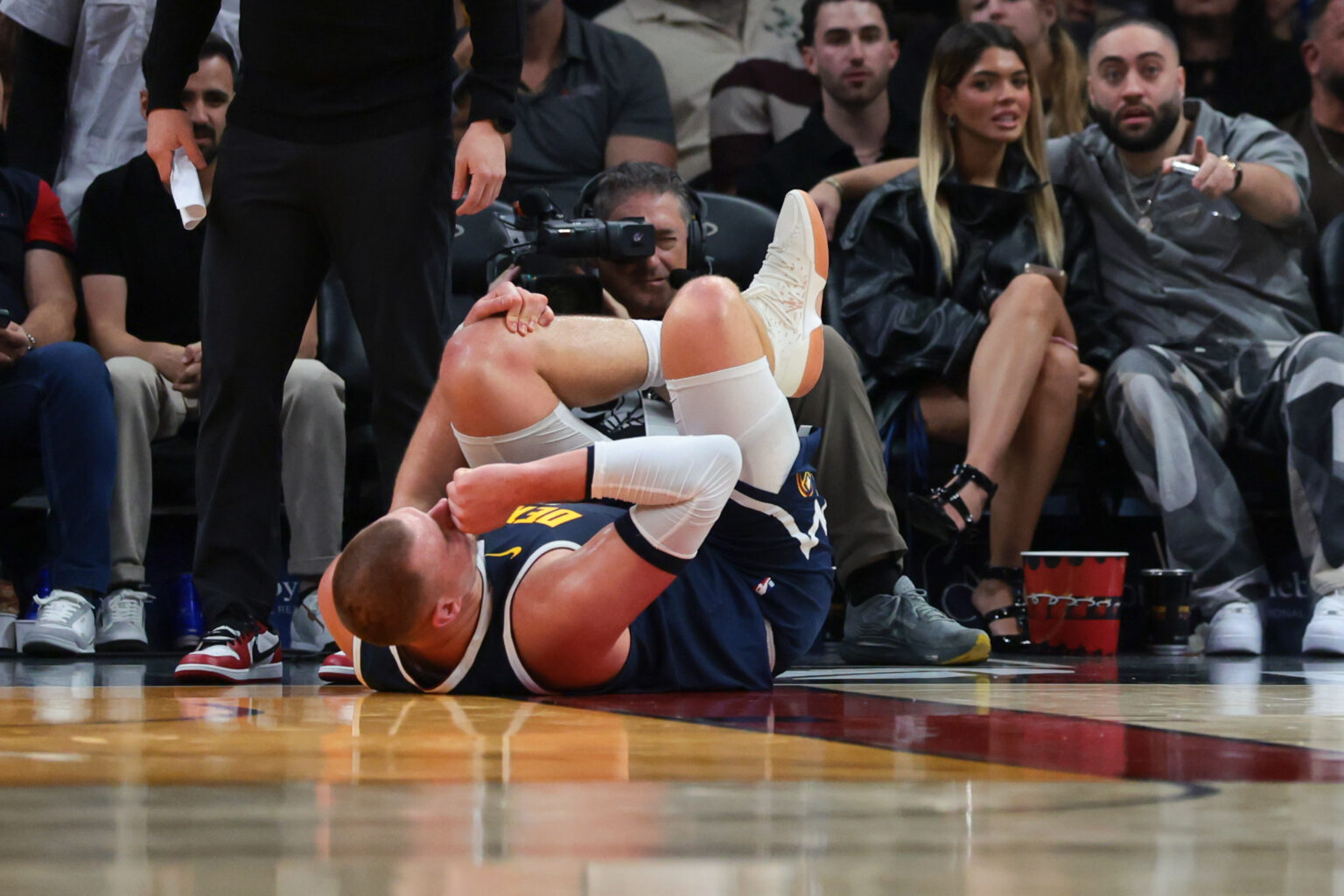
For nearly half, it looked like just another routine night for the Nuggets in Miami. Then everything unraveled in a matter of minutes. Nikola Jokic limped off the floor at the buzzer before halftime, Denver never found its footing again, and the Heat turned the second half into an avalanche en route to a 147-123 beatdown.
What followed was one of Denver’s most alarming defensive performances of the season. Miami exploded for 84 second-half points, hung 147 overall, and snapped a long stretch of frustration against the Nuggets. The loss itself was jarring.
The sight of Jokic clutching his knee and disappearing into the tunnel made it unsettling. Let’s dive into the four major takeaways after this concerning loss.
Jokic’s Injury Changed The Entire Game
Until Jokic went down, Denver was right where it wanted to be. The game was tied 63-63 at halftime, Jokic had already posted 21 points on 9-of-14 shooting with eight assists, and the Nuggets were shooting over 53% from the floor. Offensively, they looked sharp. Structurally, they looked stable.
That stability vanished after halftime. Miami outscored Denver 84-60 in the second half, including a devastating 47-point third quarter. Without Jokic anchoring the offense or quarterbacking defensive rotations, Denver surrendered 53.5% shooting overall and 47.8% from three, while Miami assisted on 40 of its 53 made field goals. The Heat went from trading punches to running downhill, and Denver had no counter.
Denver’s Defense Completely Collapsed After Halftime
Giving up 147 points is alarming no matter the context, but the way Denver allowed Miami to get there was worse. The Heat scored efficiently at every level: 22-of-46 from three (47.8%), 53-of-99 overall, and 18 fast-break points despite the Nuggets committing only 10 turnovers.
Miami repeatedly punished Denver’s closeouts and rotations, especially in the third quarter. Norman Powell scored 25 points on 9-of-16 shooting, Kel’el Ware went a hyper-efficient 8-of-12, and Nikola Jovic drilled 5 threes on 8 attempts off the bench. The Nuggets simply couldn’t string together stops, allowing Miami to score at least 10 points off turnovers, in transition, and on second-chance opportunities.
Denver’s Supporting Cast Couldn’t Stop The Bleeding
To Denver’s credit, the offense didn’t completely disappear. Jamal Murray posted 20 points and 11 assists, Spencer Jones scored 16 on a perfect 5-of-5 from three, and Tim Hardaway Jr. added another 16. But the scoring never translated into control.
The Nuggets finished with a solid 29 assists, yet they were constantly playing catch-up because they couldn’t generate defensive resistance. Miami built a 27-point advantage and closed the night with eight players in double figures. Denver didn’t lose because it couldn’t score, it lost because it couldn’t stop anything.
Rebounding And Physicality Benefited Miami
Even before Jokic exited, Denver struggled to control the glass, and after halftime, it became one-sided. Miami finished with a 46-36 rebounding edge, including 15 offensive rebounds that led to extra possessions and momentum swings.
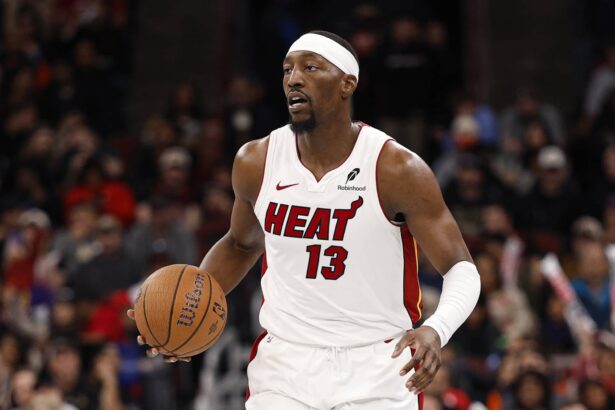
Bam Adebayo grabbed 10 rebounds in his return, Kel’el Ware added nine, and Miami consistently beat Denver to loose balls. The Heat scored efficiently on putbacks and kick-outs, while Denver managed just six offensive rebounds all night. That disparity erased any margin for error once Miami’s shooting caught fire.
What Does Jokic’s Injury Mean For The Nuggets?
Until the severity of Nikola Jokic’s knee injury is known, everything for Denver will be in limbo. What is clear is just how irreplaceable he is to this roster. Jokic entered the night as the MVP favorite, averaging 29.9 points, 12.4 rebounds, and 11.1 assists per game.
His impact goes far beyond the box score, but even the raw numbers from this loss tell the story. Once Jokic exited, Denver surrendered 147 points, lost control of the paint, and looked disconnected on both ends of the floor. The concern only deepens when you look at the broader context of Denver’s roster.
Jamal Murray, who has put together his most consistent regular-season campaign to date, now faces the burden of carrying an offense. With Aaron Gordon and Christian Braun already sidelined for stretches, the margin for error is razor-thin.
Losing a third starter would force Jonas Valanciunas into the starting lineup. Until Jokic returns, and depending on how limited he may be, these are undeniably concerning times for the Nuggets.