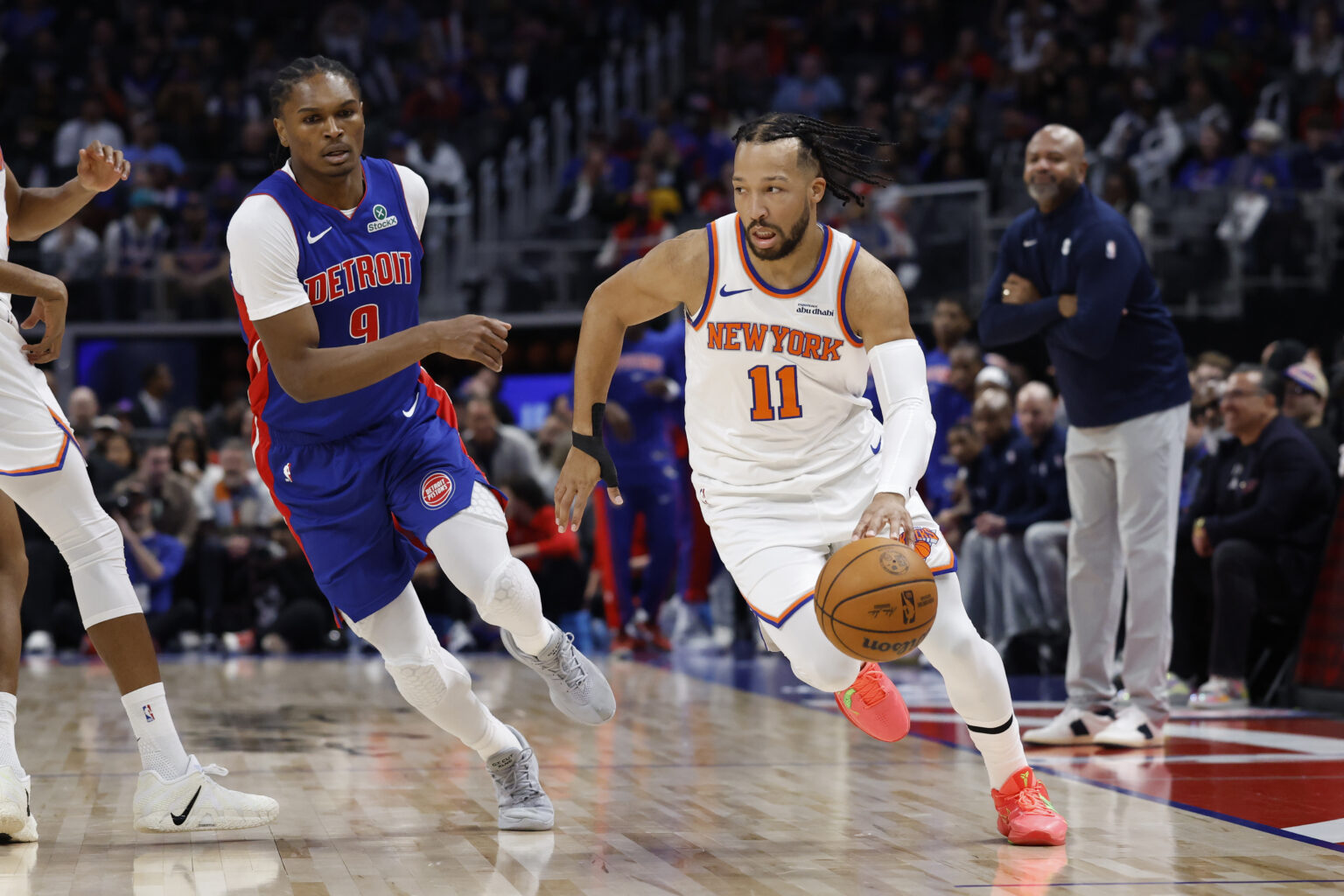
What started as a strange night quickly turned into a troubling one for the Knicks. From the opening stretch, they looked a half-step slow, a possession late, and increasingly unsure of where the answers were coming from. Detroit didn’t just win, they dictated every part of the game, opening up a lead that ballooned to 33 points and never gave New York a real window to respond.
By the final buzzer, the numbers were harsh. The Pistons shot 54.7% from the field and 51.6% from three, while the Knicks managed just 90 total points and committed 20 turnovers. This wasn’t a bad shooting night or a one-off letdown. It was a game that raised uncomfortable questions about pace, physicality, and whether New York is built to keep up with the younger, more aggressive team right now.
Cade Cunningham Completely Controlled The Game
Cade Cunningham completely orchestrated. The Pistons’ guard finished with 29 points and 13 assists, carving up New York’s defense with patience and force. He shot 11-of-17 from the floor, knocked down 3-of-4 from deep, and consistently found teammates when help arrived. Every Knicks coverage felt a step behind his reads.
What stood out most was how calm everything looked. Detroit assisted on 25 baskets, and Cunningham was the engine behind that flow. Even when New York tried switching defenders or sending extra attention, the ball kept moving. The Pistons ended the night with only 15 turnovers, a sharp contrast to the Knicks’ sloppy execution.
The Knicks Lost the Physical Battle Early And Never Recovered
From the first quarter, Detroit imposed itself inside. The Pistons won the rebounding battle 44-30, including 14 offensive boards that repeatedly extended possessions. Isaiah Stewart, Paul Reed, and Ausar Thompson combined to turn missed shots into second chances, while New York struggled to match that energy.
The paint told the story. Detroit scored 52 points in the paint, compared to just 34 for the Knicks. Mitchell Robinson pulled down 10 rebounds, but help never consistently arrived. Too often, Pistons players beat Knicks defenders to loose balls or slipped inside for easy finishes.
Turnovers and Transition Buried New York
This game unraveled quickly once New York started giving the ball away. The Knicks committed 20 turnovers, and Detroit made them pay, scoring 33 points off those mistakes. Live-ball turnovers led to runouts, and runouts led to momentum that never swung back.
The Pistons also dominated the open floor, winning fast-break points 21-12. Detroit looked decisive, pushing whenever the opportunity was there. New York, meanwhile, often jogged back, scrambling late and fouling to stop damage that had already been done.
Supporting Cast Never Showed Up For The Knicks
Jalen Brunson scored 25 points, but it came with six turnovers and little rhythm. Outside of him, consistent offense was nowhere to be found. OG Anunoby scored five points, Karl-Anthony Towns finished with six, and the starting lineup combined for minimal shot creation beyond Brunson.
The bench didn’t rescue things either. While Miles McBride knocked down five threes for 17 points, most of that production came once the game was already out of reach. The Knicks finished with just 15 assists, a sign of stagnant offense and limited trust. Detroit, by contrast, had contributions across the roster and finished with 11 blocks and 12 steals, turning defense into offense all night.