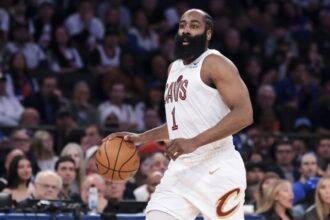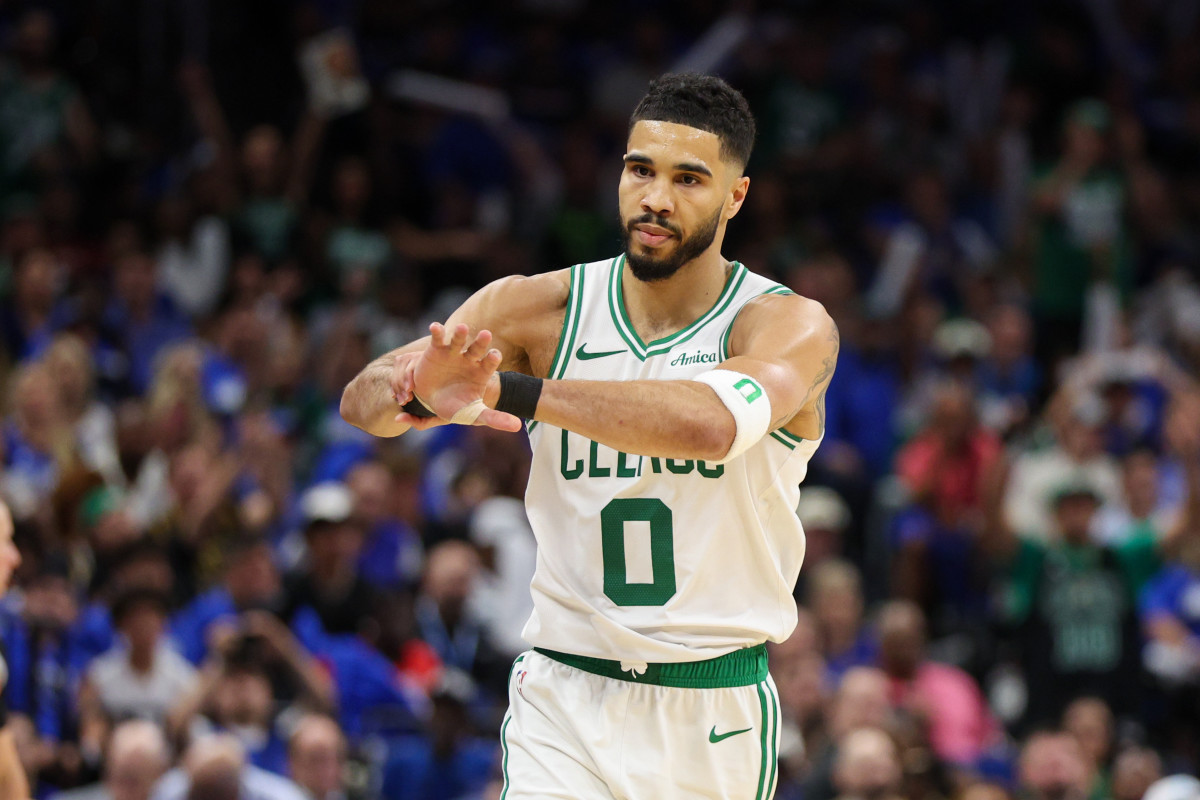
Jayson Tatum returned on March 6 against the Mavericks, just 298 days after suffering a torn Achilles, and that alone made the comeback stand out. He finished with 15 points, 12 rebounds, and seven assists in a 120-100 win, giving the Celtics an immediate reminder of how much balance he brings on both ends even without looking fully sharp yet.
Two days later, in his second game back, Tatum looked more comfortable. He scored 20 points in 27 minutes against the Cavaliers, knocked down a late dagger 3-pointer, and said afterward that the game felt “a lot more normal” from a preparation and rhythm standpoint.
That is what makes this story worth examining. Achilles injuries have historically been one of the most difficult setbacks for NBA players to overcome, often costing stars a full year or more and sometimes permanently changing what they are as athletes. Tatum did not just return faster than many notable names. He came back looking functional right away, then looked even better in his second outing.
Here is how long it took other NBA stars to get back on the floor after an Achilles tear, and why Tatum’s recovery stands out as one of the most impressive returns we’ve seen in NBA history.
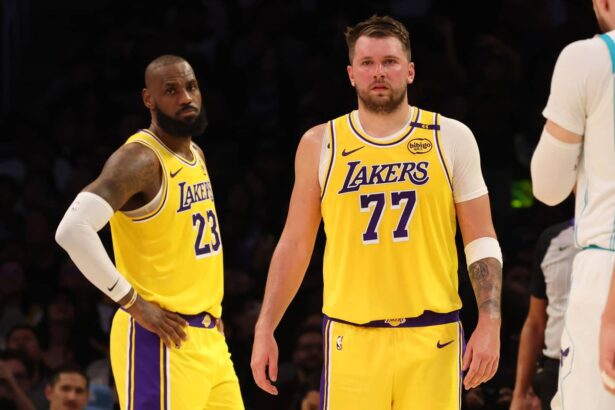
John Wall – 695 days
Before the injury, John Wall had been one of the league’s best lead guards for years. He was the No. 1 pick in 2010, made five straight All-Star teams from 2014 through 2018, earned All-NBA in 2017, and made an All-Defensive team in 2015.
At his peak, Wall was a blur in transition, one of the NBA’s best passers, and a real two-way force. He averaged 23.1 points, 10.7 assists, and 4.2 rebounds in 2016-17, then put up 19.4 points and 9.6 assists in 2017-18 before injuries started to chip away at him.
Wall’s Achilles setback was not like others. He first had surgery in January 2019 to address a left heel issue, but while recovering at home, he slipped, fell, and ruptured his left Achilles. The Wizards announced the new injury on February 5, 2019, and Wall eventually underwent surgery days later. That injury came on top of an already brutal stretch physically, and it effectively erased what should have been the middle of his prime.
Wall did not return to an NBA game until December 23, 2020, 695 days after his last appearance in December 2018. He still had flashes after that. With the Rockets in 2020-21, he averaged 20.6 points and 6.9 assists in 40 games, which on paper looked respectable. But the burst was not the same, the efficiency slipped, and the availability never recovered. He then sat out the entire 2021-22 season before playing just 34 games for the Clippers in 2022-23, averaging 11.4 points and 5.2 assists. That ended up being the last chapter of his NBA career.
That is what makes Wall’s case so harsh. He did come back, and for stretches he even looked productive. But he never got close to the All-NBA version of himself again. The player who once looked like one of the league’s defining point guards was reduced to short-term stopgap roles after the injury. Wall officially announced his retirement in August 2025, ending a career that was brilliant early and deeply derailed late.
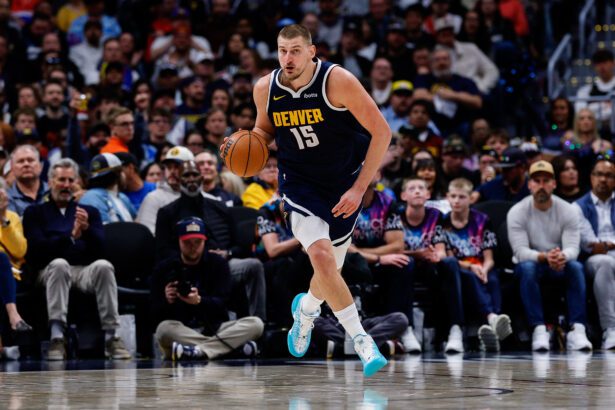
Kevin Durant – 561 days
Kevin Durant suffered his Achilles injury in the biggest possible moment. He tore his right Achilles tendon in Game 5 of the 2019 Finals after trying to return from a calf strain that had already sidelined him for more than a month. Durant had 11 points in just 12 minutes before going down, and the image of him limping off the floor became one of the defining moments of that postseason. He underwent surgery on June 12, 2019, then missed the entire 2019-20 season. He did not return until December 22, 2020, a gap of 561 days.
Before the injury, Durant was still one of the very best players in basketball. He had already won an MVP, two Finals MVPs, two championships, 10 All-Star selections, and six All-NBA honors. In his final healthy season before the tear, he averaged 26.0 points, 6.4 rebounds, and 5.9 assists while shooting 52.1% from the field and 35.3% from three. More broadly, through the end of 2018-19, he was a career 27-point scorer and one of the most efficient high-volume stars the league had ever seen.
What happened next is why Durant remains the gold standard for an Achilles comeback. He did not just return as a good player. He came back as basically the same superstar. In his first season after the injury, he averaged 26.9 points, 7.1 rebounds, and 5.6 assists in 35 games. The next year, he jumped to 29.9 points per game. He followed that with 29.1, 27.1, and 26.6 points over the next three seasons, as he is posting 26.1 points, 5.5 rebounds, and 4.5 assists this season with the Rockets, continuing to score efficiently and operate as a true No. 1 option. His post-Achilles years did not look like survival. They looked like elite production.
That is what separates Durant from almost every other name in this discussion. The injury did not end his prime. It changed parts of his game, especially some of the burst and rim pressure, but it did not remove his dominance. He remained an All-Star, remained an All-NBA level force, and kept producing like one of the best scorers in the sport. In a conversation usually built around decline, Durant is the rare exception. He came back from an Achilles and stayed Kevin Durant.
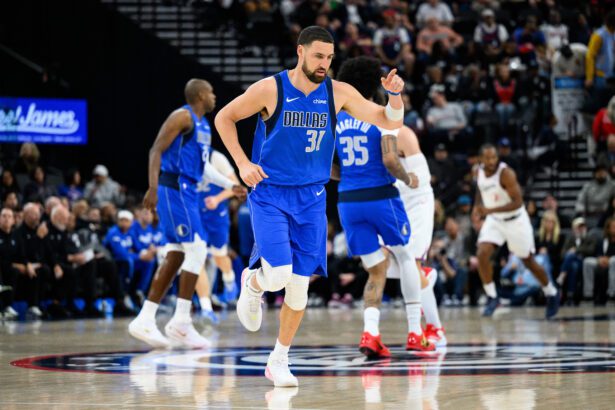
Klay Thompson – 417 days
Klay Thompson’s Achilles tear came at the worst possible time because he was already deep into rehab from another major injury. Klay had missed the entire 2019-20 season after tearing his left ACL in the 2019 Finals, then ruptured his right Achilles in November 2020 during a workout before the 2020-21 season even began.
That second injury changed everything. Instead of returning as part of a normal one-year recovery, Thompson lost another full season and did not play again until January 9, 2022, 417 days after the Achilles tear.
Before the injuries, Thompson was one of the league’s most reliable elite guards. He had made five straight All-Star teams from 2015 through 2019, earned two All-NBA selections, and built a reputation as one of the greatest movement shooters ever. In his last full healthy season before the ACL and Achilles setbacks, Thompson averaged 21.5 points, 3.8 rebounds, and 2.4 assists while shooting 40.2% from three. He was never a high-assist creator, but that was not his role. He spaced the floor, defended top perimeter assignments, and gave the Warriors a second star next to Stephen Curry.
After he returned, Thompson was still productive, but he was not the same player physically. In 2021-22, he averaged 20.4 points in 32 games and helped the Warriors win the title, which on the surface looked like a perfect comeback. But the defensive mobility had slipped, the shot selection got harder, and the consistency was no longer at his peak level. He followed that with 21.9 points in 2022-23, including 301 made threes, but by then the overall impact was more scorer than true two-way star.
The decline became impossible to ignore by the end of Thompson’s Warriors run. In his final season with the franchise, he averaged 17.9 points, 3.3 rebounds, and 2.3 assists while shooting 43.2% from the field and 38.7% from three, decent numbers on paper but well below the standard he had once set as an elite two-way guard. Then came the brutal ending: in the Play-In loss to the Kings, Thompson scored zero points and went 0-for-10 from the field in what became one of the ugliest final games any Warriors star has had with the team.
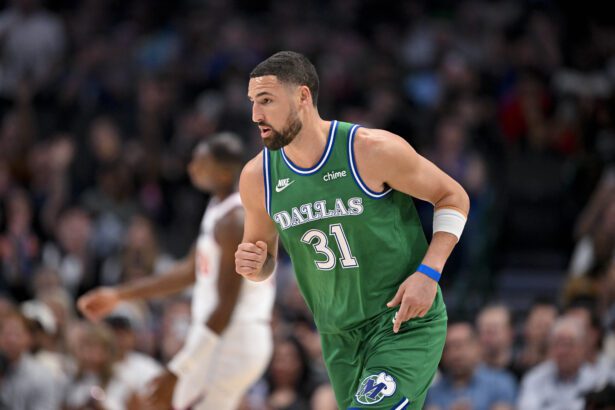
What has followed with the Mavericks has only reinforced the drop. Thompson is averaging 11.7 points, 2.3 rebounds, and 1.4 assists this season while shooting just 39.1% from the field, and he has spent much of the year in a reduced role, including coming off the bench for a team sitting 12th in the West at 21-42.
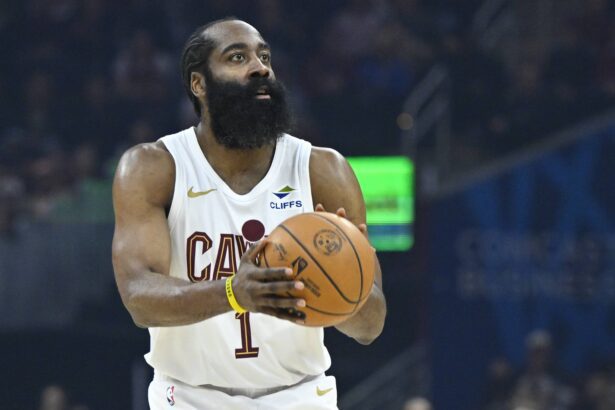
Dejounte Murray – 389 days
Dejounte Murray had reached the point in his career where he looked fully established as more than just a good starting guard. He had already made an All-Star team with the Spurs, already earned All-Defensive honors earlier in his career, and had grown into a player who could carry real offensive responsibility.
In his last full season with the Hawks before the Achilles tear, Murray averaged 22.5 points, 6.4 assists, and 5.3 rebounds while shooting 45.9% from the field and 36.3% from three. He was not just putting up numbers. He was functioning as a high-usage backcourt engine who could score, create, and still hold his own defensively.
That is why his first season with the Pelicans felt important. They brought him in to organize the offense, ease pressure on the rest of the roster, and give the team a more stable lead guard presence. Instead, the year got cut short almost immediately. Murray debuted with a hand fracture, and once he came back later in the year, he ruptured his right Achilles on January 31, 2025, and did not return to game action until February 24 this season, a gap of 389 days.
The recovery time itself was already notable. Achilles injuries usually wipe out at least a full year and often leave players looking like diminished versions of themselves once they get back. Murray’s timeline was on the quicker side for a player still expected to handle real minutes. But, like most Achilles returns, the bigger question was never just when he would play again. It was what kind of player would come back.
So far, the post-injury version has looked more limited than the one from before, posting 16.0 points, 5.3 rebounds, and 5.3 assists in 6 games. He has returned to the floor, which matters by itself, but he has not yet resembled the near 23-point-per-game guard he was before the tear. That does not mean the comeback is a failure. It just means the process is unfinished. Murray’s case is a good reminder that getting cleared and getting all the way back are two very different things.
Compared with others on this list, Murray’s comeback is still respectable on timing alone. But the standard he set before the injury was high enough that anything less than a full offensive recovery is going to stand out. That is what makes his 389-day return notable, even if the full answer on how successful it was may take longer.
DeMarcus Cousins – 357 days
DeMarcus Cousins was still one of the league’s most productive big men when everything changed. Before the Achilles tear, he had built a strong resume with four All-Star selections and two All-NBA nods, and he was coming off the best stretch of his career as a complete offensive center. In 2017-18 with the Kings and Pelicans, Cousins averaged 25.2 points, 12.9 rebounds, 5.4 assists, 1.6 steals, and 1.6 blocks before going down. He was not just a scorer. He was a true offensive hub who could pass, rebound, and create mismatches all over the floor.
The injury happened on January 26, 2018, when Cousins ruptured his left Achilles late in a game against the Rockets. It was a brutal break because he was in the middle of a dominant season and heading toward a massive contract summer. Instead, the injury changed his market and, eventually, the entire direction of his career. Cousins returned on January 18, 2019, with the Warriors on a mid-level type of deal, 357 days after the tear. At the time, that felt fast for a player of his size and style.
The problem is that the post-Achilles version never looked fully like the old one. He had flashes with the Warriors and even helped in the 2019 Finals, but injuries kept piling up, including a torn quad and later an ACL tear. From that point on, Cousins was no longer an All-Star center. He became a short-minute big bouncing from team to team. Across his post-Achilles NBA years with the Warriors, Rockets, Clippers, Bucks, and Nuggets, he never averaged more than 12.9 points in a season again. His last NBA season came in 2021-22, and he never found a stable long-term role after that.
That is what makes Cousins such a clear example in this discussion. He did come back relatively quickly, and he was still talented enough to produce in bursts. But the injury took away the version of Cousins who was one of the best centers in basketball. The player who returned was still useful at times. He just was not close to the star he had been before the Achilles.
Jayson Tatum – 298 days
Jayson Tatum is the outlier in this group because he did not come back looking like a player just trying to survive. Before the injury, he was already one of the league’s most complete stars: a six-time All-Star, multiple-time All-NBA selection, and the centerpiece of a championship team. In 2024-25, before the Achilles tear, Tatum averaged 27.3 points, 8.7 rebounds, and 6.0 assists across 72 games. He was not just an elite scorer. He was carrying star usage, defending across positions, and functioning as the two-way engine of everything the Celtics did to go back-to-back.
The injury itself came in Game 4 of the second round against the Knicks last year, and it immediately felt like the kind of setback that usually wipes out at least a full season. Tatum underwent surgery on May 13, 2025, and the normal expectation for an Achilles recovery is often in the nine-to-12-month range or longer. Instead, he made his return on March 6 against the Mavericks, just 298 days after surgery. That alone made his comeback one of the fastest high-profile Achilles returns the league has seen in recent years.
What makes it more impressive is that he did not look overwhelmed once he got back on the floor. In his debut, Tatum posted 15 points, 12 rebounds, and seven assists in 27 minutes. Two days later, in his second game back, he scored 20 points against the Cavaliers and said afterward that things already felt “a lot more normal” from a rhythm and preparation standpoint. For a player returning from one of the most difficult injuries in basketball, that is not a small detail. He was not just active. He was productive right away.
That is why Tatum’s case stands out so much in this story. Most Achilles recoveries are judged first by whether a player can get back at all, then later by whether he can resemble himself again. Tatum has already cleared the first bar unusually fast, and the early signs suggest he has a real chance to clear the second one, too. Compared with most stars who went through this injury, his timeline is rare. Compared with the level he was before it, his start back has been even more impressive.
Kobe Bryant – 240 days
Kobe Bryant’s recovery remains one of the most shocking examples because of both his age and the speed of the return. He tore his left Achilles on April 12, 2013, against the Warriors, a devastating injury that came at the end of a massive workload stretch while he was trying to drag the Lakers into the playoffs. Bryant was 34 at the time, already deep into his 17th season, and had logged huge minutes before the tear. He still came back on December 8, 2013, only 240 days later, which is the fastest return among the major names in history.
What made that injury feel so cruel is where Bryant still stood before it. Even that late in his career, he remained one of the NBA’s elite offensive players. In 2012-13, the season before the Achilles tear, Bryant averaged 27.3 points, 6.0 assists, and 5.6 rebounds while making the All-NBA First Team and another All-Star appearance. He was not prime early-2000s Kobe anymore, but he was still a superstar-level shot creator carrying huge responsibility on a flawed roster.
The comeback itself was impressive just on timing, but it did not restore the old version of Bryant. He played only six games after returning in 2013-14 before suffering a fractured left knee that ended his season again. From that point on, the final years of his career became more about flashes and volume than sustained dominance. In 2014-15, he played 35 games and averaged 22.3 points, but the efficiency dropped hard. In his final season in 2015-16, he averaged 17.6 points on 35.8% shooting from the field before retiring. The iconic 60-point finale was real, but by then, it was clear his body was no longer allowing him to be the same player.
That is why Bryant’s case is remembered with mixed feelings. The return in 240 days was remarkable, especially for an aging star with so much mileage. But it also became a reminder that returning fast is not always the same as returning fully. Bryant made it back quicker than almost anyone. He just never got another true superstar chapter after the Achilles tear.