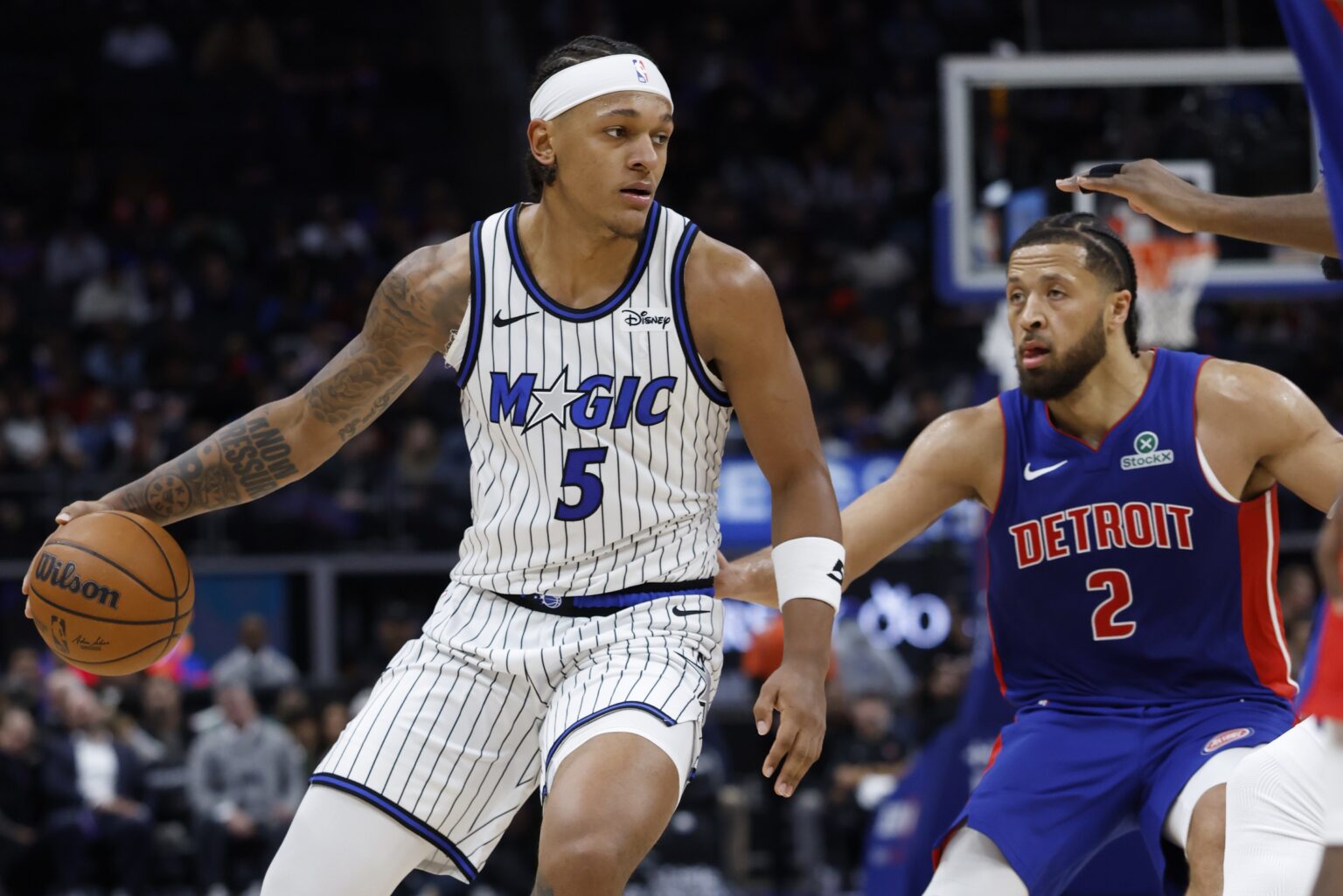
Game 3 is Saturday at 1:00 PM ET at Kia Center. The series is 1-1. The Magic took Game 1, 112-101. The Pistons answered in Game 2, 98-83. So now the series starts again, but with the Magic back home.
The first two games gave both teams a clear formula. In Game 1, the Magic shot 48.9% from the field, all five starters scored at least 16 points, Paolo Banchero had 23 points and 9 rebounds, Franz Wagner scored 19, and the Pistons shot only 40.3%. In Game 2, the Pistons flipped it. Cade Cunningham had 27 points, 11 assists, and 6 rebounds, Tobias Harris had 16 points and 11 rebounds, and the Magic were held to 32.5% shooting and just 83 points, their lowest total of the season.
Injury Report
Magic
Jonathan Isaac: Doubtful (left knee sprain)
Pistons
No players listed.
Why The Magic Have The Advantage
The first numbers edge is Game 1. The Magic won by 11, never trailed, opened on an 18-5 run, shot 48.9% from the field, and got 23 points and 9 rebounds from Banchero, 19 points from Wagner, and 17 points from Wendell Carter Jr. That matters because it showed the Magic can score enough in this matchup when the ball moves and the wings are attacking early.
The second edge is home floor plus likely shooting bounce-back. In Game 2, the Magic shot 32.5% from the field and 25.0% from three. Banchero still had 18, and Jalen Suggs had 19, but the offense around them collapsed. That level of shooting is hard to repeat. If the Magic are even normal from the field, the offense should look much better than it did in Detroit.
From a matchup standpoint, the Magic have to get back to the Game 1 version of their defense on Cunningham. In Game 2, he had 27 points and 11 assists, and once he got comfortable in ball screens, the whole Pistons offense settled down. The Magic need Suggs and Anthony Black picking him up earlier, getting over screens harder, and making him give the ball up sooner. If Cunningham is playing downhill all night, the Pistons get to their best offense too easily.
The other key is turning this into a Banchero-Wagner game, not just a Cunningham game. In Game 1, the Magic got Banchero downhill and let Wagner attack closeouts. In Game 2, the offense got stuck more often, and the Pistons were able to load up. Game 3 should be about getting those two stars into actions quickly, especially before Detroit’s defense gets set in the half-court.
Why The Pistons Have The Advantage
The first reason is Cunningham. He has already shown he can be the best offensive player in the series. In Game 1, he scored 39 points with 5 rebounds and 4 assists. In Game 2, he followed that with 27 points, 11 assists, and 6 rebounds. Through two games, he is at 33.0 points, 8.5 assists, and 5.5 rebounds per game. That is the clearest individual edge either team has right now.
The second reason is what the Pistons did defensively in Game 2. They held the Magic to 83 points, 32.5% shooting, and won the third quarter 38-16. That was not just a hot stretch. It was a game where the Pistons kept the ball in front, made the Magic play in crowds, and did not let the wings get easy downhill touches. If they can repeat even part of that, they can win on the road.
From a basketball standpoint, the Pistons need the same basic structure from Game 2. Keep the game in the half-court. Run through Cunningham in pick-and-roll. Use Duren as the screener and rim threat. Make the Magic guard multiple actions instead of living off pressure and chaos. The Magic are more dangerous when the game gets loose. The Pistons are more dangerous when Cunningham can organize everything.
The other important area is frontcourt production. Harris gave the Pistons 16 points and 11 rebounds in Game 2. Jalen Duren had 11 points and 9 rebounds. Ausar Thompson added 11 points and 8 rebounds. That matters because Detroit cannot be only Cunningham. If those frontcourt pieces keep scoring enough and winning enough rebounds, the Magic have a much harder time loading toward the ball.
X-Factors
Wendell Carter Jr. is a major one for the Magic. In Game 1 he scored 17 points and helped the Magic win the interior battle. In Game 2, the whole offense cratered. The Magic need his size, screening, and rebounding to stabilize the middle of the floor, especially if they want Banchero and Wagner attacking a spaced paint.
Jalen Suggs is another one for the Magic because his role is not just scoring. He had 19 points in Game 2, but the bigger question is whether he can disrupt Cunningham more consistently. If Suggs makes the Pistons start later in the clock and helps create live-ball mistakes, the game starts leaning back toward Orlando’s preferred style.
Jalen Duren is a big one for the Pistons because his Game 2 line was exactly the kind of support Cunningham needs: 11 points and 9 rebounds. He does not need 20. He needs to be a real lob threat, rebound, and finish enough inside that the Magic cannot just load the lane against Cunningham.
Tobias Harris is the other big Pistons swing player. In Game 2 he had 16 points and 11 rebounds, and that was important because it gave Detroit a second reliable scorer in the frontcourt. If Harris gives them that again, Detroit becomes a lot harder to guard because the defense cannot just sit on Cunningham’s first move.
Prediction
This should be the tightest game of the series so far. The Magic are home, and their Game 2 shooting was so bad that some bounce-back is likely. But the Pistons now know exactly what works: Cunningham in control, the defense set, and enough frontcourt help around him.
I lean slightly Magic because the home floor plus better expected shooting gives them the best chance to steal back control of the series. But this looks close, and the Pistons clearly have the best offensive engine in the matchup right now.
Prediction: Magic 104, Pistons 101