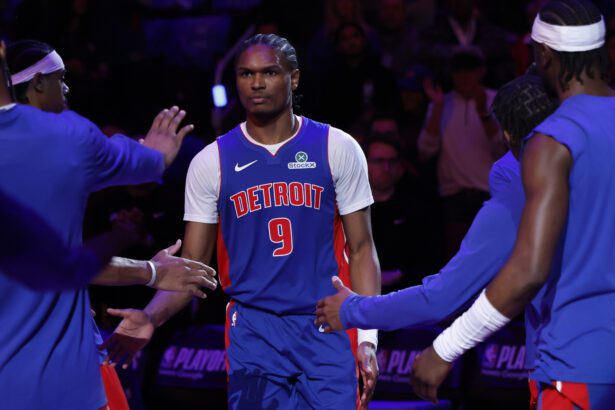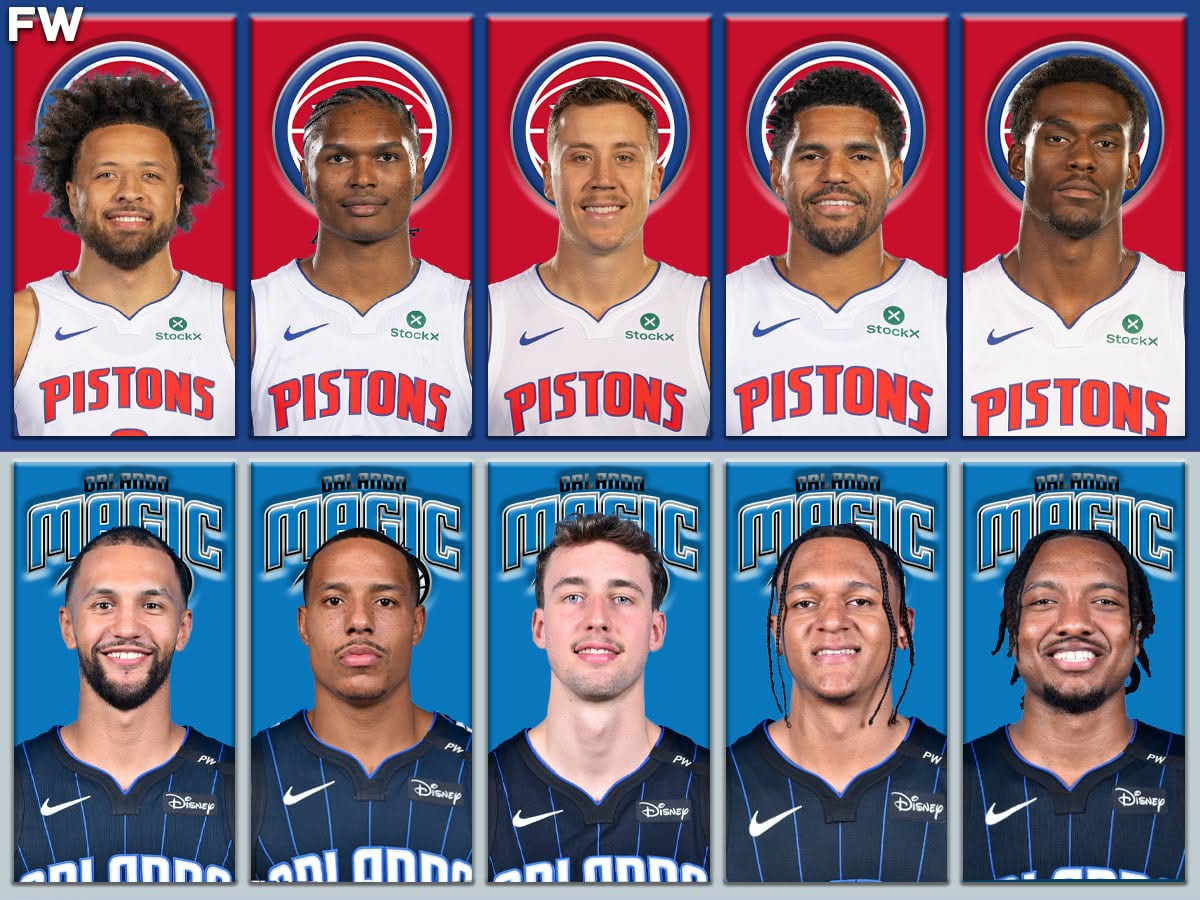
The Pistons open their first-round series against the Magic on Sunday, April 19, at 6:30 PM ET. The Pistons finished 60-22 and grabbed the No. 1 seed in the East.
The Magic got the No. 8 seed through the Play-In and now walk into a matchup that looked a lot more even before the season started. Instead, the Pistons were on top of the East all year, while the Magic had to win the last Play-In game just to get here.
The regular-season series was split 2-2. The Pistons won 135-116 on October 29 and 106-92 on March 1. The Magic answered with a 112-109 win on November 28 and a 123-107 win on April 6. That split is real, but the bigger point is that these teams played a pretty physical style against each other, and neither side found an easy offensive rhythm across all four games.
The Pistons bring the best lead guard in the series. Cade Cunningham finished the regular season with 23.9 points, 9.9 assists, and 5.5 rebounds, and he drove one of the biggest team jumps in the league.
The Magic still have the two hardest shot-makers on their side in Paolo Banchero and Franz Wagner. Banchero put up 22.2 points, 8.4 rebounds, and 5.2 assists. Wagner gave them 20.6 points, 5.2 rebounds, and 3.3 assists in 34 games.
The Magic also come in with better immediate rhythm than a normal No. 8 seed. They got blown out by the 76ers in the first Play-In game, then responded by crushing the Hornets 121-90 to lock in the last playoff spot. Banchero scored 25 in that win, Franz Wagner added 18, and Wendell Carter Jr. had 16.
The Pistons, meanwhile, had already locked up the top seed before the final day and closed the regular season with a 133-121 win over the Pacers.
At publish time, the Pistons appeared close to full strength, with Cunningham already back from his collapsed lung after he played the final stretch before the playoffs. The main Magic injury question was Jonathan Isaac, who the Magic listed as out on Friday night because of a left knee sprain.
Pistons Analysis For The Series
The Pistons have the cleanest season-long case in the matchup. They won 60 games, finished with a 117.9 offensive rating and about a 109.7 defensive rating, and ended up as the top seed in the conference. Those numbers show this was not some lucky regular season. The Pistons were good on both ends, and they were good for months, not just one hot stretch.
The biggest reason it worked starts with Cunningham. The Pistons run a huge amount of their offense through ball screens for him, ranking third-highest total among all ball-handlers this season. That is the center of the series. The Magic have usually been a drop-coverage team, so the first big Game 1 question is simple: do they stay in drop and dare Cunningham to beat them with pull-ups, or do they change the coverage and force the ball out of his hands earlier?
The Pistons also win in a way that can travel in the playoffs. They do not need a huge three-point game to control a matchup. The Pistons were plus-13.9 points per game in the restricted area, one of the best differentials any team has posted in the last 15 seasons. They ranked first in the share of their shots that came in the restricted area, and they were second in opponent field-goal percentage in the restricted area. That is a strong playoff formula because it gives them a clear identity on both ends.
That matters even more here because the Magic are not a great shooting team. The Magic are the only playoff team in the bottom seven in both three-point percentage and three-point rate. So the Pistons can stay home on the paint, live with some pull-up jumpers, and make the Magic prove they can win from outside. If the Pistons keep the series in that shape, the math starts leaning hard their way.
The glass is the other major edge. Rebounding is one of the main themes of the series. The Pistons ranked third in offensive rebounding percentage, while the Magic ranked fifth in defensive rebounding percentage. In the regular-season series, the Pistons still grabbed 36.5% of their own misses, which was the second-highest offensive rebound rate any opponent posted against the Magic all year. Ausar Thompson and Jalen Duren were at the center of that. If those two keep extending possessions, the Pistons can win ugly even if the first shot is not there.
The real concern for the Pistons is ball security. The Pistons were only 23rd in turnover rate in the regular season, and the Magic just forced 20 turnovers in the Play-In win over the Hornets. If the Pistons get careless and let the Magic create live-ball chaos, the series can get tighter than a 1-8 matchup should be. That is the pressure point the Magic will keep attacking.
Magic Analysis For The Series
The Magic do not come into this series with the cleaner season profile, but they do come in with a very clear way to make it hard. Their whole chance starts with ball pressure. The Magic had one of the biggest year-to-year drop-offs in opponent turnover rate during the regular season, but in the Play-In win over the Hornets, they looked like their old selves again. They picked up the ball, made every catch harder, and turned that into 20 turnovers. That is exactly how they can drag the Pistons into an uncomfortable series.
The other part of the formula is Banchero. This is the time when he has to look like a star, not just a talented scorer. He averaged 26.3 points against the Pistons this season, and his true shooting percentage against them was one of his best marks against any opponent. That is a real signal. The Pistons have the better defense overall, but Banchero has still found ways to score in this matchup. If he keeps getting to the line and finishing through contact, the Magic can stay in range.
Franz Wagner is the other big swing piece because the Magic need more than one creator. When the offense gets stuck, Wagner has to give them straight-line drives, second-side playmaking, and enough shot-making to stop the Pistons from loading the lane on Banchero. The Magic just saw what the bad version looks like in the 76ers loss, when they managed only 97 points and never fully controlled the game late. Then they saw the good version against the Hornets, when the offense got moving and five players hit double figures. They need more of the second game than the first.
The biggest problem is that the Pistons can challenge the Magic exactly where the Magic are most fragile. They finished with a 114.9 offensive rating and around a 114.3 defensive rating, which is fine, but not close to the Pistons’ full two-way level. And unlike some underdogs, the Magic do not have a real shooting profile to flip the math. If they are not forcing turnovers or getting easy points in transition, they can end up trying to beat the Pistons one half-court jumper at a time. That is not a great place to live over a seven-game series.
There is still one matchup area where the Magic can make this more complicated. Their size on the wing is real. Banchero, Wagner, Anthony Black, and their bigger lineups can put more pressure on the Pistons’ secondary defenders than a normal No. 8 seed would. If the Magic can make Cunningham work on defense, keep Tobias Harris and the Pistons’ wings busy in cross-matches, and avoid letting the game turn into simple Cade-Duren pick-and-roll over and over, they can keep the series from becoming too clean for the favorite.
So the Magic path is pretty simple. Pressure the ball. Turn misses into early offense. Let Banchero play through contact. Hope Wagner gives them enough secondary scoring. And make the Pistons prove they can execute every half-court possession against a loaded defense. If the series gets clean and methodical, that helps the Pistons. If it gets messy, the Magic have a chance to stretch it.
Key Factors
Jalen Duren is a huge one for the Pistons because this series should spend a lot of time around the rim. He is one of the best finishers in the league, and among the league leaders in true shooting percentage this season. More important here, he is the roll man and offensive rebounder who can punish the Magic if they overplay Cunningham. If Duren is catching lobs, winning the glass, and forcing the Magic to bring more help inside, the Pistons get the exact game they want.
Ausar Thompson is another major swing piece. He and Duren combined for half of the Pistons’ 50 offensive boards in the regular-season series. Thompson is not a spacer, and the Magic will likely ignore him outside the paint. But if he is flying in on misses, defending the ball, and creating extra possessions, he changes the series in ways that do not always show up in points.
Jalen Suggs is a big one for the Magic because he sets the tone for their pressure. The Magic need him picking up Cunningham, getting into the first dribble, and helping turn the game into a more physical one. They do not need him to be the top scorer. They need him to make the Pistons start offense later in the clock and to help create the kind of loose-ball game the Magic want. His minutes are some of the most important in the whole matchup.
Wendell Carter Jr. is another key player because the Magic cannot afford to lose the glass badly. He just scored 16 in the Play-In win over the Hornets, and he has to give the Magic sturdy minutes against Duren and the Pistons’ front line. If he rebounds his position, avoids cheap fouls, and makes a few open shots, the Magic can keep their lineups balanced.
Prediction
The Magic have enough defense and enough size to make this series annoying, and the 2-2 regular-season split is not fake. Banchero can win a game. Wagner can keep them alive offensively. The ball pressure is real when it is on. But the bigger sample still points one way. The Pistons were better all year, they are stronger inside, and the exact weak spot the Magic want to attack, ball security, is something the Pistons can still survive if they control the glass and keep scoring in the paint.
I think the Magic take one because their defense will probably win them a game, and Banchero is too good not to have at least one huge night. Over the full series, though, the Pistons have more answers, more structure, and a much cleaner inside game.
Winner: Pistons in 5