Winning MVP usually goes with sustained team success. In most cases, the award signals not only individual dominance, but also a player who spent years carrying teams into the postseason. That is why this list stands out.
The names here are not failed stars. Most are all-time greats, champions, or franchise-defining players. What pushed them onto this ranking was a mix of long careers, injuries, weak supporting casts, and late-stage decline. In some cases, the MVP came early, and the roster around them never stayed strong enough for long. In others, the player remained great, but the team context collapsed.
This ranking looks at the MVP winners who missed the playoffs the most times in their careers. It is not a judgment on peak value. It is a reminder that even the league’s most decorated players do not spend every season in contention.
10. Kobe Bryant
MVP Awards: 1
Playoffs Missed: 5
Kobe Bryant is one of the best examples of how a long career can raise this total, even for a player whose prime was tied to constant postseason success. He won the 2007-08 MVP, finished with five championships, two Finals MVPs, 18 All-Star selections, and 15 All-NBA selections. Most of his career was built on deep playoff runs. From 1999-00 through 2012-13, the Lakers missed the playoffs only once, and Bryant was the central scorer for most of that stretch.
The five missed playoff seasons came in very different contexts. The first was 2004-05, right after the Shaquille O’Neal trade, when the Lakers went 34-48. The other four were tied to the end of Bryant’s career, when injuries and roster decline hit hard. The Lakers missed in 2013-14, 2014-15, and 2015-16, and Bryant played only six games in 2013-14 because of the knee fracture that followed his Achilles tear the year before.
What keeps Bryant from ranking higher is that, when healthy and in his prime, his teams were usually in the bracket. He made the playoffs 15 times in 20 seasons, averaged 25.6 points, 5.1 rebounds, and 4.7 assists in 220 postseason games, and reached seven Finals. So while the missed-playoff total is real, it says more about the difficult end of his career than about the level he sustained for most of it.
9. Bob McAdoo
MVP Awards: 1
Playoffs Missed: 5
Bob McAdoo won the 1974-75 MVP after one of the biggest scoring seasons by any center in league history. He averaged 34.5 points, 14.1 rebounds, and 2.1 blocks for the Braves (now Clippers), while shooting 51.2% from the field. He also won three straight scoring titles from 1973-74 through 1975-76, which is why his place on this list is a little unusual. His peak was huge, but team success did not always follow it for long.
That is the main reason he missed the playoffs five times. The Braves made the postseason in each of his first three full years, but the team fell off quickly after that. McAdoo missed the playoffs in 1976-77 and 1977-78, then again later in his career during shorter stops before landing in a different role with the Lakers. By that stage, he was no longer the franchise centerpiece he had been in Buffalo. The roster changes were constant, and his teams were not built to contend every year.
The second half of his career changed his resume. McAdoo joined the Lakers in 1981 and won titles in 1982 and 1985 as an elite scoring big man off the bench. That is not a case of an MVP winner fading out without impact. He finished with one MVP, five All-Star selections, two championships, and a career average of 22.1 points and 9.4 rebounds. The missed-playoff number is high, but it sits next to a career that still included a major peak and real championship contribution later on.
8. Steve Nash
MVP Awards: 2
Playoffs Missed: 6
Steve Nash won back-to-back MVP awards in 2004-05 and 2005-06, and both came with the same basic formula: elite offense, elite efficiency, and full control of the game. He led the Suns to 62 wins in his first MVP season, then followed that by averaging 18.8 points and 10.5 assists in his second MVP year. Across his career, Nash finished with two MVPs, eight All-Star selections, seven All-NBA selections, and five assist titles.
The six missed playoff seasons are mostly a story of timing. Nash missed the postseason in each of his first four years with the Suns from 1996-97 through 1999-00, when he was still developing and not yet the lead guard he later became. After that, he made the playoffs every year from 2001 through 2012, first with the Mavericks and then during the best years of the Suns’ run-and-gun era. That stretch is important because it shows how different the first half and second half of his career were.
The final two missed seasons came at the end, with the Lakers in 2012-13 and 2013-14, when injuries took over. Nash played only 15 games in 2012-13 and 15 again in 2013-14 before retiring. So while the total of six missed playoff years is high, four came before his prime, and two came after it. In the middle, he was one of the most consistent postseason engines of his era, averaging 17.3 points and 8.8 assists in 120 playoff games.
7. Dirk Nowitzki
MVP Awards: 1
Playoffs Missed: 6
Dirk Nowitzki missed the playoffs six times, but the split in his career is important. He missed in each of his first two NBA seasons, 1998-99 and 1999-00, while the Mavericks were still building around him. Then, after making the postseason 11 straight times from 2000-01 through 2011-12, he missed four of his last six seasons as the team aged out of contention. So this is not a case of an MVP failing to lift teams. It is mostly a case of a long career with missed-playoff years concentrated at the very start and very end.
The peak years were strong enough to outweigh that. Nowitzki won the 2006-07 MVP after averaging 24.6 points, 8.9 rebounds, and 3.4 assists, while shooting 50.2% from the field, 41.6% from 3, and 90.4% from the line. He made 14 All-Star teams, 12 All-NBA teams, won the 2011 Finals MVP, and led the Mavericks to the only championship in franchise history.
That 2011 title run is the clearest proof of his value. In those playoffs, Nowitzki averaged 27.7 points, 8.1 rebounds, and 2.5 assists in 21 games. In the Finals against the Heat, he averaged 26.0 points, 9.7 rebounds, and 2.0 assists, and closed the series with 21 points in Game 6. Across his playoff career, he averaged 25.3 points, 10.0 rebounds, and 2.5 assists in 145 games.
So the six missed playoff seasons are real, but the context matters. Four came after age and roster decline hit the Mavericks, and two came before Nowitzki became Nowitzki. In between, he gave the Mavericks more than a decade of automatic postseason basketball.
6. Bill Walton
MVP Awards: 1
Playoffs Missed: 6
Bill Walton is the strangest name in this ranking because the number is almost entirely about injuries. He won the 1977-78 MVP after averaging 18.9 points, 13.2 rebounds, 5.0 assists, and 2.5 blocks for the Trail Blazers, one year after leading them to the 1977 title. At his best, Walton was not just an MVP. He was one of the best two-way centers in basketball, with elite passing, rebounding, and rim protection.
But his prime was short. Foot and ankle injuries wrecked the middle of his career and forced him to miss full seasons. That is why he ended up missing the playoffs six times despite having an MVP, a Finals MVP, two championships, two All-Star selections, two All-NBA selections, and two All-Defensive First Team nods. From 1978-79 through 1984-85, Walton played in only 169 regular-season games total. That stretch did the damage to his playoff outcome.
His career still had a second act. After years of physical setbacks, Walton reinvented himself with the Celtics and won Sixth Man of the Year in 1985-86. That season, he averaged 7.6 points, 6.8 rebounds, and 2.1 assists in a limited role, and helped the Celtics win the title. It was a very different version of Walton, but still a useful one on a championship team.
So unlike some of the other names on this list, Walton did not pile up missed-playoff years because his teams kept underachieving around him. His total is mostly a health story. When he was available and near his peak, he was winning MVP, winning titles, and changing the level of his team immediately.
5. Allen Iverson
MVP Awards: 1
Playoffs Missed: 6
Allen Iverson’s number is high because his career had two very different sides. Early on, he missed the playoffs in his first two seasons, before the 76ers became a real contender around him. Then he made the postseason six times in seven years from 1998-99 through 2004-05, which included the 2001 MVP season and the run to the Finals. After that, the pattern flipped again. He missed in 2005-06, then made it with the Nuggets in 2006-07 and 2007-08, before missing again in his final stops with the Pistons, Grizzlies, and 76ers. That is how an MVP-level player ended up at six missed postseasons.
The peak was dominating enough that the missed-playoff total does not change his place in history. Iverson won the 2000-01 MVP, made 11 All-Star teams, won four scoring titles, led the league in steals three times, and made seven All-NBA teams. His best postseason came in 2001, when he averaged 32.9 points, 4.7 rebounds, and 6.1 assists in 22 playoff games, and carried the 76ers to the Finals. He also had the signature moment of that run in Game 1 against the Lakers, when he scored 48 points in the overtime win.
So this ranking is not really about underachievement. Iverson averaged 29.7 points, 3.8 rebounds, and 6.0 assists in 71 career playoff games, which is one of the highest postseason scoring marks ever for a guard. The six missed playoff years say more about how short the contender window was around him, and how fast the decline came late, than about the level of player he was at his best.
4. Moses Malone
MVP Awards: 3
Playoffs Missed: 7
Moses Malone ranks this high because his career was both long and uneven in team context. He played from 1974 through 1995, won three MVP awards, and still missed the playoffs seven times. That total is easier to understand when you look at the timeline. He had early seasons on unstable rebuilding rosters, then late seasons with teams that were no longer contenders, especially near the end of his runs with the Hawks, Bucks, 76ers, and Spurs. The length of the career pushed the missed-playoff count up.
The middle of the career is why the ranking needs context. Malone was not just an MVP. He was one of the most productive big men ever. He won MVP in 1979, 1982, and 1983, made 12 NBA All-Star teams, earned eight All-NBA selections, led the league in rebounding six times, and won the 1983 title and Finals MVP with the 76ers. In that 1983 playoff run, he averaged 26.0 points, 15.8 rebounds, and 1.5 assists in 13 games, while the 76ers went 12-1 and finished one of the best title runs of that era.
He also had major playoff production before the title. In 1981 with the Rockets, Malone averaged 26.8 points, 14.5 rebounds, and 1.7 assists in 21 playoff games and took them to the Finals. His value was not limited to one championship year. The seven missed postseasons are part of the record, but the larger fact is stronger: when Malone had enough around him, he was usually producing at an MVP level and pushing teams deep into the bracket.
3. Kevin Garnett
MVP Awards: 1
Playoffs Missed: 7
Kevin Garnett won the 2003-04 MVP after one of the best all-around seasons ever by a power forward. He averaged 24.2 points, 13.9 rebounds, and 5.0 assists, led the league in total rebounds, and carried the Timberwolves to 58 wins and the Western Conference finals. That season was the peak, but the missed-playoff total shows how uneven the team was around him across a very long career.
Garnett made the playoffs eight straight times with the Timberwolves from 1996-97 through 2003-04, but then missed three straight seasons from 2004-05 through 2006-07. In that stretch, Garnett was still productive. In 2004-05, he averaged 22.2 points, 13.5 rebounds, and 5.7 assists. In 2005-06, he put up 21.8 points, 12.7 rebounds, and 4.1 assists. The Wolves still missed the field both times. That is a big part of how his total reached seven.
The second act in Boston changed history. Garnett won the 2007-08 title, took Defensive Player of the Year, and helped turn the Celtics into an immediate contender. He finished his career with one MVP, one championship, 15 All-Star selections, nine All-NBA selections, and 12 All-Defensive selections. Across 21 seasons, he also averaged 17.8 points, 10.0 rebounds, and 3.7 assists.
So Garnett ranks this high mostly because of longevity and team cycles, not because his prime lacked winning. He made the playoffs 14 times, reached two Finals, and was still elite on both ends at his peak. The seven missed postseasons sit next to one of the deepest two-way profiles of his era.
2. Derrick Rose
MVP Awards: 1
Playoffs Missed: 7
Derrick Rose is the clearest injury story anywhere on this list. He won the 2010-11 MVP at age 22 after averaging 25.0 points, 4.1 rebounds, and 7.7 assists, while leading the Bulls to 62 wins and the No. 1 seed in the East. He became the youngest MVP in league history. On talent and trajectory, Rose looked like a player who would spend the next decade in the playoffs every year.
That is not how it went. In the 2012 playoffs, Rose tore his ACL in Game 1 against the 76ers, and that injury changed everything. He missed the entire 2012-13 season, then dealt with repeated knee problems after that. He still had productive years later, including 18.0 points and 4.3 assists with the Knicks in 2016-17, and 18.0 points and 4.3 assists with the Timberwolves in 2017-18, but the continuity was gone. His teams missed the playoffs seven times across his career because the version of Rose that won MVP never fully came back for long.
The track record still has weight. Rose made three All-Star teams, one All-NBA First Team, won Rookie of the Year, and had multiple strong comeback seasons later, especially in 2018-19 with the Timberwolves and 2019-20 with the Pistons, when he averaged 18.1 points and 5.6 assists. But this ranking is really about lost years. Unlike some of the other names here, Rose’s missed-playoff total is tied directly to one major injury and the chain reaction that followed it.
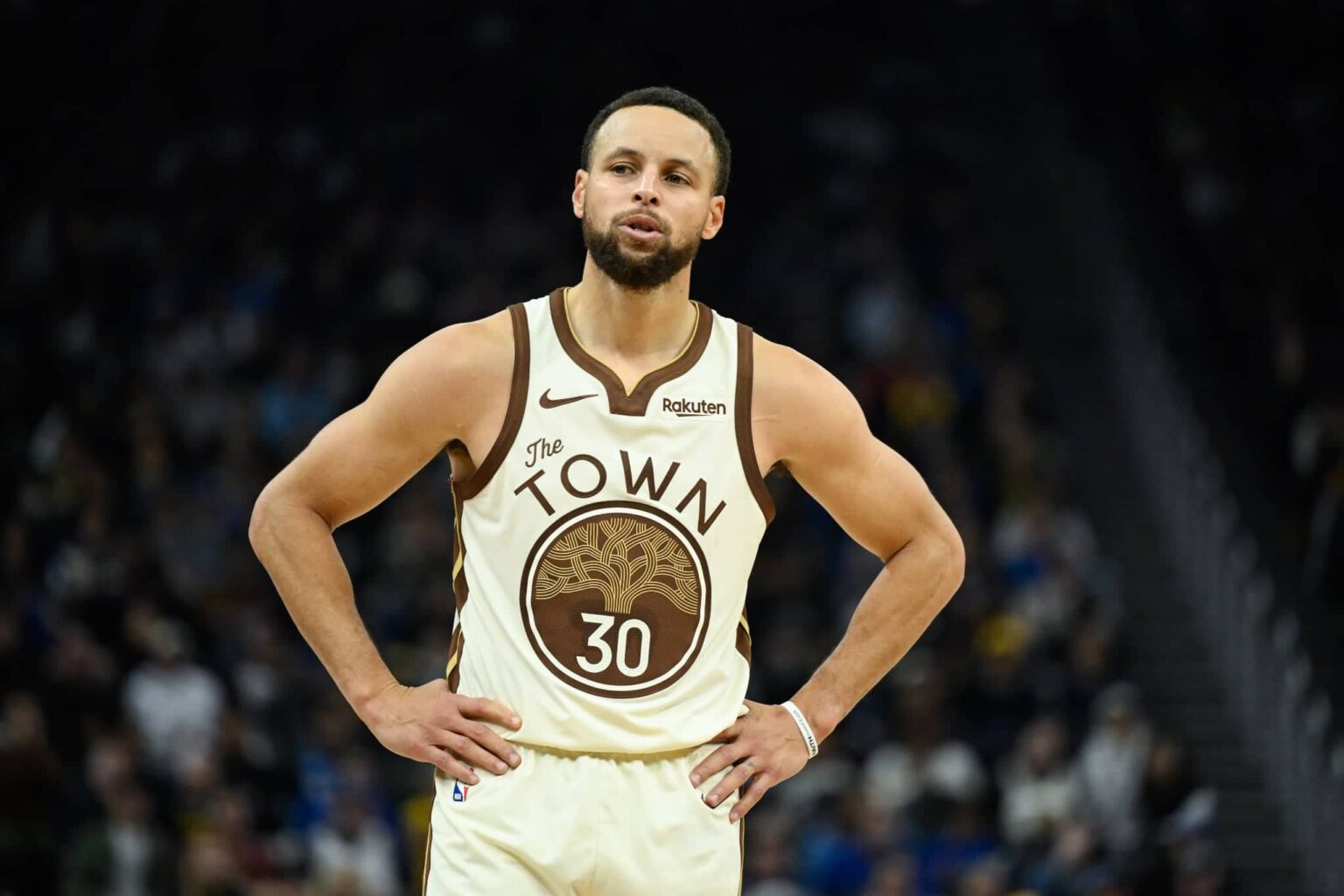
1. Stephen Curry
MVP Awards: 2
Playoffs Missed: 7
Stephen Curry being first on this list says more about career length and early development than about any failure to win. Curry won MVP in 2014-15 and 2015-16, including the first unanimous MVP season in league history, when he averaged 30.1 points, 5.4 rebounds, and 6.7 assists. He also turned into the centerpiece of a Warriors dynasty that won four titles and reached six Finals.
The reason the missed-playoff total reached seven is the shape of the career. Curry missed the playoffs in each of his first three seasons before the Warriors became a contender. Then came the dynasty years, when the Warriors made the playoffs from 2012-13 through 2018-19. After that, the total rose again. Curry played only five games in 2019-20 because of a broken hand, the Warriors missed in 2020-21 after losing in the play-in, and then missed again in later years as the roster aged out of its peak.
The larger career arc easily outweighs the ranking. Curry has four championships, one Finals MVP, 11 All-Star selections, 11 All-NBA selections, and two scoring titles. In the 2021-22 title run, he averaged 27.4 points, 5.2 rebounds, and 5.9 assists in 22 playoff games, then put up 31.2 points, 6.0 rebounds, and 5.0 assists in the Finals against the Celtics.
So yes, Curry is No. 1 here with seven missed postseasons. But unlike most players at the top of a list like this, he also has one of the strongest winning records of the era. The total is high because the career is long, the beginning was slow, and the late years have been less stable, with yet another postseason lost in 2025-26.