The Golden State Warriors host the Utah Jazz at Chase Center, with the Warriors sitting at 18-17 and the Jazz at 12-21. The Warriors have handled business at home (10-5), while the Jazz have struggled on the road (4-10), so the baseline math already leans one direction.
They’ve already seen each other once this season, and the Warriors took that first meeting 134-117, which is why they enter this matchup up 1-0 in the season series.
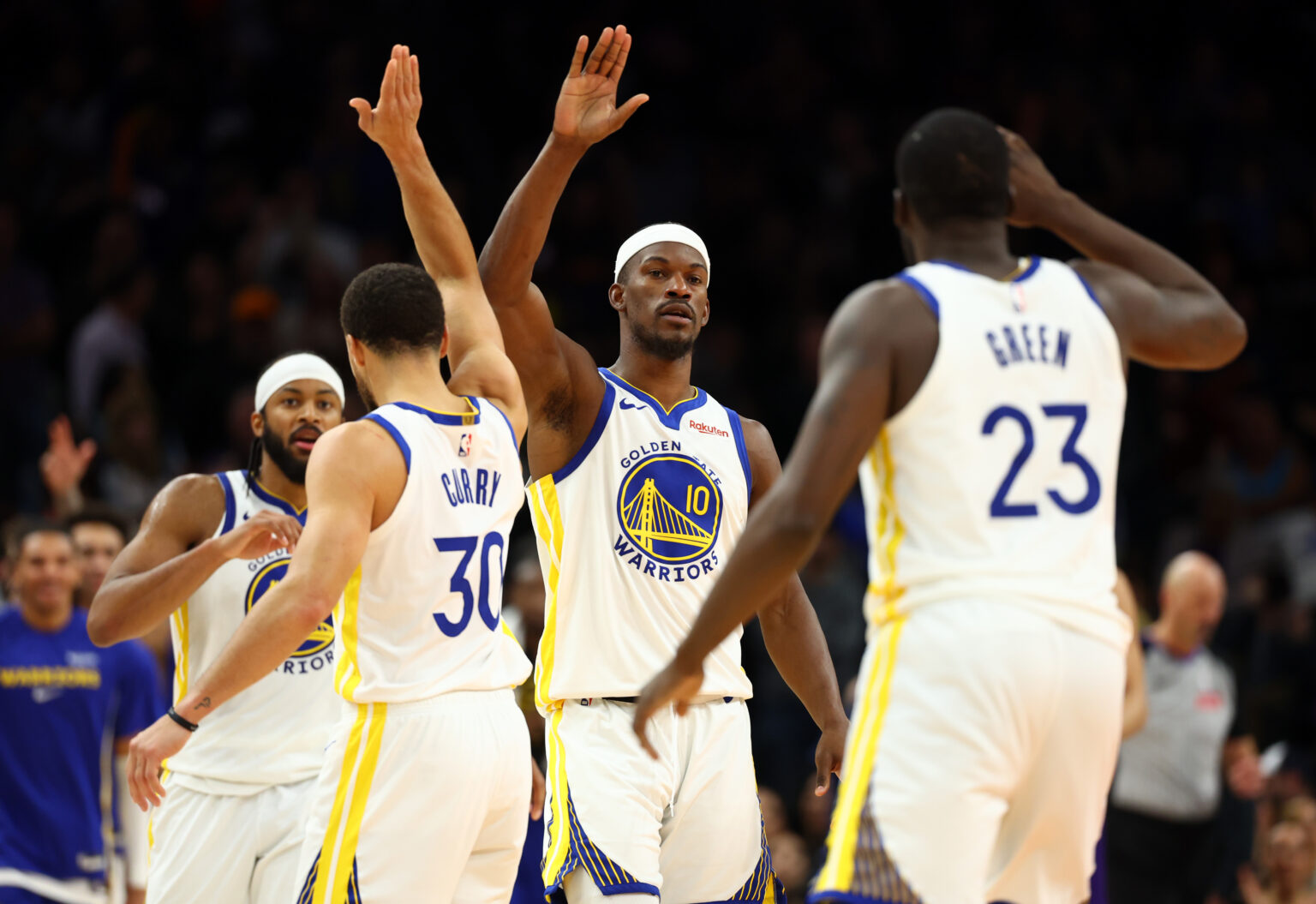
Stephen Curry has been elite again with 28.7 points, 4.0 rebounds, and 4.3 assists per game, while Jimmy Butler has added 19.7 points, 5.6 rebounds, and 4.9 assists.
On the other side, Lauri Markkanen is putting up 27.7 points and 7.0 rebounds per game, and Keyonte George has emerged as a real problem with 24.6 points and 6.8 assists per night.
Injury Report
Warriors
Seth Curry: Out (left sciatic nerve irritation)
Al Horford: Out (left toe injury management)
Jimmy Butler III: Questionable (illness)
Stephen Curry: Questionable (left ankle sprain)
Jonathan Kuminga: Questionable (bilateral low back soreness)
Will Richard: Probable (left retrocalcaneal impingement)
Jazz
Ace Bailey: Out (left hip flexor strain)
Walker Kessler: Out (left shoulder injury recovery)
Georges Niang: Out (left foot fourth metatarsal stress reaction)
Jusuf Nurkic: Out (left first MTP sprain)
Lauri Markkanen: Probable (left knee contusion)
Keyonte George: Available (illness)
Why The Warriors Have The Advantage
The Warriors’ advantage begins with the intangibles that show up even when the offense looks weird: defense, pressure, and home-court rhythm.
They’re giving up just 113.9 points per game and ripping 9.5 steals a night, which is exactly how you punish a team that can get loose with the ball when the pace speeds up. They also add 4.5 blocks per game, so even when they lose a step on the perimeter, they’ve got some backline erasers to keep possessions from turning into layup lines.
And then there’s the matchup context. The Jazz score a ton at 119.8 points per game, but they also allow 126.8, which is basically begging for a shootout. If the Warriors can even be “normal” offensively, the Jazz defense usually gives them enough openings to build separation, especially at home.
The home/road split is the part that matters most here. The Warriors’ 10-5 home record screams comfort, while the Jazz sitting at 4-10 on the road screams chaos. That’s not a small swing, that’s the difference between playing like you know what’s coming and playing like you’re guessing every possession.
Also, the Warriors just took a brutal loss against the Thunder, and teams with pride usually respond hard after that kind of punch. If Curry and Butler are even close to full go, this has the feel of a “get right” night where the Warriors squeeze the Jazz with turnovers, turn those into early offense, and never let the game get comfortable.
Why The Jazz Have The Advantage
The Jazz advantage is simple: they can overwhelm you with offense, and they don’t need it to look pretty.
They’re at 119.8 points per game with 30.0 assists, so the ball movement is real, and they can generate shots without relying on one single action every time. That matters a lot if the Warriors are missing even one of their top guys, because suddenly the Jazz can play freer, push tempo, and turn it into a “score with us” type of game.
The other sneaky edge is volume. The Jazz don’t have to be efficient for four straight quarters when they’re playing this fast and creating this many chances. If they get hot for even a six-minute stretch, they can flip the scoreboard in a hurry, especially against a Warriors team that scores 115.0 points per game and can go cold if the spacing gets cramped.
And if Curry and Butler are limited or out, the Jazz suddenly get what they want: a game where their creators can attack downhill without fearing that they have to trade nuclear shot-making every trip. That’s when their offense becomes dangerous enough to steal a game that “should” belong to the Warriors.
X-Factors
Brandin Podziemski feels massive in this matchup because he’s the type of connector who can keep the Warriors’ offense alive if the stars aren’t at 100%. He’s averaging 12.5 points, 4.4 rebounds, and 3.3 assists, and his decision-making matters when the Warriors need to win the “non-star minutes” without panicking.
Buddy Hield is the swing shooter. He’s only at 7.6 points per game, but his value isn’t volume, it’s gravity. If he hits a couple early threes, the Jazz can’t load up as aggressively, and the Warriors’ spacing looks like it actually makes sense again.
Quinten Post is the other one to watch because the Jazz frontcourt injuries create a real opening for energy minutes. He’s at 7.8 points and 4.1 rebounds while finishing efficiently, and if he wins the hustle battle at the rim, the Warriors can stack stops without needing to win a pure shooting contest.
For the Jazz, Isaiah Collier is a real sneaky lever. He’s averaging 8.4 points and 6.6 assists, and if he stabilizes the offense when the stars sit, the Jazz can keep the pressure on instead of bleeding leads during bench stretches.
Kyle Filipowski is the chaos piece. He’s averaging 9.5 points, 6.3 rebounds, and 2.2 assists, and his rebounding plus quick decisions can punish a Warriors team that sometimes gets a little too comfortable after one good defensive possession.
Prediction
This one comes down to availability. If Curry plays, I like the Warriors’ ability to pressure the Jazz into mistakes and keep the game from turning into a track meet. If Curry and Butler both sit, the Jazz offense gets scary fast.
I’m leaning Warriors because the home profile is strong (10-5), and the Jazz defense has been way too leaky to trust on the road.
Prediction: Warriors 116, Jazz 110