The case against the Rockets is not built on panic. It is built on expectation. This was a 52-win team, the No. 5 seed in the West, a team that finished fifth in point differential at plus-5.2 per game and fourth in points allowed at 110.0.
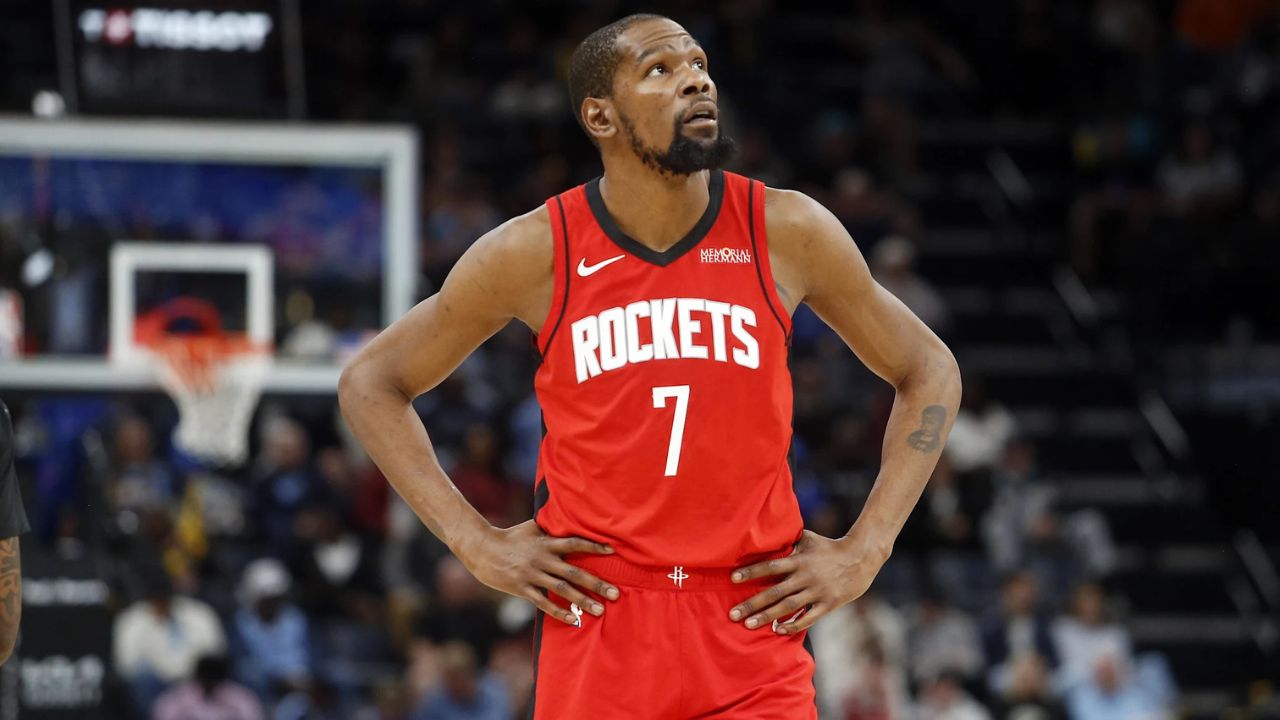
They added Kevin Durant, who gave them 26.0 points per game on 52.0% shooting and 41.3% from 3. They had Alperen Sengun coming off a 20.4-point, 8.9-rebound, 6.2-assist season and Amen Thompson taking another jump with 18.3 points, 7.8 rebounds, and 5.3 assists. On paper, that is not the profile of a team that should look this fragile in Round 1.
And yet that is exactly what the Rockets have looked like through two games against the Lakers. They lost 107-98 in Game 1 and 101-94 in Game 2, which means they are heading into Friday’s Game 3 at Toyota Center down 0-2 after scoring only 96.0 points per game in the series. That alone would be bad enough. The bigger issue is context. The Lakers have played both games without Luka Doncic and Austin Reaves, and the Rockets still have not found a reliable offensive answer. When a 52-win team with this much front-line talent falls behind against a short-handed opponent, “disappointing” stops sounding harsh and starts sounding precise.
The numbers make the case even harder to dismiss. The Rockets are getting offensive rebounds. They are getting second-chance points. They are still winning some of the physical parts of the matchup. But the parts that usually decide playoff games, perimeter shotmaking, half-court execution, late-possession creation, and ball security, have tilted toward the Lakers.
The Rockets are not losing because one thing broke. They are losing because several weaknesses that were manageable in the regular season have shown up together, at the worst possible time.
A Clear Lack Of Outside Shooting
The biggest reason is the most obvious one. The Rockets have not shot well enough from 3, and the gap has not been small. Through two games, they are averaging 9.0 made threes on 29.0% shooting. The Lakers are averaging 11.5 made threes on 48.9%. In Game 1, the Rockets went 11-for-33 from deep while the Lakers hit 10-of-19. In Game 2, the Rockets fell to 7-for-29 while the Lakers went 13-of-28. That is not a side issue. That is the series.
What makes it worse is that this outcome was visible in the Rockets’ offensive design all season. They finished 10th in 3-point percentage at 36.4%, which sounds healthy, but they ranked just 25th in 3-pointers made at 11.5 per game. Percentage can flatter an offense if the volume is not high enough. The Rockets have been selective rather than aggressive from deep, and in the playoffs, that selectivity can turn into hesitation.
The individual numbers tell the same story. Reed Sheppard, one of the few Rockets guards with real shooting gravity, is 5-for-17 from 3 in the series after going 5-for-14 in Game 1 and scoreless in Game 2. Amen Thompson is 0-for-2 from 3 in the series and shot 21.6% from deep in the regular season. Alperen Sengun is 0-for-3 in the series and shot 30.5% from 3 in the regular season. When the Lakers load up on Durant and crowd the paint, they are effectively betting that the Rockets’ spacing pieces will not punish them often enough. So far, that bet has paid off.
This is why the shooting problem feels larger than a two-game slump. It is not just that the Rockets are missing open shots. It is that their roster construction gives defenses a path to survive Durant isolations and Sengun post touches without paying a serious price on the perimeter. The Lakers have been able to shrink the floor, rotate late and still recover to shooters because they do not fear enough volume or enough proven playoff shooting around the Rockets’ main creators. In April, that becomes a structural problem, not just a cold week.
The Half-Court Offense Has No Margin For Error
The Rockets’ raw regular-season scoring total was respectable at 115.2 points per game, but the team still ranked only 18th in scoring and roughly middle of the pack in offensive rating at 118.6. That suggested a good offense, not an elite one. It suggested a group that could win with balance, athleticism, and force, but one that might struggle once the game slowed down and every weakness was attacked possession after possession. That is what the Lakers have done.
The playoff evidence is blunt. The Rockets have scored below 100 points in both games and are at 96.0 per game in the series. They were 8-17 in the regular season when scoring below 110 and 0-7 when scoring below 100. They have also lost their last 10 playoff games when failing to reach 100. None of that is accidental. This offense does not have enough natural ease in the half-court. Too many possessions end with a contested midrange shot, a late-clock bailout, or a drive into a crowded lane. In the regular season, the volume of possessions can hide that. In the playoffs, it sits in the open.
Game 2 was the clearest example. The Rockets won points in the paint 54-34. They won fast-break points 20-17. They won second-chance points 21-17. Usually, those are the numbers that support a win. Instead, they scored only 94 because the half-court possessions between those categories were too shaky, and because the Lakers still got the more valuable shots. Game 1 told a similar story in a different form. The Rockets had a 23-6 edge in second-chance points and still lost by nine because the Lakers shot 60.6% from the field and 52.6% from 3. That is what it looks like when your effort stats are strong, but your shot quality ecosystem is not.
This is also where the regular-season shot profile comes back into focus. A team that ranked 25th in made threes and led the league in attempts from 10 to 14 feet was always walking a narrower path than its record suggested. Durant can rescue some of that because he is one of the best difficult-shot makers in league history. Sengun can rescue some of it with his passing and touch. Thompson can rescue some of it with pressure at the rim. But when all three have to rescue the offense at once, that means the offense is already in trouble. Against a locked-in playoff defense, that is too much to ask.
Turnovers Have Destroyed Any Rhythm
The Rockets are not an exceptionally careful team. They averaged 15.4 turnovers per game in the regular season, which ranked 24th, and their turnover percentage was 13.3. They also allowed 18.8 opponent points off turnovers per game, another bottom-tier mark. So this is not new. The problem is that playoff pressure has turned a weakness into a main plot line.
In Game 1, the Rockets committed 13 turnovers and gave up 24 points off them. In Game 2, they turned it over 15 times and handed the Lakers 16 more points. That is 40 Lakers points off turnovers across two games. For a Rockets team that has scored only 192 total points in the series, those giveaways are catastrophic. They wipe out the gains from offensive rebounding. They wipe out the gains from paint scoring. They let the Lakers play faster than the Rockets want, even when the half-court offense is failing.
Kevin Durant’s Game 2 line captured the problem. He scored 23 points and got to the line nine times, but he also committed nine turnovers, tying his playoff career high. That is not just a bad night. It is exactly the kind of star-level sloppiness that swings a playoff game. Durant averaged 3.2 turnovers per game in the regular season, and the Rockets were 3-7 when he had at least six turnovers. When your best scorer is also the player defenses are loading up on, his ball security has to be elite. In Game 2, it was the opposite.
The larger issue is that the Rockets do not have enough calm guard play to settle possessions when the initial action gets blown up. Thompson has made real strides as a playmaker, and his 8.0 assists per game in the series show that he is creating chances. But he is still not a spacing threat, which changes how the Lakers defend him. Sheppard can pass and shoot, but he is still young and was scoreless in 10:33 in Game 2 after his 17-point Game 1. Without a veteran organizer like Fred VanVleet, every possession asks more of wings and bigs to make precision reads under pressure. That has shown.
Their Best Players Have Not Controlled The Series
Disappointing playoff teams are usually defined by one thing. Their stars do not own enough of the series. That is where the Rockets are now. Durant missed Game 1 with a right knee contusion, returned for Game 2, then was listed as questionable for Game 3 with a sprained left ankle. He still averaged 26.0 points, 5.5 rebounds, and 4.8 assists in the regular season and remains the player most capable of bending a defense. But the series has already become unstable around his health, and that instability is killing them, because the Rockets built so much of their offensive ceiling around his shotmaking.
Sengun’s production looks fine at first glance. He is at 19.5 points, 9.5 rebounds, and 5.5 assists in the series. But he is shooting just 38.5% from the field, and that efficiency problem changes everything. The Rockets need Sengun’s creation from the elbow and the post, but they also need him to finish well enough that the Lakers cannot live with single coverage or late doubles. So far, he has produced, but not cleanly enough to tilt the series. He’s been too busy fighting through contact and physical one-on-ones instead of being a pressure valve that fixes their offensive woes.
Thompson is in a similar place. His overall line in the series, 16.5 points, 6.0 rebounds, 8.0 assists, and 2.0 steals, shows activity and impact. But the lack of 3-point shooting remains a serious limitation. He shot 21.6% from deep in the regular season and has not made a 3 in the series. That lets the Lakers shade help toward Durant and Sengun without paying a major spacing tax. Thompson is doing many good things, but the postseason is about which good things change the geometry of the floor. Right now, the Lakers still get to choose where the help comes from.
Jabari Smith Jr. deserves separate mention because he has actually done his job. He is averaging 17.0 points and 9.0 rebounds in the series after a 15.8-point, 6.9-rebound regular season. He has made 6 of his first 16 threes in the matchup and has been one of the few Rockets who looks comfortable in a direct, simple role. But the fact that Smith has been one of their steadiest players is part of the disappointment, too. On a roster built around Durant, Sengun, and Thompson, the burden should not keep drifting to the fourth or fifth read in the hierarchy. The stars are supposed to simplify the game. The Rockets’ stars have not done that often enough.
This Was Supposed To Be An Easy Bracket
If the Rockets wanted a favorable first-round setup, this was it. The Lakers played the first two games without Luka Doncic and Austin Reaves, with both inactive in Game 1 and Game 2. That should have tilted the series heavily toward the Rockets. A 52-win team built around Kevin Durant, Alperen Sengun and Amen Thompson should not be down 0-2 against a Lakers team missing two of its top offensive creators.
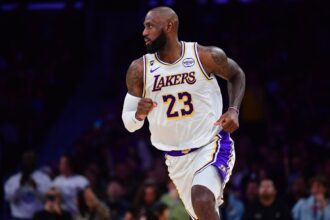
Instead, the Rockets have made the matchup look far more difficult than it should. This is not a case of running into a full-strength contender. This is a case of failing to handle LeBron James and then letting the Lakers’ support pieces decide the series. LeBron has been excellent, with 19 points and 13 assists in Game 1, then 28 points and seven assists in Game 2. But the bigger issue is everything happening around him.
Luke Kennard and Marcus Smart have punished the Rockets on the perimeter. Kennard scored 27 points in Game 1 and 23 in Game 2. Smart added 15 in the opener and 25 in Game 2. Rui Hachimura has given the Lakers efficient secondary scoring, and Deandre Ayton has produced inside. That is the real embarrassment for the Rockets. It is one thing to lose control of LeBron. It is another to get shredded by role players and complementary starters when the other team is missing Doncic and Reaves.
That is what makes this series look so bad for the Rockets. The Lakers have not needed overwhelming star power to take control. Their role players have filled the basket, spaced the floor, and punished every defensive mistake. In Game 1, the Lakers shot 60.6% from the field and 52.6% from 3. In Game 2, they still hit 46.4% from deep. The Rockets have done enough in some hustle areas to stay close, but none of that matters when the Lakers’ secondary pieces are scoring this easily.
This is why the disappointment feels so sharp. The Rockets were handed a version of the matchup that should have been manageable. Instead, the Lakers have looked more organized, more composed and far more dangerous, even while undermanned. That is the kind of failure that changes the tone of an entire playoff run.
Final Thoughts
The Rockets have been the most disappointing playoff team, not because they are losing, but because they are losing in ways that question the validity of their formula. They are still winning hustle categories. They are still showing size and physicality.
But playoff basketball is won with clean half-court execution, reliable spacing, star control, and low-error possessions. The Rockets have not given enough of any of those. Their 52-win regular season, Durant’s arrival, Sengun’s growth, and Thompson’s breakout all raised the standard. Being down 0-2 to a Lakers team that has played without Doncic and Reaves is not just a bad start. It is a major credibility hit.
If the shooting does not normalize and the offense does not simplify immediately, this is heading toward the kind of first-round loss that changes how the entire season is remembered.