On the second night of a back-to-back, the Rockets walked into Dallas hoping to steady themselves after a long week, only to walk out with their most lopsided loss of the season. Houston hung in for a half, but everything unraveled after halftime, as the Mavericks ripped off a 37-20 third quarter that felt like the breaking point.
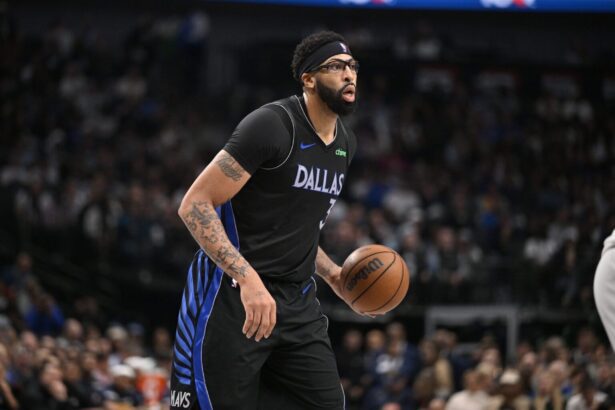
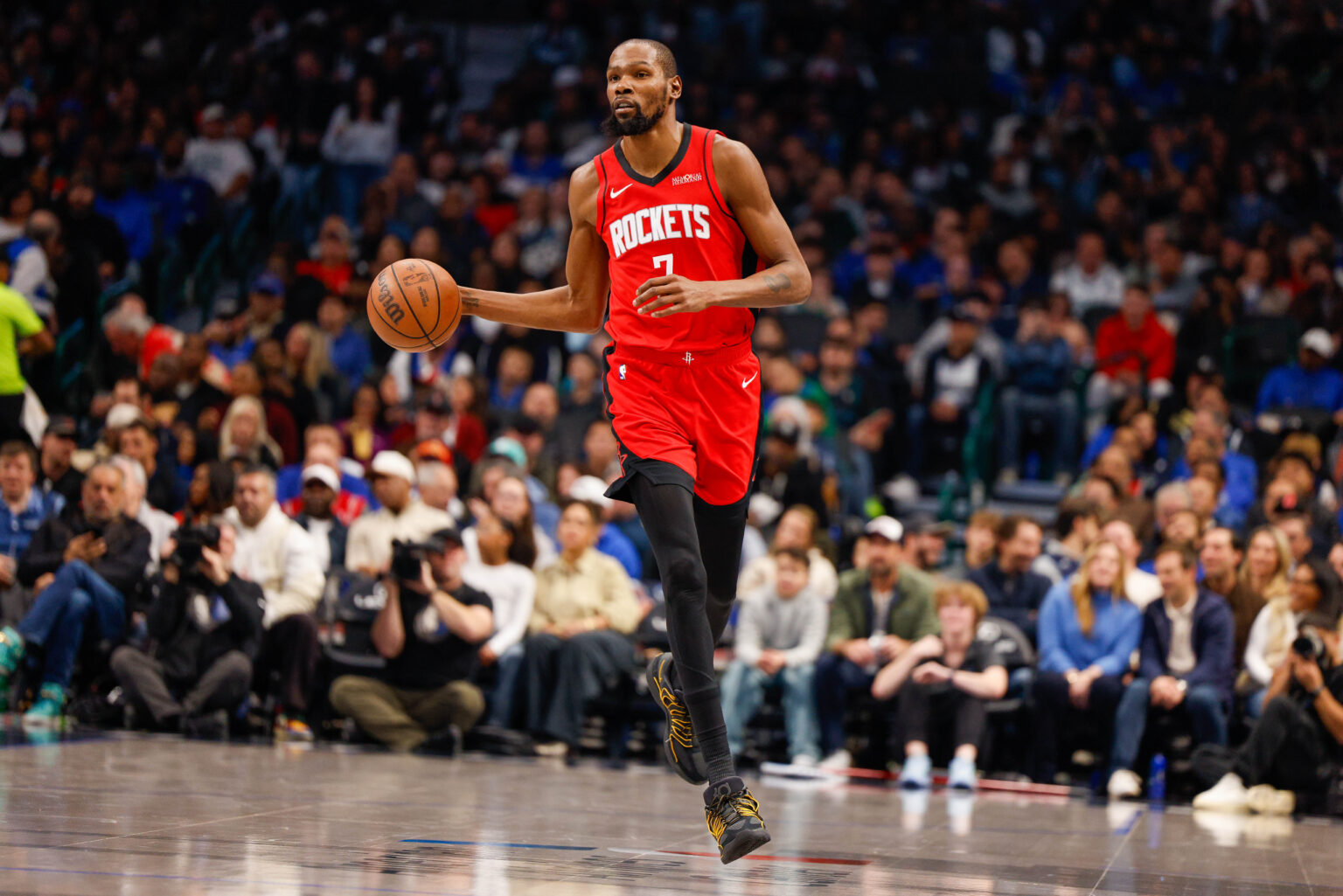
Anthony Davis, who couldn’t buy a basket the night before in Oklahoma City, came out looking like he’d taken the Thunder loss personally. He buried 14 of his 19 shots and powered Dallas to a 122-109 win that never felt as close as the final margin. Kevin Durant gave the Rockets a strong start, pouring in 20 of his 27 points before the break, but even he couldn’t rescue a group that simply didn’t have enough shot creation or stability without Alperen Sengun.
Once Dallas stretched the lead past 20 early in the fourth, Durant sat, and the rest of Houston’s rotation tried to hang on while the Mavericks’ young contributors, Cooper Flagg, Ryan Nembhard, Brandon Williams, kept piling on. Houston fought on the glass and shot the ball well enough, but 20 turnovers and a steady stream of Dallas transition points ultimately swallowed them whole.
Anthony Davis Dominates After 24 Hours
The biggest swing in this game was Davis’ performance compared to the night before. After scoring just two points on a miserable 1-for-9 effort in Oklahoma City, Davis returned looking like he hit a reset button.
His 29 points came on 14-of-19 shooting, and he controlled the entire third quarter by himself. Davis went 6-for-7 in that frame, repeatedly beating Houston’s bigs to his spots and forcing the Rockets to send help they didn’t really want to send. His eight rebounds and two steals added just enough defensive presence to anchor Dallas while the perimeter guys did the running.
What made his night even more impactful was how much easier he made things for everyone else. With Davis eating up single coverage, Dallas shot 60% from the field and racked up 74 points in the paint. Houston simply had no answer once he started burying those mid-range turnarounds and slipping into pockets behind their aggressive switches.
By the time the fourth quarter rolled around, the Mavericks didn’t even need him anymore; that’s how thoroughly he had swung the game’s rhythm. If the Rockets were hoping fatigue from the back-to-back would keep Davis in check, he answered that question quickly.
Dallas’ Young Core Keeps Flashing More Than Just Potential
Even with Davis stealing the headlines, Dallas got enormous mileage from its young backcourt. Cooper Flagg finished with 19 points, five rebounds, and three assists, and his most impressive moment came in transition when he threaded a bounce pass to Ryan Nembhard for an easy layup that ballooned the lead to 98-77.
Nembhard, who has now started six straight games, continued to look polished beyond his years with 11 points, seven assists and just two turnovers. Their ability to push tempo was one major difference between the teams; Dallas finished with 28 fast-break points to Houston’s eight. The Mavericks also got a massive spark from Brandon Williams, who dropped 20 points on 8-of-12 shooting off the bench.
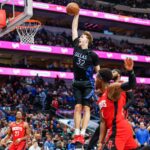
Between him, Nembhard and Flagg, Dallas’ guards repeatedly turned Houston’s 20 turnovers into downhill attacks before the Rockets could build a wall. P.J. Washington, fresh off a four-game absence, added 14 points, seven boards and five steals, including back-to-back dunks during a 14-0 third-quarter surge. When Dallas found that gear, Houston simply couldn’t match the pace. This was Dallas’ depth and youth winning the game outright.
A Strong First Half from Durant Couldn’t Cover Houston’s Cracks
Kevin Durant came out sharp, scoring 20 of his 27 points before the break, and for a moment it looked like Houston might steal one. He shot 11-for-20 overall and didn’t seem bothered by Dallas’ size on switches, but once he sat in the fourth quarter, the Rockets’ halfcourt issues came roaring back.
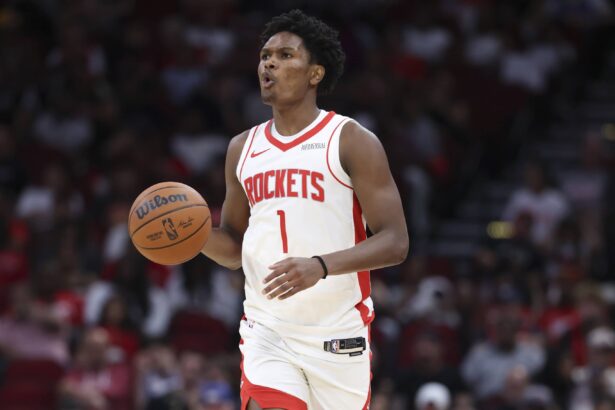
Jabari Smith Jr. gave them 22 points and eight rebounds while shooting 10-for-19, yet Houston never found a consistent rhythm beyond their starters. Amen Thompson chipped in a hard-earned 7-6-6 line, and Aaron Holiday had 19 points on 7-of-12 shooting, but the Rockets simply didn’t have the ball security to survive.
The most damaging number was the 20 turnovers, which Dallas spun into 34 points. Houston actually outshot the Mavericks from the field (51% to 60% early before cooling), won the rebounding battle 37-31, and even grabbed 16 offensive boards, but none of it mattered with Dallas constantly running downhill after steals and errant passes.
Without Sengun orchestrating the offense, Houston never settled in the third quarter, committing nine giveaways in that stretch alone. Dallas shot 73% in the period and turned a tie game into a runaway. One strong half from Durant wasn’t enough to cover all those cracks.