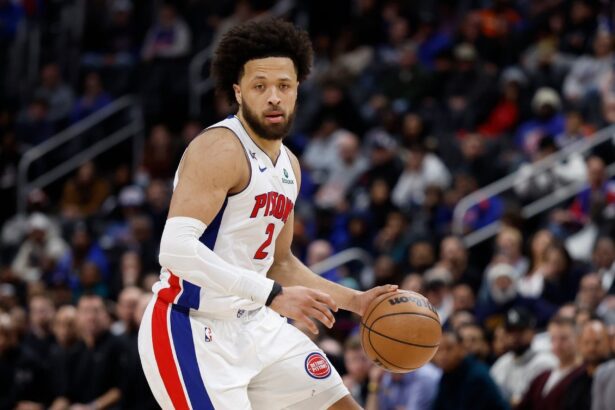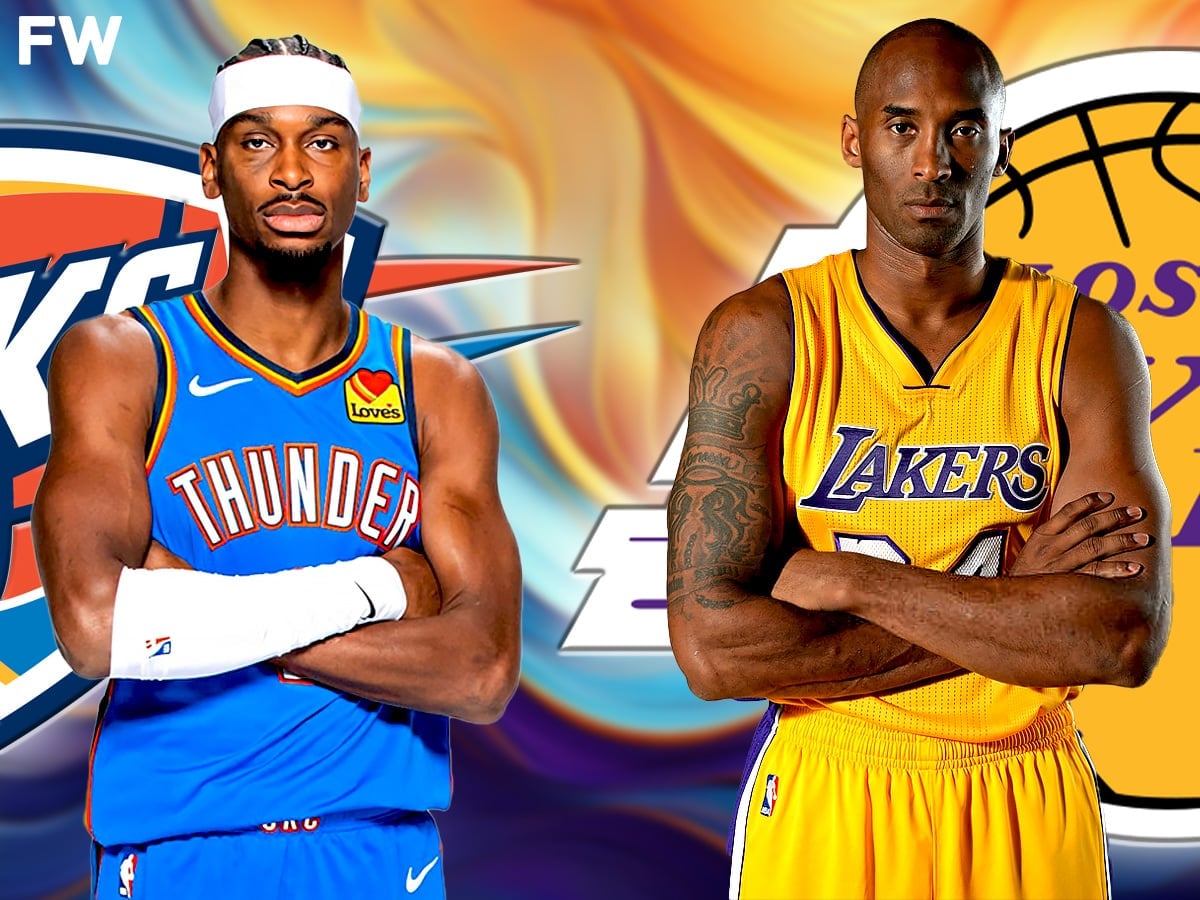
Shai Gilgeous-Alexander is hitting that same “this is unstoppable” feeling like last season, where he earned an MVP, Finals MVP, and a championship with the Oklahoma City Thunder.
He’s not a pure volume flamethrower, but the efficiency and control are ridiculous, and he’s doing it as the engine of the Thunder every single night. Right now, he’s at 32.1 points, 4.9 rebounds, and 6.5 assists on 55.1% from the field, which is another MVP-level production in the cleanest possible form.
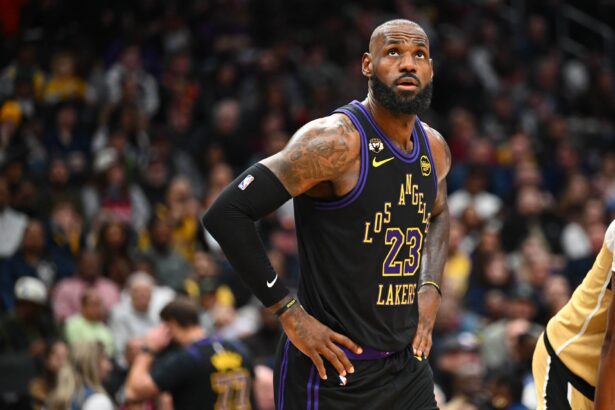
Kobe Bryant became a legend in phases with the Los Angeles Lakers. At 20, he was already putting up real star numbers, 19.9 points, 5.3 rebounds, and 3.8 assists, while still learning how to be “the guy” on a loaded roster.
By 27, he was the league’s most terrifying scorer, averaging 35.4 points, 5.3 rebounds, and 4.5 assists, basically dragging the sport into a new level of shot-making difficulty.
So this isn’t a vibes debate or a “who had the cooler highlights” thing. It’s a real timeline comparison from age 20 to 27: role, responsibility, scoring profile, playmaking load, and how dominant each guy actually was at the same points of their careers. The question is simple, and it’s spicy for a reason: who’s been better so far?
Points Per Game (PPG)
1. Kobe Bryant: 27.1 PPG (2 points)
2. Shai Gilgeous-Alexander: 24.9 PPG (1 point)
Kobe wins this because the scoring volume is simply heavier across the full 20-to-27 window, and that matters in a “so far” comparison. This isn’t just about the raw number either; it’s about the type of scoring Kobe lived on for most of that stretch.
He played in a slower, more physical environment with tighter spacing and far fewer “easy” possessions. A lot of his points came from contested midrange work, difficult late-clock shots, and games where defenses loaded up early because they knew the Lakers’ offense could tilt into Kobe creation.
Shai’s 24.9 is still elite, and if you zoom in on the top end of his window, his peak is terrifying. He scores with patience and geometry, not chaos. But this category is an average across the entire age range, and Kobe’s average is higher for a reason: he spent more of the window as a high-volume scorer with a green light that never turned off. Shai has the cleaner process. Kobe has the bigger scoring output in this slice of their careers.
Rebounds Per Game (RPG)
1. Kobe Bryant: 5.9 RPG (2 points)
2. Shai Gilgeous-Alexander: 4.8 RPG (1 point)
Kobe takes this because he played with more physical wing responsibility and attacked the glass more like a small forward than a modern lead guard. He had the strength, the explosiveness, and the mindset to finish possessions in traffic, and those boards often mattered because they triggered transition chances or prevented second opportunities.
There’s also an era layer here. The early 2000s had more missed shots and more bodies near the rim, which creates more “real” rebounding possessions, not just long bounces. Kobe’s willingness to mix it up inflated his impact beyond the stat, because a rebounding wing can stabilize a team when the offense bogs down.
Shai is a good rebounder for his position, but his rebounding is more role-based. He often plays with length around him that cleans the glass, and his job is frequently to secure the ball only when it’s clean, then flow immediately into offense. He’s not living in the trenches for boards the same way Kobe did. Kobe wins both the stat and the vibe of the category.
Assists Per Game (APG)
1. Shai Gilgeous-Alexander: 5.2 APG (2 points)
2. Kobe Bryant: 5.1 APG (1 point)
This one is razor-thin, but Shai gets the two points, and stylistically it makes sense. Shai’s playmaking is built around manipulation: he probes, he waits for the help defender to commit, and he hits the exact pass that punishes the rotation. His assists often feel “inevitable” because his scoring threat bends the defense in predictable ways.
Kobe’s 5.1 is a reminder that he wasn’t just a scorer. He created plenty, especially as he became the unquestioned centerpiece. But Kobe’s playmaking in that window often came from pressure situations: two defenders shade at him, he kicks to shooters, he dumps to a big, or he finds a cutter once the defense panics. It was more reactive, more “I drew a crowd, now I’ll punish it.”
Shai’s is more systemic. He generates assists as part of the normal rhythm of his possessions, not only as a counter to doubles. Again, it’s close, but Shai slightly outproduces Kobe here and does it with a style that consistently creates clean shots for others.
Steals Per Game (SPG)
1. Kobe Bryant: 1.7 SPG (2 points)
2. Shai Gilgeous-Alexander: 1.4 SPG (1 point)
Kobe wins this category because his defensive activity shows up more consistently in the “take the ball from you” way. Young Kobe was aggressive on the perimeter, quick with his hands, and willing to jump lanes when he smelled a mistake. Steals aren’t perfect defense, but they do reflect disruption, attention, and the ability to flip a possession instantly.
The era matters too. Perimeter defense was more physical, on-ball matchups were more direct, and teams leaned into isolation sets and predictable passing patterns. That environment can create steal chances for elite perimeter defenders who know what’s coming. Kobe’s 1.7 suggests he wasn’t just surviving on defense while carrying offense; he was actively generating extra possessions.
Shai’s 1.4 is still strong, and his defense is often about length, positioning, and bothering shots rather than gambling. He also carries a huge offensive burden during the peak years of his window, and that naturally shifts your defensive profile. But in this category, Kobe’s activity and production are clearly ahead.
Blocks Per Game (BPG)
1. Shai Gilgeous-Alexander: 0.8 BPG (2 points)
2. Kobe Bryant: 0.7 BPG (1 point)
It’s funny, but Shai winning blocks makes sense when you think about modern defensive roles for guards. Shai gets blocks as a help defender, a rear-view contest guy, and a long guard who times swipes and vertical challenges around the rim. Modern schemes ask perimeter players to cover space, rotate down, and contest at the basket more often than older perimeter roles did.
Kobe at 0.7 is still excellent for a guard/wing and reflects his athleticism and timing. But Kobe’s defense was often built around on-ball pressure and denying touches, not always being the weak-side helper who comes flying in for a block. The way teams defend today creates more opportunities for guards to be part of rim protection by committee.
This category doesn’t prove Shai is a better defender overall; it just tells you he produced slightly more blocks per game in this window. It’s close, but Shai gets it.
Field Goal Percentage (FG%)
1. Shai Gilgeous-Alexander: 50.5% from the field (2 points)
2. Kobe Bryant: 45.4% from the field (1 point)
This is one of Shai’s strongest categories because 50.5% from the field across a seven-to-eight year window as a primary perimeter scorer is absurdly clean. It reflects shot quality, finishing touch, and a style that doesn’t waste possessions. Shai gets to the rim, he lives in the paint, and when he takes midrange shots, they’re usually within a controlled rhythm, not desperation.
Kobe’s 45.4% reflects a different job description. He took harder shots, more contested looks, more late-clock bailouts, and he operated in an environment with tighter spacing and more bodies sitting in help. His misses are part of the “Kobe tax,” the cost of being the guy who takes the hardest shot because someone has to take it.
But the category is efficiency, and efficiency matters. Making more of your shots improves everything downstream: transition defense, offensive rhythm, and the pressure you put on opponents. Shai’s advantage here is too big to hand-wave away, even when you account for era differences.
Three-Point Percentage (3P%)
1. Shai Gilgeous-Alexander: 36.0% from three (2 points)
2. Kobe Bryant: 33.3% from three (1 point)
Shai takes this because his three-point shot functions as a stable part of his scoring ecosystem. He doesn’t need to be a volume bomber to be dangerous, he just needs defenses to respect the shot enough that they can’t load up on his drives. 36.0% does exactly that. It’s credible, consistent, and it forces defenders to guard him honestly.
Kobe’s 33.3% reflects his era and his shot diet. Three-point shooting wasn’t emphasized the same way, and Kobe took plenty of difficult threes, especially late in possessions when the offense stalled. That lowers percentages. Also, the spacing context matters: fewer kickout threes off four-out attacks, more self-created heaves against set defenses.
Still, this category is about the result, and Shai’s number is stronger. In a modern comparison, that steadiness from deep also matters because it affects how opponents build their entire coverage. Shai makes the defense pay for going under screens or sagging even a little.
Free Throw Percentage (FT%)
1. Shai Gilgeous-Alexander: 86.3% from the line (2 points)
2. Kobe Bryant: 83.9% from the line (1 point)
Both are excellent free throw shooters, but Shai is simply more efficient at the line across the sample. That’s a big deal because Shai’s game is built to generate free throws consistently through pace control and contact creation. When you get to the line as often as a superstar does, a couple percentage points becomes real value over seasons.
Kobe’s 83.9% is still elite and matches the reputation: cold-blooded, reliable, and never afraid of the moment. But Shai’s 86.3% is just cleaner, and it reinforces the broader theme of his profile: high volume without high waste.
Small difference, but in a comparison this tight, that kind of edge matters.
Effective Field Goal Percentage (eFG%)
1. Shai Gilgeous-Alexander: 54.5% eFG% (2 points)
2. Kobe Bryant: 48.3% eFG% (1 point)
This is the category that screams “modern efficiency monster.” eFG% rewards three-point shooting properly and penalizes empty midrange volume. Shai’s 54.5% is outstanding for a player who carries a major scoring load. It means his attempts are producing points at a high rate, not just looking good on tape.
Kobe’s 48.3% is shaped by the midrange-heavy era and the reality that he took a lot of the hardest shots in the building. His midrange was a weapon because it existed when nothing else did, but eFG% isn’t sentimental. It doesn’t care how iconic a fadeaway is, it cares how much value it returns on average.
Shai’s advantage here is structural: he takes more efficient shots, makes them at a higher rate, and includes enough threes to boost overall shot value. Kobe’s scoring greatness was about shot-making difficulty. Shai’s greatness is about shot-making and shot selection combining into a cleaner profile. This is one of Shai’s clearest wins.
Box Plus/Minus (BPM)
1. Shai Gilgeous-Alexander: 6.0 BPM (2 points)
2. Kobe Bryant: 5.5 BPM (1 point)
Impact metrics aren’t perfect, but over a big sample they capture something real: how much you’re tilting possessions on both ends. Shai’s 6.0 suggests elite two-way influence driven by efficient scoring, playmaking, low waste, and defensive length. His game tends to grade well because it’s balanced and efficient, and it doesn’t rely on high-variance shot diets.
Kobe’s 5.5 is still superstar territory and absolutely reflects massive impact. But his era and role can hurt him in these models. The early-2000s game produced uglier possessions, more midrange volume, and more “bailout” attempts for stars. Those shots were necessary, but they don’t always look optimal in metric frameworks.
Shai’s edge here aligns with what the eye sees in modern basketball: he creates advantages without burning possessions, and he puts constant pressure on defenses while still contributing defensively. Kobe’s impact was enormous, but in this specific metric and window, Shai comes out slightly ahead.
Value Over Replacement Player (VORP)
1. Kobe Bryant: 41.4 VORP (2 points)
2. Shai Gilgeous-Alexander: 33.0 VORP (1 point)
This is the “total weight of the window” category, and Kobe’s number is massive. VORP is a cumulative value. It rewards availability, minutes, and sustained high-level seasons. Kobe stacking 41.4 in this age range reflects that he spent a huge portion of it as a major impact player, often logging heavy minutes and delivering consistent value year after year.
Shai’s 33.0 is still excellent, but it reflects a different arc. Shai’s peak is incredible, but his climb into the very top tier hits later in the window compared to Kobe’s early arrival. In cumulative metrics, those earlier seasons matter. Kobe’s early years in this range came with big roles and big stakes, and it shows in the total.
Championships
1. Kobe Bryant: 3 Championships (2 points)
2. Shai Gilgeous-Alexander: 1 Championship (1 point)
Rings are team-dependent, but within this format they still count. Kobe’s three championships in this age window show how quickly he became part of a true title core and how consistently those teams finished the job. Even when he wasn’t the singular centerpiece early, he was a major driver of winning at the highest level.
Shai having one championship in this same age window is still enormous. It’s the ultimate validation that his style isn’t just regular-season dominance; it can scale to the most intense environment. A ring by 27 changes how people talk about you forever.
But 3 vs. 1 is still a clear difference in this category. Kobe gets the two points because his resume in this slice includes more title finishes.
1st Team All-NBA
1. Kobe Bryant: 4 First Team selections (2 points)
2. Shai Gilgeous-Alexander: 3 First Team selections (1 point)
This is the “top-of-the-mountain” recognition category. First Team All-NBA means you weren’t just great, you were considered one of the absolute best at your position that season. Kobe having four of these in this age range shows he didn’t take long to become permanent royalty.
Shai having three is also elite. It means he wasn’t a one-year wonder; he lives in that upper tier. That’s the difference between being a star and being a standard. Shai reached that level and held it.
But in a strict scoring format, the extra First Team matters. Kobe gets the edge because his dominance, in the eyes of voters, lasted one more season at that very top tier during the window.
All-NBA Selections
1. Kobe Bryant: 8 All-NBA selections (2 points)
2. Shai Gilgeous-Alexander: 3 All-NBA selections (1 point)
This category is a resume sledgehammer. Eight All-NBA selections from age 20 to 27 is outrageous consistency. It means Kobe wasn’t just popping in and out of superstar conversations; he was basically a permanent resident.
Shai’s three reflect a later takeoff. He didn’t become a perennial All-NBA guy immediately at 20; he climbed into it, then exploded. That’s not a negative; it’s just a different timeline. But in a category that rewards total recognition during the window, Kobe’s advantage is overwhelming.
All-Defensive Teams
1. Kobe Bryant: 6 All-Defensive selections (2 points)
2. Shai Gilgeous-Alexander: 0 All-Defensive selections (1 point)
Kobe crushes this category. Six All-Defensive selections in the age 20–27 window is not a small thing; it’s a statement. It means Kobe wasn’t merely “capable” on defense; he was recognized repeatedly as one of the league’s best perimeter defenders while also being a primary scorer.
Shai getting zero here doesn’t mean he can’t defend. His defense often shows up in length, positional discipline, and contesting rather than highlight plays. Still, the sheet is the sheet. Kobe takes it.
MVP
1. Shai Gilgeous-Alexander: 1 MVP (2 points)
2. Kobe Bryant: 0 MVPs (1 point)
This is Shai’s loudest individual accolade in the window. MVP is the “center of the league” award. Winning one by 27 means Shai wasn’t just putting up numbers; he owned the 2024-25 season.
Kobe not having an MVP in this specific age range is about timing and competition more than talent. But the format is the format. Shai has the MVP, Kobe doesn’t, so Shai gets the two points.
Finals MVP
1. Shai Gilgeous-Alexander: 1 Finals MVP (2 points)
2. Kobe Bryant: 0 Finals MVPs (1 point)
Finals MVP is the purest “big stage ownership” stamp you can get in a single season. Shai having one in this age window is huge because it says he didn’t just win a title, he defined the series.
Kobe not having a Finals MVP in this specific window is more about timing than ability. Still, Shai gets the category.
All-Star Selections
1. Kobe Bryant: 7 All-Star selections (2 points)
2. Shai Gilgeous-Alexander: 3 All-Star selections (1 point)
All-Star is part performance, part reputation, part cultural footprint. Kobe stacking seven All-Star selections in this age window shows how early he became a permanent face of the league and how consistently he stayed there.
Shai’s three reflect his later rise into superstardom. Once he arrived, he became a fixture, but Kobe simply spent more of this age range as an established All-Star presence.
Final Verdict
Final Score:
Shai Gilgeous-Alexander: 27 points
Kobe Bryant: 27 points
Shai Gilgeous-Alexander tying Kobe Bryant across this age 20–27 scoreboard says everything about how real his rise has been.
He wins the modern “how efficient and unstoppable are you possession-to-possession” battle with huge advantages in FG%, 3P%, FT%, eFG%, and BPM, then slams the door with the two loudest trump cards on the sheet, an MVP and a Finals MVP. That’s not just pretty numbers, that’s proof his style scales to the highest stage.
Kobe’s side is the heavyweight resume: more scoring volume, more rebounding, more steals, a massive VORP edge, three championships, eight All-NBA selections, and six All-Defensive teams. That’s the classic two-way dominance profile, and it’s why the tie feels so wild.
The honest takeaway is simple, Shai already belongs in this conversation, and if he keeps stacking seasons, the next version of this comparison might not end in a draw.