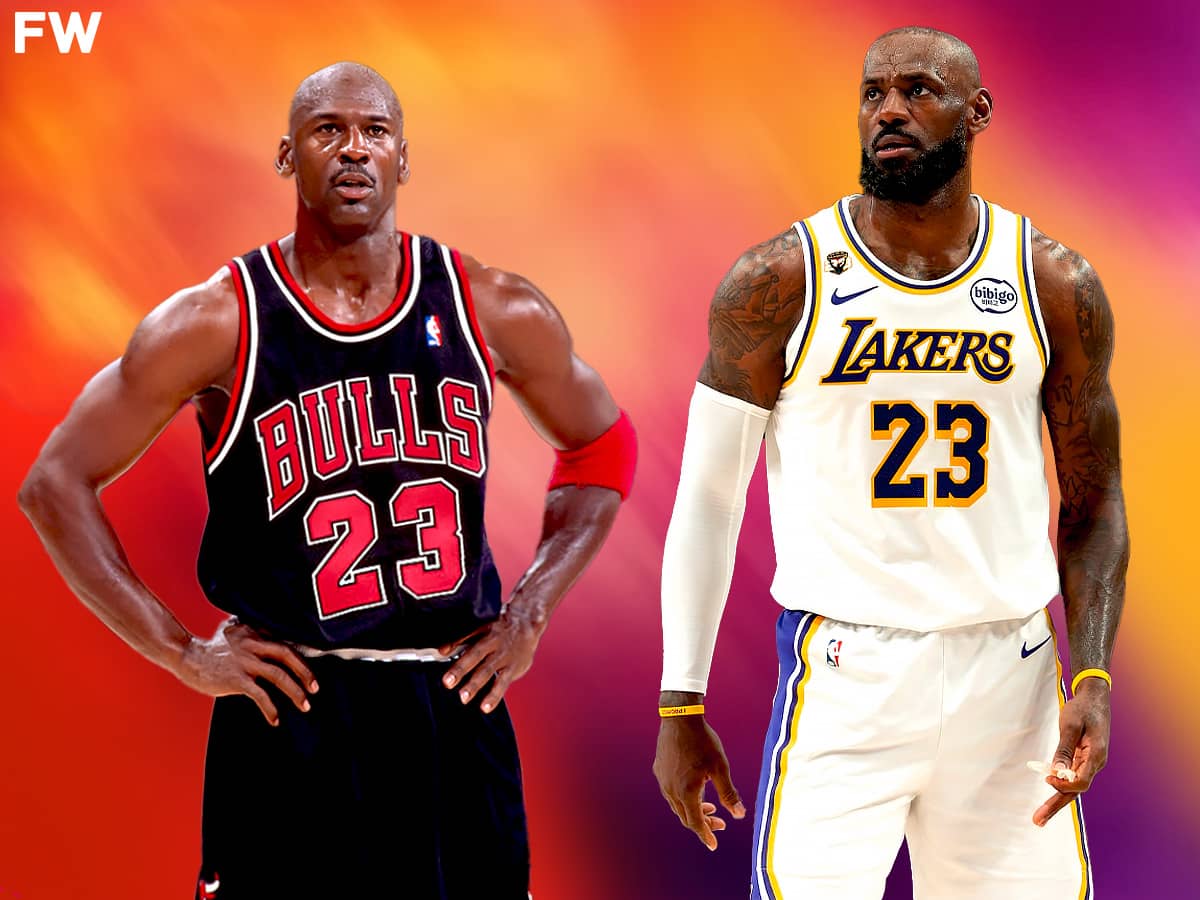
LeBron James has once again addressed the debate that has followed him for most of his career, pushing back on constant comparisons with Michael Jordan while defending how his legacy is judged. Speaking to ESPN’s Dave McMenamin, James described the GOAT discussion as ‘very tiring’ and reduced it to ‘barbershop talk,’ making it clear that he no longer sees value in trying to win that argument.
“You can look at both of us and say that you love both of us without trying to s— on the other person. And usually, it’s s***ing on me. But I know for sure that I’ve done my part in this journey.”
He also spoke about the role Jordan played in shaping his dreams. Growing up in Akron, James studied Jordan closely and used him as a source of inspiration.
“I never thought that I could be him, but I dreamed of the opportunity to live in the shoes that he lived in. I dreamed of being able to be in a big game and hit a game-winner as the clock went down. I dreamed of having my own sneaker. I dreamed of flying through the air like him. I dreamed of people screaming my name.”
“Everything that he did. I needed inspiration from certain people in music and in sports during my upbringing. I needed that.”
The most pointed part of James’ comments focused on his 4-6 Finals record, a statistic often used to challenge his standing in all-time rankings. Earlier in his career, he admitted that criticism over those losses affected him. Over time, his perspective shifted.
“When I was younger, I used to have the notion of like, people were getting on me for losing in the Finals, and when I was younger, I used to listen to it. Like, people will really rather you not make the playoffs or lose in the first round than to lose in the Finals, which is crazy to me. And I almost feel like, is it because it’s me?”
“Everybody has to say something about my career: ‘Oh, well, he made eight straight Finals, but he was only able to win three.’ ‘He’s the leading scorer in NBA history, but he’s played 23 years.'”
“Yeah, but I am also fastest to 1,000. Fastest to 2,000. Fastest to 5,000. Fastest to 10,000. So when I started realizing it was just a knock on me, I started to appreciate it a little bit more. Like, I am pissed off that I didn’t have a better winning percentage individually in the Finals, but for people to try to turn it into a negative, it doesn’t bother me like it did when I was younger.”
James highlighted the broader context of his career to counter that narrative. He reached the NBA Finals ten times, including eight consecutive appearances, a level of sustained dominance never seen in league history.
There is also a stylistic divide that James believes fuels the debate. He has long described himself as a point forward, a player who prioritizes playmaking and elevating teammates while still carrying scoring responsibility. Jordan, by contrast, built his reputation as a scoring guard with relentless offensive pressure. James sees these differences as central to understanding why their careers unfolded in unique ways.
At this stage, LeBron James really doesn’t care about public opinion and is more focused on how he evaluates his own journey. He acknowledged frustration over not winning more championships, but he rejected the idea that his Finals record negatively affects his legacy. Instead, he views it as evidence of consistency, durability, and the ability to lead teams deep into the postseason year after year.
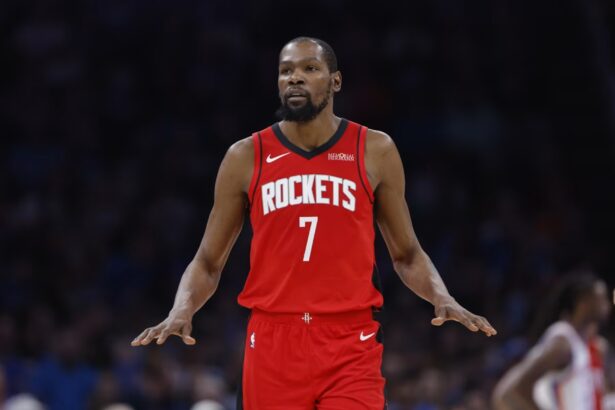
That perspective is reinforced by what he is still doing in real time. Now in his 23rd NBA season, James is leading the Los Angeles Lakers through a demanding playoff series against the Houston Rockets without his two co-stars, Luka Doncic and Austin Reaves.
Despite those absences, the Lakers hold a 3-1 series lead and are in position to close it out at home in Game 5. James has been central to that success, averaging 21.5 points, 8.8 assists, and 8.3 rebounds in the series while controlling the tempo and creating offense under constant pressure.
His ability to maintain this level of impact at 41 years old adds weight to his argument. The same longevity that critics sometimes use against him has allowed him to produce across multiple eras, adapt his role, and continue delivering in high-stakes situations. For James, that sustained excellence is part of the legacy that cannot be captured by a simple Finals record comparison.