Finals MVP is usually a superstar award. Most years, it goes to the best player in the series, and that player was already an All-Star, All-NBA guy, MVP candidate, or full franchise face before the Finals started. But not always.
Some players won it without being All-Stars that same season. That does not mean they were random players. Most of them were still great, important, or already respected. It just means their regular season did not have the same status as their Finals moment.
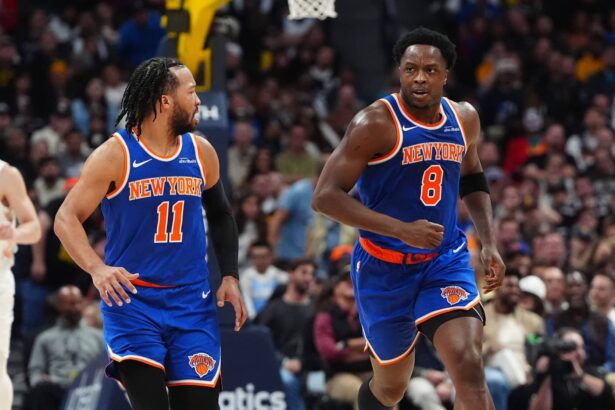
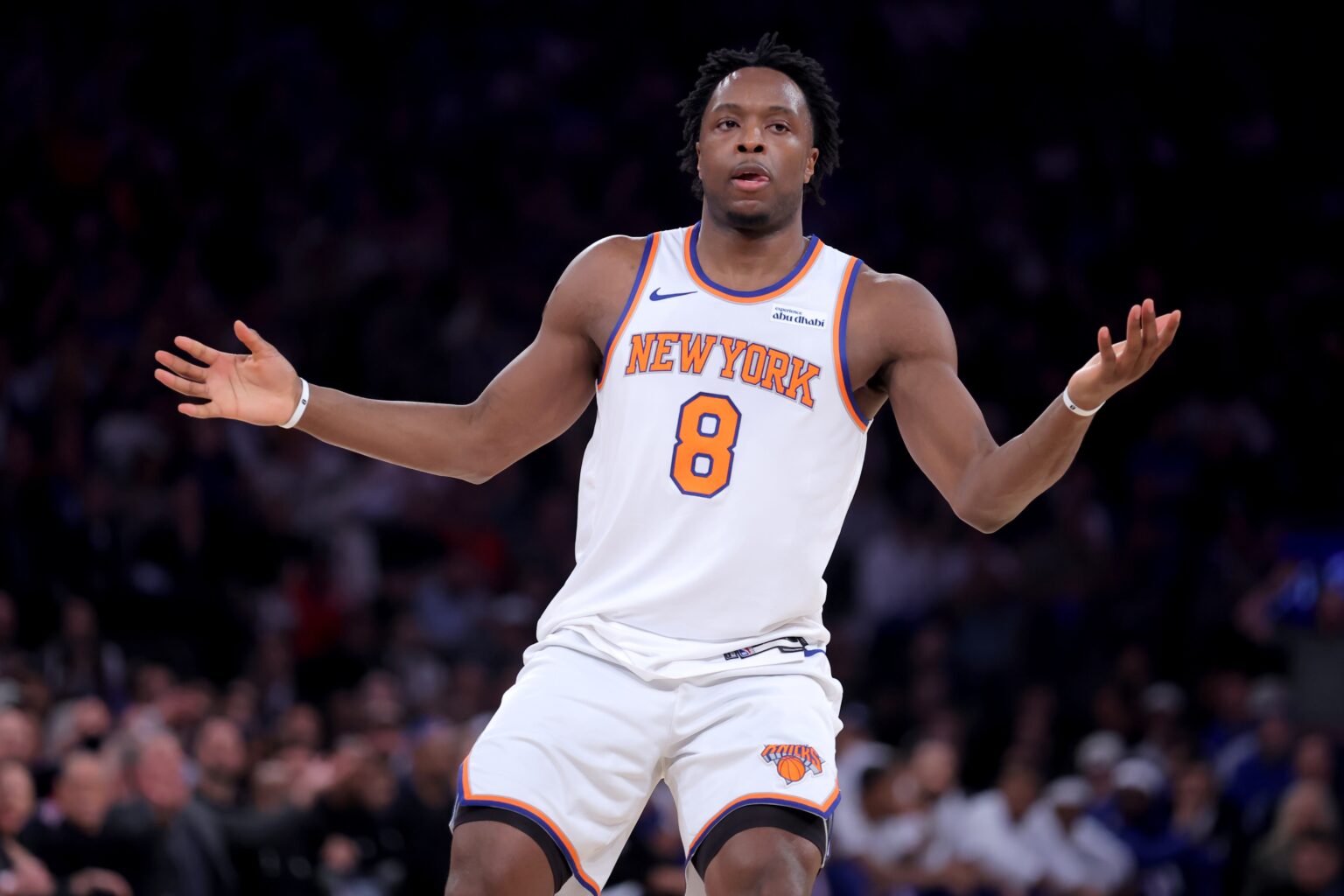
That is why OG Anunoby is now a real name in this conversation. He was not an All-Star, but he has been one of the biggest players in the 2026 NBA Finals. His defense, shooting, and Game 4 winner changed the series. If the Knicks finish the job and voters reward two-way impact, he has a real case.
Here are the NBA Finals MVP winners who were not All-Stars that season, going from the oldest case to the newest.
8. Willis Reed – 1973 NBA Finals MVP
Finals Stats: 16.4 PPG, 9.2 RPG, 2.6 APG, N/A SPG, N/A BPG, 49.3% FG, N/A 3P%
By 1973, Willis Reed wasn’t the same monster who carried the Knicks earlier in his career. He was still respected, still tough, and still the captain, but his role had changed. The Knicks didn’t need him to be a 25-point scorer anymore.
His regular season showed that shift. Reed averaged 11.0 points, 8.6 rebounds, and 1.8 assists in 27.2 minutes per game. That wasn’t an All-Star season. It was good, but it wasn’t star-level production. Walt Frazier, Earl Monroe, Dave DeBusschere, and the rest of the Knicks had a better offense around him.
The Finals were different. Reed raised his production to 16.4 points, 9.2 rebounds, and 2.6 assists against the Lakers. He shot 49.3% from the field and 88.9% from the free-throw line. That last number is a key stat, because centers in that era weren’t typically good at the line.
The Knicks lost Game 1, then won four straight. Reed scored at least 18 points in three of the five games. In Game 5, he had 18 points, 12 rebounds, and 7 assists in the 102-93 closeout win. That was his best all-around game of the series, and it came with the title on the line.
Frazier had a strong case with 16.6 points, 6.8 rebounds, and 5.2 assists. But Reed had the captain label, the interior role, and the championship-closing performance. He wasn’t an All-Star that season, but he still gave the Knicks the exact version they needed in the Finals.
7. Wes Unseld – 1978 NBA Finals MVP
Finals Stats: 9.0 PPG, 11.7 RPG, 3.9 APG, 0.6 SPG, 0.1 BPG, 52.0% FG, N/A 3P%
The box score makes this one look strange at first. Wes Unseld won Finals MVP while averaging only 9.0 points per game. That sounds too low for the award, especially because Elvin Hayes scored more and had bigger raw numbers for the Bullets.
But Unseld was never that kind of player. He wasn’t there to score 25. He was there to rebound, set hard screens, and make the Bullets play with higher IQ. He did the dirty work every possession, and that was his real value.
In the 1978 Finals, Unseld averaged 11.7 rebounds and 3.9 assists while shooting 52.0% from the field. He took only 7.1 shots per game, so he wasn’t forcing offense. He stayed inside his role, finished when he had chances, and helped his team play through pressure.
Game 7 was the best example. Unseld had 15 points, 9 rebounds, and 6 assists in the 105-99 road win over the SuperSonics. It wasn’t a superstar box score, but it was exactly what the Bullets needed. He gave them rebounds, passing, screens, and made the late free throws in a close game.
It was a strange Finals MVP case, but it made sense inside the series. Unseld didn’t win it with big scoring. He won it because the Bullets played through his toughness, rebounding, and screens. He wasn’t an All-Star in 1978, but in those Finals, Washington felt like his team.
6. Cedric Maxwell – 1981 NBA Finals MVP
Finals Stats: 17.7 PPG, 9.5 RPG, 2.8 APG, 0.2 SPG, 1.0 BPG, 56.8% FG, N/A 3P%
Cedric Maxwell didn’t have the usual track record of a Finals MVP. He wasn’t an All-Star in 1980-81, and he never made an All-Star team in his career. But the Celtics didn’t need the famous name to win that series. They needed a guy who could do the simple damage every game: score near the rim, attack mismatches, get to the line, and make the Rockets feel him physically. Maxwell was that guy.
His regular season already made the role clear. Maxwell put up 15.2 points, 6.5 rebounds, and 2.7 assists on 58.8% from the field. That number says a lot. He wasn’t hunting tough shots or playing outside his lane. He got to his spots, scored around the basket, cut behind the defense, posted smaller guys, and turned simple plays into points.
The Finals made that role even louder. Maxwell averaged 17.7 points, 9.5 rebounds, and 2.8 assists against the Rockets. He shot 56.8% from the field and 75.9% from the free-throw line. That is very effective offense for a six-game Finals. He didn’t space the floor, and he didn’t need to. His value came from pressure in the paint, second chances, and free throws.
Game 5 was the biggest reason he won the award. The series was tied 2-2, and Maxwell gave the Celtics 28 points and 15 rebounds in a 109-80 win. He shot 10-of-13 from the field and 8-of-10 from the line. That is 76.9% from the field in the swing game of the Finals.
He also helped close it in Game 6 with 19 points, 5 rebounds, and 6 assists. Larry Bird had the bigger name and reputation, but Maxwell’s full series was more damaging and more efficient. He wasn’t an All-Star, but he was the Celtics player giving the Rockets the most constant problem.
5. Joe Dumars – 1989 NBA Finals MVP
Finals Stats: 27.3 PPG, 1.8 RPG, 6.0 APG, 0.5 SPG, 0.3 BPG, 57.6% FG, 0.0% 3P
The Lakers didn’t have an answer for Joe Dumars in 1989. Dumars wasn’t an All-Star that season, and he wasn’t the biggest name on the Pistons. Isiah Thomas had the star status. Bill Laimbeer had the edge. Dennis Rodman had the defense. Dumars was a secondary player, but in the Finals, he became the Pistons’ best scorer.
The jump from regular season to Finals was massive. Dumars averaged 17.2 points, 2.5 rebounds, and 5.7 assists in the regular season. In the Finals, he went to 27.3 points and 6.0 assists. That is a jump of 10.1 points per game from the regular season to the Finals, and he didn’t do it with bad efficiency.
His shooting was crazy good. Dumars shot 57.6% from the field and 86.8% from the free-throw line. He went 38-of-66 from the field and 33-of-38 at the line in the four-game sweep. He didn’t make a three, but it didn’t matter because the Lakers couldn’t stop his mid-range game, drives, and free-throw pressure.
The scoring never really dropped. Dumars had 22 points in Game 1, 33 in Game 2, 31 in Game 3, and 23 in Game 4. That is four straight games over 20 points, and two games over 30. Game 3 was the strongest one because he scored 31 points and carried the offense in the third quarter with 17 straight Pistons points.
The Lakers were hurt, and that has to be said. Byron Scott missed the series, and Magic Johnson got hurt in Game 2. But Dumars still had to attack that weakness every night. He did it with no panic and no wasted shots.
This wasn’t a random Finals MVP. Dumars earned it with the way he scored, the way he attacked the Lakers, and the efficiency behind it. He wasn’t an All-Star in 1988-89, but in that series, he looked like the best offensive player on the floor.
4. Tim Duncan, 1999 NBA Finals MVP
Finals Stats: 27.4 PPG, 14.0 RPG, 2.4 APG, 1.0 SPG, 2.2 BPG, 53.7% FG, 0.0% 3P
Tim Duncan is a little different from the other names here. He wasn’t an All-Star in 1998-99, but that’s only because there was no All-Star Game during the lockout season. So it’s not like people didn’t know he was great. Duncan was already a superstar. He made the All-NBA First Team, All-Defensive First Team, and then won Finals MVP in just his second season.
His numbers were already elite in the regular season. Duncan averaged 21.7 points, 11.4 rebounds, 2.4 assists, and 2.5 blocks. Then in the Finals against the Knicks, he went even higher, putting up 27.4 points, 14.0 rebounds, 2.4 assists, 1.0 steals, and 2.2 blocks per game. That’s not only scoring. That’s full two-way dominance.
The Spurs beat the Knicks in five games, and Duncan was the main reason the series never really felt even. He shot 53.7% from the field and 79.5% from the free-throw line. For a big man taking 19.0 shots and 8.8 free throws per game in the Finals, that’s very strong efficiency. He was scoring in the post, facing up, getting to the line, and still protecting the rim on the other side.
The most impressive part is how stable he was every game. Duncan had 33 points and 16 rebounds in Game 1, 25 and 15 in Game 2, 20 and 12 in Game 3, 28 and 18 in Game 4, and 31 and 9 in Game 5. That’s five straight games with at least 20 points, and four games with at least 12 rebounds. The Knicks just didn’t have an answer for him.
Game 5 was the closeout, and Duncan finished it like a franchise player. He had 31 points, 9 rebounds, and 2 assists in the 78-77 title win. The Spurs only scored 78 points, and Duncan had 31 of them. That means he scored 39.7% of the Spurs’ points in the championship game. For a second-year player, that’s crazy.
This is probably the least surprising name on the list. Duncan wasn’t an All-Star only because the game didn’t happen that season. But the fact still counts, and the Finals case is too strong to leave out. He wasn’t officially an All-Star in 1998-99, but everybody could see he was already one of the best players in the league and a future all-time great.
3. Chauncey Billups, 2004 NBA Finals MVP
Finals Stats: 21.0 PPG, 3.2 RPG, 5.2 APG, 1.2 SPG, 0.0 BPG, 50.9% FG, 47.1% 3P
The Lakers had the bigger names going into the 2004 Finals, but Chauncey Billups played the smartest basketball in the series. He wasn’t an All-Star in 2003-04, and he also wasn’t the most famous player on the Pistons. The team’s identity was more about Ben Wallace, Rasheed Wallace, defense, toughness, and Larry Brown’s system.
But once the Finals started, Billups gave the Pistons exactly what they needed. He averaged 21.0 points, 3.2 rebounds, 5.2 assists, and 1.2 steals in five games. He didn’t have to score 30 every night. He just had to control the pace, attack the right matchups, hit threes, get to the line, and punish the Lakers every time he could.
The efficiency is what really makes his Finals stand out. Billups shot 50.9% from the field, 47.1% from three, and 92.9% from the free-throw line. That’s basically a 50-47-93 shooting split in the NBA Finals. He also finished with a 69.6% true shooting mark, which is ridiculous for a point guard creating that much offense against a team with so much size.
His scoring was also very steady. Billups had 22 points in Game 1, 27 in Game 2, 19 in Game 3, 23 in Game 4, and 14 in Game 5. The only game under 19 came in the closeout, and the Pistons still won that game by 13. He didn’t need to force anything because by that point, the Lakers were already falling apart.
Game 2 was his best scoring game overall. Billups had 27 points and 9 assists, shot 6-of-15 from the field, made both of his threes, and went 13-of-14 from the line. The Pistons lost in overtime, but that game already showed the Lakers had a serious Billups problem.
By the end of the series, it was hard to argue with the MVP choice. Billups wasn’t the biggest name on the floor, but he was the guard who made the game easier for his team and harder for the Lakers. For a player who wasn’t an All-Star in 2003-04, that Finals was the moment where he looked like a real championship point guard.
2. Kawhi Leonard, 2014 NBA Finals MVP
Finals Stats: 17.8 PPG, 6.4 RPG, 2.0 APG, 1.6 SPG, 1.2 BPG, 61.2% FG, 57.9% 3P
Kawhi Leonard didn’t come into the 2014 Finals like the main face of the Spurs. Tim Duncan was still there, Tony Parker was still the main guard, and Manu Ginobili was still a big part of the team. The Spurs were more about the system, the ball movement, and everyone doing their job. Leonard was the young two-way wing who was growing inside all of that.
His regular season was good, but he wasn’t an All-Star level player yet. Leonard averaged 12.8 points, 6.2 rebounds, 2.0 assists, and 1.7 steals in 66 games. He shot 52.2% from the field and 37.9% from three. Those are very solid numbers, especially for a role player, but not the kind of profile people normally expect from a Finals MVP.
Then the Finals changed the way people looked at him. Leonard averaged 17.8 points, 6.4 rebounds, 2.0 assists, 1.6 steals, and 1.2 blocks against the Heat. The scoring wasn’t huge, but the efficiency was crazy. He shot 61.2% from the field and 57.9% from three. For a wing taking big shots in the NBA Finals, that’s almost too good.
The first two games were quiet for him. Leonard scored only 9 points in Game 1 and 9 points again in Game 2. But after that, everything changed. In Game 3, he had 29 points on 10-of-13 shooting. In Game 4, he had 20 points, 14 rebounds, 3 assists, 3 steals, and 3 blocks. Then in Game 5, he had 22 points and 10 rebounds in the closeout win.
That three-game stretch is really why he won Finals MVP. From Game 3 to Game 5, Leonard averaged 23.7 points and shot 68.5% from the field. He went from being a very useful young wing to being the Spurs player who changed the series.
The defense also matters a lot. Leonard spent many possessions guarding LeBron James, and of course, nobody really stops LeBron, but Kawhi made him work, as James posted 28.2 points on 57.1% from the field.
But Kawhi had the length, the hands, and the discipline, limiting LeBron’s passing lanes and forcing him into an average of nearly 4 turnovers per game in those 5 games. Leonard’s defensive pressure forced James to expend heavily contested energy, lowering his overall playmaking impact, and lowering his defensive production late in games.
This was the start of Kawhi becoming Kawhi. He wasn’t an All-Star in 2013-14, but in those Finals, he already looked like the next great two-way forward in the NBA.
1. Andre Iguodala, 2015 NBA Finals MVP
Finals Stats: 16.3 PPG, 5.8 RPG, 4.0 APG, 1.3 SPG, 0.3 BPG, 52.1% FG, 40.0% 3P
Andre Iguodala is still the biggest example for this kind of list. He wasn’t an All-Star in 2014-15, and he wasn’t even starting during the regular season. He came off the bench for the Warriors all year and averaged 7.8 points, 3.3 rebounds, and 3.0 assists in 26.9 minutes per game.
That’s why his Finals MVP still feels strange for some people. Stephen Curry was the league MVP. Klay Thompson was an All-Star. Draymond Green was already one of the most important players on the team. Iguodala was more like the veteran wing who did the dirty work, defended, passed, and helped the team stay organized.
But the Finals changed when he entered the starting lineup. The Warriors were down 2-1 to the Cavaliers after Game 3. In Game 4, Steve Kerr started Iguodala, took Andrew Bogut out of the starting group, and went smaller. That move changed the whole series. The Warriors won Game 4, Game 5, and Game 6 to finish it.
Iguodala averaged 16.3 points, 5.8 rebounds, 4.0 assists, and 1.3 steals in the series. He shot 52.1% from the field and 40.0% from three. That was a huge jump from his regular-season scoring. He more than doubled his regular-season points average in the Finals, and it didn’t feel forced. He took good shots, moved the ball, and punished the Cavaliers when they left him open.
His best games came after the lineup change. He had 22 points and 8 rebounds in Game 4, 14 points, 8 rebounds, and 7 assists in Game 5, and then 25 points, 5 rebounds, and 5 assists in Game 6. In the closeout game, he shot 9-of-20 from the field and made 3 threes.
The LeBron matchup is the biggest reason he won it. LeBron still put up monster numbers, with 35.8 points, 13.3 rebounds, and 8.8 assists per game. So it’s not like Iguodala stopped him. But he gave the Warriors their best answer. He made the shots harder, took the contact on drives, and allowed the Warriors to stay small without falling apart on defense.
The award will always be debated because Curry had a strong case. Curry averaged 26.0 points, 5.2 rebounds, and 6.3 assists in the series. So yes, there’s a real argument that the voters gave too much value to the story of the lineup change.
Still, Iguodala’s case makes sense inside that Finals. The series changed when he started. His scoring went up. His defense was important. The Warriors won three straight games after the adjustment. He wasn’t an All-Star, but in that series, he became the player who explained why everything flipped.
OG Anunoby Could Be Next
2026 Finals Stats: 23.8 PPG, 4.0 RPG, 1.3 APG, 1.0 SPG, 1.5 BPG, 58.0% FG, 55.6% 3P
OG Anunoby isn’t there yet, but he is getting very close. The Knicks lead the Spurs 3-1 in the 2026 NBA Finals, and right now, Anunoby is the biggest non-All-Star name with a real Finals MVP case.
His regular season was good, but it wasn’t really an All-Star season. Anunoby averaged 16.7 points, 5.2 rebounds, 2.2 assists, 1.6 steals, and 0.7 blocks. He shot 48.4% from the field and 38.6% from three. That’s strong production for a two-way wing, but Jalen Brunson and Karl-Anthony Towns had more star power on the Knicks.
The Finals changed the conversation. Through four games, Anunoby is averaging 23.8 points while shooting 58.0% from the field and 55.6% from three. That’s a huge jump from his regular-season scoring. He isn’t only defending and standing in the corner anymore. He is scoring like a real No. 2 option, and he is doing it with crazy efficiency.
Game 4 gave him the moment that every Finals MVP case needs. The Knicks were down 29 points, made the biggest comeback in NBA Finals history, and Anunoby finished the game with the winning tip-in with 1.2 seconds left.
He had 33 points, shot 10-of-15 from the field, went 7-of-9 from three, and made all 6 free throws. That isn’t just a strong game. That’s the type of Finals game people remember when they vote.
His case still isn’t automatic. Brunson is the engine of the Knicks, and Towns has been very important inside. But Anunoby has a very strong mix right now: efficiency, defense, shooting, and the biggest single moment of the series. If the Knicks close it out and he gives them one more big game, his case can become very serious.