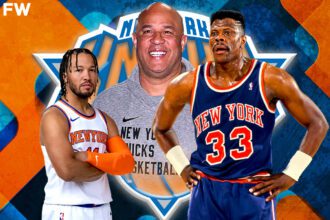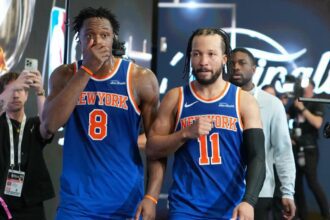
The Knicks are NBA champions for the first time since 1973, and almost nobody saw this exact run coming when the playoffs started.
They finished 53-29 and earned the No. 3 seed in the East, so this was never a bad team. Still, the Knicks entered the postseason with +2200 championship odds. No team since the NBA-ABA merger had ever started the playoffs at +2000 or longer and finished the job.
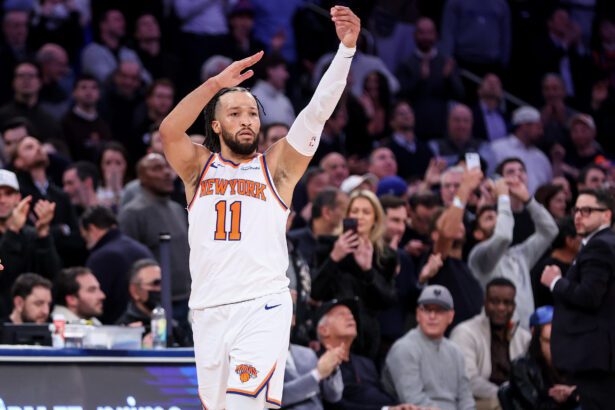
Then everything changed very fast. The Knicks won 13 straight playoff games, swept the Eastern Conference Finals, and beat the Spurs 4-1. They came back from a double-digit deficit in every Finals win, including a 29-point comeback in Game 4. Jalen Brunson ended it with 45 points in Game 5 and won Finals MVP after averaging 32.6 points.
That is a surprising championship, but history has produced even bigger ones. Some champions won fewer than 50 regular-season games. Some entered as low seeds. Others had to beat superteams or opponents that looked much better on paper.
Here are the 10 most surprising NBA champions and where the 2026 Knicks belong.
10. 2015 Golden State Warriors
It feels strange to call the Warriors a surprise now. Stephen Curry, Klay Thompson, and Draymond Green later became the main pieces of a dynasty. Before the 2014-15 season, nobody knew that was coming. The Warriors had not reached the Finals since 1975 and started the season with championship odds around +2800.
Everything arrived at once. Curry won MVP with 23.8 points, 4.3 rebounds, and 7.7 assists. The Warriors improved from 51 wins to 67 in Steve Kerr’s first season and finished first in defensive rating. In the Finals, Curry averaged 26.0 points, 5.2 rebounds, and 6.3 assists as the Warriors beat the Cavaliers in six games.
This championship stays at No. 10 because the Warriors were clearly great by the time the playoffs started. They also faced a damaged Cavaliers team without Kevin Love for the full series and Kyrie Irving after Game 1. The preseason surprise was massive. The actual Finals result was less shocking.
9. 2019 Toronto Raptors
The Raptors were not some weak team that became hot for two weeks. They won 58 games, finished second in the East, and had one of the best two-way players in basketball. Kawhi Leonard averaged 26.6 points during the regular season, then increased that to 30.5 points across 24 playoff games.
The surprise was getting through the full path. Leonard hit the four-bounce shot to eliminate the 76ers in Game 7. The Raptors then came back from a 2-0 deficit against the 60-win Bucks and won four straight. They finally defeated a Warriors group trying to win its third consecutive title. Leonard averaged 28.5 points, 9.8 rebounds, and 4.2 assists in the Finals.
The injuries lower their position. Kevin Durant missed almost the entire series and ruptured his Achilles after returning in Game 5. Klay Thompson missed Game 3 and tore his ACL during Game 6. The Raptors deserved the championship, but beating a healthy Warriors roster would have made it much more surprising.
8. 1977 Portland Trail Blazers
The Blazers had never made the playoffs before 1977. They finished 49-33 under first-year head coach Jack Ramsay and entered the postseason without any previous series experience as a franchise. It was a young team built around Bill Walton and his all-around game from the center position.
They beat the Bulls in three games, swept Kareem Abdul-Jabbar and the Lakers, then faced a loaded 76ers group with Julius Erving, George McGinnis, Doug Collins, and World B. Free. The Blazers lost the first two Finals games. Instead of collapsing, they won four straight and took the championship in six.
Walton averaged 18.5 points, 19.0 rebounds, and 5.2 assists in the Finals. He finished Game 6 with 20 points, 23 rebounds, seven assists, and eight blocks. Winning the title in a first playoff appearance is still wild. The only reason they aren’t higher is that Walton was already one of the best players in the league, and the Blazers had won 49 games.
7. 2026 New York Knicks
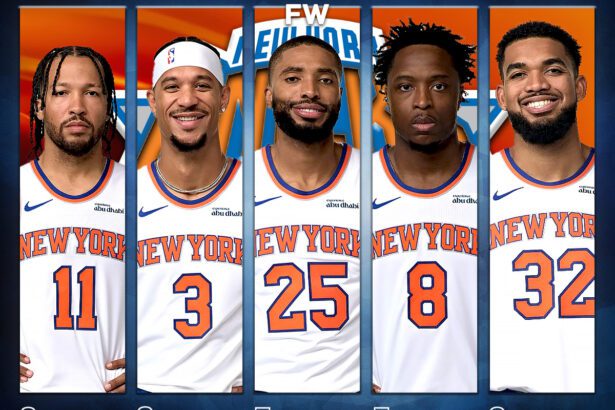
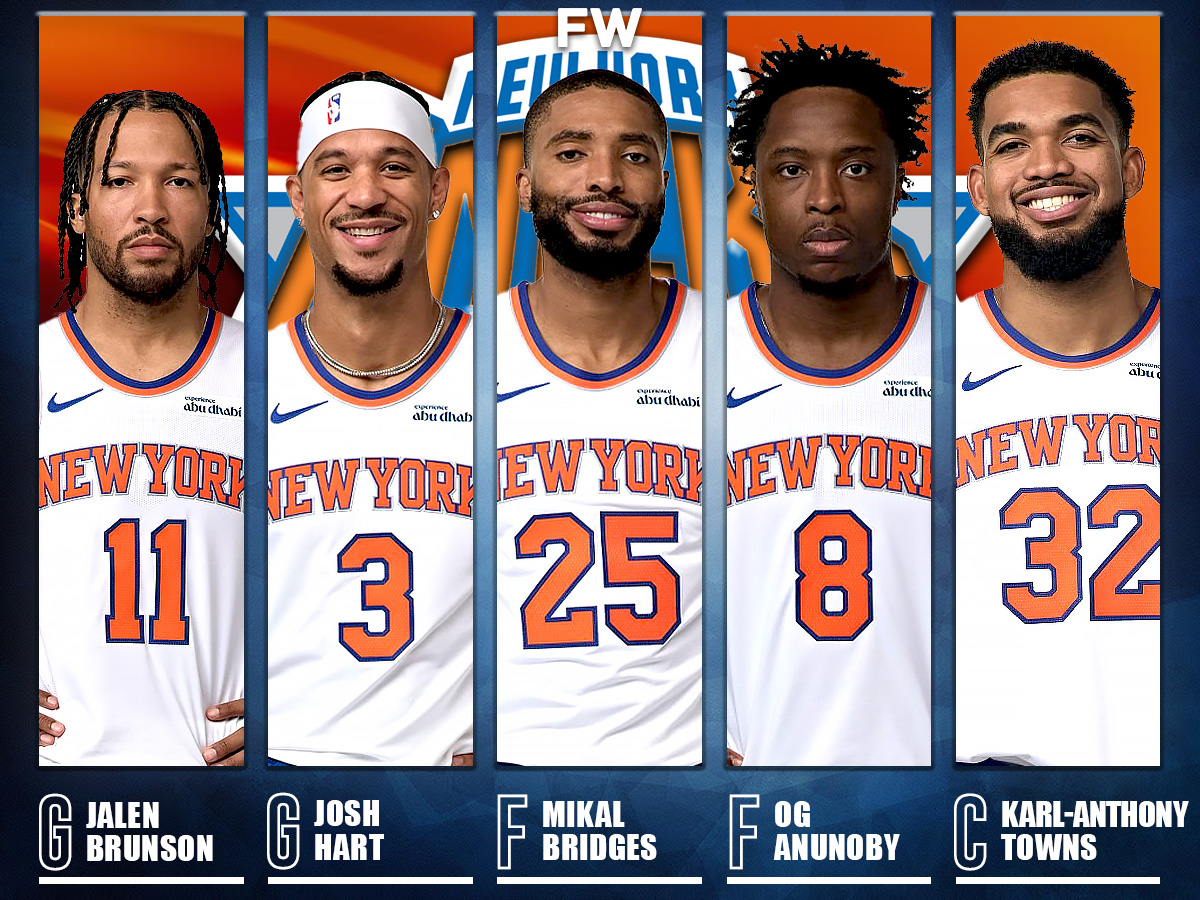
The Knicks had enough talent to compete. Brunson was an All-NBA guard, Karl-Anthony Towns was an All-Star scorer, and the roster also had Mikal Bridges, OG Anunoby, Josh Hart, and Mitchell Robinson. A 53-29 record showed that the team was real. Their +900 preseason odds were also better than several champions on this list.
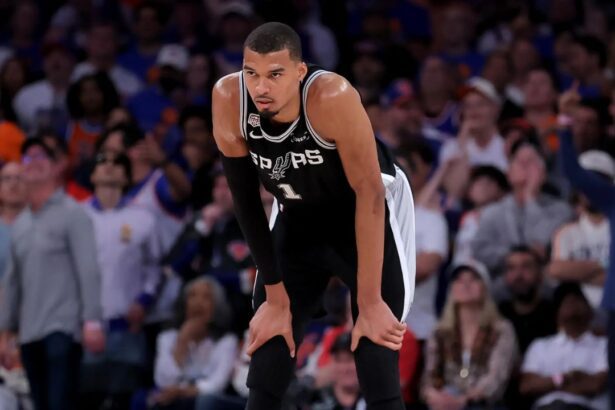
What nobody expected was a 16-3 playoff run. The Knicks entered the postseason at +2200 and became the first post-merger champion to win after starting the playoffs at +2000 or longer. They won 13 consecutive games, swept the Cavaliers in the Eastern Conference Finals, and beat a 62-win Spurs team in five games.
The Finals made the run even stranger. The Knicks trailed by double digits in all four victories. They erased a Finals-record 29-point deficit in Game 4, then came back from 16 down in Game 5. Brunson scored 29 second-half points and finished with 45. The Knicks aren’t a top-five surprise because they had a deep roster and won 53 games, but the odds and the way they won put them above most modern champions.
6. 1969 Boston Celtics
This was the final season of the Bill Russell dynasty, and the Celtics looked almost finished. They went 48-34, placed fourth in the East, and had their worst regular-season record since 1956-57. Russell was 35 years old and working as both player and head coach.
The Lakers looked much stronger. Their roster had Jerry West, Wilt Chamberlain, and Elgin Baylor. They won 55 games, had home-court advantage, and took a 2-0 lead in the Finals. West averaged 37.9 points and 7.4 assists in the series, which was enough to win Finals MVP even after losing.
The Celtics still pushed it to Game 7 and won 108-106 on the road. They were the first team to win a Finals Game 7 away from home and remain the only fourth-place team to win the championship. Russell finished his career by beating a more talented roster one last time. This was not the dominant Celtics anymore. That is what makes it special.
5. 1978 Washington Bullets
No champion in a normal 82-game season has won fewer games than the 1978 Bullets. They finished only 44-38, earned the No. 3 seed in the East, and had a lower regular-season winning percentage than every other full-season champion.
Their playoff path was not easy either. The Bullets eliminated the Spurs, beat the 55-win 76ers in six games, and then needed seven games against the SuperSonics. They lost Game 1 at home and later fell behind 3-2, but won the final two games. Game 7 was played on the road, where they survived 105-99.
Wes Unseld won Finals MVP with only 9.0 points, 11.7 rebounds, and 3.9 assists per game. Elvin Hayes was the bigger scorer who produced several important late baskets. There was no dominant individual performance carrying them. A 44-win team simply survived every bad position and became champion.
4. 1975 Golden State Warriors
The Warriors won 48 games and finished first in the West, but nobody treated them like the best team. The Bullets won 60 games, had Elvin Hayes and Wes Unseld, and had already beaten the defending champion Celtics. The regular-season series also went 3-1 to the Bullets.
The expected close series never happened. Rick Barry averaged 29.5 points, 4.0 rebounds, and 5.0 assists, and the Warriors swept the Finals. They won Game 1 on the road by six points, survived Game 2 by one, then completed the sweep after trailing by 14 points in Game 4.
Barry was the only established superstar on the roster. Rookie Jamaal Wilkes was the second-leading scorer, and head coach Al Attles used a deep rotation instead of depending on two or three names. The Warriors won 12 fewer regular-season games than the Bullets and still never lost in the Finals. The sweep is what moves this championship so high.
3. 2011 Dallas Mavericks
The Mavericks won 57 games, but the league did not trust them. Dirk Nowitzki was 32, Jason Kidd was 37, and the roster had a long history of playoff disappointment. Caron Butler, one of their main scorers, also suffered a season-ending knee injury in January.
Their path was brutal. The Mavericks beat the Blazers in six games, swept the two-time defending champion Lakers, and eliminated Kevin Durant, Russell Westbrook, and James Harden in five. Then came the Heat with LeBron James, Dwyane Wade, and Chris Bosh. The Heat entered the Finals around -180 favorites, while the Mavericks were close to +160.
Nowitzki averaged 26.0 points and 9.7 rebounds in the Finals. The Mavericks came back from 15 points down late in Game 2, won Game 4 while Nowitzki played with a fever, and closed the series on the road. James averaged only 17.8 points. An old team with one real superstar beat the biggest superteam of that era. It was not random, but it was absolutely unexpected.
2. 2004 Detroit Pistons
The Pistons had no normal offensive superstar. Richard Hamilton led them with only 17.6 points per game during the regular season. Ben Wallace was an elite defender, Chauncey Billups was very good, and Rasheed Wallace arrived in a midseason trade. Still, nobody looked at that roster and saw an easy champion.
The Lakers had Shaquille O’Neal, Kobe Bryant, Karl Malone, and Gary Payton. That is four future Hall of Famers. The Finals were supposed to be another Lakers title. Instead, the Pistons won 4-1 and held them below 90 points in all four victories. Their only loss came in overtime after Bryant made a difficult late three.
Billups averaged 21.0 points and 5.2 assists while shooting 51.0% from the field and 47.1% from three. The Pistons defended every position, moved the ball, and made the Lakers look slow and disconnected. This remains one of the very few modern championships won without a top-level scoring star. That kind of team almost never finishes first.
1. 1995 Houston Rockets
Nothing tops the 1995 Rockets. They went 47-35, entered the playoffs as the No. 6 seed, and remain the lowest-seeded champion in NBA history. They also had no home-court advantage in any round.
The opponent list was ridiculous. The Rockets beat the 60-win Jazz, the 59-win Suns, the 62-win Spurs, and the 57-win Magic. They survived elimination games against the Jazz, came back from a 3-1 deficit against the Suns, then beat regular-season MVP David Robinson and the Spurs in six games.
Hakeem Olajuwon finished the run by averaging 32.8 points, 11.5 rebounds, and 5.5 assists in the Finals. The Magic had Shaquille O’Neal, Penny Hardaway, and home-court advantage, but the Rockets swept them. A 47-win sixth seed eliminated four teams that combined for 238 regular-season wins. No other champion had a path like that, and no other result belongs at No. 1.