The Knicks did not just beat the Hawks to eliminate them from the postseason last night. They removed them from the floor entirely.
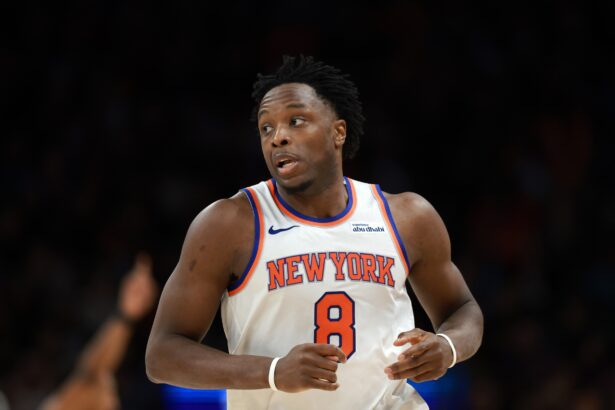
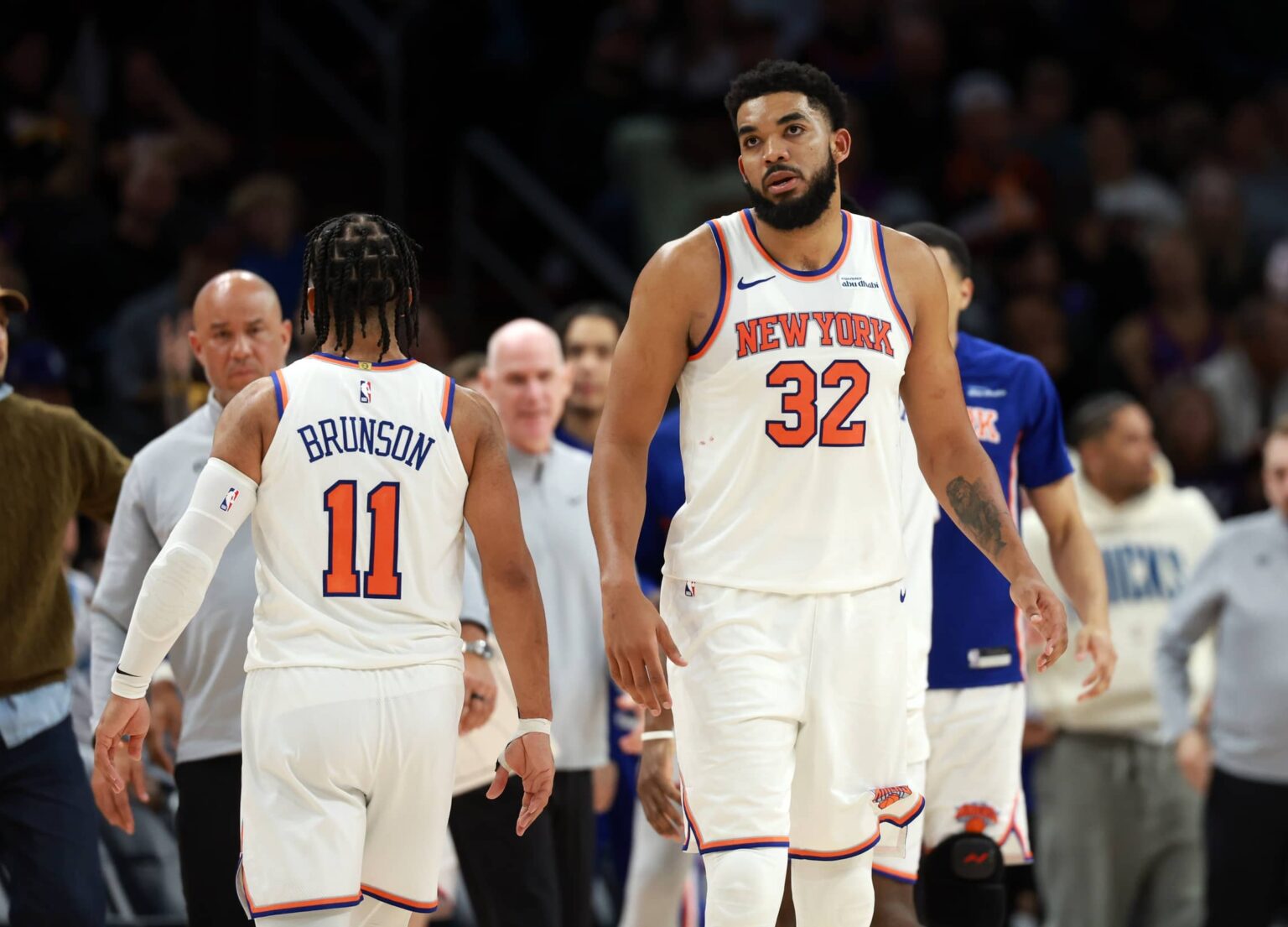
A 140-89 closeout win in Game 6 is not any playoff noise. It was the largest postseason win in Knicks history, the most points they have ever scored in a playoff game, and it came with an NBA playoff-record 47-point halftime lead after an 83-36 first half. The Knicks used a 63-11 run to turn a road closeout game into a public warning. OG Anunoby had 29 points, Mikal Bridges had 24, Jalen Brunson had 17 points and eight assists, and Karl-Anthony Towns recorded his second triple-double of the series.
That is the starting point for the championship case. The Knicks struggled early in the Hawks series. They lost Game 2 at home, dropped Game 3, and looked too dependent on Brunson’s shot-making. Then the rotation tightened, Towns became more central as a passer, Anunoby took over the matchup physically, Bridges finally found his rhythm, and the defense started shrinking the floor. The last three games were not close: 114-98, 126-97, and 140-89. That is a 96-point margin across three wins.
That is the opening. If this version of the Knicks is real, they are not just a dangerous East team. They are the best championship bet in the conference because they have the most complete mix of scoring, defense, size, and playoff shot-making.
The Blowout Was Not A Random Outcome
The final score was loud, but the process was more important. The Knicks did not win Game 6 because they made a few difficult shots early. They won because they controlled every structural part of the game: shot quality, ball pressure, transition defense, spacing, and decision making.
The Knicks had a 143.5 offensive rating and a 91.2 defensive rating in 98 possessions. That is absurd efficiency for a playoff closeout game. It means they were producing elite half-court looks without sacrificing defensive balance. They scored 40 in the first quarter, 43 in the second, and still held the Hawks to 36 points in the first half.
The defensive number is the key. The Knicks had 16 steals and six blocks, and the Hawks never found a stable release valve. The first question with this roster was always whether Brunson and Towns could survive enough on defense at the highest level. Against the Hawks, the answer improved as the series went on. The Knicks used Bridges, Anunoby, and Josh Hart to absorb the hardest perimeter work, then let Towns play more on the help side instead of asking him to fix every breakdown at the rim.
The Anunoby piece is the biggest change. He averaged 21.5 points, 8.7 rebounds, and 1.8 steals in the Hawks series while shooting over 61.0% from the field and over 60.0% from three-point range. That is not just hot shooting. That is control. Anunoby punished smaller defenders on drives, ran the floor, attacked closeouts in straight lines, and defended without needing help behind him.
That kind of wing play changes the entire bracket. If Anunoby is only a stopper, the Knicks are easier to load up against. If he is a 20-point scoring threat on top of elite defense, opponents have to defend five threatening players. That opens Brunson’s driving lanes, gives Towns more room at the elbows, and prevents defenses from hiding weak guards against them.
Bridges also changed the tone in Game 6. He had 24 points on 10-of-12 shooting after an uneven series, which makes the Knicks more imposing with him back to the standard. They need him to be a reliable connector who can shoot, run secondary pick-and-roll, make the extra pass, and guard the opponent’s best backcourt scorer. If Bridges is making shots, the Knicks’ spacing becomes difficult to target.
The Towns adjustment may be even more important. Towns had a second triple-double in the series, something only Walt Frazier had done in Knicks playoff history. That tells the whole story of why this version is dangerous. Towns is not just a shooting big. He is a pressure point. When he catches at the nail or above the break, the defense has to choose between staying home on shooters, helping on his drives, or sending a second defender and opening cuts behind the play.
The Knicks now have a complete five-man offensive map: Brunson as the primary advantage creator, Towns as the big man who punishes a switch, Anunoby as the two-way wing scorer, Bridges as the spacing and defense stabilizer, and Hart as the chaos piece. Mitchell Robinson gives them a different shape with offensive rebounding and vertical defense. That is not a perfect roster, but it is a playoff roster made to adapt.
The Knicks Are Peaking At The Right Time
The regular-season base was already strong. The Knicks went 53-29, finished third in the East, averaged 116.5 points, 45.6 rebounds, and 27.4 assists, and allowed only 110.1 points per game. That is not the sign of a pretender. It is a 53-win team with top-end scoring, rebounding, and a defense that was already strong before the playoff surge.
The playoff metrics are better. The Knicks are first in net rating at +18.1, first in effective field goal percentage at 56.9%, fifth in offensive rebound percentage at 33.2%, and sixth in assist-to-turnover ratio at 1.8. Those numbers are not empty because they match the eye test. The Knicks are getting efficient shots, creating extra possessions, and avoiding the kind of turnover volume that fuels opponent runs.
That is championship material. Teams win in the playoffs by creating more chances than their opponent. The Knicks are doing that by winning the glass, forcing turnovers, and keeping their own mistakes low.
Brunson is still the main engine. He averaged 26.0 points, 3.3 rebounds, and 6.8 assists during the regular season while shooting 46.7% from the field. In the playoffs, he is at 26.3 points and 6.2 assists through six games. That is exactly where the Knicks need him. He does not have to score 40 every night if the rest of the roster is doing its job.
That is a major change from previous Knicks runs. Brunson was often asked to carry too much shot creation late in the clock. Now, if teams blitz him, Towns can short-roll into a pass or a floater. If teams switch, Brunson can hunt the big or Towns can punish a smaller defender. If teams stay in drop coverage, Brunson can get to the middle and force the low man to help, which opens Anunoby and Bridges in the corners.
Towns gives the Knicks a different ceiling. He averaged 20.1 points, 11.9 rebounds, and 3.0 assists during the regular season while shooting 50.1% from the field. His playoff line through six games is 18.7 points, 11.3 rebounds, and 6.0 assists on 56.9% from the field and 44.4% from three-point range. That assist number is the stat that should scare the rest of the East.
When Towns passes like that, the Knicks become much harder to load up against. He can hit Hart on cuts, find Anunoby behind a stunt, and punish weak-side help before the defense rotates. That reduces Brunson’s burden and keeps the offense from becoming predictable.
The Knicks also have a better defensive wing structure than most remaining East teams. Anunoby, Bridges, and Hart can guard 1-4. They can switch across guard-wing actions, lock shooters, crowd Tyrese Maxey or Jayson Tatum, and still recover to shooters. This is the part that makes them feel more complete than the version that entered the playoffs with questions.
The concern is still real: Towns will be targeted. Brunson will be targeted. The bench is not perfect. Robinson’s foul risk can change lineups. But every remaining East team has a bigger flaw. The Celtics are in a Game 7 after losing control of a 3-1 lead. The 76ers are trying to manage Embiid’s health after emergency surgery. The Pistons and Magic are beating each other up. The Cavaliers and Raptors are in a 3-2 series with injury questions on the Raptors side. The Knicks, meanwhile, just played their best basketball of the season.
Why They Can Beat The Celtics Or 76ers
The Knicks’ next opponent will be the winner of Celtics-76ers, and both options are manageable for different reasons. The Celtics still have the higher top-end talent, but they no longer look inevitable. They led the series 3-1, then lost back-to-back double-digit games. In Game 6, the Celtics shot 41.9% from the field and 29.3% from three-point range, while Jayson Tatum and Jaylen Brown combined for only 35 points.
That is huge, since the Knicks are built to pressure the exact areas where the Celtics are currently showing stress. Tatum averaged 21.8 points, 10.0 rebounds, and 5.3 assists during the regular season, but he shot only 41.1% from the field. Brown averaged 28.7 points, 6.9 rebounds, and 5.1 assists on 47.7% from the field, but he remains a player the Knicks can crowd with length and force into tough decisions.
The Knicks have enough wing size to avoid overhelping. Anunoby can take the first Tatum assignment. Bridges can chase Brown or Derrick White. Hart can switch into either star and rebound after a stunt. That gives the Knicks a way to stay home on shooters, which is the most important defensive rule against the Celtics.
On offense, the Knicks can put the Celtics into difficult cross-matches with Brunson-Towns actions. If the Celtics switch, Brunson can attack slower defenders like Vucevic or Queta, and Towns can seal smaller players in White or Brown. If they play drop, Brunson gets to his pull-up zones. If they bring two to the ball, Towns becomes the playmaking release at the free-throw line. The Knicks do not need to win by taking more threes than the Celtics. They need to win by taking better threes, getting second shots, and forcing the Celtics into late-clock isolation.
The 76ers present a different problem. They have the highest single-game pressure points in the series because Tyrese Maxey’s speed and Joel Embiid’s size can distort any defense. Maxey had 30 points in Game 6, Paul George added 23, and Embiid had 19 points, 10 rebounds, and eight assists in only his third game since an emergency appendectomy. That is impressive. It is also fragile.
The Knicks can attack the 76ers by making Embiid defend in space. Towns is not a normal center matchup. If Embiid sits in drop, Towns can pop. If Embiid comes higher, Brunson can reject screens and attack the middle. If the 76ers hide Embiid away from Towns, the Knicks can screen that matchup into the play and force him back into movement.
Maxey is the harder problem because of his speed. The Knicks cannot let him turn every miss into an early-clock attack. That means floor balance is non-negotiable. Hart and Bridges have to retreat early. Anunoby has to meet him before the paint. Robinson’s lineups have to protect the rim without opening threes. But the Knicks have more perimeter bodies than the Celtics have shown in this series, and they can make Maxey work defensively by involving him in Brunson actions.
The 76ers’ current surge is real, but it also comes with health and consistency questions. Embiid’s minutes, lift, and conditioning are still part of the scouting report after his return. George has looked better, but the Knicks would live with contested pull-ups from him if it means keeping Maxey out of transition and Embiid away from deep post-ups.
The Celtics are still the tougher matchup because of their spacing and experience. But the Knicks can beat them. The 76ers are more volatile. In both cases, the formula is the same: win the wing matchups, protect the defensive glass, keep Towns involved as a passer, and do not let Brunson become the only late-clock answer.
The Other Side Of The East Looks Less Complete
The Knicks’ championship case is not only about who they face next. It is also about what may wait in the Eastern Conference Finals.
The Pistons and Magic are still fighting through a strange series. The Magic led 3-1, but the Pistons won Game 5 and can force a Game 7 with another win. The recent scores show how physical and low-margin that matchup has become: 113-105 Magic, 94-88 Magic, then 116-109 Pistons.
The Pistons are dangerous because Cade Cunningham can control tempo and create offense against set defenses. Cunningham averaged 23.9 points, 5.5 rebounds, and 9.9 assists during the regular season, then had 45 points in Game 5 to keep the Pistons alive. That is real star control.
But the Knicks have the better playoff answer. Against the Pistons, the Knicks can put Anunoby and Bridges on Cunningham in waves, then switch Hart into the action when needed. The goal would not be to shut him down. It would be to make every touch forced, every pass contested, and every drive finish over size. If Cunningham has to score 35-plus just to keep the Pistons level, the Knicks would accept that.
The Magic are a different type of threat. Paolo Banchero averaged 22.2 points, 8.4 rebounds, and 5.2 assists during the regular season, and he has the size to punish smaller defenders. But the Magic still have spacing limitations. In a long series, the Knicks would pack the elbows, crowd Banchero’s dribble, and force the Magic to beat them with quick decisions from the supporting cast.
The Cavaliers are more dangerous because they have more offensive skill. Their series with the Raptors is at 3-2 after a 125-120 Game 5 win, and they have a chance to close it in Game 6. Still, the Cavaliers have not looked like a complete machine. Donovan Mitchell has been in a shooting slump, and turnovers have been a problem. The Cavaliers have enough creation with Mitchell, James Harden, and Evan Mobley to stress the Knicks, but the Knicks have more defensive answers across the perimeter and a clearer identity when the game slows down.
The Raptors are probably the weakest possible East finalist if they get there. They are tough, long, and annoying to play, but they have major health concerns. Brandon Ingram is doubtful for Game 6, and he has averaged only 12.0 points on 32.7% from the field in the playoffs. Without Quickley and with Ingram compromised, the Raptors would have to lean heavily on Scottie Barnes, RJ Barrett, and role-player shot-making.
The Knicks are superior to all four possible teams on that side because they have the best blend of shot creation, wing defense, spacing, and rebounding. The Pistons may have the best single creator in that group with Cunningham. The Magic may have the most size. The Cavaliers may have the most talented offense. The Raptors may have the most defensive disruption. But the Knicks have fewer holes.
That is what championship teams usually look like. Not flawless. Just harder to solve four times.
The Knicks Have The Most Reliable East Formula
The Knicks are not championship favorites because they won one game by 51 points. That would be too simple. They are championship favorites because that blowout confirmed the version of the team that already made sense on paper.
They have a primary creator in Brunson who can win games in the clutch. They have a spacing center in Towns who is now passing well enough to punish traps. They have two elite wing defenders in Anunoby and Bridges. They have Hart as a rebounding guard-forward who fixes messy defensive schemes. They have Robinson as a big man who can change the glass and rim protection. They have enough shooting to avoid crowded floors and enough physicality to survive slow playoff games.
That is the balance. The Knicks can win a 140-89 game with pace, spacing, and transition defense. They can also win a half-court game if Brunson and Towns are forcing two defenders into every action. They do not need one style to work. They have multiple paths.
The most important number is still +18.1. That is the Knicks’ postseason net rating, and it reflects a team that is not just surviving. It is controlling. Add the 56.9% effective field goal percentage, the 33.2% offensive rebound rate, and the 1.8 assist-to-turnover ratio, and the profile becomes clear: the Knicks are winning the efficiency battle, the extra-possession battle, and the mistake battle at the same time.
That is why the East should be nervous. The Celtics may survive Game 7, but they look more beatable than they did a week ago. The 76ers may complete the comeback, but Embiid’s health makes every game a calculation. The Pistons and Magic are already dragging each other into deeper water. The Cavaliers and Raptors have played a tight series with injuries and uneven execution.
The Knicks, meanwhile, are the team moving forward with the best momentum and the sharpest tape. Their defense is connected. Their stars are not being overextended. Their wings are making shots. Their center is passing. Their point guard has not had to carry every possession alone.
That is the difference between a good playoff team and a real title threat.
The Knicks still have to prove it against a stronger opponent. The Hawks were a good first-round test, but the next round will be more tactical, more physical, and more punishing. Brunson will be trapped harder. Towns will be pulled into more actions. Anunoby and Bridges will have to defend elite scorers without fouling. Mike Brown will have to keep the offense from slowing into isolation.
But the case is now obvious. The Knicks are not just hot. They are balanced, deep at the right positions, and built to win the math of a playoff series. After a 51-point closeout win and a three-game stretch that flipped their entire postseason profile, they should be treated as the East’s best championship bet.
The old question was whether the Knicks had enough offense around Brunson. The new question is whether the rest of the East has enough answers for Brunson, Towns, Anunoby, Bridges, and a defense that just held a playoff opponent to 89 points in a closeout massacre.
Right now, the answer looks closer to no.