The Philadelphia 76ers delivered a statement performance in Game 5, overpowering the Boston Celtics to swing the series back in their favor. Facing immense pressure, Philadelphia responded with one of their most complete efforts of the postseason, winning 113-97.
Led by the brilliance of Joel Embiid and Tyrese Maxey, the Sixers played suffocating defense and consistently found high-quality looks. No doubt, there were some standout performances from Philly on both ends.
On the other side, despite solid individual efforts from Jayson Tatum and Jaylen Brown, Boston struggled with efficiency, particularly from beyond the arc and the free-throw line. Those shortcomings, combined with Philadelphia’s excellent execution, proved the difference.
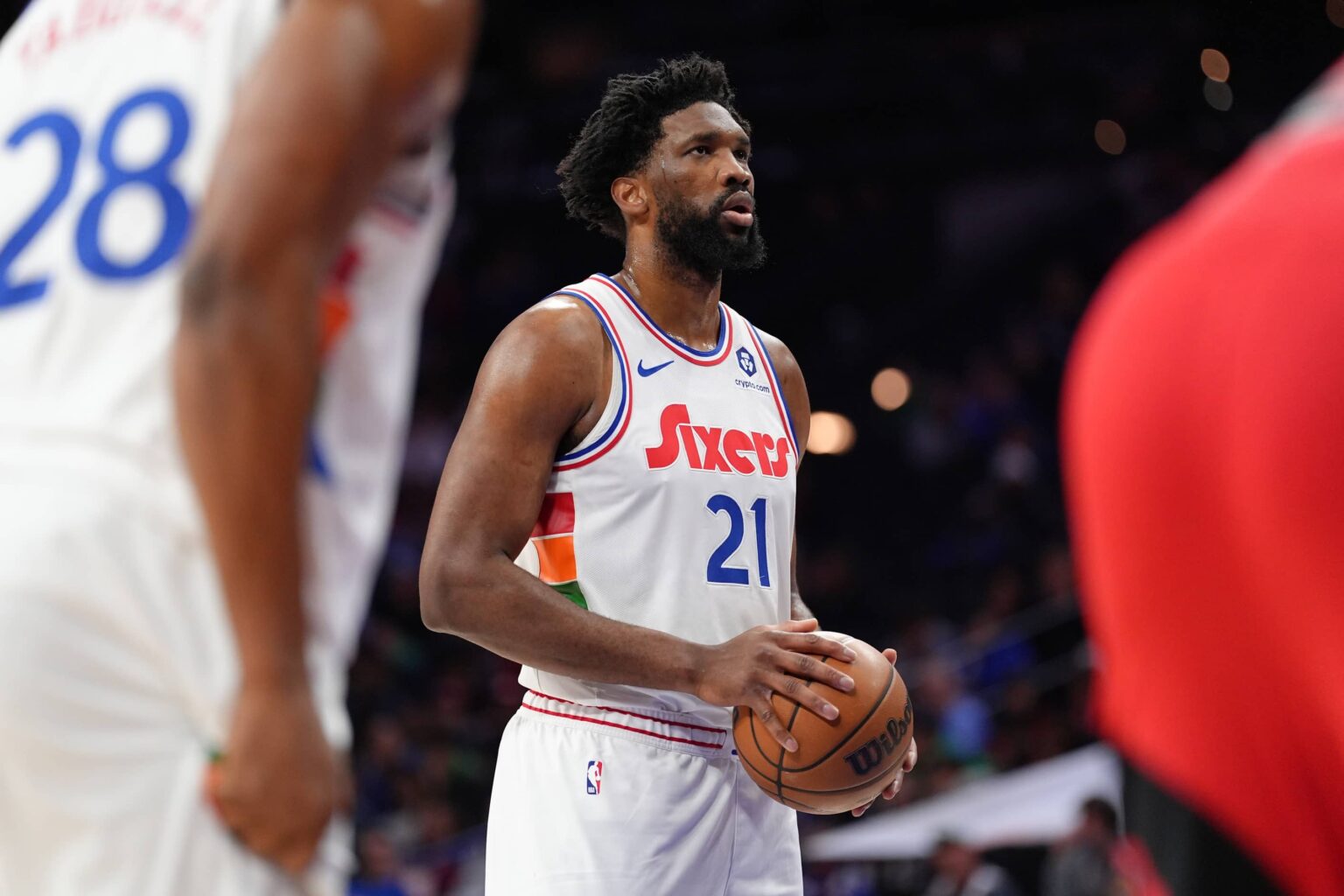
1. Joel Embiid Played Like An MVP
This was a reminder of why Joel Embiid is a perennial MVP-caliber star if he can just stay healthy. He dropped 33 points on 12-23 shooting, added 9-10 from the free-throw line, and orchestrated offense with 8 assists.
Boston tried multiple looks, but nothing worked consistently. Whether it was single coverage or late help, Embiid punished it every time by scoring or passing.
What made it worse for Boston is how efficient and composed he was. Only 3 turnovers in 39 minutes despite touching the ball constantly is elite. When your best player is scoring at that level and acting as a high-level playmaker, defenses break, and that’s exactly what happened here.
2. Tyrese Maxey’s All-Around Impact Was Huge
Tyrese Maxey was the co-star. His line jumps off the page: 25 points, 10 rebounds, and 5 assists on 10-18 shooting. That’s superstar-level production from your guard.
He attacked downhill, hit timely threes (3-10), and repeatedly collapsed Boston’s defense, forcing rotations that Philadelphia capitalized on. But the most underrated part of his night? Control.
Just 2 turnovers in 43 minutes while handling heavy usage is huge, especially compared to Boston’s sloppiness. Maxey stabilized the offense.
Every time the Celtics tried to make a push, he either got to the rim, drew attention, or created a clean look. That steady pressure wore Boston down over four quarters.
3. Three-Point Shooting Was Decisive
Philadelphia buried Boston from deep. The Sixers knocked down 15-42 (35.7%) from three, while the Celtics went 11-39 (28.2%). That’s a 12-point swing from beyond the arc, and in a playoff game, that’s massive.
Players like Paul George (4 threes) and Quentin Grimes (4-7 off the bench for 18 points) made Boston pay for every defensive lapse. Meanwhile, Boston’s stars couldn’t match that efficiency.
Jayson Tatum shot 4-12 from deep, and the team as a whole struggled to generate clean perimeter looks. Even when they did, they couldn’t convert consistently. In a modern playoff game, losing the three-point battle like that almost always spells trouble, and it absolutely did here.
4. Boston’s Inefficiency And Free-Throw Issues Cost Them
The Celtics had chances, but their inefficiency was glaring. They shot just 40.4% from the field (36-89) and a brutal 60.9% from the free-throw line (14-23). That’s leaving points on the table in a game where margins matter.
Jaylen Brown and Tatum combined for 46 points, but needed 42 shots to get there – not nearly efficient enough to carry a playoff offense. On top of that, Boston couldn’t capitalize on their advantages.
They grabbed 49 rebounds (15 offensive) yet scored only 97 points. That’s a failure to convert second chances and sustain pressure.
Add in 12 turnovers and inconsistent half-court execution, and it becomes clear: Boston wasted opportunities. Against a locked-in team like Philadelphia, that’s a recipe for exactly this kind of result.