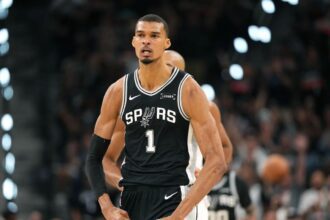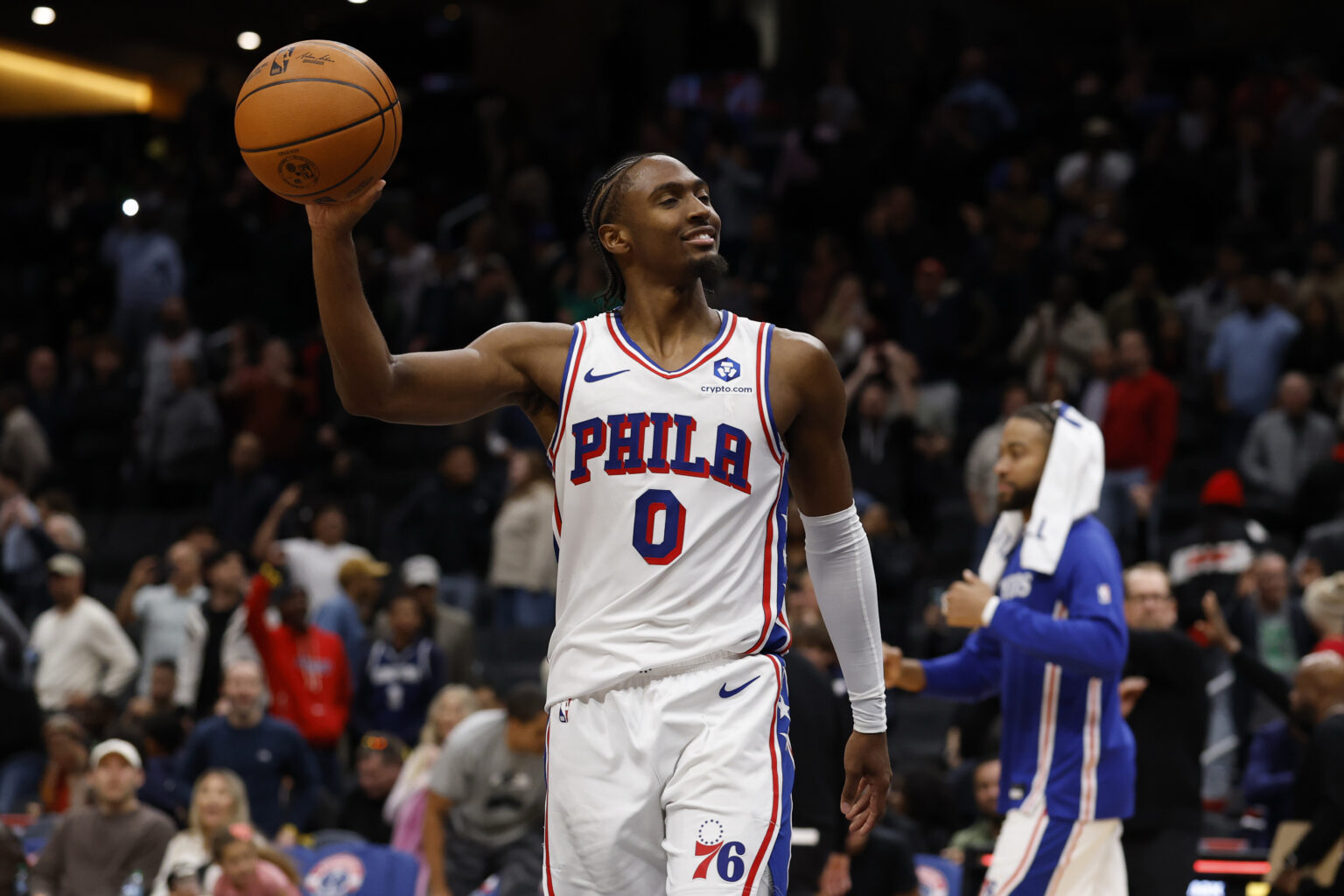
The 76ers are in a familiar place: good enough to contend, unstable enough to feel one bad stretch away from a playoff collapse. They are 33-26, sitting sixth in the East, and they just beat the Heat 124-117 behind Tyrese Maxey’s 28 points and 11 assists, a win that also pushed Maxey past Allen Iverson for the franchise lead in made threes.
Joel Embiid added 26 points and 11 rebounds in that game, but he also left for the locker room with a rib issue, the type of thing that always changes the stakes for this roster, like the sudden suspension of Paul George before the break.
That is why this draft review is important. The 76ers have lived at the edge of contention for years, and the first round has been a major part of both the upside and the damage. The grading stays strict and local: what the 76ers actually got in a 76ers uniform, how long it lasted, and whether the pick produced real on-court value or real asset value. No nostalgia. No “he became good later.” Just the receipts.
2016 NBA Draft
Ben Simmons – 1st Pick
Stats: 15.9 PTS, 8.1 REB, 7.7 AST, 0.7 BLK, 1.7 STL, 56.0% FG, 14.7% 3PT
Ben Simmons was supposed to be the franchise-altering outcome as the No.1 2026 Draft pick. For stretches, he was. Simmons gave the 76ers elite transition creation, high-level defense, and regular-season floor raising that few players can match without scoring like a traditional star. The problem is that the entire value proposition was fragile in playoff basketball, and once the offensive limitations became an easy scouting report, the relationship could not survive.
The 76ers still got real value in their own uniform. Simmons was an All-Star-level player, and the team won a lot of games with him as a core piece. The issue is that a No. 1 pick is judged against the highest standard: postseason functionality and long-term stability. The 76ers did not get either, and the exit was catastrophic in terms of direction.
He did not leave for nothing, which matters for the grade. The 76ers ultimately flipped him in the James Harden deal, converting a broken situation into a short-term win-now swing. That does not erase the pick’s failure to deliver the intended long-term outcome. It just prevents it from being pure zero.
Rating: Good
Timothe Luwawu-Cabarrot – 24th Pick
Stats: 6.1 PTS, 1.8 REB, 1.1 AST, 0.1 BLK, 0.4 STL, 39.0% FG, 32.3% 3PT
Timothe Luwawu-Cabarrot was a standard late-first wing swing: energy, basic size, and the hope that a real three-point shot would turn him into a cheap rotation player. The 76ers did get minutes and basic production, but they did not get a player who became a stable part of a serious rotation.
The offensive efficiency never became a reason to play him, and the defense did not tilt possessions enough to compensate. For a late first, the bar is simple: become usable. He was usable at times, but not valuable, and not sticky.
He also did not convert into a meaningful 76ers return on the back end. The pick produced low-leverage minutes and then moved on without leaving a real asset imprint.
Rating: Bust
Furkan Korkmaz – 26th Pick
Stats: 6.8 PTS, 2.0 REB, 1.2 AST, 0.1 BLK, 0.5 STL, 40.6% FG, 35.6% 3PT
Furkan Korkmaz was a late-first bet on shooting, and the 76ers mostly got what that archetype is supposed to provide. Korkmaz lasted seven seasons, played real regular-season minutes across multiple team versions, and gave the 76ers a functional spacing piece when the roster needed cheap shooting.
The limitation was always the same. He was not a two-way rotation lock, and he was not reliable enough to be treated as a playoff staple. That matters because late-first success on a contender is usually defined by whether the player can survive higher-leverage matchups.
Still, for pick No. 26, this is not a miss. The 76ers got years of usable minutes from a late-first shooter, which clears the baseline value test even if it never rises to “difference-maker.”
Rating: Good
2017 NBA Draft
Markelle Fultz – 1st Pick
Stats: 7.7 PTS, 3.4 REB, 3.4 AST, 0.3 BLK, 0.9 STL, 41.4% FG, 26.7% 3PT
Markelle Fultz was the 76ers’ trying to buy certainty at the top of the board. They moved up from No. 3 to No. 1 with the Celtics to take him, a franchise decision built around the idea that he would become the long-term lead guard next to Joel Embiid. That is what the slot represents. You do not trade up for a role player.
The 76ers never got a stable version of him. The shoulder situation swallowed his first two seasons, turned his shot into a nightly question, and kept the development curve from ever becoming normal. The production in a 76ers uniform reflects the larger issue: limited games, limited trust, and no clear pathway to the player they drafted him to be.
The ending was the organizational verdict. On Feb. 7, 2019, the 76ers traded him to the Magic for Jonathon Simmons, a protected 2020 first-round pick, and a 2019 second-round pick. That return prevents the pick from being a total zero, but the standard for a No. 1 pick is not “some draft compensation.” It is franchise stability and postseason functionality. The 76ers did not get it.
Rating: Bust
Anzejs Pasecniks – 25th Pick
The 76ers spent real assets to get this selection. They acquired No. 25 from the Magic and used it on a stash center profile, a bet that development overseas could eventually turn into a cheap frontcourt option. The 76ers bought the pick, not stumbled into it.
The problem is that the pick never produced 76ers value. Pasecniks never played a minute for the 76ers and never became a usable roster piece or a meaningful trade chip. When a late first does not even get to the “is he playable?” stage, the evaluation becomes simple: the pipeline slot was burned.
The ending is the clean receipt. In July 2019, the 76ers renounced his draft rights, effectively closing the book without an on-court return.
Rating: Bust
2018 NBA Draft
Mikal Bridges – 10th Pick
Mikal Bridges was selected by the 76ers, then moved on draft night. The 76ers traded his rights to the Suns for Zhaire Smith and an unprotected 2021 first-round pick that the Suns had acquired from the Heat.
Because Bridges never played for the 76ers, there is no “great, good, or bust” label to apply to the player in this format.
Rating: N/A
Zhaire Smith – 16th Pick
Stats: 3.7 PTS, 1.2 REB, 0.9 AST, 0.2 BLK, 0.4 STL, 37.8% FG, 31.6% 3PT
Zhaire Smith was the development bet inside the Bridges deal. Smith’s appeal was athleticism and defensive upside, the type of guard-wing profile teams take when they believe they can build a role around on-ball pressure, transition finishing, and energy plays.
The 76ers never got the runway required for that bet to become real. Smith played 13 total regular-season games in a 76ers uniform, and the usage was too limited to create a meaningful development arc. The production was minimal, the minutes never stabilized, and he did not become a trusted rotation option at any point.
For a first-round pick, even one acquired via trade, the baseline is simple: become usable enough to either earn a role or hold trade value. Smith did neither for the 76ers, and the pick effectively produced no on-court return.
Rating: Bust
Landry Shamet – 26th Pick
Stats: 8.3 PTS, 1.4 REB, 1.1 AST, 0.1 BLK, 0.4 STL, 44.1% FG, 40.4% 3PT
Landry Shamet was the cleanest pick from this class for the 76ers because the skill translated immediately. Shamet’s job was spacing, quick decisions, and secondary ball-handling that does not disrupt a half-court offense. As a rookie, he gave them exactly that and shot 40.4% from three in his 76ers minutes.
The value was not just “a rookie who can shoot.” It was that he was playable on a team with real expectations. He fit next to high-usage stars without needing touches, and he stayed composed enough to function in pressure possessions, which is rare for late-first guards.
The 76ers did not keep him long-term, but they did convert him into real team value. Shamet was included in the 2019 deadline deal for Tobias Harris, which is the clearest proof that the pick held asset weight league-wide. The player did not become a 76ers cornerstone, but the 76ers got immediate rotation minutes and then leveraged him as part of a major acquisition.
Rating: Good
2019 NBA Draft
Matisse Thybulle – 20th Pick
Stats: 4.4 PTS, 1.8 REB, 1.0 AST, 0.8 BLK, 1.5 STL, 44.8% FG, 32.5% 3PT
Matisse Thybulle was not a passive selection. The 76ers traded up for him, sending the No. 24 pick and a second-rounder to Boston to secure the defensive profile they wanted. That No. 24 slot was used on Ty Jerome on draft night, which is the clean receipt for what the 76ers chose to give up to target Thybulle.
In a 76ers uniform, Thybulle delivered exactly one elite thing: game-changing perimeter defense. The steals and blocks rates were real, the point-of-attack disruption was real, and he earned All-Defensive Team recognition, which is the clearest possible validation for a late-first wing defender. The limitation was always the same. The offense never became stable enough to keep him on the floor in every matchup, and teams consistently treated him as a low-priority shooter when the playoffs tightened.
The exit reflects both the value and the limitation. In February 2023, the 76ers moved him to the Blazers in a multi-team deal that brought back Jalen McDaniels plus two second-round picks. That is a real return for a role player, but it also confirms he was not viewed as an untouchable rotation piece on a contender. The pick produced a high-end defensive specialist and then converted into usable value at the deadline.
Rating: Good
2020 NBA Draft
Tyrese Maxey – 21st Pick
Stats: 21.0 PTS, 3.2 REB, 4.8 AST, 0.2 BLK, 0.8 STL, 46.5% FG, 38.0% 3PT
This is a franchise-level outcome from outside the lottery. Tyrese Maxey has already produced a 76ers career line that would qualify as a strong hit for a top-10 pick, and his 2025-26 season has moved him into the rare tier where he is carrying star volume without collapsing the team’s offense. He is averaging 29.1 points, 6.8 assists, and 4.1 rebounds this season.
The defining value is portability. He can create in the half court, he can run high pick-and-roll, and he can score in transition without the offense becoming one-dimensional. That is the exact skill set that keeps a team’s floor high when lineups change or injuries hit. It is also why this pick is the cleanest “great” in the 76ers’ last decade of first-round work.
The record-setting moment last night is a direct reflection of that growth. Maxey passed Allen Iverson for the franchise record in made threes, and that’s the mark of a player who has shifted from “young scorer” into a central franchise piece, and it happened while the 76ers are fighting for seeding, not coasting through a lost season.
Rating: Great
2021 NBA Draft
Jaden Springer – 28th Pick
Stats: 3.4 PTS, 1.5 REB, 0.9 AST, 0.4 BLK, 0.4 STL, 44.2% FG, 25.0% 3PT
Jaden Springer was a late-first bet on point-of-attack defense and physical tools. The 76ers were trying to find cheap perimeter athleticism that could survive next to high-usage stars, with the idea that a young guard could grow into a narrow but useful role: pressure the ball, fight through screens, and avoid mistakes on offense.
The pick never produced stable 76ers value because the pathway to minutes never opened. Springer spent most of his 76ers stint on the fringe of the rotation, with small usage, short stints, and no consistent offensive baseline. The shooting never became a reason to play him, and without that, the defense had to be overwhelming to force a permanent role. It was not.
The exit confirmed the league’s valuation of the asset. In February 2024, the 76ers traded Springer to the Celtics for a second-round pick. That is not a meaningful return for a first-rounder, even at No. 28. In this format, the conclusion is direct: the 76ers used a first-round slot and did not get a reliable rotation player or a meaningful trade chip.
Rating: Bust
2022 NBA Draft
No First-Round Pick (Traded Away)
David Roddy was selected by the 76ers at No. 23, then moved immediately on draft night. The 76ers sent Roddy’s draft rights and Danny Green to the Grizzlies for De’Anthony Melton.
Rating: N/A
2023 NBA Draft
No First-Round Pick (Traded Away)
The 76ers did not make a first-round selection in 2023 because that pick was already gone. It was the first-rounder tied to the James Harden trade framework, deferred into 2023, then moved again before draft night.
The final receipt is clear. The pick ultimately landed with the Jazz, and it became Brice Sensabaugh at No. 28. That is the name attached to the 76ers’ missing first-round slot in this class.
Rating: N/A
2024 NBA Draft
Jared McCain – 16th Pick
Stats: 10.0 PTS, 2.2 REB, 2.0 AST, 0.0 BLK, 0.6 STL, 41.8% FG, 37.9% 3PT
Jared McCain gave the 76ers immediate rotation production as a rookie, even with his stint cut short. In 2024-25, he averaged 15.3 points, 2.6 assists, and 2.4 rebounds in 23 games before a knee injury ended his season in December. That is a real outcome for the 16th pick: a player who can score and space the floor without the team redesigning the offense around him.
The second season never stabilized in a 76ers uniform. A torn UCL in his right thumb during an offseason workout delayed his 2025-26 start, then the minutes and rhythm never fully recovered. The career line with the 76ers settled at 10.0 points on 42.6% shooting, which reflects the split between a strong rookie stretch and a shortened, uneven follow-up.
Then the 76ers made the decision that defines the pick’s file. On the trade deadline, they traded him to the Thunder for a 2026 first-round pick (via the Rockets) and three second-round picks. The return is seen as a salary dump in order to extend Quentin Grimes. But it is a conversion of a mid-first guard into future draft capital while he still had perceived upside.
I love what McCain is doing with the Thunder right now, and I’m a believer that he can become a great starting-level guard in the league. But the evaluation is what the 76ers banked. They got immediate on-court value as a rookie and then flipped the asset into a first-rounder plus three seconds. That is a successful outcome for the slot, even if the player’s long-term arc plays out elsewhere.
Rating: Good
2025 NBA Draft
VJ Edgecombe – 3rd Pick
Stats: 15.3 PTS, 5.6 REB, 4.0 AST, 0.5 BLK, 1.5 STL, 43.1% FG, 36.0% 3PT
VJ Edgecombe is already producing like a top rookie should. The line is starter-level: 15.3 points, 5.6 rebounds, and 4.0 assists in heavy minutes, plus real defensive activity at 1.5 steals per game. That is a real impact, because the 76ers did not draft him to be a low-usage complementary piece. They drafted him to become an eventual primary or secondary creator who can pressure the rim and still defend at a playoff level.
The efficiency is the swing point, and it is trending in the right direction for a rookie guard. The three-point rate is already respectable, and the volume is real. The best snapshot is that the production shows up in real games with stakes. Last night against the Heat put up 19 points, eight rebounds, and four assists while playing 39 minutes. That is not developmental usage. That is responsibility.
A No. 3 pick still gets judged on ceiling. The next step is whether Edgecombe’s half-court scoring becomes efficient enough to tilt playoff defenses, not just contribute. The early baseline is strong, and the role is already serious.
Rating: Too Early
Final Thoughts
The 76ers’ last 10 years in the first round are a reminder that draft results can pull a team forward or quietly weaken it for years. The biggest positive is clear. Tyrese Maxey is the best pick in this stretch. He became a real star from outside the lottery and now carries major offensive responsibility on a team trying to stay in the top half of the East. The fact that he now holds the franchise record in made threes is a simple way to show how big his role has become.
After that, the results are mixed. Ben Simmons produced real value for several seasons and helped the 76ers win a lot of regular-season games. The fit broke down when the playoffs exposed the limits, but the team still turned the situation into a major trade rather than losing the asset for nothing. Matisse Thybulle was a hit in a narrow way. The defense was elite, but the offense never became stable enough to keep him in every playoff lineup. Landry Shamet also fits in the “good” group because he was playable right away as a shooter and later carried value in a bigger deal.
The misses are the reason the 76ers have had to rely so heavily on veterans and trades to stay competitive. Markelle Fultz is the obvious one. The 76ers traded up for the No. 1 pick and never got the player they needed. Zhaire Smith is another, tied directly to the decision to trade Mikal Bridges on draft night, because Smith never gave them real rotation value. Timothe Luwawu-Cabarrot and Jaden Springer also did not turn into reliable first-round outcomes in a 76ers uniform.
The recent picks are more about value management than long-term certainty. Jared McCain gave them useful rookie production and then was traded for a 2026 first-round pick plus three second-rounders, which is a strong return for the 16th pick. VJ Edgecombe is still too early to tell, but the early numbers and the minutes load show the team is already treating him like a serious piece.