All-Star Weekend is done, the Kobe Bryant MVP trophy went to Anthony Edwards, and the league is about to snap back into the part of the calendar that actually decides the standings.
This is the point where records stop being a vibe and start being a math problem. Rotations tighten. Travel piles up. The teams that were coasting on early-season shotmaking or a soft schedule get exposed. The teams that were surviving injuries, weird fits, or bad clutch luck finally get a runway to climb.
And the break matters in two specific ways. One, bodies: if you have a star who can actually ramp minutes and a bench that can stabilize the non-star stretches, you can rip off a 10-4 run and flip your whole season. Two, identity: the teams that know exactly what they’re hunting on offense and what they’re willing to give up on defense usually look sharper by the first week of March.
So yeah, the second half is coming. Some teams are about to look a lot better. Others are about to get loud for the wrong reasons.
Teams That Will Get Better
1. New York Knicks
The Knicks are already in the right neighborhood. They’re 35-20 and sitting third in the East, and the profile is stable: positive point differential, strong home baseline, and no obvious “fake good” warning signs like an unsustainable clutch heater.
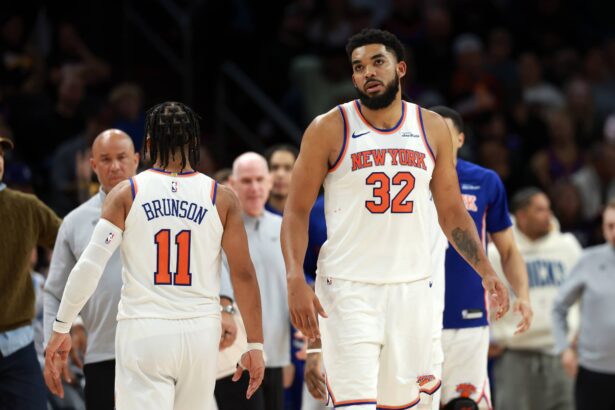
The biggest reason I buy a post-break jump is that their offense has real structure. They are second in the league in offensive rating at 118.9, right behind the Nuggets. That matters because teams don’t usually “forget” how to score after the break. They either clean up shot selection and turnovers, or they don’t. The Knicks have enough creation to do the former, especially with Jalen Brunson playing like an All-NBA guard (27.0 points, 6.1 assists on 47.0% from the field).
What swings them from “very good” to “scarier” is lineup clarity. The simplest version is: keep Brunson’s minutes married to enough size and defense so he can hunt matchups without bleeding on the other end.
The Knicks’ defense has been good enough overall, but the real gains come from the Jose Alvarado trade and the expectations of what Jeremy Sochan can add defensively for the rotation.
This is also where their recent tactical shifts matter. The Knicks have been using Karl-Anthony Towns more as a spacer and rebounder instead of a possession-eater, and that has helped their overall rhythm. During a recent stretch, they posted a 117.5 offensive rating and a 110.8 defensive rating while winning nine of 10. That’s not proof they’ll keep playing at that exact level, but it’s evidence the “best version” is accessible without needing a trade.
My take: the Knicks get better because they have the one thing that usually spikes after the break, which is defense and decision-making. Brunson is elite at controlling tempo, and if New York keeps leaning into defense-first closing groups, they’ll win a lot of the ugly games that show up in March.
2. Cleveland Cavaliers
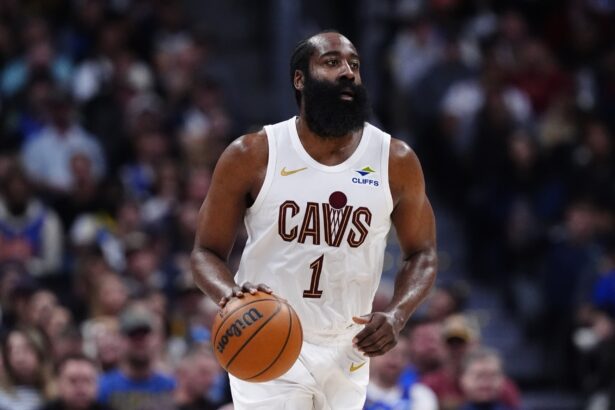
The Cavaliers’ case is simple: the Harden trade gives them a cleaner offensive identity, and the early results have already popped. The Cavs are 34-21, fourth in the East, and they came into the break on a five-game win streak.
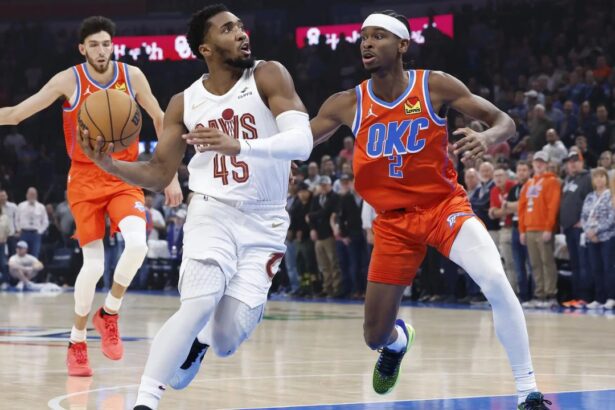
James Harden landing next to Donovan Mitchell matters because it fixes their biggest stress test: what happens when possessions slow down, and teams load up on Mitchell. Mitchell has been awesome (29.0 points, 5.9 assists, 48.7% from the field), but even great creators need a second organizer when playoff-style defenses start forcing the ball out of your first option. Harden gives them that. He’s still producing at a star level this season (25.0 points, 8.2 assists), and even if you think those numbers are partly usage-driven, the passing is the point.
The Cavs sent Darius Garland and a second-round pick to the Clippers for Harden. And yes, they went 3-0 since the trade, with Harden himself discussing their championship aspirations. The more important angle is how it changes roles for everyone else. When Harden is on the floor, the Cavaliers can play simpler basketball: spread pick-and-roll, quick advantage reads, fewer possessions that devolve into late-clock bailouts.
They also don’t have to trade defense for this. The Cavaliers’ overall scoring margin is already strong (+4.1 per game), and they’ve been a top-tier offense by rating (117.5, sixth in the league). If the Cavs keep their defensive floor intact, adding Harden is basically buying “playoff reps” in the regular season: tighter spacing, more intentional shot diet, and fewer stretches where the offense just disappears.
3. Phoenix Suns
The Suns feel like the classic post-break riser because the bar for “better” isn’t perfection. The Suns are 32-23, seventh in the West, and sitting right in the part of the standings where one real run flips your entire season narrative.
The anchor is Devin Booker. He’s at 25.2 points and 6.3 assists, and that combination of scoring plus playmaking is what you want when rotations tighten, because it travels. The defense has been respectable by efficiency (113.4 defensive rating), and that’s the key. If you’re not a bottom-five defense, you can win a lot of games on shot-making and execution alone, especially when you have a star guard who can get to his spots and bend coverage.
Here’s the part I’m watching: The Suns’ shot profile after the break. Teams like the Suns get “better” when they stop taking the bait. The bait is early-clock pull-ups that feel good but create long rebounds and transition chances the other way. If Phoenix leans into more organized possessions and keeps Booker as the hub, they can raise their floor without needing a roster overhaul.
The Dillon Brooks piece is where it gets interesting. Brooks just got suspended one game after picking up his 16th technical foul, which is automatic under league rules. That’s the exact kind of “self-inflicted” issue that can either derail a team or sharpen it. The optimistic case is that Phoenix uses it as a line in the sand: keep the edge, lose the distractions. Because Brooks has actually been a huge on-court driver for them. He’s averaging a career-best 21.2 points, and he’s giving them real two-way bite on the wing.
My take: the Suns don’t need to become “elite” to look better. They need to become more consistent. In the West, consistency is basically a cheat code because everyone else is dealing with injuries, travel, and matchup volatility. Phoenix has enough high-end offense to bank wins if they just stop giving games away in the margins.
4. Golden State Warriors
The Warriors are the most interesting “get better” team in the league because the improvement isn’t theoretical. It’s a personnel change that forces opponents to guard them differently. The Warriors are 29-26, eighth in the West, and hovering right where a post-break surge actually matters for playoff positioning.
The Kristaps Porzingis trade is the swing. The Warriors acquired Porzingis from the Hawks, and the fit is pretty clean: they needed frontcourt shooting and a true pick-and-pop big who can punish teams for loading up on Stephen Curry. Porzingis isn’t the same player he was at his absolute peak, but he’s still productive (17.1 points, 5.1 rebounds, 2.7 assists), and he changes spacing immediately.
This matters even more because Curry has been carrying a huge offensive burden again (27.2 points, 4.8 assists) and, importantly, he was banged up heading into All-Star weekend with a knee issue. If Curry’s minutes need managing, Golden State has to be able to score without turning every possession into chaos. Porzingis helps there because he gives them a simple action that produces clean looks: high screen, pull the big up, force a decision, punish the help.
Defensively, the Warriors have been solid by rating (113.5). That’s not “lockdown,” but it’s good enough if the offense becomes more efficient and less turnover-heavy. And the Warriors’ defense tends to sharpen after the break anyway because their scheme is experience-based. They communicate, they know the rotations, and they generally don’t beat themselves with dumb mistakes when the games start to matter.
If Porzingis is healthy enough to be a big minutes player, the Warriors get better fast. Not because he’s a savior, but because he makes Curry’s life easier. And when Curry’s life is easier, everything else scales up.
5. Los Angeles Lakers
The Lakers are the most obvious post-break “better” candidate because the formula is boring and real: health plus shooting. They’re 33-21 and fifth in the West, and they went into the break looking like a team that can rip off a 12-5 type run without anyone blinking.
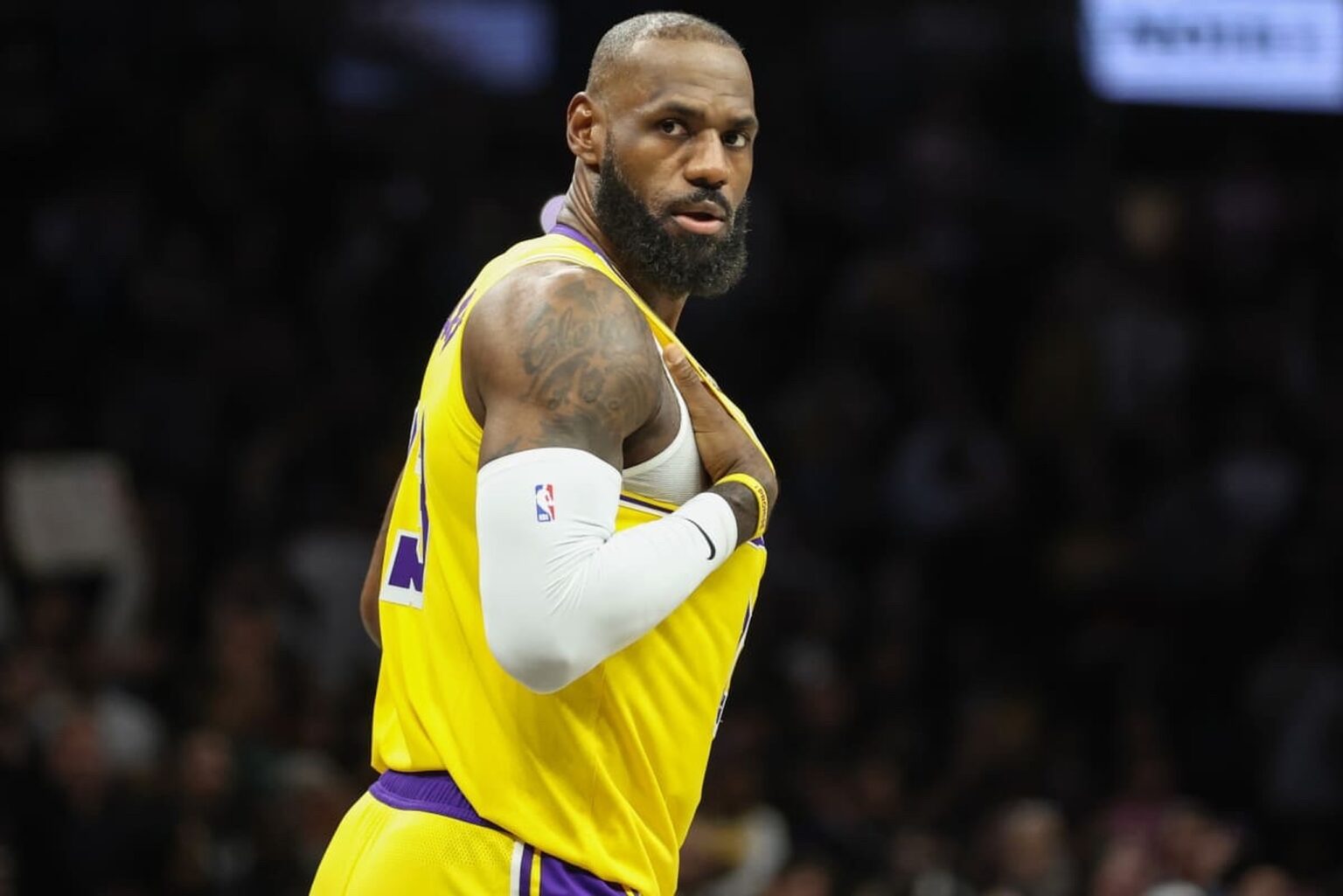
Start with the stars. LeBron James is still producing (22.0 points, 7.1 assists, 5.8 rebounds), even while managing a foot issue that cost him games. Luka Doncic has been the league’s top scorer at 32.8 points with 8.6 assists and 7.8 rebounds, and that combination is basically an offense by itself. Austin Reaves has jumped a tier too (25.4 points, 6.0 assists, 50.8% shooting), which matters because the Lakers can survive non-LeBron minutes if Reaves is actually a creator, not just a connector.
The Lakers acquired Luke Kennard from the Hawks, and the reason is obvious. Kennard is hitting 49.7% from three this season, which is absurd gravity next to Luka and LeBron. Even if he’s not a wing stopper, the Lakers needed someone defenses actually fear when the ball swings. That’s how you turn “good shot” into “great shot” over and over.
The concern is real: the wing defense isn’t perfect, and the Lakers have had defensive wobble stretches that suggest it’s not fixed by vibes. But this is where I’m betting on the math. If the Lakers keep scoring efficiently, they can win a ton of regular-season games even as a middle-of-the-pack defense. And their offense has been elite by rating (116.3, seventh in the league).
Teams That Will Get Worse
1. Milwaukee Bucks
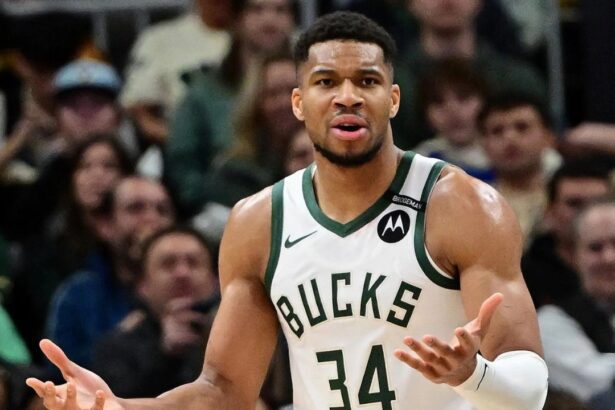
The Bucks are stuck in the NBA’s worst middle: not good enough to scare anyone, but not bad enough to cleanly reset without making hard choices. They’re 23-30 and hovering in play-in range, and the Giannis Antetokounmpo calf strain is the pivot point for everything. Doc Rivers has said the Bucks won’t shut him down, but reports have also been consistent that the timeline is uncertain and the team is being careful with his rehab.
Here’s the reality. If Giannis isn’t 100%, grinding him through March for a low seed is basically borrowing against your own future. And if he is close to returning, that still doesn’t automatically fix the roster problems that got them here. Their defense hasn’t looked like a contender’s, and they don’t have the kind of margin to survive extended “figure it out” stretches.
The other piece is incentive. A team with a superstar doesn’t tank loudly, but it can drift into a soft-tank without announcing it. More conservative minutes. More “maintenance.” More experimenting. That’s how you protect Giannis while quietly accepting that this season might not be the one.
The Bucks might get worse because the break forces clarity. Either you chase something real, or you stop pretending the 10-seed is a goal. With Giannis banged up, the smart move is protecting the asset, even if it costs wins and probably your franchise star traded over the summer.
2. Sacramento Kings
The Kings are the easiest call here because the Zach LaVine news basically slams the door on any post-break push. LaVine is set for season-ending right-hand surgery, and that’s a massive loss of shot creation for a roster that’s already been underwater all year.
They’re 12-44. At that record, the season stops being about “fixing it” and turns into “don’t accidentally ruin the one upside you still have,” which is draft position. The league has cracked down on obvious tanking, sure, but there are clean ways to lose without making it a headline. You sit guys with anything questionable. You prioritize development lineups. You stop chasing short-term rotations that squeeze out two extra wins.
LaVine’s numbers this season weren’t peak LaVine at 19.2 points, 2.8 rebounds, and 2.3 assists, but he was still a real scoring option, and his absence makes the offense simpler to defend every night. More importantly, it removes the “maybe we can steal a run” argument inside the building.
The Kings’ season incentives are now aligned with losing. Health is bad, the record is worse, and the cleanest path forward is leaning into the lottery instead of pretending there’s a late miracle coming.
3. Denver Nuggets
The Nuggets won’t implode because Nikola Jokic exists, but they can absolutely get worse in the only way that matters for a contender: dropping a tier in seeding and bleeding games they normally bank. Peyton Watson’s hamstring strain is a real blow, and the team announcement was clear: at least four weeks out, then re-evaluation.
Watson isn’t a box-score celebrity, but he’s the type of wing every playoff team needs. He defends a position, he plugs leaks, and he lets the team keep lineups athletic without sacrificing too much spacing. Watson completely brokeout with Jokic out through January, posting career-best numbers of 21.9 points, 5.5 rebounds, and 3.0 assists in 15 games.
When you remove that, your rotation gets fragile. The bench minutes get shakier. The matchups get harder. And the post-break schedule doesn’t care that you’re missing a key glue guy.
This is also where the “regular season doesn’t matter” stuff is fake. It matters a ton if you’re fighting for home court or trying to avoid a brutal first-round draw. A four-week stretch can flip your entire bracket path.
This won’t be a collapse, but a slow bleed. Fewer stops on the wing, more stress on the top guys, and just enough dropped games to make April harder than it needed to be.
4. Dallas Mavericks
The Mavericks trading Anthony Davis is the loudest possible signal that the season’s priorities changed. The core point is simple: a team trying to win now doesn’t move a star like that unless the bigger plan is elsewhere.
The Mavericks sit at 19-35 and are riding a long losing streak, which already tells you where this is headed. Once you’re that far down, “compete” becomes “steal a few wins that don’t actually help you.” The smarter play is to lean into development, preserve health, and maximize draft odds.
That’s where the Cooper Flagg angle comes in. If Flagg is your future, you want another premium bite at the top of the draft to build next to him, not a late-season sprint to finish 12th. Your best outcome is clarity: give Flagg the ball, let the mistakes happen, and stack assets.
More young minutes, more experimenting, fewer veterans pushing for ugly wins. That’s how you end up “worse” after the break, even if the long-term plan is smarter.
5. Memphis Grizzlies
The Grizzlies already told you what this is when they moved Jaren Jackson Jr. with a blockbuster, eight-player type of deal to the Jazz. When a team trades a two-way anchor like that, it’s not a “retool on the fly” move. It’s a direction change.
Then there’s Ja Morant. The elbow UCL sprain has kept his return timeline cloudy, and even the updates from the front office have been cautious about when he’ll be back post-break. Without Morant, your ceiling drops. Without Jackson, your defensive identity drops too.
The record matches it. The Grizzlies are 20-33. That’s not “one hot streak fixes this.” That’s “be realistic, protect health, and prioritize the draft.”
The Grizzlies are supposed to tank now. Once you trade Jackson, and Morant is still a question mark, the smartest version of the season is development and draft positioning, not chasing a play-in treadmill.