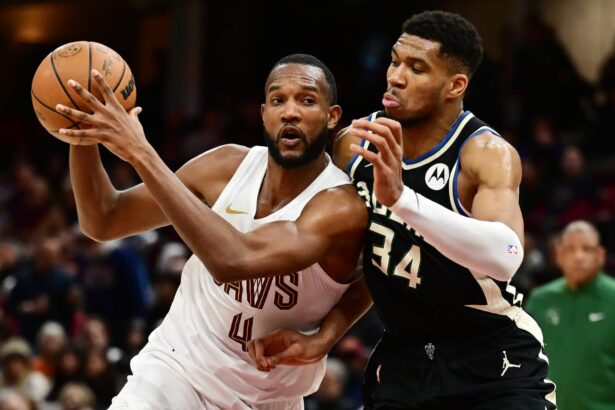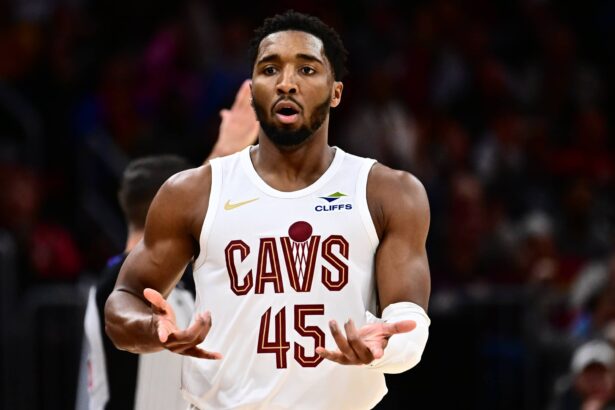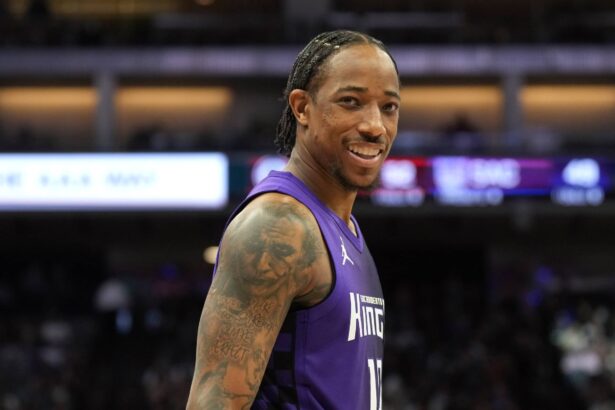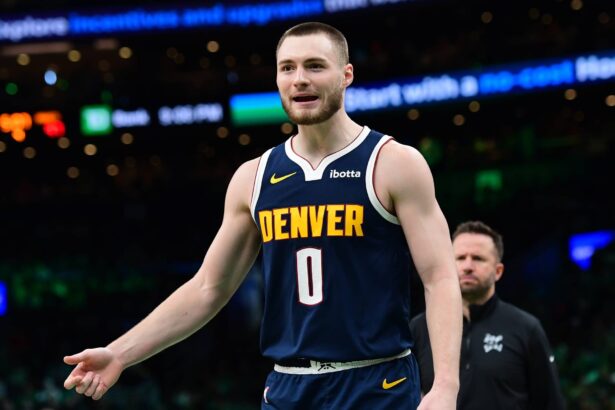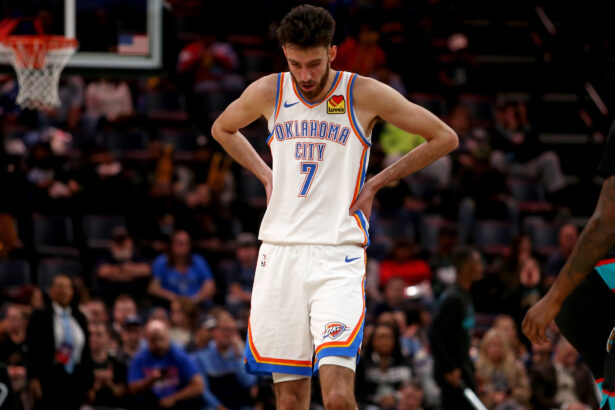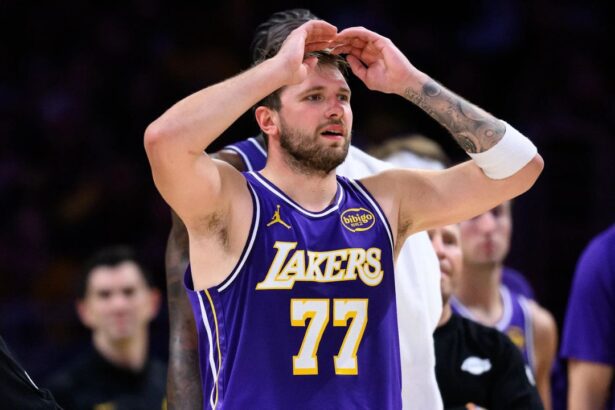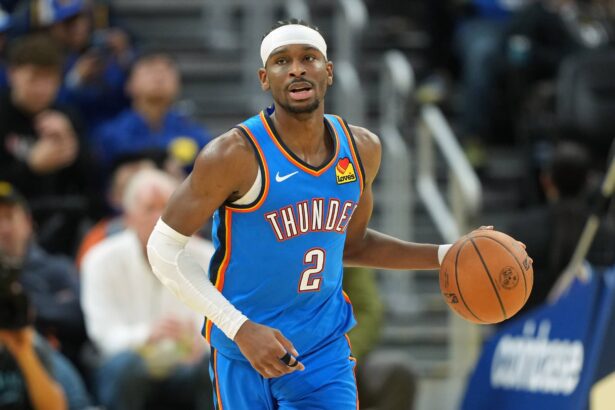
The Kings are running this stretch without a safety net. Zach LaVine and Domantas Sabonis are out for the rest of the season after undergoing surgeries, removing the two highest-usage, highest-salary pillars from an already spiraling year.
The timing is brutal because the Kings were already sitting at 12-44 with a 14-game losing streak heading into the break, and now the roster is forced into survival mode with development minutes disguised as competitive basketball.
That’s the key context for this draft audit. The Kings are not a franchise with a young, franchise-altering prospect already in place, the kind that can absorb a lost season and still keep the big picture clean. When your best players are sidelined, and your foundational upside is uncertain, the first round stops being a luxury. It becomes your fastest path to talent, value, and optionality.
This is the same exercise we just ran with the Lakers, Warriors, Bulls, and other teams in this series. Same grading standard, same strict framing: what the Kings actually got in a Kings uniform, how long it lasted, and whether the pick produced real on-court impact or real asset value.
2016 NBA Draft
Georgios Papagiannis – 13th Pick
Stats: 4.1 PTS, 3.2 REB, 0.5 AST, 0.8 BLK, 0.2 STL, 50.0% FG, 0.0% 3PT
Georgios Papagiannis was a non-consensus lottery decision that immediately raised the bar for scrutiny. The Kings used a premium asset on a traditional center profile, betting that size and rim protection could translate fast enough to justify the slot. In a rebuild, that is a hard sell unless the player becomes a reliable rotation piece quickly.
That never happened. Papagiannis struggled to earn consistent minutes, and when he did play, the impact was narrow and mostly limited to basic finishing and occasional rim contests. The production stayed low, and the role never progressed from “situational look” to “dependable backup.”
The exit was blunt. In February 2018, the Kings waived him less than two seasons after drafting him, a rare outcome for a lottery pick and a clear signal the organization had moved on from the development timeline.
Rating: Bust
Malachi Richardson – 22nd Pick
Stats: 3.5 PTS, 1.2 REB, 0.5 AST, 0.0 BLK, 0.2 STL, 41.2% FG, 28.6% 3PT
Malachi Richardson was a standard late-first swing on a scoring wing archetype. The Kings were looking for perimeter size and shot creation upside, the type of bet that can make sense in the 20s because you are paying for potential more than certainty.
The problem was that Richardson never became a player the Kings could regularly use. His minutes stayed inconsistent, the efficiency did not stabilize, and he never carved out a clear lane as either a shooter or a secondary creator. The numbers reflect a player who never moved from developmental usage into a stable rotation role.
The end came quickly. At the 2018 deadline, the Kings traded him to the Raptors for Bruno Caboclo, closing the book without a meaningful on-court return from the pick.
Rating: Bust
Skal Labissiere – 28th Pick
Stats: 7.8 PTS, 4.3 REB, 1.0 AST, 0.6 BLK, 0.4 STL, 46.9% FG, 35.9% 3PT
Skal Labissiere was the late-first profile that usually keeps a team interested longer: a young big with touch, some face-up skill, and just enough shooting indicators to project a modern stretch role. For the Kings, he was also a low-cost bet. At No. 28, you can afford development if there is a pathway to a usable rotation piece.
He gave the Kings more than the other picks in this class. Labissiere played real minutes, had stretches of productive scoring, and showed flashes as a pick-and-pop option. The broader issue was that the role never firmed up into something the coaching staff could rely on long-term, and the defensive impact did not grow enough to secure consistent minutes in a serious rotation.
The Kings eventually moved him in February 2019, sending him to the Trail Blazers for Caleb Swanigan. That trade return tells you how the league valued him at the time: a swap of fringe bigs rather than a player with real asset pull.
He wasn’t a hit, but he also wasn’t an empty value. For a No. 28 pick, giving the Kings actual games and a small return on exit clears the minimum threshold.
Rating: Good
2017 NBA Draft
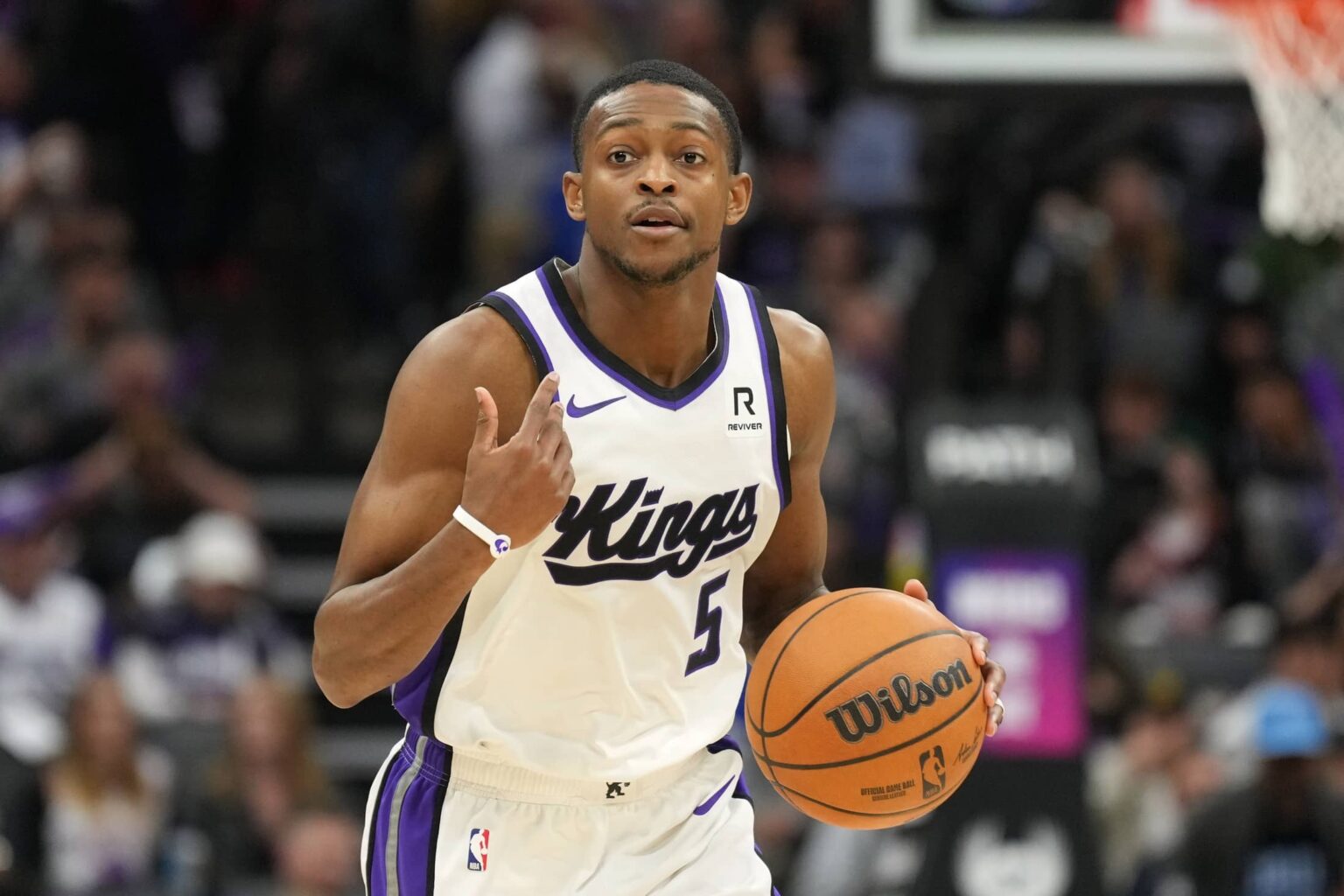
De’Aaron Fox – 5th Pick
Stats: 21.5 PTS, 3.9 REB, 6.1 AST, 0.4 BLK, 1.4 STL, 47.1% FG, 33.3% 3PT
De’Aaron Fox was the only true franchise-level bet the Kings actually hit in this stretch, and the return in a Kings uniform was real. Fox became the engine. He carried usage, created paint pressure, and turned the Kings into a team that could play fast without losing its structure. The numbers are strong on their own, but the context is the point. The Kings spent years searching for a lead guard who could hold that job without training wheels, and Fox did it.
The peak version was clear once the roster put real spacing and shooting around him. Fox’s speed and rim pressure forced defenses to collapse, then the kickouts and late-clock pull-ups became repeatable offense. He also grew into a real late-game scorer, which matters because the Kings were not winning games with margin. They were living in close endings, and Fox made those possessions survivable.
Then the ending defined the current Kings problem. Fox was traded to the Spurs mid-season last year, and now the franchise is staring at a season without a young, franchise-altering player already in place. That does not change the grade on the pick. It just explains why the Kings are back in a draft value conversation again.
Rating: Great
Justin Jackson – 15th Pick
Stats: 6.7 PTS, 2.8 REB, 1.2 AST, 0.2 BLK, 0.4 STL, 43.4% FG, 32.6% 3PT
Justin Jackson arrived through an aggressive draft-night decision. The Kings moved the No. 10 pick to get two first-rounders, which became Jackson at No. 15 and Harry Giles III at No. 20. That trade matters because it raises the expectation. A mid-first pick is supposed to become a stable rotation player, at minimum.
Jackson never reached that baseline for the Kings. He played minutes, he started some games, and he did not completely wash out. But the role was always thin. The shooting did not become consistent enough to lock down a true 3-and-D identity, and the offensive value stayed mostly limited to low-leverage scoring. The stat line reflects a player who stayed replaceable.
The Kings moved him at the 2019 deadline in the Harrison Barnes trade, sending Jackson and Zach Randolph to the Mavericks. That’s the cleanest summary of his Kings tenure: a playable body who ultimately functioned more as salary ballast than as a core rotation solve.
Rating: Bust
Harry Giles III – 20th Pick
Stats: 7.0 PTS, 3.9 REB, 1.4 AST, 0.4 BLK, 0.5 STL, 52.4% FG, 0.0% 3PT
Harry Giles III was the upside swing in that same No. 10 trade. The profile was clear. Big-man touch, passing feel, and the hope that the health history would stabilize long enough for the talent to show. For the Kings, that was a reasonable bet at No. 20, but it still required one thing: sustained availability and a defensible role.
The Kings never got it. Giles had moments as an energy big and an interior finisher, and the efficiency was fine in his minutes. But the role never became firm, the minutes stayed limited, and the development runway never translated into a reliable rotation piece the Kings could plan around.
The organizational decision was explicit in 2019, when the Kings declined his contract option, effectively closing the chapter before the fourth season. For a first-round big, that is the outcome you cannot escape in grading. The talent flashes were not enough to turn the pick into a durable Kings asset.
Rating: Bust
2018 NBA Draft
Marvin Bagley III – 2nd Pick
Stats: 13.5 PTS, 7.4 REB, 0.9 AST, 0.7 BLK, 0.5 STL, 49.4% FG, 29.9% 3PT
Marvin Bagley III was the Kings making a top-of-the-draft decision that demanded a franchise outcome. At No. 2, the pick is not supposed to be “a player.” It is supposed to be a direction. Bagley came in with real athletic tools and scoring touch for a big, and the early production looked playable. The issue is that “playable” is not the bar here.
The Kings got stretches of scoring and rebounding, but they did not get a stabilizing cornerstone. The availability problems and the stop-start development mattered, and the fit never became clean enough to justify building around him. Even in the best moments, Bagley’s impact stayed narrow: finishing, putbacks, and interior scoring without the two-way leverage that typically separates top picks from normal starters.
The ending was the clearest verdict. On February 10, 2022, the Kings moved him in a four-team trade that sent him to the Pistons. When a No. 2 pick is out of your building before his rookie contract is even finished, the evaluation is already written. It does not matter that he continued his career elsewhere. The Kings used a premium pick and did not get a premium outcome.
Rating: Bust
2019 NBA Draft
No First-Round Pick
The Kings did not make a first-round selection in 2019 because that pick had already been moved out in the chain connected to the 2017 Celtics-76ers deal. When the lottery landed, the Kings’ pick conveyed at No. 14, and the Celtics made the selection for Romeo Langford.
Rating: N/A
2020 NBA Draft
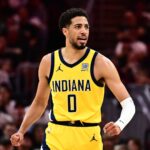
Tyrese Haliburton – 12th Pick
Stats: 13.6 PTS, 3.4 REB, 6.3 AST, 0.6 BLK, 1.5 STL, 46.5% FG, 41.1% 3PT
Tyrese Haliburton was the rare Kings pick that immediately looked like a solution instead of a project. The role was clean from week one: pace control, low-mistake playmaking, real pull-up and catch-and-shoot gravity, and enough size to function in multiple backcourt pairings. The production matched the feel. His Kings career line is efficient, high-assist, and built on skills that translate without special usage.
The important part is how fast the value became obvious. Haliburton didn’t need a third season to “arrive.” He played like an organizing guard right away, earned All-Rookie recognition, and looked like the type of young lead who can actually scale when the roster gets better. For a No. 12 pick, that is not a normal return. That is franchise-level value, even if the Kings never fully stabilized the roster around him.
Then the Kings made the defining choice of this era. On February 9, 2022, Haliburton was moved to the Pacers in the Domantas Sabonis deal. That trade is part of the pick’s Kings story, because it proves the asset quality.
You only get a player like Sabonis by putting a real young centerpiece in the deal. The Kings drafted a high-end guard, got immediate two-way offensive value, and then cashed him into an All-Star-level big to change the team’s timeline.
Rating: Great
2021 NBA Draft
Davion Mitchell – 9th Pick
Stats: 7.4 PTS, 1.6 REB, 2.8 AST, 0.2 BLK, 0.5 STL, 43.4% FG, 32.7% 3PT
Davion Mitchell was drafted as an identity pick. Point-of-attack defense, physical pressure, and the idea that the Kings could finally put a perimeter stopper next to a scoring guard without compromising effort or toughness. The defensive effort was real, but the offensive limitations never cleared the standard for a top-10 guard. The scoring efficiency was inconsistent, and the shooting never became stable enough to force defenses to treat him as more than a low-priority threat.
The Kings did get NBA minutes and some useful regular-season stretches, but the role never reached “core rotation lock.” He averaged 7.4 points and 2.8 assists in 227 games for the Kings, and those totals tell the story: the pick produced volume minutes, not leverage. For a No. 9 selection, the expectation is either a long-term starter or an asset that holds serious trade value. Mitchell never became either in a Kings uniform.
The exit confirms how the league valued him at that point. In June 2024, the Kings traded him to the Raptors along with Sasha Vezenkov and the No. 45 pick in the 2024 draft for Jalen McDaniels. That is not a return you associate with a successful top-10 pick. He’s been amazing for the Heat this season as a starter, but for the Kings, the clock was too short.
Rating: Bust
2022 NBA Draft
Keegan Murray – 4th Pick
Stats: 13.4 PTS, 5.6 REB, 1.4 AST, 0.8 BLK, 0.9 STL, 44.9% FG, 36.6% 3PT
Keegan Murray was drafted to be the rare clean fit in a messy Kings build. Big wing-forward size, real shooting volume, and a low-drama style that translates next to any primary creator. The Kings did not draft him to run the offense. The Kings drafted him to hold a starting job for years, space the floor, and defend enough to stay playable when the game gets tighter.
The Kings got a real rotation player immediately. Murray has started almost his entire Kings career and settled into a stable production band, which is not a small outcome for a top-five pick on a team that has repeatedly missed on development timelines.
His value is not built on flashes. It is built on repetition: taking NBA threes, playing real minutes, and staying functional without the offense being designed around him.
The best indicator of how the Kings actually view him is what they did with the contract. The Kings committed long-term with a five-year, $140.0 million extension reported by Shams Charania, which is the franchise placing Murray in the “core salary” tier rather than treating him like a replaceable starter.
That still does not automatically make the pick “great” in this grading. A No. 4 pick is judged like a potential franchise-altering player, and Murray has been more high-level complementary starter than a primary engine. That is valuable, but it is not the top outcome.
The grade is straightforward. The Kings drafted a real long-term starter who fits modern basketball, and the organization chose to pay him like a core piece. That is a successful pick, even if it stops short of “great.”
Rating: Good
2023 NBA Draft
No First-Round Pick
The Kings did not make a first-round selection in 2023 because the pick was moved on draft night as part of a salary-clearing deal. The Kings sent Richaun Holmes and the draft rights to the No. 24 selection to the Mavericks for cash considerations. The player taken with that pick was Olivier-Maxence Prosper.
Rating: N/A
2024 NBA Draft
Devin Carter – 13th Pick
Stats: 4.6 PTS, 2.1 REB, 1.4 AST, 0.2 BLK, 0.6 STL, 37.8% FG, 24.8% 3PT
Devin Carter was drafted as a role guard, and that’s the problem. If you take a role guard in the teens, he has to immediately look like he belongs in an NBA rotation. Carter has not.
His second season has not moved the evaluation in the right direction. This season, Carter is at 6.1 points, 2.2 rebounds, and 1.9 assists in 13.4 minutes per game, with 38.7% from the field and 18.8% from three. The minutes are not a coaching “development plan” issue. They reflect performance.
The shot is the central problem. If Carter is not a credible spot-up threat, the role collapses because he does not create enough advantage as a scorer to compensate. The efficiency profile forces the Kings into spacing compromises, and that is exactly what a mid-first guard cannot do on a roster already fighting for functional offense.
There have been isolated box-score games, including an 18-point night in late January and a 10-point, five-assist line in a heavier-minute spot. That does not change the overall read. Through the season sample, Carter has not secured a stable place, has not shown a bankable NBA-level skill that demands minutes, and has not justified the pick relative to the expected readiness of his archetype.
Rating: Bust
2025 NBA Draft
Nique Clifford – 24th Pick
Stats: 6.6 PTS, 3.1 REB, 1.7 AST, 0.3 BLK, 0.7 STL, 39.3% FG, 31.7% 3PT
Nique Clifford entered the Kings timeline through a draft-night acquisition, not a natural first-round slot. The Thunder made the selection at No. 24, and the pick was traded to the Kings, which is the only reason the Kings have a first-round name to evaluate in 2025.
The rookie season has been usable but not convincing. Clifford has played rotation minutes and started some games, but the efficiency profile is the first issue.
A wing taken in the 20s can survive low usage, but the sub-40.0% from the field with mediocre three-point accuracy is the downside of his season, even with the good flashes he’s been showing lately.
His production to date reads like a bench connector: some rebounding for position, some ball movement, and enough defense to get on the floor, without a bankable offensive skill that forces minutes.
The short-term opportunity is obvious. With Zach LaVine and Domantas Sabonis shut down for the season, the Kings are going to have to allocate real minutes to younger players, and this is the exact environment where a rookie either claims a role or stays in the “replaceable” bucket.
Rating: Too Early
Final Thoughts
The Kings’ last decade of first-round work is a clean example of why draft outcomes shape everything, even when the roster looks veteran-led on paper. The Kings have not consistently produced a young, franchise-altering centerpiece through the draft pipeline, and the timing is worse now being the worst team in the West. When your top-end talent is struggling, and your long-term ceiling is unclear, the first round is not optional. It is the fastest path back to leverage.
At the top, there are two real “great” outcomes. De’Aaron Fox became the Kings’ engine for years, a lead guard who carried usage, created rim pressure, and gave the franchise a legitimate identity. Tyrese Haliburton was even cleaner in terms of translatable value: efficient creation, elite feel, and instant organization. The Kings did not keep either long-term, but that does not change what the picks produced in a Kings uniform. Those were franchise-level hits, even if the front office’s decisions are still being questioned.
The “good” tier is thinner, but it exists. Keegan Murray has been a stable, starting-caliber wing-forward who fits modern basketball and has held his role without drama. That is real value at No. 4, even if it is not a true franchise-altering outcome. Skal Labissière, taken late in the first, gave the Kings actual minutes and some productive stretches, which is enough to clear the late-first baseline.
The “bust” bucket is where the story turns blunt. Georgios Papagiannis at No. 13 was an empty value for a premium slot. Malachi Richardson did not become a rotation piece. Justin Jackson and Harry Giles III were the return from the 2017 trade-down sequence, and neither became a long-term solution. Marvin Bagley III is the headline miss because No. 2 picks are supposed to anchor your direction, not exit before the rookie deal ends. Davion Mitchell never delivered top-10 guard value, and Devin Carter has opened his career without a clear NBA-level calling card, which is a major problem for a mid-first guard profile.
Add it up, and the conclusion is simple. The Kings drafted two true answers, failed to retain them with trades that never panned out, and then spent too many years paying for misses and empty draft nights.