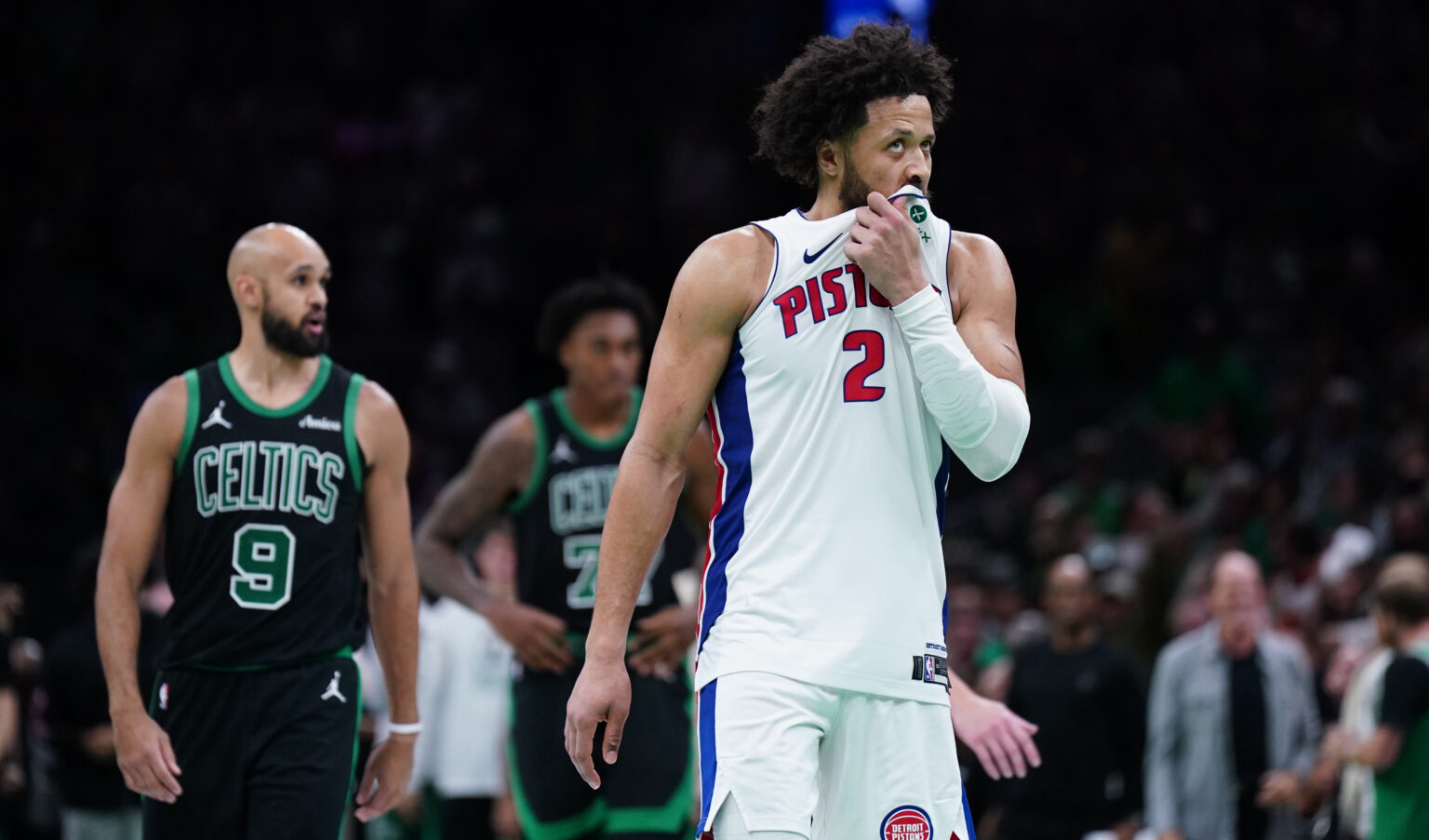
Cade Cunningham’s All-NBA case changed the moment the Pistons announced that he would miss at least two weeks with a collapsed lung. The Pistons said Cunningham will be re-evaluated in two weeks, while ESPN reported the injury is considered mild and that the expectation is he could return before the postseason.
Even so, the timing matters because All-NBA is no longer judged only by production, impact, and team success. Availability is now part of the equation. Under the NBA’s current rules, players must appear in at least 65 regular-season games to qualify for major awards, including All-NBA.
That is what makes Cunningham’s injury such a major development in the race. He has been one of the best guards in basketball this season, averaging 24.5 points, 5.6 rebounds, and 9.9 assists in 61 games, numbers strong enough to put him firmly in the All-NBA conversation.
With Cunningham’s margin for error now much thinner, the All-NBA race suddenly feels less settled than it did a few days ago. Here is how the 2025-26 All-NBA teams could look as the regular season enters its final stretch.
Third Team All-NBA
Jamal Murray
Tyrese Maxey
Devin Booker
Kawhi Leonard
Karl-Anthony Towns
This is the part of the ballot where availability starts to matter just as much as raw production. Jamal Murray and Karl-Anthony Towns have already cleared the 65-game threshold, which gives them a clean path. Tyrese Maxey has played 61 games and still has room to qualify. Devin Booker and Kawhi Leonard are in a far tighter spot at 54 games each, which means both are basically in must-play mode down the stretch if they want to stay eligible. That matters, but so does what they have done when they have actually been on the floor.
Murray belongs here because he has given the Nuggets a real second-star season, not just a hot stretch. He is averaging 25.1 points, 4.4 rebounds, and 7.1 assists in 65 games while shooting 47.8% from the field and 42.3% from deep. On a Nuggets team that sits 42-28 and sixth in the West, that matters. The record is not ideal for an All-NBA guard, but Murray’s shot-making, playmaking, and durability check every box for the third team. He has been too good for too long this season to leave off.
Maxey has the strongest pure scoring case in this group. He is averaging 29.0 points, 4.1 rebounds, and 6.7 assists in 61 games, with 46.1% shooting from the field and 37.3% from three. The problem is team context. The 76ers are only 38-32 and ninth in the East, which usually drags a player down in this conversation. Still, Maxey has carried a huge offensive burden, and the volume is too serious to ignore. If this ballot is supposed to reflect who has actually been one of the best guards in the league, he still makes it.
Booker and Leonard are the hardest names to place because their team situations are not helping them. The Suns are 39-31 and seventh in the West, while the Clippers are 34-36 and eighth. But both wings still have strong All-NBA arguments on production alone. Booker is averaging 25.8 points, 5.9 assists, and 3.9 rebounds in 54 games. Leonard has been even better on a per-game basis, posting 28.2 points, 6.4 rebounds, and 3.6 assists in 54 games while shooting 50.4% from the field and 38.3% from three. Booker has been the Suns’ offensive organizer. Leonard has been the Clippers’ best player when available. The standings keep them out of the higher teams, but not off the ballot.
Towns closes this team because his season has been steady, valuable, and easy to defend. He has averaged 20.0 points, 11.8 rebounds, and 2.9 assists in 65 games, with 49.2% shooting from the field and 36.6% from deep, and the Knicks are 45-25 and third in the East. He does not have the headline numbers some others do, but he has matched strong production with real team success. That is usually enough to lock one of the frontcourt spots on the third team, and this year it should be enough again.
Second Team All-NBA
Jalen Brunson
Anthony Edwards
Jaylen Brown
Donovan Mitchell
Kevin Durant
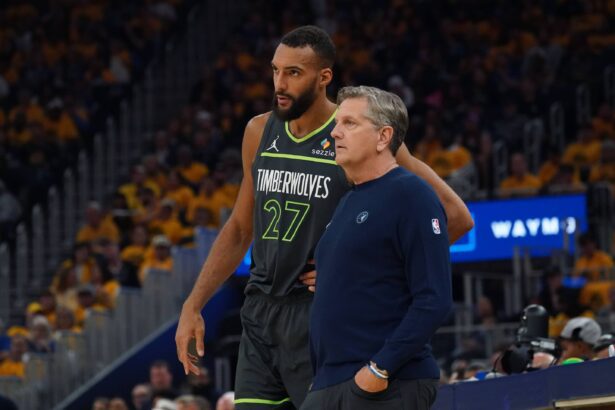
This group has a little bit of everything. There is top-end scoring, team success, late-season pressure, and, in Anthony Edwards’ case, a real eligibility scare. Kevin Durant is already safe at 65 games. Jalen Brunson sits at 64. Jaylen Brown is at 62. Donovan Mitchell is at 61. Edwards is the one hanging on the edge at 58 after the Timberwolves announced he will be out at least one week with right knee inflammation and re-evaluated in one to two weeks. With the Timberwolves at 43-27, that leaves only 12 games on the schedule, so Edwards now needs seven appearances just to get to 65.
Edwards still belongs here because the body of work is too strong to ignore. He has put up 29.5 points, 5.1 rebounds, and 3.7 assists in 58 games while hitting 49.2% from the field and 40.2% on three-point attempts. That is clear Second Team production. The problem is that the knee issue changed the conversation from placement to survival. Before the injury, the case was about whether he had pushed high enough for First Team consideration. Now it is about whether he can even stay eligible. If he gets back quickly, the scoring volume, the efficiency jump, and the fact that the Timberwolves are still 43-27 should keep him here. If there is any setback, the whole ballot opens up.
Brown has one of the cleanest cases on this team. He is at 62 games already, so eligibility should not be a real issue, and his production has stayed at an All-NBA level all season: 28.5 points, 7.0 rebounds, and 5.1 assists on 48.0% shooting. The Celtics are 46-23, and Brown has repeatedly looked like the stabilizer whenever the season has gotten noisy. He just hung 41 points, seven rebounds, and six assists on the Suns, then followed that with 32 points, six rebounds, and five assists against the Warriors. That matters this late in the year. Brown’s season is not just about the raw numbers. It is about being the reliable scorer on a contender that keeps stacking wins, and that profile is exactly what a Second Team spot is for.
Brunson has the classic lead-guard case. He is at 64 games, so one more gets him across the line, and the rest of the resume is already strong enough. He has 26.3 points and 6.6 assists a night, and the Knicks are 45-25 with him driving one of the league’s steadiest offenses.
There is also a clutch element to his season that still shows up every time the Knicks need control late in games. He recently dropped 29 points and nine assists against the Pacers, and even after missing the previous game with right ankle and neck issues, he’s been cleared on Thursday. That is important because the Knicks’ offense still bends to his pace, footwork, and decision-making. He does not have the gaudiest stat line on this team, but the total package is easy to defend.
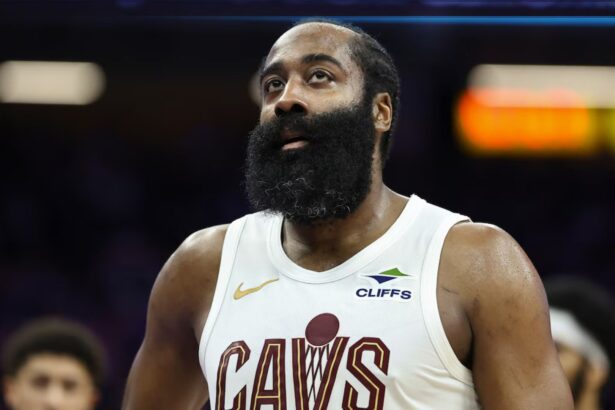
Mitchell’s case got more interesting once James Harden arrived, because this could have gone one of two ways. Either Harden would take too much on-ball control and flatten Mitchell’s rhythm, or he would make the Cavaliers more functional and let Mitchell pick his spots. It has mostly been the second one. Mitchell is at 28.0 points, 5.9 assists, and 4.5 rebounds in 61 games, and in late February, the Cavaliers were 6-1 with Harden after the deal and found a new level of confidence. That matters because Mitchell has not had to sacrifice his own production to make the partnership work. If anything, the pairing has made his season look more complete.
Even with Mitchell sidelined Friday by a bruised left eye, Harden’s 36-point game was another reminder that Cleveland finally has a second creator who can carry real usage. Mitchell remains the lead scorer, but he no longer has to do every hard thing on every possession, and that has strengthened his All-NBA case, not weakened it.
Durant rounds this out because he has already cleared the threshold and because the season has been big enough to survive the occasional ugly night. He is at 65 games with 25.7 points, 5.5 rebounds, and 4.4 assists on 51.6% shooting and 40.2% on three-point attempts. The Rockets are 41-27 and right in the middle of a brutal West seeding fight, and Durant has carried a massive shot-creation load in that environment.
He just had 32 in a win over the Pelicans and dropped 40 against the Magic a few weeks ago. The rougher moments matter too. After a late collapse against the Lakers, Durant openly said the loss was on him after a seven-turnover second half. That honesty actually fits the season. He has been brilliant often enough to make Second Team sense, but he has also been forced into a difficult offensive role on a team that still does not always create easy offense around him. Even with that, the production and durability are there.
First Team All-NBA
Shai Gilgeous-Alexander
Luka Doncic
Cade Cunningham
Nikola Jokic
Victor Wembanyama
This is still the cleanest First Team on talent and season-long impact, but it is no longer clean on eligibility. Shai Gilgeous-Alexander is at 58 games, Luka Doncic is at 58, Cade Cunningham is at 61, Nikola Jokic is at 54, and Victor Wembanyama is at 55. That means Shai and Luka are in strong shape, Cade still controls his fate, and Jokic and Wembanyama have almost no room left.
Cade’s collapsed lung changed the entire shape of this ballot because the Pistons said he will be re-evaluated in two weeks, while Jokic is still climbing back after the left knee issue that cost him 16 games earlier in the season. So this is not just a ranking of who has been best. It is also a snapshot of who can still survive the 65-game rule.
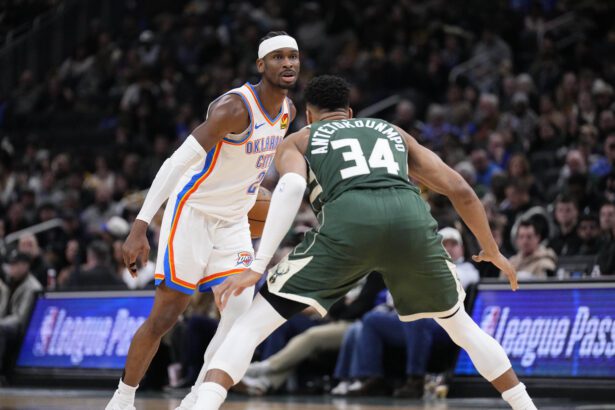
Shai gets the first guard spot because he has been the most stable superstar in the league all year. He is putting up 31.5 points, 6.6 assists, and 4.5 rebounds on 55.1% shooting, and the Thunder are 55-15 with a 10-game winning streak. That combination is hard to beat. The scoring volume is elite, the efficiency is elite, and the team context is even better. He also just pushed his 20-point streak to 130 straight regular-season games, which says a lot about how little his level moves from night to night. There may be flashier single-game explosions elsewhere, but nobody has owned the season more consistently than Gilgeous-Alexander on his way to a second MVP award.
Doncic is the easiest First Team pick after that. He leads the league in scoring, the Lakers are 45-25 and up to third in the West, and his recent run has felt absurd even by his standards. He just dropped 60 on the Heat one night after hanging 40 on the Rockets, giving him 100 points in less than 24 hours. The broader season case is just as strong: 33.4 points, 8.4 assists, and 7.9 rebounds in 58 games. This has not been an empty offense either. The Lakers have won eight straight, and Doncic has looked like the engine of a group that suddenly has real playoff weight. If this ballot is about the best players this season, he is not moving off it.
Cunningham is where the First Team gets tricky. Before the injury, this felt locked. He had carried the Pistons to 50 wins and the best record in the East, while producing 24.5 points, 9.9 assists, and 5.6 rebounds across 61 games. That is a serious lead-guard season on a contender, and the team transformation around him matters. The problem is simple now: he needs four more games to qualify, but might lose 6 to 8 games at least in this span. So the case is still First Team on merit, but it is hanging by availability. If he comes back in time, he belongs. If he does not, this spot opens immediately.
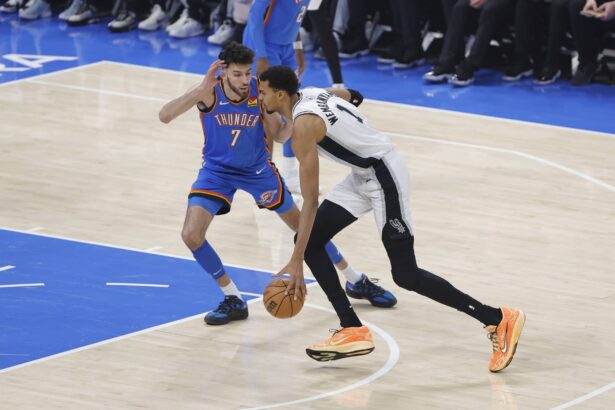
Jokic and Wembanyama are different versions of the same problem. Jokic has only 54 games, which means he now needs 11 of the final 12 just to get there. But when he has played, he has still looked like Jokic: 28.2 points, 12.6 rebounds, and 10.5 assists for a Nuggets team that is 42-28 and sixth in the West. Wembanyama has a little more room at 55 games, and the Spurs being 52-18 after clinching a playoff spot gives him a major team boost. His line remains ridiculous anyway: 24.3 points, 11.1 rebounds, and 3.0 blocks. Wembanyama’s late-game dominance has become part of the case, too, especially after the game-winner against the Suns. If both bigs get to 65, they are still First Team players. The tension is that neither has margin left, especially Jokic.
Final Thoughts
If Anthony Edwards and Cade Cunningham both fall short of 65 games, the ballot gets cleaner, even if it also gets less interesting. In that scenario, Jaylen Brown should move up to First Team. He has already built a strong enough case on merit anyway, with 28.4 points for a Celtics team that is 46-23 and still looks like one of the league’s most stable contenders. If Cunningham misses the cutoff, Brown is the most logical replacement because he combines big numbers, real two-way value, and high-end team success.
That would then create a chain reaction. If Edwards also misses, Jamal Murray feels like the cleanest promotion to Second Team. He has already reached 65 games and has given the Nuggets a season that looks much bigger than a standard co-star year, with 25.1 points and 7.1 assists a night. The scoring load, late-game shot creation, and durability all work in his favor, especially compared to some of the shakier eligibility cases around him.
Once Brown moves up and Murray follows, the real debate lands on that final Third Team opening. James Harden would have a strong argument there. He is up to 60 games, and his full-season line sits at 24.2 points, 8.0 assists, and 4.9 rebounds. The context helps. The Cavaliers are 43-27, and since the trade, he has clearly helped stabilize their offense next to Donovan Mitchell rather than shrinking Mitchell’s role.
Jalen Johnson is another real option, and honestly, one of the more interesting ones. He is at 62 games with 22.9 points, 10.5 rebounds, and 8.1 assists, which is a monster all-around line for a Hawks team that has won 11 straight and climbed to 38-31, tied with the Heat and only a half-game behind the sixth seed. If voters want to reward a breakout season instead of a bigger name, Johnson has a serious case.
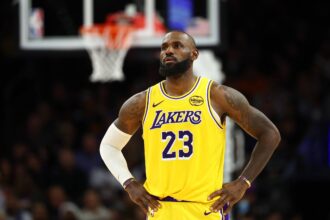
As for the stars who are already officially out, that list is not small. LeBron James is at 49 games, Austin Reaves is at 44, Stephen Curry is at 39, and Giannis Antetokounmpo is at 36, so none of them can still reach 65. That means they are already out of the All-NBA race regardless of how strong their per-game production has been.
The same is true for several other star-level or headline names around the league. Ja Morant has played 20, Paul George is at 27, Trae Young is at 15, and Jayson Tatum is at just 6. Not all of those players were realistic All-NBA threats this season, but they are all officially out of contention for the league’s major awards because they cannot get to 65.