The Orlando Magic didn’t just pull off a 123-107 win; they controlled it from start to finish. In a game where they led for 96% of the time and built a lead as large as 26, Orlando overwhelmed the Detroit Pistons with defensive pressure, physical drives, and relentless execution. Yes, the Pistons sorely missed Cade Cunningham tonight.
Detroit had stretches of offensive flow, but turnovers, foul trouble, and an inability to contain Orlando’s stars turned this into a one-sided result. The Magic had control across all four quarters, and here are the five main things we learned.
1. Paolo Banchero Led A Complete Offensive Charge
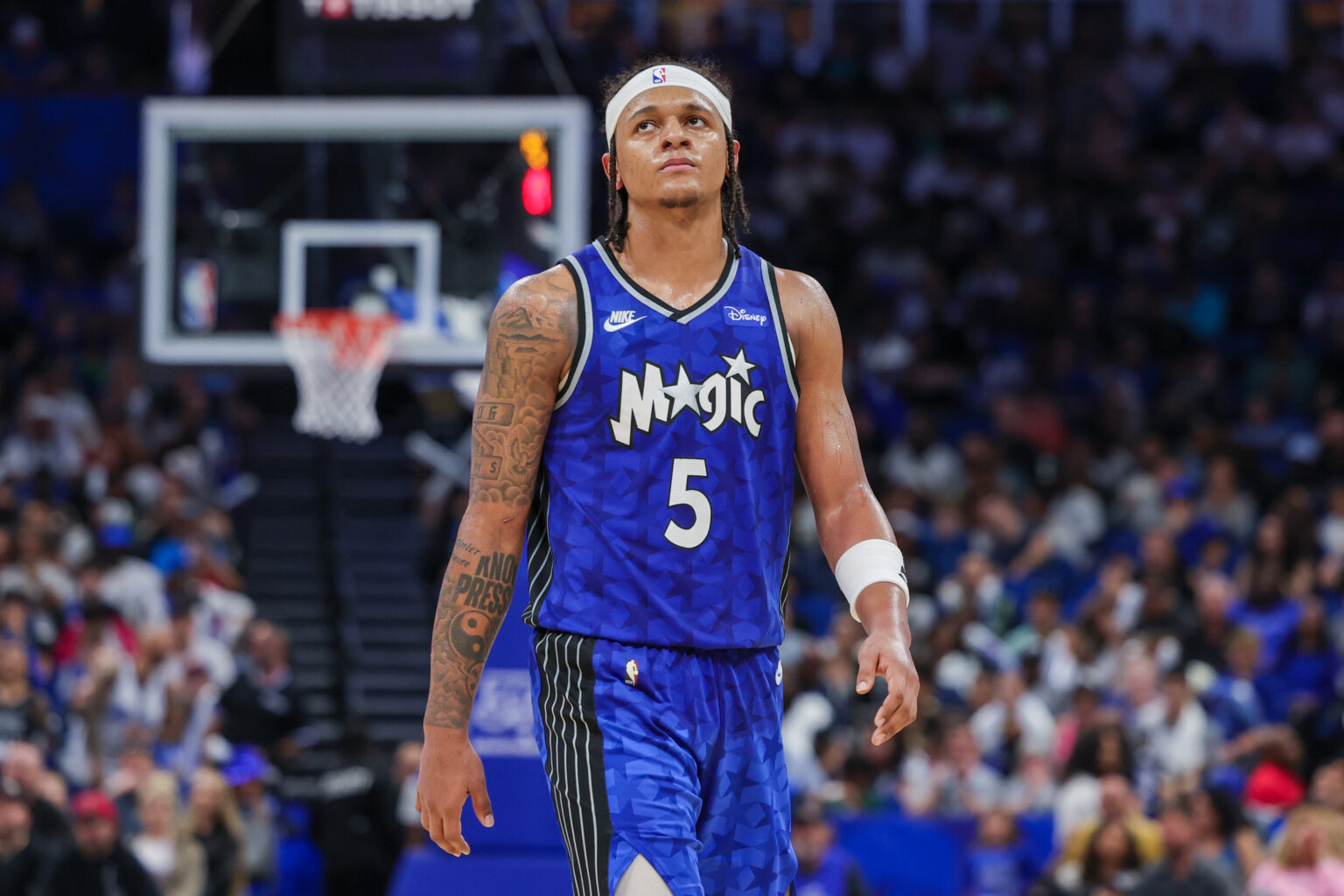
Paolo Banchero was the tone-setter from the opening tip, finishing with 31 points on 10-16 shooting while going a perfect 10-10 from the free-throw line. He attacked relentlessly, forcing contact and dictating how Detroit defended every possession.
His efficiency stood out – no wasted movement, no forced shots. Whether operating in isolation or within the flow, Banchero consistently generated high-quality looks.
Orlando shot 50.6% as a team, and Banchero’s ability to collapse the defense opened space for everyone else to operate.
2. Free Throw Disparity Broke The Game Open
The most obvious gap was at the line. Orlando went 30-40 from the free-throw line, and Detroit went 13-19, which is a 17-point differential in a 16-point game. Desmond Bane and Banchero consistently drew fouls from the Pistons and scored at a high clip.
The Pistons struggled the entire game to generate enough pressure to cause the same difficulty for the Pistons as Jalen Duren was effective enough with 18 points, but the Pistons did not get to the line enough to keep pace as a unit.
With relatively even shooting splits, the difference in points scored from the free-throw line was the most significant in the game, as Detroit continued to draw the same number of fouls as the Pistons.
3. Magic’s Defense Created Chaos
Orlando’s defensive activity was relentless. They recorded 16 steals and 9 blocks, constantly disrupting Detroit’s offensive rhythm.
The Pistons committed 21 turnovers, which led directly to 33 points for the Magic. Live-ball turnovers in particular fueled Orlando’s transition game, where they outscored Detroit 23-16 in fast-break points.
Jalen Suggs anchored the perimeter defense with 3 steals and high-level ball pressure, while multiple bigs protected the rim. It wasn’t just effort – it was coordinated, aggressive defense.
4. Balanced Scoring Gave Orlando Control
This wasn’t a one-man performance. Desmond Bane added 25 points on 9-17 shooting, knocking down 4-7 from three and stretching Detroit’s defense.
Jalen Suggs contributed 12 points and 12 assists, orchestrating the offense while maintaining defensive intensity. Wendell Carter Jr. chipped in 12 points and efficient interior scoring.
Orlando had five players in double figures and consistently generated offense from multiple spots. That balance made it difficult for Detroit to key in on any one player.
5. Pistons Couldn’t Overcome Turnovers And Defensive Breakdowns
The Detroit Pistons had some productive individual performances – Jalen Duren (18 points, 8 rebounds), Kevin Huerter (17 points), and Daniss Jenkins (18 points, 7 assists) all contributed.
But the team’s overall execution fell short. The 21 turnovers not only killed offensive flow but also directly fueled Orlando’s scoring. Additionally, defensive lapses, particularly in transition and at the point of attack, made it difficult to string together stops.
Even with 32 assists and decent shooting (49.4%), the Pistons couldn’t sustain momentum. Every push was answered, often immediately, by Orlando.