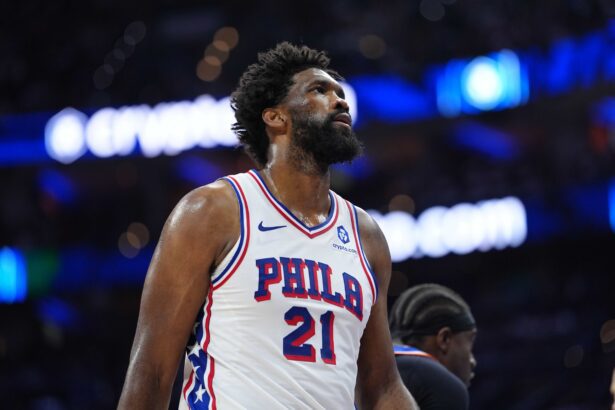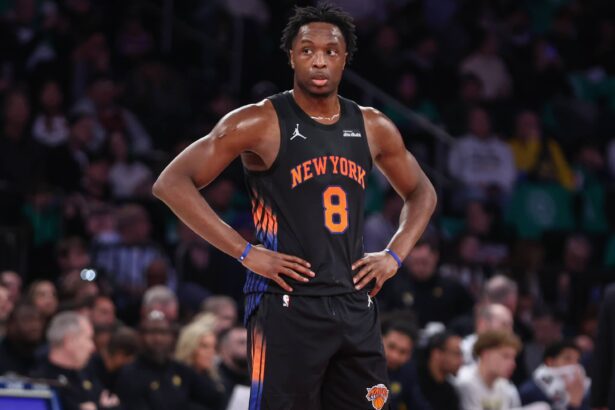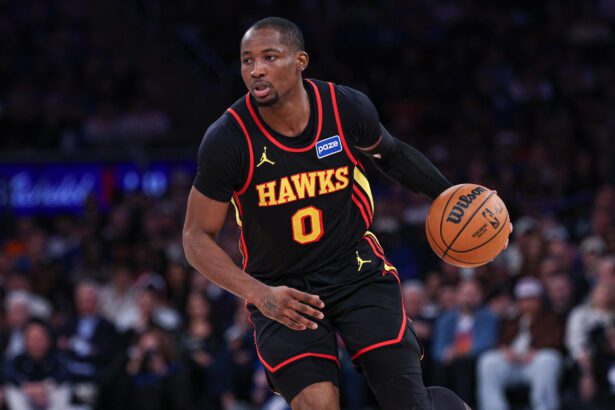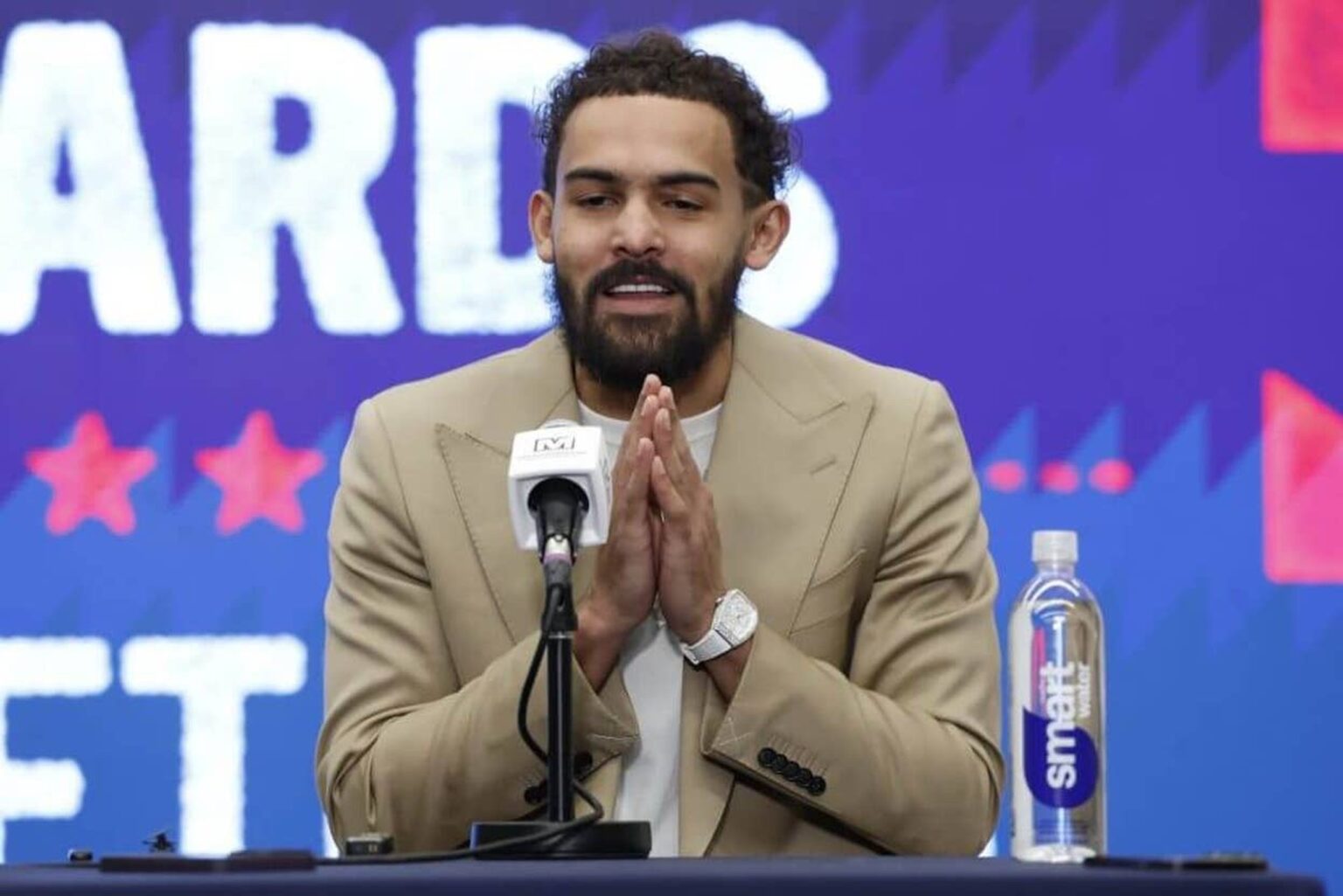
Anthony Davis gave the Wizards a needed jolt when they paired him with Trae Young at the trade deadline. But the early message around this roster is simple: two big names are not enough.
The Wizards still finished 17-65, the worst record in the NBA, and Davis did little to hide that he wants clarity on where this is going. At his season-ending availability, Davis joked that he is staying because he is under contract, but he also said he wants to talk with the front office “sooner rather than later” about the plan to turn the Wizards into a contender.
That is not a trade request. Still, it is the kind of public pressure that quickly creates league-wide speculation about whether he could eventually push for a move if the roster does not improve fast enough.
That is why this offseason is so vital. The Wizards already made their first swing by landing Trae Young, and the front office saw both Young and Davis as part of the next step in their rebuild. Now the next job is obvious: find another real difference-maker who can raise the floor, ease the burden on Young and Davis, and make the team look more serious in the short term.
If the Wizards want to keep Davis bought in, they need more than patience and internal development. They need another star-level piece, or at least a high-end starter, to prove this project is moving toward winning and not just collecting names.
6. Rui Hachimura
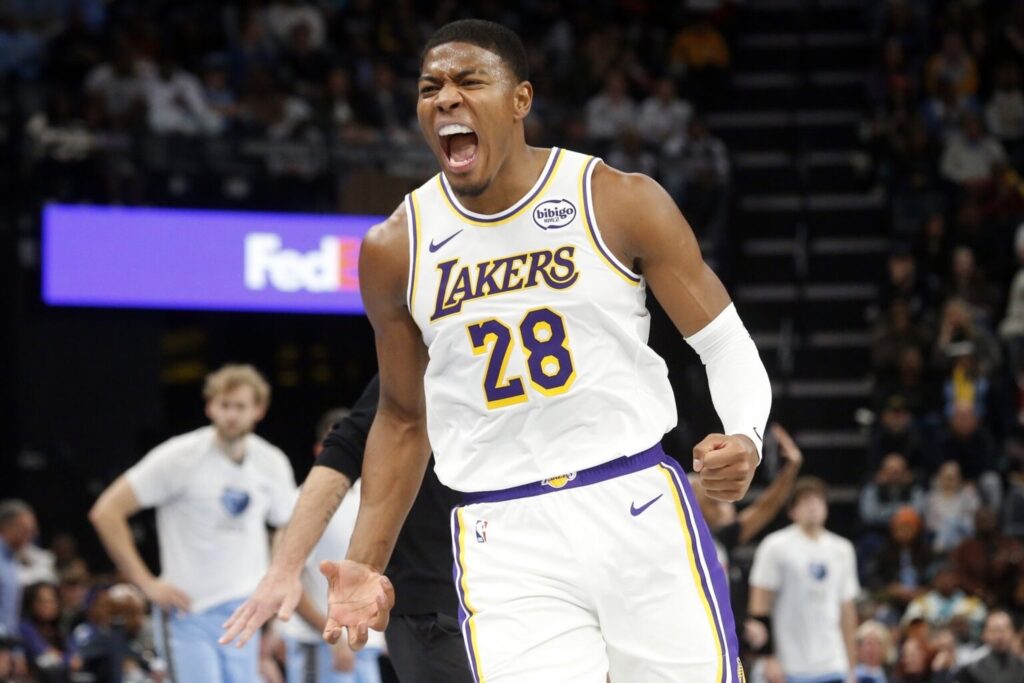
2026 Free Agent
Rui Hachimura is not the biggest name on the market, but he may be one of the cleanest fits for the Wizards. He is set to hit 2026 unrestricted free agency after finishing an expiring deal worth $18.3 million, and that matters because the Wizards do not need another long, risky bet. They need a forward who already knows the organization, can play next to stars without needing the ball all the time, and can give the roster more size, shooting, and stability.
Hachimura checks those boxes. The Wizards originally drafted him, and his 2025-26 season with the Lakers showed the same core value he has long carried: efficient scoring, real strength at forward, and low-maintenance offense. The numbers are solid, even if they are not flashy.
Hachimura averaged 11.5 points, 3.3 rebounds, and 0.8 assists in 2025-26 while shooting 51.4% from the field and 44.3% from three. That last number is the key one. Put that kind of frontcourt spacing next to Anthony Davis, and the fit gets easier right away. Put him next to Trae Young, and the offense gets another reliable catch-and-shoot option who can also attack a closeout and finish through contact.
Hachimura would not fix everything. He is not a primary creator, and he is not the kind of defender who changes a scheme by himself. But the Wizards do not need him to be that. They need him to be a real starting-caliber forward who can score 12 to 15 points, guard bigger wings, and keep the floor open around Davis and Young. For a team trying to move from bottom-feeder to credible playoff group, that is a big upgrade, even if it is not the flashy move.
5. Norman Powell
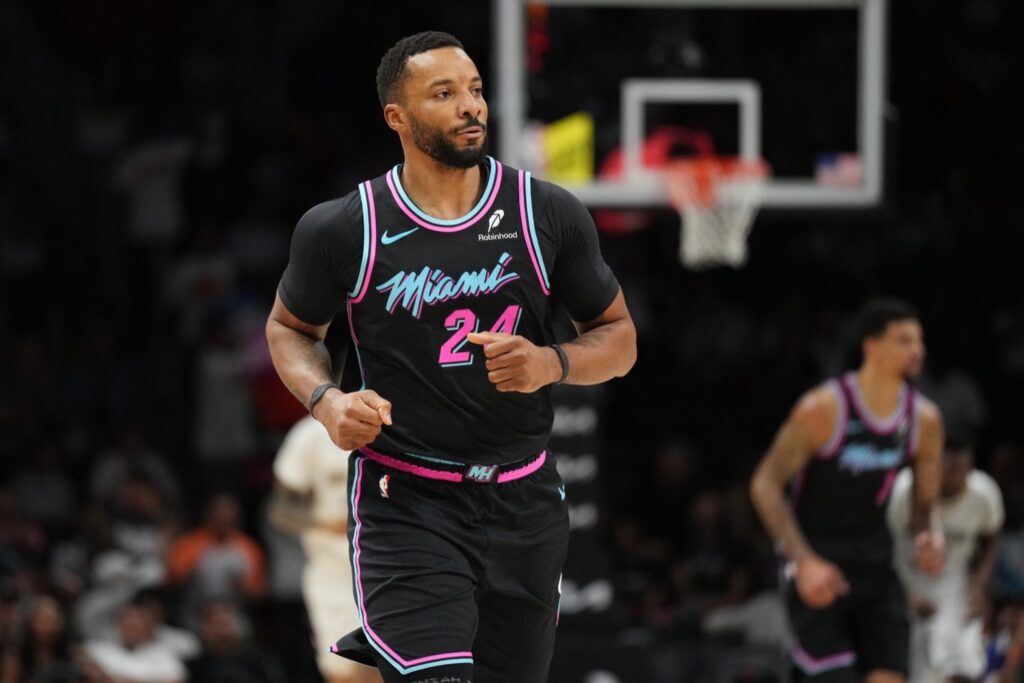
2026 Free Agent
Norman Powell is the kind of target contenders usually chase, which is exactly why the Wizards should be aggressive. Powell is heading into 2026 free agency after a 2025-26 season in which he earned his first All-Star selection with the Heat.
He also made $20.5 million this season, so any serious offer from the Wizards probably starts with that number. A short deal in the range of about $22 million per year would make sense, especially for a veteran scorer entering his age-33 season who may value strong annual money over a very long contract. That is not a report. It is the logical market range based on his current salary, age, and production.
Powell’s case is easy to understand. He averaged 21.7 points, 3.5 rebounds, and 2.5 assists in 58 games for the Heat while shooting 47.0% from the field and 38.0% from three. That is real scoring juice. For the Wizards, the appeal is obvious. Young can run the offense. Davis can anchor the frontcourt. What the roster still needs is another perimeter scorer who does not freeze when the game gets tight. Powell can create his own shot, punish weak closeouts, score from deep, and survive on or off the ball.
He would not be a long-term face of the franchise, but he could be the clean third scorer that makes this whole build look more serious. And from Powell’s side, the sales pitch is there too: a major role, big money on a shorter deal, and a chance to play next to two stars instead of carrying too much scoring by himself. If the Wizards want a move that raises their floor fast, this is one of the most realistic swings on the board.
4. Peyton Watson
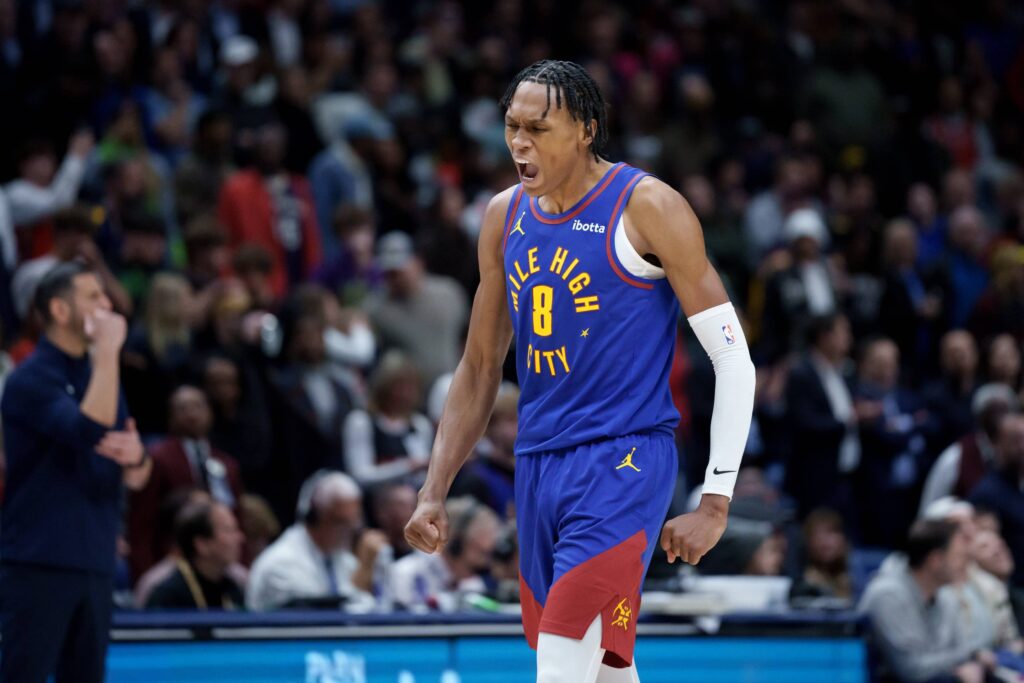
2026 Restricted Free Agent
Peyton Watson is one of the best realistic upside swings the Wizards could make. He is headed for restricted free agency after finishing the last season of his rookie deal, which paid him $4.36 million in 2025-26. The bigger point is the pressure on the Nuggets.
The Nuggets are already projected to be about $10.4 million over the first apron and only about $2.6 million below the second apron for 2026-27, while also carrying major money for Nikola Jokic, Jamal Murray, Aaron Gordon, and Cameron Johnson. That is why Watson is not a normal restricted free agent. They can match, but keeping him gets expensive fast unless the Nuggets move a bigger contract, such as Johnson’s $21.1 million salary or Gordon’s $22.8 million figure. That is the opening for the Wizards.
The appeal is not hard to see. Watson averaged 14.6 points, 4.9 rebounds, and 2.1 assists this season while shooting 49.1% from the field and 41.1% from three. Then came the real breakout stretch. In January 2026, he averaged 21.9 points, 5.5 rebounds, and 3.0 assists. In games without Nikola Jokic this season, Watson put up 22.1 points, 5.8 rebounds, and 2.8 assists across 15 games.
That is where this stops being just a 3-and-D flyer. The defense is already his calling card. The length is great. The weak-side rim protection is impressive. But the important development was the on-ball creation. Watson showed he can attack a closeout, get downhill, finish above traffic, and hold offense together for stretches instead of only feeding off stars.
For the Wizards, that profile makes a lot of sense. They already have Trae Young to organize the offense and Anthony Davis to anchor the frontcourt. What they still need is a young wing with real defensive range and room to grow into more. Watson fits that better than most names on this list.
A Mikal Bridges prototype is aggressive, but the template is there: long wing, disruptive defender, improving shooter, and more self-creation than people expected. The Wizards no longer project to have major cap room after the Davis and Young moves, but ESPN’s Bobby Marks reported they should still have the non-tax midlevel exception, projected at around $15.1 million.
That may not be enough to scare the Nuggets in case they clear money elsewhere, but if they do not, Watson is exactly the type of offer-sheet target worth forcing them to think hard about.
3. Dillon Brooks
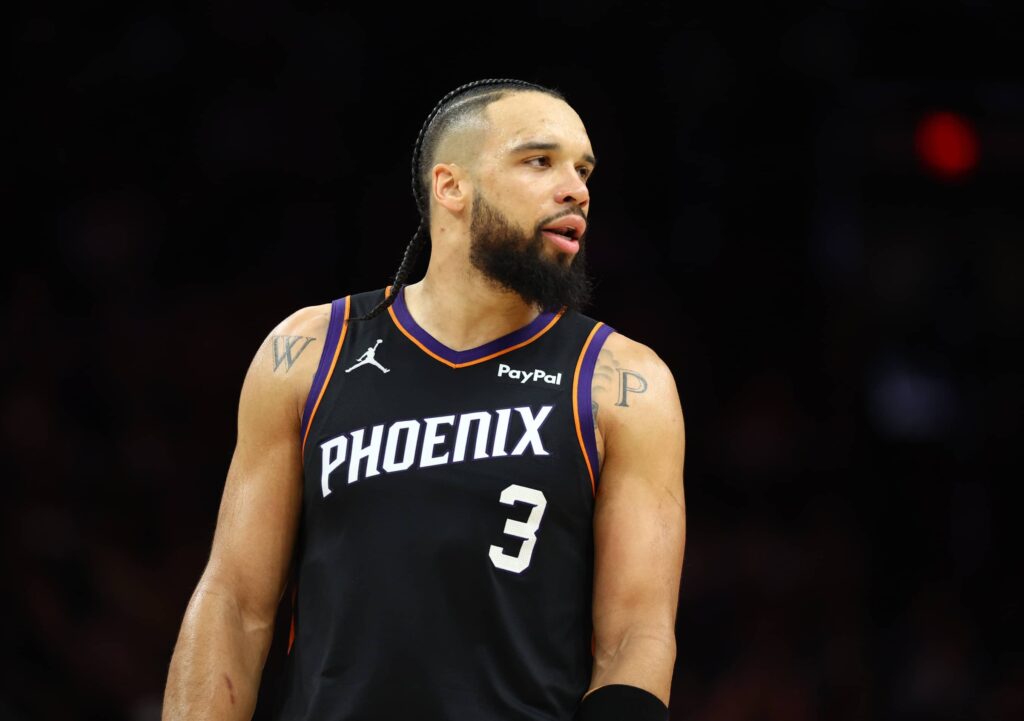
Washington Wizards Receive: Dillon Brooks
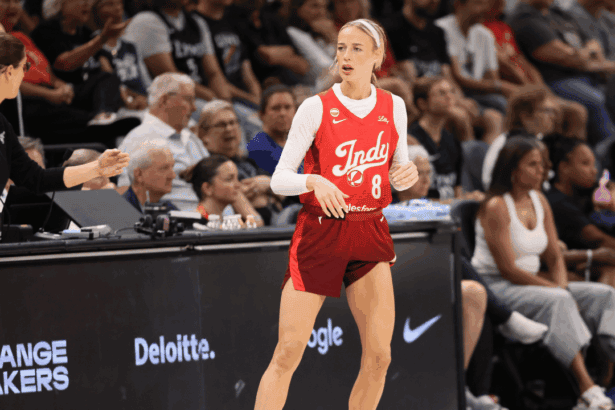
Phoenix Suns Receive: Bilal Coulibaly, Jaden Hardy, Cam Whitmore
This is the kind of trade that would tell the league the Wizards are done waiting. Dillon Brooks is not a developmental bet. He is a ready-made starter who brings defense, edge, and scoring to a team that already has Trae Young and Anthony Davis handling the star burden.
The Suns finished 45-37 and grabbed the No. 7 seed in the West, and Brooks was a real part of that. He averaged 20.2 points, 3.6 rebounds, and 1.8 assists in 2025-26 while shooting 43.5% from the field and 34.5% from three. He is also under contract for $21.1 million in 2025-26 and $20.0 million in 2026-27, which gives the Wizards short-term control without locking themselves into a massive long deal.
The logic from their side is straightforward. Bilal Coulibaly still has clear value, but the offensive growth has been slower than hoped. He averaged 11.7 points, 4.3 rebounds, and 2.6 assists this season, but he shot 42.5% from the field and 31.9% from three, and he still looks more like a long-term project than a winning-now wing.
Brooks is the opposite. He can take the toughest perimeter assignment, play with force, hit open threes, and give the Wizards a much harder identity on the wing. Next to Young, that is massive because this team needs more point-of-attack resistance. Next to Davis, Brooks can pressure the ball and let Davis clean up behind the play instead of covering every mistake. For a team trying to pivot toward the playoffs, Brooks is a cleaner fit right now than waiting on Coulibaly’s offense to arrive.
The financial side also makes sense in broad terms. Coulibaly is on a $7.28 million rookie-scale deal, Jaden Hardy is at $6.0 million, and Cam Whitmore is at $3.54 million and likely to become a sign-and-trade, so the outgoing package gives the Wizards a workable path toward Brooks’ salary, even if a small extra piece would likely be needed to complete the financial outgoing number.
That is manageable if the Wizards believe Brooks can be the missing two-way wing around their stars. He is older than the rest of this core, but that is also the point. The Wizards do not need another maybe here. They need a real NBA starter who can help them win games now. Brooks would do that.
2. Nickeil Alexander-Walker
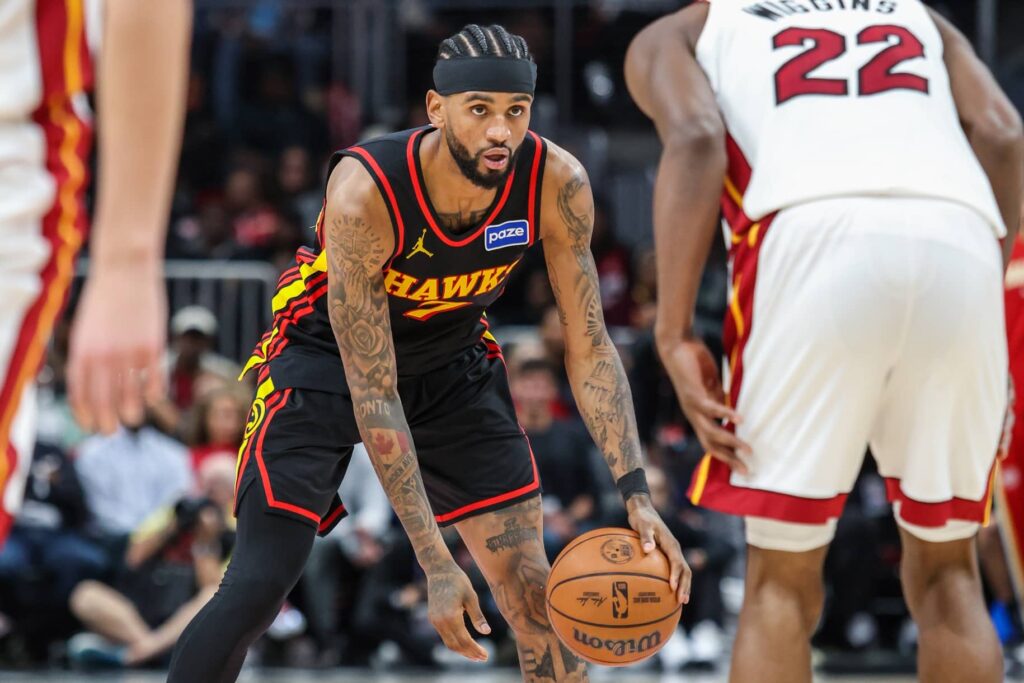
Washington Wizards Receive: Nickeil Alexander-Walker
Atlanta Hawks Receive: Bilal Coulibaly, Jaden Hardy, 2026 first-round pick (via Suns), 2027 second-round pick, 2027 second-round pick (via Warriors or Suns)
Nickeil Alexander-Walker looks like the most explosive win-now target left on the board. The Hawks went 46-36, and Alexander-Walker was one of the biggest breakout guards in the league, averaging 20.8 points, 3.4 rebounds, 3.7 assists, 1.3 steals, and 3.2 made threes per game while shooting 45.9% from the field.
That is enticing for the Wizards because this is not a pure specialist. He can defend at the point of attack, work off the ball, and still give you enough secondary creation when Trae Young sits or when a possession gets stuck.
The fit is obvious. Young needs a guard next to him who can take harder defensive assignments and still punish defenses without dominating the ball. Alexander-Walker does that. He can chase guards, switch up a spot, space the floor, and attack a bent defense. He also fits better than waiting on Bilal Coulibaly’s offense to fully arrive.
Coulibaly still has real value, but he finished 2025-26 at 11.7 points on 42.5% shooting, and he remains much more projection than finished product on that end. For a Wizards team trying to keep Anthony Davis bought in, Alexander-Walker is the more reliable player right now.
The money is another reason this works. Alexander-Walker is on a four-year, $60.6 million deal, fully guaranteed, with salaries of $15.16 million this season, $14.40 million in 2026-27, $15.16 million in 2027-28, and a $15.92 million player option for 2028-29. That is a very reasonable contract for a starting two-way guard in his prime.
Bilal Coulibaly at $7.28 million and Jaden Hardy at $6.0 million get the Wizards close enough to build a workable structure, and the picks are the real cost here. That is a real price, but it is also the type of price teams pay when they want an immediate rotation upgrade instead of another long development curve.
1. DeMar DeRozan
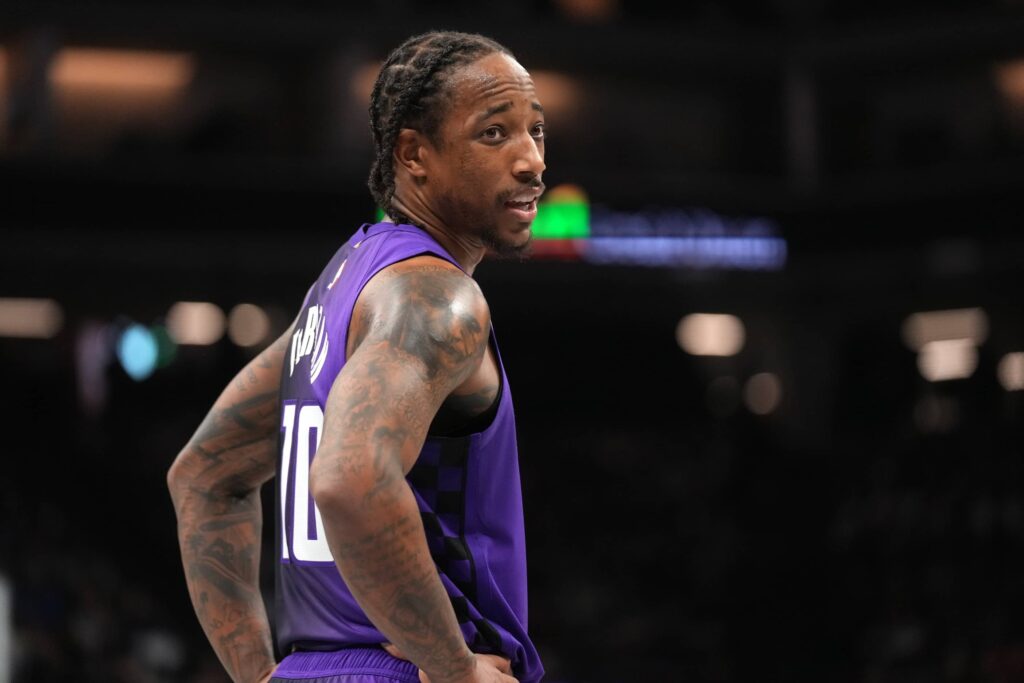
Washington Wizards Receive: DeMar DeRozan
Sacramento Kings Receive: Jaden Hardy, Cam Whitmore, Justin Champagnie, Anthony Gill, 2027 first-round pick (lottery protected)
DeMar DeRozan is the kind of move a team makes when it wants its offense to stop falling apart in the half-court. The Kings went 22-60, so they should pivot toward younger pieces instead of holding another veteran scorer.
DeRozan still produced, though. He averaged 18.4 points, 2.9 rebounds, and 4.1 assists in 2025-26 while shooting 49.7% from the field, and he remained one of the league’s most dependable late-clock shot makers. For the Wizards, Young and Davis cannot be the only two players that defenses worry about when the game slows down.
The fit is more about role than volume. DeRozan would not come in to carry the offense every night. He would come in to stabilize it. The Wizards need another real half-court creator, someone who can get to his spots, punish switches, and keep the second unit from turning into a mess when Young sits.
DeRozan can still do that. He is not the cleanest spacing fit, and he is not fixing the defense by himself, but that is why Davis is here. If the Wizards want another scorer who can create his own shot without needing 20 pick-and-rolls a night, DeRozan is still one of the better realistic options. His game ages well because it is built on craft, footwork, and control, not speed.
Financially, this is a very manageable veteran swing. DeRozan is at $24.57 million in 2025-26 and $25.74 million in 2026-27. Hardy makes $6.0 million, Champagnie is at $2.35 million, Gill carries a $2.30 million cap hit, and Whitmore was at $3.54 million before this structure. But since Whitmore is expiring, the cleanest path is a sign-and-trade starting around $5.0 million, which pushes the outgoing money into a more workable range without touching the bigger contracts on the roster.
That is the key here. The Wizards would be using smaller deals and one protected first-round pick to buy a proven scorer instead of sacrificing a core star piece. If the goal is to show Davis this team is serious right now, this is the most direct move on the list.