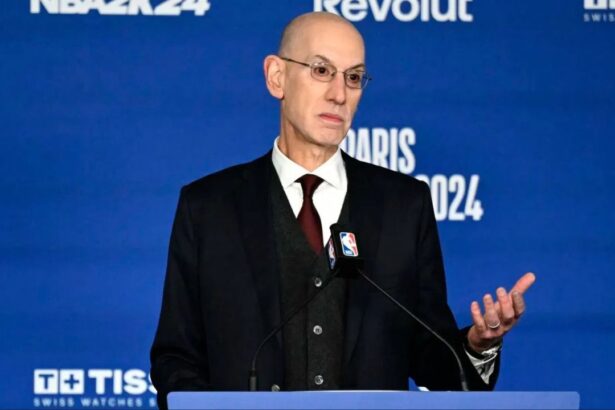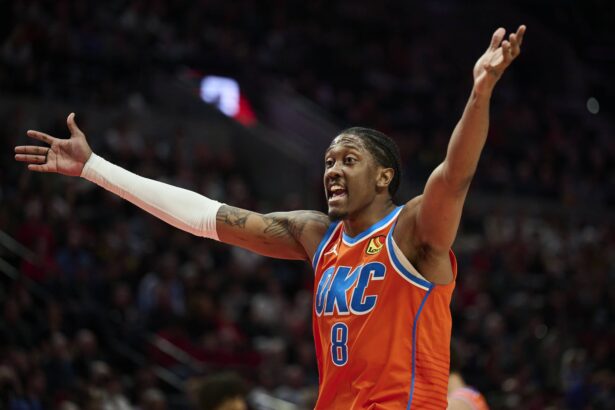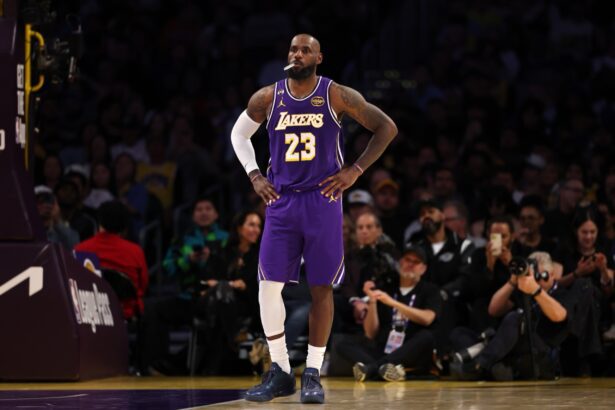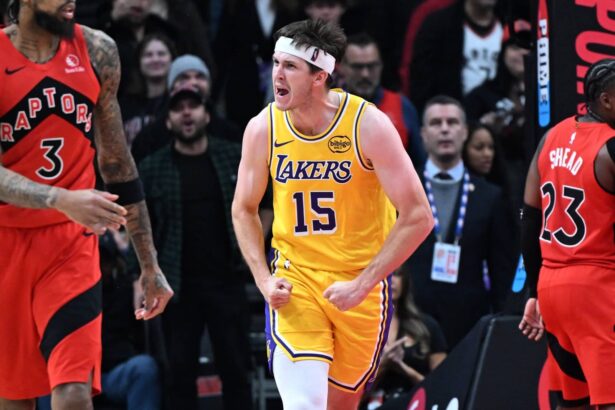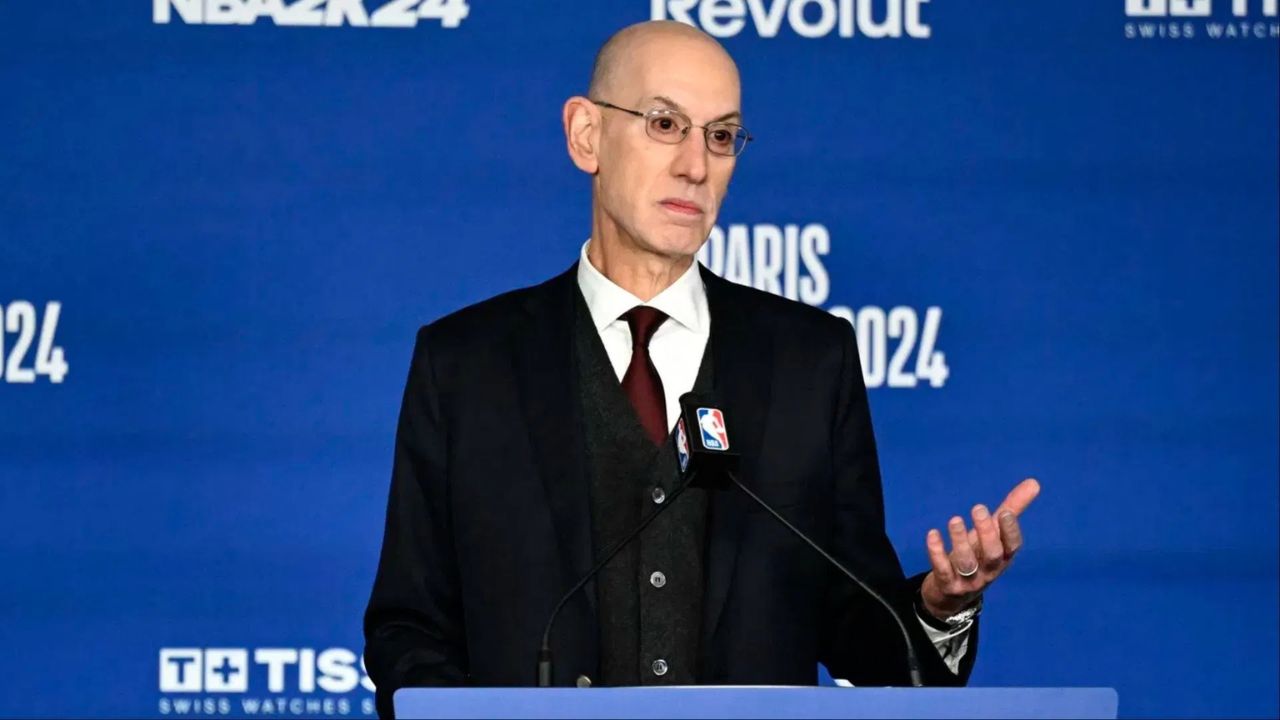
The NBA commissioner, Adam Silver, recently appeared on ESPN’s Pat McAfee Show and said it is next to certain that Artificial Intelligence will be introduced into the league’s officiating to reduce the rising concerns of mistakes and flopping woes.
“It’s been a conversation. I would only say that there’s a difference between selling a call, exaggeration, and a true flop, which is where you’re actually fooling the referees.”
“I think sometimes even as I sit in the stands at games, players may be falling, players may be reacting to a call, but then to me, if they’re not fooling the referees, it’s like, okay, that’s like they’re the players are taught to sell calls these days,” said Silver.
“Can officiating get better? Of course. We’re always working on that. Can officials get fooled occasionally? We’re always looking for that as well. But I think the officiating is incredible.”
“I will also add one other piece to it because I know there’s always controversy out there around certain calls. There’s one you were talking about on your show earlier today.”
“And I think in terms of replay, I think we’re going to get to the point fairly quickly where, for example, out of bounds, the very play that you were talking about, [Chet Holmgren’s foot].”
“And I think where just like, you know, you’re a tennis fan, and they have what they call Hawkeye, and it’s like the animation, and you quickly see, you know, where the line was, and the oos and aas of the crowd had touched the line, or it was out of bounds. We’re going to move to a system like that, where that whole category of calls will be automatic,” the commissioner further explained.
“Where you know it’s going to be, you know Laker ball, Knicks ball, whatever it is, you know Thunder ball, you know those calls will be done by an AI automated system with cameras lined around the court.”
“And it’ll take all those so-called objective calls out of the hands of the referees. It’ll just be it’ll be instantaneous. This will be automatic. Just play on, you know, let’s go, you know, Spurs inbound, and you and you’ll move on.”
“You won’t have to deal with challenges on those calls, but it’ll also allow the officials on the more difficult subjective calls to give their full attention to those where, you know, because there’s often contact on every play. It doesn’t mean there’s a foul. And they’re trying to measure, sort of, whether that contact is impeding the player, how hard that contact is.”
“It’s something that can’t just be done on camera. They’re actually feeling the contact because they’re there on the floor with the players. So anyway, I think there is a technology that will really be helpful here,” Silver concluded.
While Commissioner Silver did not confirm when the system will be implemented, he has made his intentions fairly clear to introduce AI not just in the fan experience but also in the officiating across the league.
Just last night, there were two controversial talking points in Game 5 of the Thunder–Spurs series that have raised this discussion. During the third quarter, in the final minute, the ball went out of bounds off of Chet Holmgren, and Mitch Johnson was unable to call a challenge on it due to a technicality in the game.
Mitch Johnson asks for a coach’s challenge right in front of the referee James Capers, but he doesn’t call it.
Instead, he receives a technical foul.
The Spurs would have won the challenge, as the refs gave the ball to the Thunder after it went out of bounds off Chet Holmgren.… pic.twitter.com/Flh2KundBv
— MrBuckBuck (@MrBuckBuckNBA) May 27, 2026
Due to the sense of urgency, the game proceeded, and Johnson was livid that, despite having signaled a challenge, the officials did not award him one simply because he did not call a timeout before calling for a challenge. Johnson was livid and received a technical foul for his reaction.
This incident could have been avoided if there had been a system that instantly informed the officials that the ball clearly went off Chet Holmgren, and their decision was incorrect.
Moreover, it sounds like Adam Silver intends to let the human element of officiating focus on the contact between players so that they can work towards eradicating flopping altogether.
The second talking point was whether there was a disparity between what the officials were allowing as permissible contact for one team over another. On one side, the Thunder’s supporters feel that since there is a biased narrative against Shai Gilgeous-Alexander’s ability to draw fouls, the officials are allowing defenders to be too aggressive on him.
On the other side, Stephon Castle claimed after Game 5 that the officials were not allowing the Spurs as much leeway in terms of physical aggressiveness as they did to the Thunder.
Therefore, in an attempt to eliminate flopping from the sport altogether, reducing an official’s workload to focus on the contact between players will be a step forward in the right direction towards solving the problem.