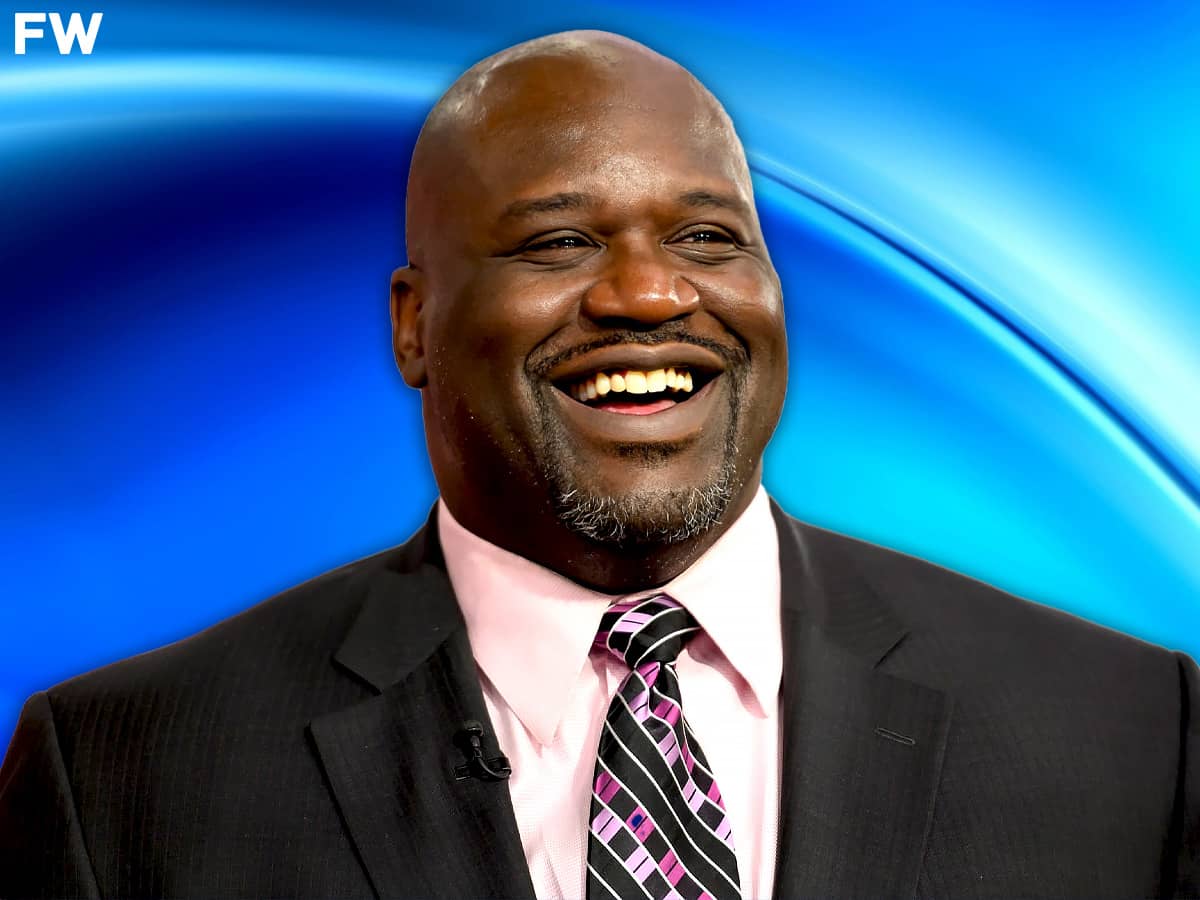
Shaquille O’Neal has sparked fresh debate after sharing a controversial top 25 greatest players list on his Instagram story, originally compiled by USA Today. While O’Neal did not add commentary, the rankings quickly drew attention for several placements that challenge widely accepted historical consensus.
1. Michael Jordan
2. LeBron James
3. Kobe Bryant
4. Stephen Curry
5. Kareem Abdul-Jabbar
6. Magic Johnson
7. Larry Bird
8. Bill Russell
9. Wilt Chamberlain
10. Shaquille O’Neal
11. Tim Duncan
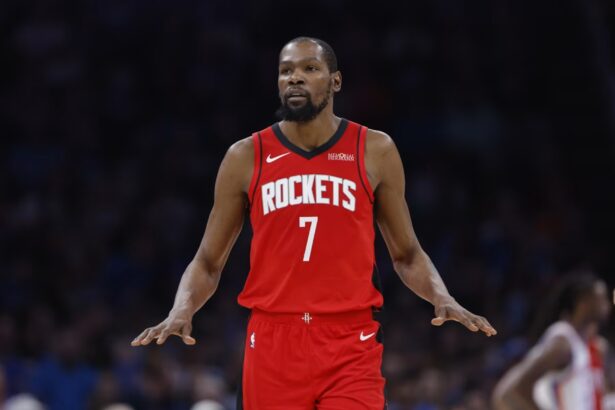
12. Kevin Durant
13. Allen Iverson
14. Oscar Robertson
15. Elgin Baylor
16. Jerry West
17. Julius Erving
18. Moses Malone
19. Kevin Garnett
20. Charles Barkley
21. Karl Malone
22. David Robinson
23. Isiah Thomas
24. John Havelicek
25. George Mikan
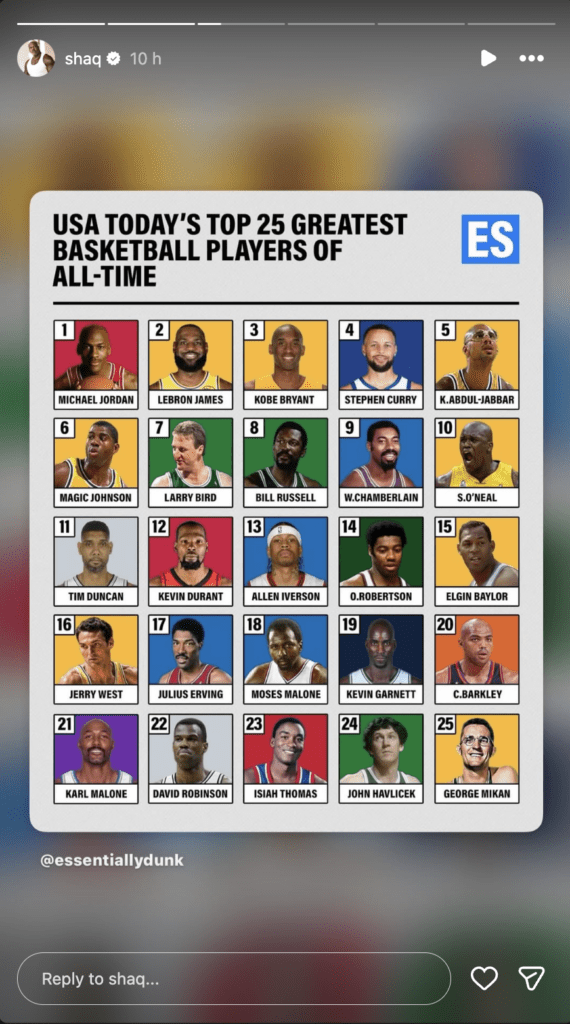
At the top, Michael Jordan holds the No. 1 spot, followed by LeBron James and Kobe Bryant. That order aligns with many modern debates. However, the first major talking point comes at No. 4, where Stephen Curry is placed ahead of several all-time giants.
Curry’s ranking above Kareem Abdul-Jabbar, Magic Johnson, Larry Bird, and Bill Russell has driven the strongest reactions. While Curry’s impact on modern basketball is undeniable, especially with his role in the three-point revolution, placing him this high remains a bold stance. Kareem, ranked fifth, carries six MVP awards and the longest sustained dominance in league history, while Russell’s 11 championships and defensive legacy are often viewed as unmatched.
O’Neal himself appears at No. 10, which has also raised eyebrows. Given his peak dominance, including three straight Finals MVPs and a stretch where he was widely considered the most unstoppable force in the league, many expected him to rank higher. Players like Tim Duncan at No. 11 and Kevin Durant at No. 12 follow closely, reflecting a mix of longevity and scoring excellence.
Further down the list, the inclusion and positioning of certain players have fueled additional debate. Allen Iverson at No. 13 stands out as one of the more aggressive placements, given his lack of championships compared to others ranked below him. Legends like Oscar Robertson, Jerry West, and Julius Erving fall into the mid-to-late teens, which some fans view as undervaluing their historical impact.
The back end of the list includes players such as Charles Barkley, Karl Malone, David Robinson, and Isiah Thomas, along with older era legends like George Mikan. While their inclusion reflects respect for different eras, the ordering has led to questions about the criteria, especially when comparing players across generations with vastly different styles and competition levels.
Shaq’s decision to share the list without explanation leaves room for interpretation. In the past, he has consistently pushed for Bryant’s place in the GOAT debate and has recently supported Curry’s inclusion in that conversation as well. His history of sharing rankings, including a top 100 list from Bleacher Report, suggests he enjoys engaging with these discussions, even when they spark disagreement.
Ultimately, the reaction to this list highlights how subjective all-time rankings remain. Different eras, playing styles, and team contexts make direct comparisons difficult. What Shaq’s post has done is reignite a conversation that never fully settles, where every ranking reflects not just achievements, but a personal perspective on greatness.