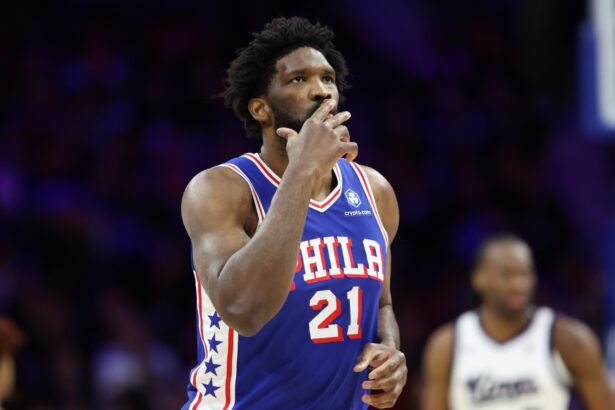
The Joel Embiid trade noise is still early, but the Mavericks name is now in the mix for a real reason. FortyEightMinutes reported in a June 8 post the following:
“If Philadelphia moves on from Joel Embiid under new GM Mike Gansey, they’ll likely retool around Tyrese Maxey and VJ Edgecombe… One front office member threw out the Mavs as a possible suitor for Embiid if Philly goes that route.”
Gansey has said the public part right now, saying the 76ers still have Embiid and that he has had good talks with him. But the roster situation is not simple after a 45-37 season, a No. 7 seed, and a second-round sweep.
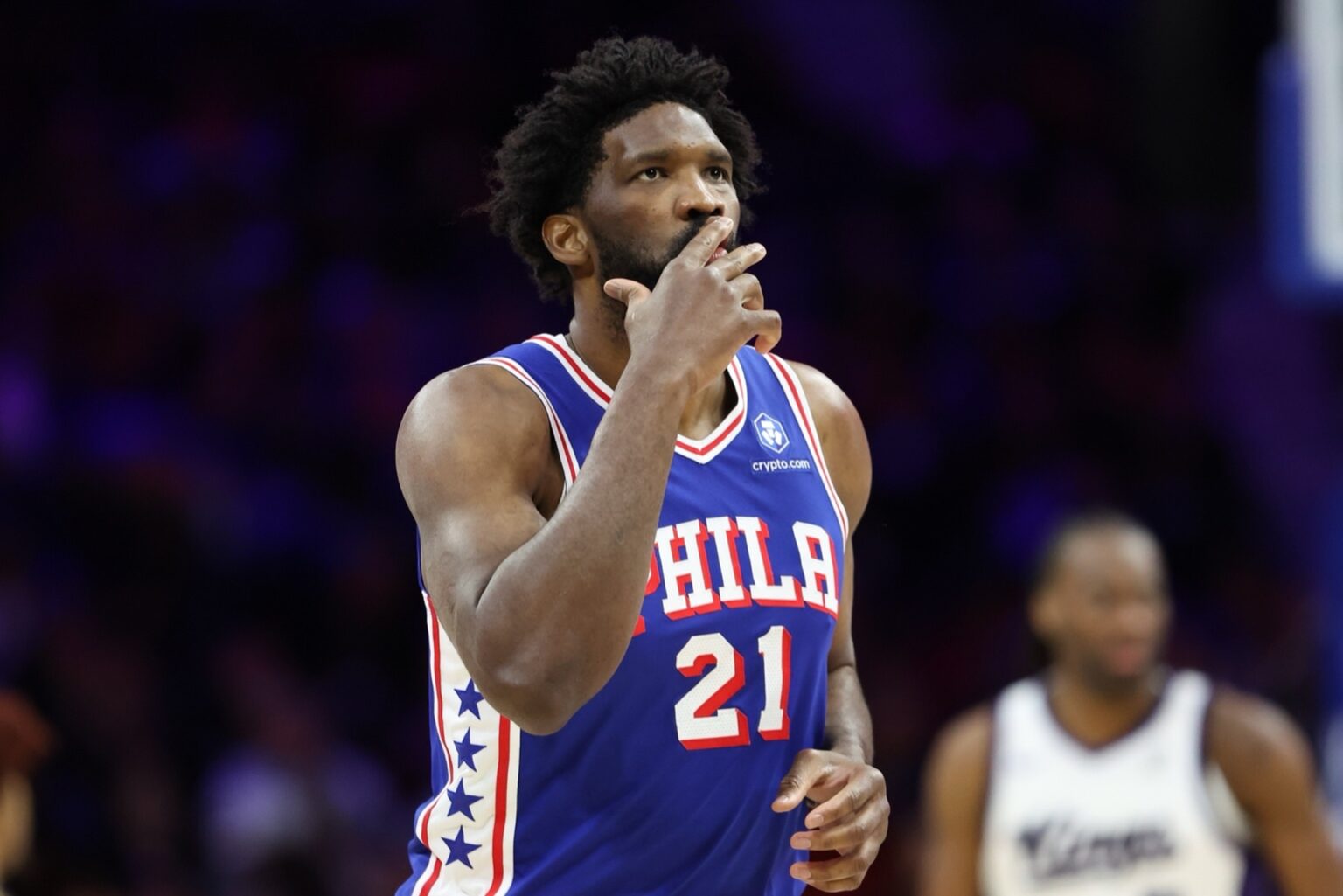
Embiid is still a dominant player when he is on the floor. He averaged 26.9 points, 7.7 rebounds, and 3.9 assists on 48.9% from the field this season. The problem is that he played only 38 games, and his contract is massive. That is why every Embiid conversation now has two sides. One side is the talent. The other side is the body, the money, and how long the 76ers want to keep building around him with Tyrese Maxey and VJ Edgecombe already in place.
For the Mavericks, this is where it gets interesting. They already moved Anthony Davis to the Wizards in February, added draft capital, and shifted more toward Cooper Flagg, who just had a Rookie of the Year campaign with 21.0 points, 6.7 rebounds, and 4.5 assists per game. If the Mavericks want to go big again, Embiid would be the biggest swing possible. It would also be a huge injury bet for a rebuilding squad.
A Potential Trade Framework
Dallas Mavericks Receive: Joel Embiid
Philadelphia 76ers Receive: Daniel Gafford, Klay Thompson, P.J. Washington, No. 9 pick 2026, No. 30 pick 2026, 2029 first-round pick (Lakers), No. 48 pick 2026 (Suns)
Financially, this framework can work. Daniel Gafford is set to make $17.3 million in 2026-27, Klay Thompson is at $17.5 million, and P.J. Washington is at $19.8 million. That gives the Mavericks around $54.5 million in outgoing salary. Joel Embiid is around $59.5 million for 2026-27, so the Mavericks would be taking back close to $5.0 million more than they send out.
That should be inside the salary-matching window if the Mavericks stay below the first apron after the deal. The small detail is Thompson’s 15% trade bonus, so the final math may need a waiver, a small adjustment, or another minor salary piece. But the main structure is not the problem.
The 76ers would also get two first-round picks in the 2026 draft, with the Mavericks’ own No. 9 pick and the No. 30 pick that originally comes from the Thunder. They would also get the 2029 first-round pick from the Lakers, which gives them one longer-term asset after the Embiid contract timeline. The second-round piece would be the No. 48 pick in the 2026 draft via Suns.
Why The 76ers Would Let Embiid Go
The 76ers wouldn’t move Joel Embiid because he is finished. That is not the case. They would move him because the roster is stuck between two timelines, and that is usually where expensive teams get into trouble.
The new front office has a reason to think about it. Mike Gansey replaced Daryl Morey, and new decision-makers usually want their own plan. Publicly, Gansey has backed Embiid. But he also said the 76ers aren’t a championship-caliber team after getting swept in the second round. That is the more important part.
The 76ers were 45-37 and finished No. 7 in the East. They were not bad. They won a 3-1 comeback series against the Celtics. But they also ended the year with a negative net rating and were not elite on either side. Their regular-season offensive rating was 115.4, and their defensive rating was 115.6. That is middle-level team data, not title contending.
The argument for a reset is stronger because Tyrese Maxey is already good enough to be the main piece of the next version. He averaged 28.3 points, 4.1 rebounds, and 6.6 assists, with 46.2% from the field and 36.7% from three. That is a real No. 1 guard profile. VJ Edgecombe also gave the 76ers a serious rookie season, with 16.0 points, 5.6 rebounds, and 4.2 assists. That gives them a young backcourt with scoring, speed, pressure, and enough size to build around.
The other side is the veteran money. Embiid and Paul George are still high-level names, but both missed a lot of time. George played 37 games and averaged 17.3 points, 5.3 rebounds, and 3.6 assists. Embiid played 38 games. That is too little availability from the two biggest veteran salaries on the roster.
That is why the 76ers could listen. Not because Embiid has no value, but because his value is more complicated now. If they can turn him into three rotation players, multiple first-round picks, and one second-round pick, they get more depth and more flexibility around Maxey and Edgecombe. It would not be a full tank. It would be a retool with younger legs, more draft control, and less dependence on one injured superstar.
How Embiid Would Fit With The Mavs
For the Mavericks, the basketball fit is easy. The timing is the problem.
Embiid would give them the one thing they did not have this season: a true half-court offensive anchor. The Mavericks finished 26-56, No. 12 in the West, with the No. 27 offense in the league. Their offensive rating was 111.2, and that explains a lot. They played a full season without enough stable creation, without enough easy points, and without enough pressure on the rim.
Cooper Flagg was already excellent as a rookie. He won Rookie of the Year and gave the Mavericks a new franchise base. But asking a 19-year-old forward to fix a bottom-five offense by himself is not serious. Embiid would change the offensive structure right away. He can score from the post, elbows, face-up spots, and free-throw line. He also pulls help, which would open easier reads for Flagg.
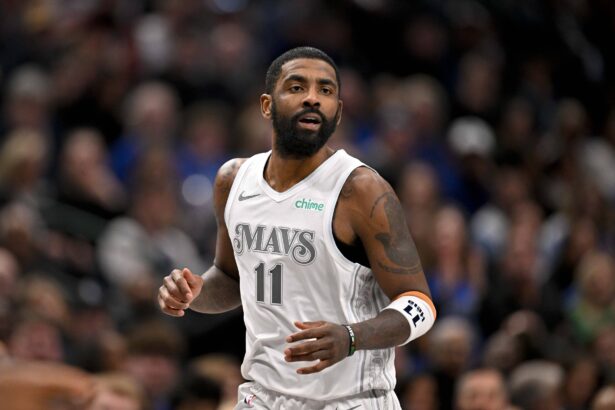
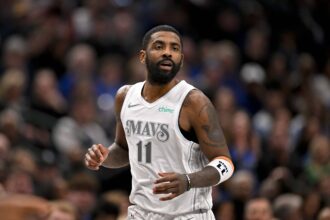
That is the main appeal. Flagg would not have to force every advantage. He could cut more, attack tilted defenses, run in transition, and defend without carrying the whole scoring load every night. Embiid would also give Kyrie Irving a cleaner offensive partner. Kyrie can still create at an elite level when healthy, and his last full season showed that with 24.7 points, 4.8 rebounds, and 4.6 assists on 47.3% from the field and 40.1% from three. A Kyrie-Embiid two-man game would be ugly for defenses.
The frontcourt setup would need work after the trade. Daniel Gafford would be gone, so Dereck Lively II becomes more important as the backup center and injury insurance. That is risky because Lively played only seven games this season before foot surgery. He is expected to be ready for training camp, but the Mavericks can’t just assume 70 games from him. They would need another minimum big or cheap veteran center.
The wing problem is even bigger. Losing P.J. Washington removes the best big forward defender in the deal. Embiid helps the rim protection, but the Mavericks would still need someone to defend strong wings and bigger forwards. That matters in the West, where every playoff team has size.
Still, the ceiling is real. Embiid, Flagg, and Kyrie would give the Mavericks three elite shot-creation points: interior scoring, jumbo forward creation, and guard shot-making. That trio would make them dangerous fast. It just wouldn’t make them safe.
Final Thoughts
This trade is possible, but it doesn’t feel like the right move for the Mavericks.
The reason is simple. They are not one risky star trade away from being a title contender. They just went 26-56, their offense was near the bottom of the league, and their best long-term piece is still a teenager. That should push them toward patience, draft assets, health, and young depth around Flagg.
Embiid would make the Mavericks more interesting right away. He would give them a better offense, a real post hub, and a bigger name next to Flagg and Kyrie. But the cost is too high for where the roster is. Losing three rotation players and four draft assets for a center with major availability questions is not a smart win-now move. It is an all-in move.
The 76ers can justify it because they would be shifting toward Maxey and Edgecombe while getting picks and playable veterans back. The Mavericks can’t justify it as easily. Their job should be to build the next five years around Flagg, not spend most of their flexible trade package on a veteran star who may not line up with that timeline.
So the framework works on paper. It has enough salary, enough draft value, and enough logic for the 76ers. But from the Mavericks’ side, it should stay as a rumor idea, not the real plan.