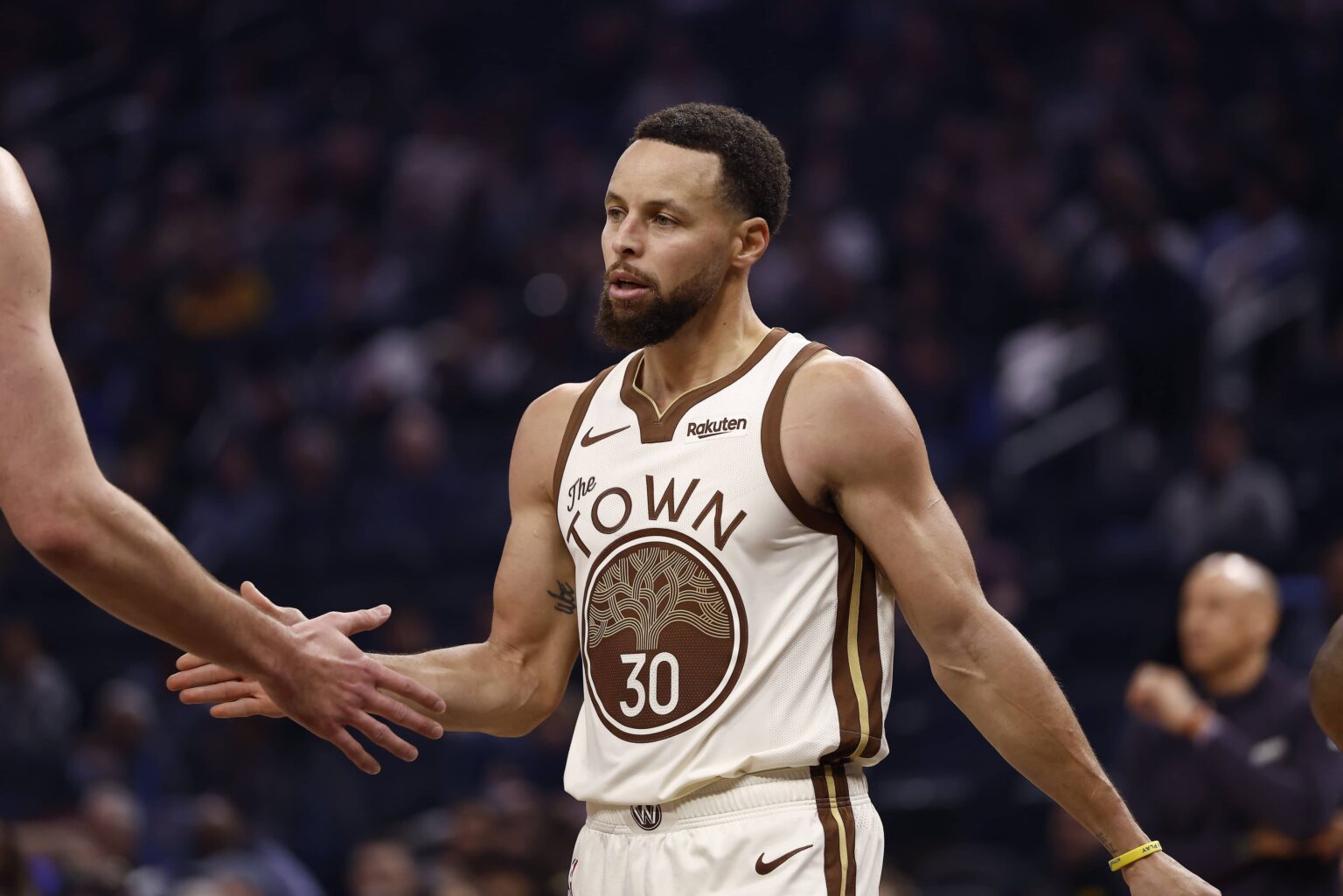
The Warriors enter this deadline stretch sitting at 26-22, eighth in the West, good enough to stay in the mix, but not good enough to feel like a real contender on most nights.
That uncertainty spiked last week when Jimmy Butler suffered a torn right ACL, an injury that will cost him the rest of the 2025-26 season. Then came the reporting that sharpens the conversation from “should they make a move” to “why didn’t they already?”
Marcus Thompson II of The Athletic recently reported that the Warriors’ front office has resisted pursuing certain star trades that Stephen Curry personally advocated for. The implication is not that Curry is dictating the roster, but that there have been moments where the franchise’s caution and its superstar’s urgency have pointed in different directions, and the front office chose caution.
That’s the core idea behind this piece. Since the 2022 title, the Warriors have had multiple windows where a blockbuster could have reshaped the roster around Curry’s remaining prime.
Some were close calls, some were philosophical non-starters, and some became deals other teams completed while the Warriors stayed on the sideline. Thompson’s reporting frames those misses differently: not as hypothetical fan fiction, but as real forks in the road, with Curry’s voice on one side and organizational restraint on the other.
1. Lauri Markkanen: The Blockbuster The Warriors Almost Landed
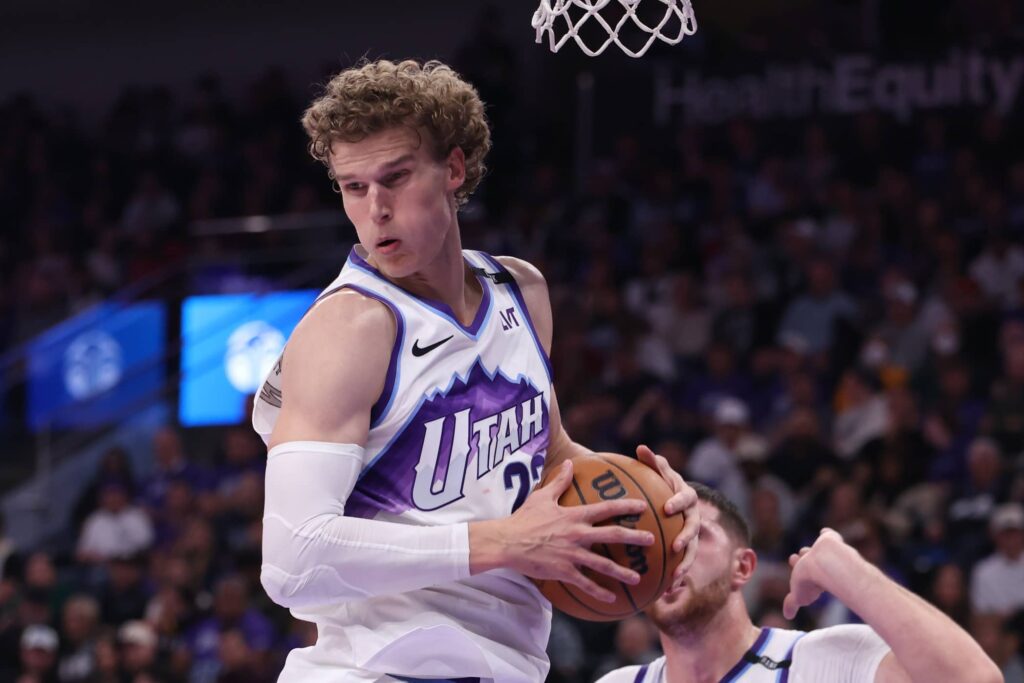
If you’re looking for the cleanest example of a real, tangible blockbuster the Warriors were actively chasing and still couldn’t close, it’s Lauri Markkanen in the 2024 offseason.
The reporting around those talks was unusually specific. Multiple times, Shams Charania reported that the Warriors’ most aggressive offer to the Jazz was built around Moses Moody plus a heavy draft package, multiple first-round picks, multiple pick swaps, and multiple second-round picks.
The core tension was just as clear: the Jazz wanted premium young value back, and the Warriors were protective of Brandin Podziemski in that exact Markkanen conversation.
That’s what made this miss sting. The Warriors weren’t dabbling. They were pressing. But they were also trying to win the negotiation, not just win the player. They were willing to pay a lot in picks, yet they drew a hard line on the young piece(s) the Jazz actually prioritized.
In a market where true floor-spacing, All-Star-caliber frontcourt scorers almost never become available at age 27, that’s how talks die: not because the “concept” doesn’t work, but because the final, painful asset never gets put on the table.
Then the door effectively slammed shut. Markkanen renegotiated and signed a multi-year contract extension with the Jazz in early August 2024. That timing mattered, because it wasn’t just “Markkanen stayed.” The structure of the extension made him ineligible to be traded during the entire 2024-25 regular season, removing the Warriors’ best chance to circle back quickly if the season turned sideways.
Fast forward to now, and the fit looks even more obvious in hindsight. Markkanen is putting up 27.9 points, 7.2 rebounds, and 2.2 assists this season, shooting 48.3% from the field and 36.5% from three. That’s a high-volume spacer with real size who can live at the four, slide to the five in certain looks, and punish switches in a way the Warriors have too often lacked since their last title run.
Meanwhile, the Warriors are sitting in the middle of the West pack, with recent injury turbulence forcing them to scramble for reliable offense and lineup stability. Markkanen was the rare swing that could have raised the ceiling without changing what they are at their core. They just didn’t want to pay the one price that probably would have finished the deal.
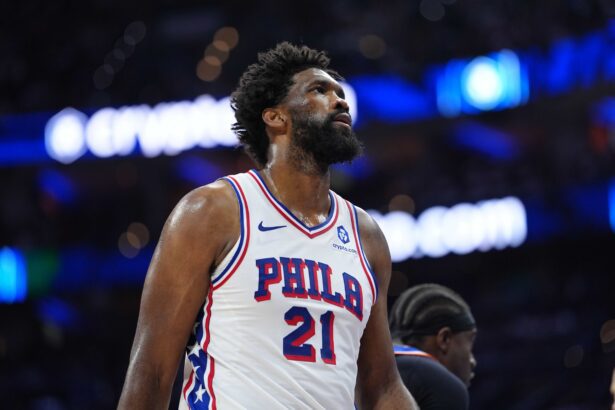
2. The Paul George Sign-And-Trade That Died At The Finish Line
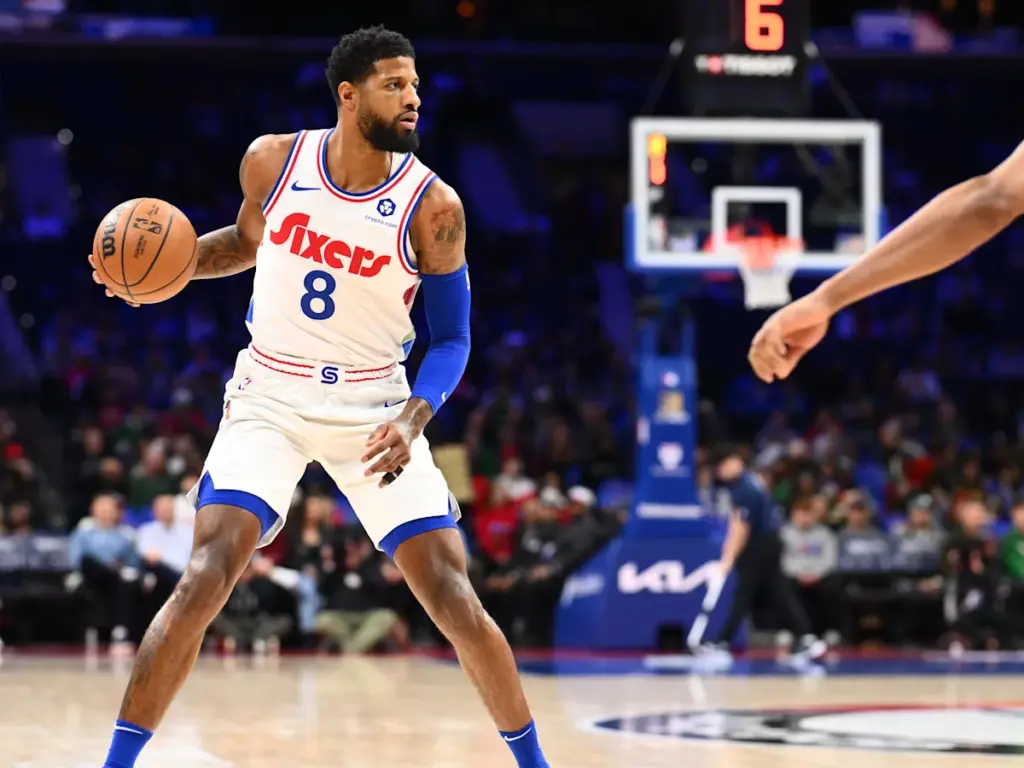
The Paul George pursuit in the 2024 offseason was the kind of swing that rarely becomes available to a team operating without cap space. The path was narrow, but it was real: if George exercised his $48.8 million player option, it would have opened a clean opt-in-and-trade lane for the Warriors to negotiate directly with the Clippers, match salary, and then lock him in with the long-term max commitment he wanted.
From the outside, it looked simple. In reality, it was a ticking clock with multiple pressure points. There were apron complications, roster dominoes, and a negotiation partner that had no incentive to cooperate unless it liked the return.
Reporting at the time framed it as “very serious negotiations” that went right up to the deadline for George’s option decision, with the Warriors believing they were close and willing to authorize the max extension on their end. The problem was the last step, the Clippers never agreed to any version of a trade.
Then the entire mechanism collapsed in one move. George declined the option, which immediately removed the opt-in-and-trade route that would have made him realistically attainable for the Warriors.
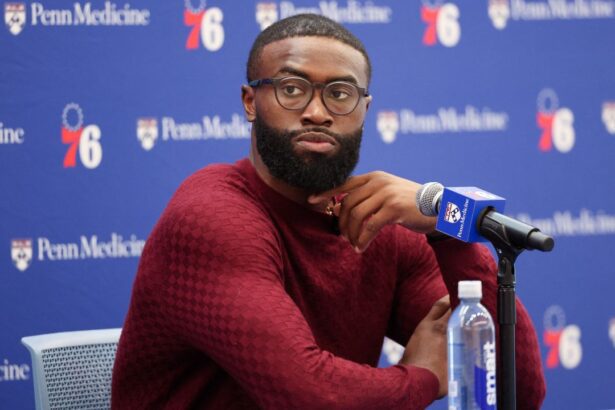
ESPN reported it plainly: once he opted out, the opt-in-and-trade scenario was no longer possible. From there, George entered free agency and ultimately signed a four-year, $212 million max deal with the Sixers.
What makes this miss more than a routine “they tried” story is how clearly the contract dynamics shaped everything. George later explained that he was willing to stay with the Clippers on the same three-year, $150 million structure Kawhi Leonard received, but only if it came with a no-trade clause.
When that wasn’t on the table, George described the negotiations as a stalemate, and he pivoted to securing the four-year, $212 million number. That context matters because it frames the Warriors’ pursuit as a rare opening where a max-level wing could be acquired via trade mechanics, not cap room, and it still required perfect alignment from every party involved.
The on-court appeal is obvious even in a downshifted role this season. George is averaging 15.4 points, 5.3 rebounds, and 3.6 assists, shooting 41.5% from the field, 36.4% from three, and 86.5% at the line. The “miss” here wasn’t about talent evaluation. It was about leverage, timing, and a rival deciding it would rather walk away than help build a different contender.
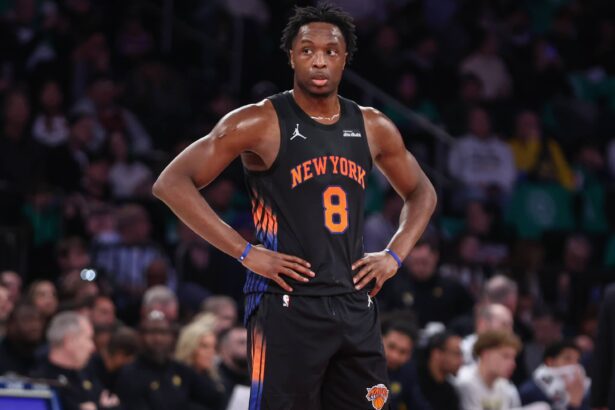
3. The Call That Went Nowhere But Still Hurt With OG Anunoby
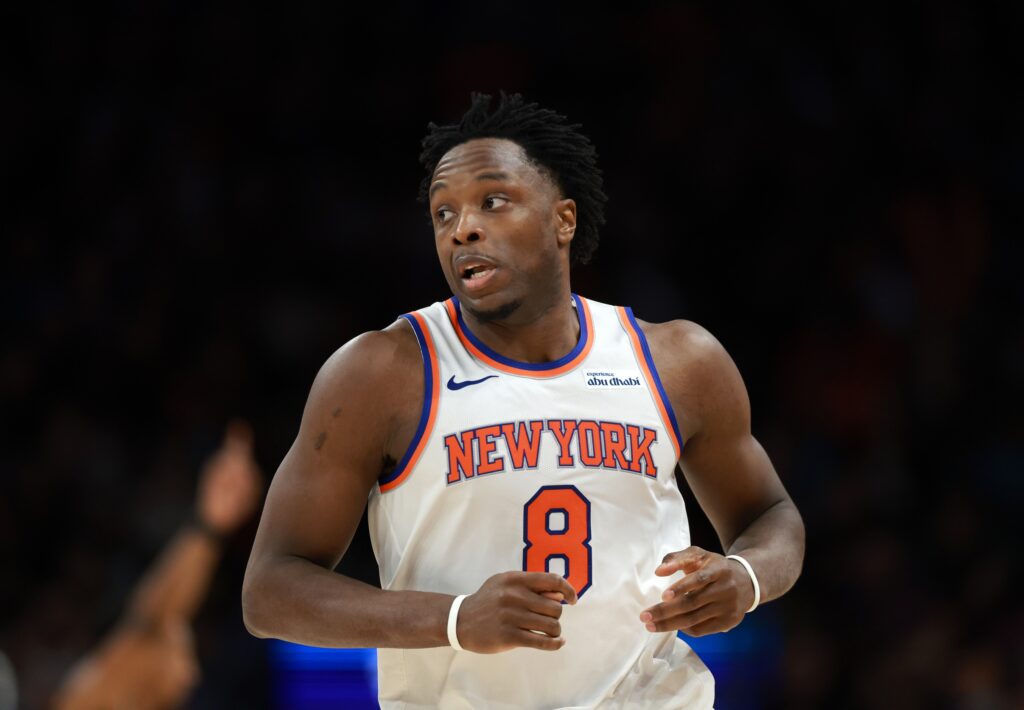
The OG Anunoby window is a different kind of miss than Markkanen or Paul George, because it happened before the Warriors were even in full desperation mode. It was early, proactive, and it still got shut down fast.
In late June 2023, reporting from NBC Bay Area made it clear the Warriors placed a call to the Raptors to gauge a framework centered around Jordan Poole for Anunoby. It wasn’t framed as a rumor cloud or a fan-driven idea. It was described as a real check-in, with Poole as the centerpiece concept. The response, according to that same reporting, was basically a dead end: the Raptors were not interested in a Poole-for-OG structure.
That matters because it puts the Warriors’ “missed deal” in the simplest terms possible. They identified the archetype, they made the call, and the other side didn’t bite. No extended saga, no months of leverage games. Just an immediate reminder that the Warriors’ biggest tradable salary and most marketable “young-ish scorer” wasn’t valued the way they needed it to be for an elite two-way wing.
What makes this one linger is what happened next. A few weeks later, the Warriors pivoted and moved Poole in the deal that brought in Chris Paul. That trade had its own logic, but it also represented a completely different roster direction: more ball-handling and structure, less defensive wing size and switchable athleticism.
The OG path would have pushed the roster toward the exact kind of postseason basketball the Warriors usually win with, wings who guard up, hit open threes, and survive matchup hunting.
Anunoby is still that guy. With the Knicks this season, he’s averaging 15.7 points, 5.5 rebounds, and 2.3 assists, shooting 46.0% from the field and 34.4% from three.
Those numbers don’t scream “superstar,” but the value isn’t in raw usage. It’s a fact that he fits basically any playoff offense without needing touches, while giving you a real defensive answer on the other end. Put that next to Curry and suddenly the Warriors’ lineup math becomes easier: fewer minutes scrambling for a stopper, fewer possessions where you need to overhelp, fewer late-game possessions where you’re forced into awkward cross-matches.
The painful part is the simplicity. This wasn’t a complicated three-team puzzle. It was a straight swing that got rejected because the Warriors didn’t have the kind of centerpiece the Raptors wanted. And once that call died, the alternative paths got messier, older, and more desperate by default.
4. The Rental Question That Cost Them Pascal Siakam
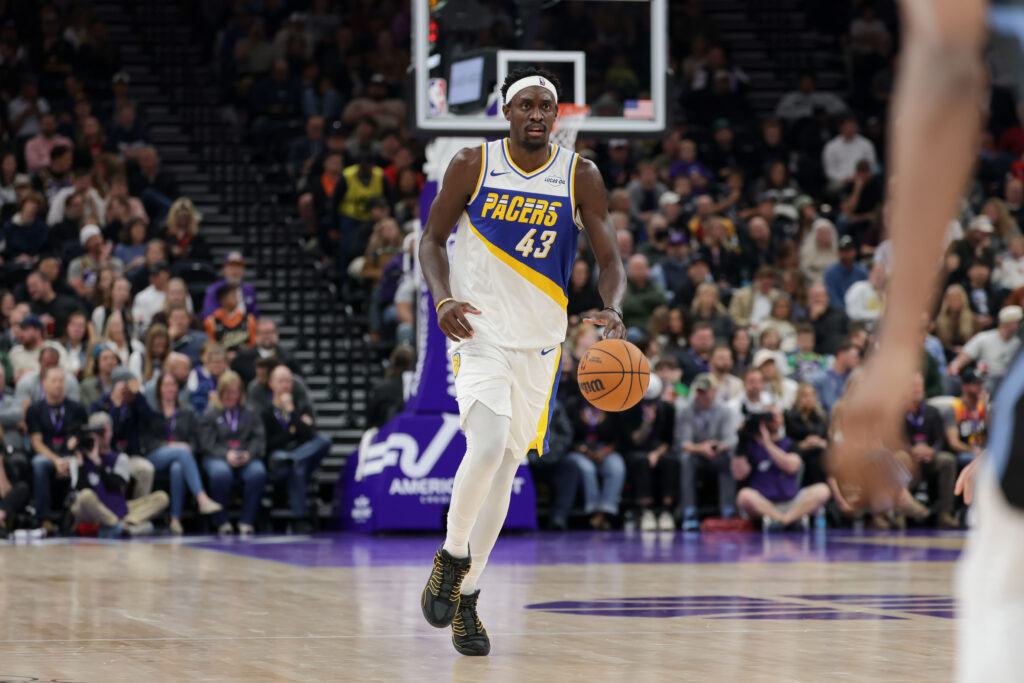
Pascal Siakam was one of those deadline names where the league’s interest was real, the price was obvious, and the hesitation was predictable.
In the days leading up to his January 2024 trade to the Pacers, Shams Charania and Sam Amick reported that the Warriors, along with the Mavericks, had “exploratory interest” in Siakam.
Yahoo framed the Warriors as a “wild horse” in the market, basically the team that could pop up late if it decided to get serious. That distinction matters, because this wasn’t smoke about a perfect fit. It was reporting that the Warriors were at least checking the framework.
The complications were baked in. Siakam was headed toward unrestricted free agency, and anyone trading for him had to be comfortable with the reality that the move only made sense if you were ready to pay him like a franchise pillar.
That was part of the public conversation at the time too, that any team acquiring him should be prepared to max him out, with the Kings, another interested party, thrown out of contention. The Warriors’ interest, in other words, came with a second transaction attached to it: the extension.
The Pacers did exactly what the Warriors wouldn’t. They closed the deal on January 17, 2024, sending Bruce Brown, Jordan Nwora, and three first-round picks to the Raptors in a trade that also involved the Pelicans.
That package is the whole story. When a team is willing to hand over three firsts for a player who can walk in July, it’s telling you it already feels confident about the next step.
And the next step came fast. Siakam ultimately agreed to a four-year, $189.5 million max contract to stay with the Pacers. That’s why this belongs on a “missed blockbuster” list even without a leaked “Warriors offered X” package.
The market proved what it cost in picks, and it proved what it cost in salary. The Warriors flirted with the idea, but the team that landed him was the one willing to sign up for both parts of the transaction.
The basketball case has aged well, too. Siakam is averaging 23.8 points, 7.0 rebounds, and 4.0 assists this season, shooting 48.0% from the field and 37.8% from three after going to the NBA Finals last season.
That’s not just “another scorer.” That’s a high-end forward who can create offense without needing to hijack your spacing, while giving you a reliable second-layer option when games slow down.
This one wasn’t about availability. It was about appetite. And the Warriors never showed enough of it.
5. A Kevin Durant Reunion The Warriors Chased But Got Shut Down
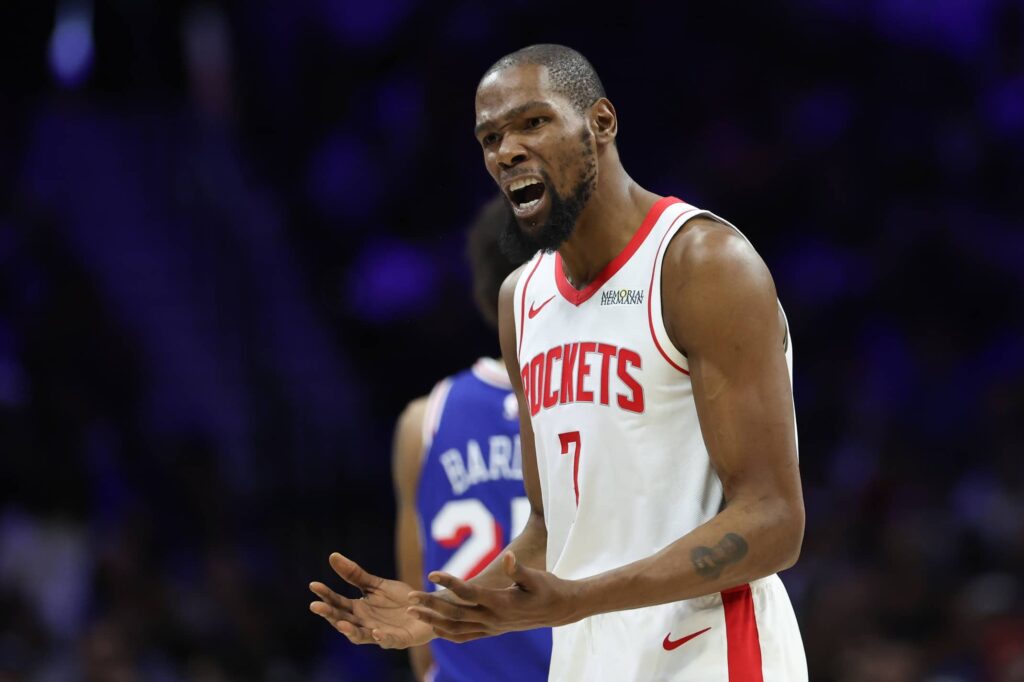
For a few days ahead of the February 2025 trade deadline, the idea of Kevin Durant going back to the Warriors wasn’t just message-board noise. It reached the level where league sources told ESPN that the Warriors were seriously pursuing a trade and Durant was one of their targets.
And then it ended, decisively, for the one reason that matters most in a true superstar market: the player didn’t want it.
On February 5, 2025, ESPN’s Shams Charania reported that Durant had no desire for a reunion with the Warriors, effectively freezing the concept before it could become a real negotiation finish.
That detail is what separates this from the typical “teams checked in” chatter. The Warriors could explore packages, they could call, they could build the math. But without Durant’s appetite for a second run, the whole thing is a dead-end, because the acquiring team is taking on massive money and massive optics for a player who isn’t buying in.
What makes this one qualify as a “missed blockbuster” anyway is that it wasn’t a rumor that quietly evaporated. Months later, Durant addressed the saga publicly.
In September 2025, Durant commented that he was upset when he heard he was being discussed in trade conversations by the Suns, and that he ultimately prevented a Warriors reunion from happening. That post-deadline confirmation reframed the February reporting as more than speculation. The talks were real enough that Durant felt them, reacted to them, and moved to stop the outcome.
It’s also the most revealing kind of miss for the Warriors because it highlights a different limitation than the other deals on this list. This wasn’t about draft picks, or whether a front office would part with a specific young player. This was about the human side of roster building, scars, comfort, and control.
Durant already lived the Warriors experience at the highest level, two titles, two Finals MVPs, and he still drew a line when the possibility came back, eventually landing with the Rockets for this season.
The irony is that Durant is still playing at a level that makes the swing feel tempting in any era. This year, he’s averaging 26.4 points, 5.5 rebounds, and 4.5 assists, shooting 51.4% from the field, 40.7% from three, and 88.2% at the line. The Warriors didn’t “mis-evaluate” him. They simply ran into the hardest barrier in the league: a superstar saying no.
Final Thoughts
One thing that always makes a Warriors “missed trades” list tricky is how sealed-off their operation tends to be. They do not leak like other franchises. You rarely get the kind of play-by-play reporting you’ll see with the Lakers, Knicks, or Heat, where every offer, counter, and internal debate ends up in public within 48 hours. With the Warriors, you usually find out the real story later, and only in fragments.
Markkanen and Paul George had real connective tissue. Anunoby and Siakam had credible “they were in the neighborhood” breadcrumbs. The Durant reunion attempt was loud enough that the player himself addressed it afterward. Those are the clean ones.
But if you want to widen the lens beyond the best-documented misses, there are other “blockbuster-ish” paths that can reasonably be included in the larger conversation, even if they are harder to pin down as true near-deals.
Jrue Holiday is one. If you define “missed” as “a high-level, playoff-ready guard became available and they never made themselves a serious factor,” it belongs in the same bucket, even if it’s not as satisfying as a confirmed offer that got rejected.
Damian Lillard is another, mostly because that saga was the kind of league-wide market moment where you could argue the Warriors should have at least tried to bend the timeline.
And there are a few other “could’ve been on the table” situations you can make cases for depending on how strict you want to be, like other premium wings who moved, or stars who were discussed as possible targets before their situations resolved. The point is not that the Warriors failed on every single one. It’s that the pattern keeps showing up at the exact moment you would expect urgency to win.
The uncomfortable takeaway is simple. The Warriors did not lose their edge because they stopped being smart. They lost it because they kept trying to win every deal instead of just risking to win in the season.