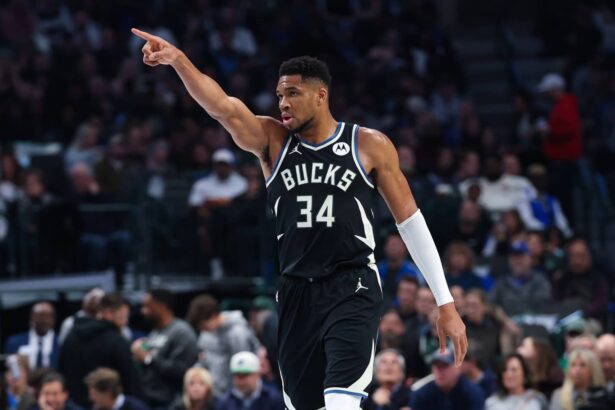
The 2025-26 trade deadline ended up being defined by what did not happen rather than what did. For weeks, the loudest expectations centered on two names: Giannis Antetokounmpo and Ja Morant. Neither moved. Both stayed with their current teams as the deadline passed, despite league-wide interest and plenty of speculation leading into Thursday.
When the biggest dominoes do not fall, the market shifts to the next tier, and teams start solving for fit instead of chasing star power. The deadline still produced meaningful swings and clearer direction calls, especially among teams trying to improve their playoff matchups and teams trying to protect long-term flexibility.
With that context set, this list breaks down the five winners and five losers from deadline week, based on value, roster fit, and what each move signals about a team’s plan from here.
5 Biggest Winners
1. Utah Jazz
The Jazz are winners because they are building something that actually makes sense now. They already had Lauri Markkanen playing at an All-Star level, and they just added another frontcourt star in Jaren Jackson Jr. That is a real foundation, not a “maybe” foundation.
Start with the deal. The Jazz acquired Jackson, plus John Konchar, Jock Landale, and Vince Williams Jr., and they sent out Walter Clayton Jr., Kyle Anderson, Taylor Hendricks, Georges Niang, and three future first-round picks.
Jackson is the centerpiece. He is averaging 19.2 points, 5.8 rebounds, 1.9 assists, and 1.5 blocks this season. He gives the Jazz rim protection and spacing in the same player, and that matters when you are trying to build a modern frontcourt that can survive playoff matchups.
Now pair him with Markkanen. Markkanen is putting up 27.4 points, 7.0 rebounds, and 2.2 assists, with 47.7% from the field and 35.7% from three. Two high-level scorers in the frontcourt change everything for lineup building. The Jazz can play big without losing spacing, and they can play fast without giving up size.
Then there is Walker Kessler, who will come back next season. He was at 14.4 points, 10.8 rebounds, and 3.0 assists, while shooting 70.3% from the field before being sidelined early in the year.
If you can run Kessler at center with Jackson and Markkanen as the forward combo, that is a lot of length, rebounding, and rim presence. It is not a perfect fit in every matchup, but it is a real “problem” frontcourt for opponents.
The record explains why this is possible. The Jazz are 16-36 and 13th in the West. That puts them in a strong position to add a top draft pick in June. With Markkanen and Jackson already in place, that pick does not have to carry the franchise on Day 1. It can be a third pillar, not the whole plan.
Ace Bailey is also already part of the future. He is on the roster now, and he is getting real reps. So the Jazz are not starting from zero on the wing pipeline either.
The money is heavy, but it matches the level of the player. Markkanen is making $46.4 million in 2025-26, and Jackson is making $35.0 million. Kessler is still cheap at $4.9 million and will not demand a franchise-breaking amount in restricted free agency.
That is the point. The Jazz can leave this season with two star-level frontcourt players, a legit center, a blue-chip rookie wing in Bailey, and a strong shot at another top pick. For a team sitting near the bottom of the standings, that is a big step forward.
2. Indiana Pacers
The Pacers are winners because they leaned into a smart form of tanking without making it feel like a full teardown. This season has been rough, but the context matters. Tyrese Haliburton has been out with an Achilles injury, and that has effectively pushed the Pacers to the bottom of the East.
With a 13-38 record, they are positioned to land a top-five pick, and that is a strong place to be if Haliburton is expected back next season with a generational draft class in sight.
The deadline move fits that plan. The Pacers traded for Ivica Zubac, bringing in a starting-level center to replace the void left by Myles Turner’s offseason departure. The main outgoing piece was Bennedict Mathurin, plus Isaiah Jackson and a real pick package.
Zubac is the on-court reason this works. He is averaging 14.4 points and 11.0 rebounds per game this season. He is a physical rebounder, a consistent screener, and a steady finisher. For a team that has lacked reliable size all year, that is not a small upgrade. It gives the Pacers a cleaner structure when they are healthy again: Haliburton running pick-and-roll with a center who can control the paint, finish plays, and clean the glass.
The Mathurin part is important still. He is averaging 17.8 points and 5.4 rebounds, but he is also nearing the point where his next contract becomes the story. Reports around the team had already framed him as an extension question, and he was heading toward restricted free agency after his rookie deal.
If the Pacers did not want to pay the price that comes with that kind of scoring wing, flipping him for a long-term center solution is a clean value decision.
The contract angle is another win. Zubac is making $18.1 million in 2025-26, which is starting-center money but not a roster-breaker. It is also a number you can move later if the fit is not perfect. For a team that should add a high-end draft talent this summer, keeping flexibility matters.
So the Pacers’ picture looks clearer than it did a week ago. This season sets them up for a premium pick. Next season, they can bring Haliburton back into a roster that finally has a real center again, instead of trying to patch the position every month. And they avoided the hardest part of rebuilding: overpaying a player they were not fully committed to.
3. Jonathan Kuminga
Jonathan Kuminga is a winner because he finally gets clarity. The Hawks traded Kristaps Porzingis to the Warriors for Kuminga and Buddy Hield. For Kuminga, the value is not just the move. It is what the move implies: the Hawks see him as a primary wing piece, not a nightly rotation question.
Kuminga’s season line is solid, even with inconsistent usage. He played 20 games with 13 starts and averaged 12.1 points, 5.9 rebounds, and 2.5 assists, shooting 45.4% from the field, 32.1% from three, and 74.2% at the line.
That is a real baseline for a 23-year-old wing who is still figuring out how to pick his spots. He attacks the rim, he can guard multiple positions in stretches, and he has enough handle to create an advantage when the floor is spaced correctly.
The Hawks need that type of player. They are 25-27 and ninth in the East. That is a team living in the play-in zone, which usually means you are missing a second or third option who can tilt a game. Moving Porzingis also opens more wing reps and more on-ball chances. That is the main point. Kuminga now has a clearer pathway to prove whether he is a long-term starter or a long-term scorer off the bench.
This also removes the “fit tax” he carried with the Warriors. They are always managing short-term urgency, and that often turns young players into situational pieces. On a team like the Hawks, Kuminga’s development becomes part of the plan, not a side project. That does not guarantee he turns into a star, but it does increase the odds that his next 25 games are meaningful.
The contract angle matters as well. Kuminga is making $22.5 million in 2025-26, with a player option for next season if he wants to stay with the Hawks. That number puts pressure on him to produce, but it also signals the Hawks have already priced him as a high-end role player at minimum.
In the right environment, that can become a bargain. In the wrong environment, it becomes dead weight. He needed a setting where the role is clear.
This is also a reputation reset. In one trade, Kuminga goes from “rotation debate” to “headline return.” That changes how the league talks about him, and it changes how his own team has to treat him. For a young player, that is a win.
4. Boston Celtics
The Celtics solved a very specific roster problem without damaging their cap space. They needed another true center option who can play real minutes, rebound, and keep the offense functional when the first unit sits. They got Nikola Vucevic, and they did it by moving Anfernee Simons and his larger number.
Vucevic’s production is exactly what the Celtics were missing in certain matchups. He is averaging 16.9 points, 9.0 rebounds, and 3.8 assists this season, shooting 50.5% from the field, 37.6% from three, and 83.8% at the line. That matters because it keeps the spacing intact and adds a real passing hub at the elbows.
The Celtics can run more of their normal stuff with him than they could with a limited offensive big in Chris Boucher or Neemias Queta. He also helps them earn extra possessions with rebounds, which is a quiet postseason skill.
The Celtics are 31-18 and third in the East. This is not a team that needs “more talent,” even with Jayson Tatum sidelined for the season. It is a team that needs fewer weak links in a seven-game series. Vucevic reduces the number of minutes where they have to survive rather than control the game with Jaylen Brown’s heroics.
The money part is a major win, too. Simons’ deal was the bigger number on a $27.7 million expiring contract, while Vucevic is on a $21.5 million expiring deal. Being able to trade Simons after all is real relief for a team that always has to manage tax penalties and apron rules.
Even if Vucevic is not a long-term piece, this keeps options open in the summer and makes the roster easier to maintain around the stars.
Simons was not a bad player for them. He averaged 14.2 points per game in a bench role. But the Celtics’ bigger need was in the frontcourt, not another guard scorer. This is value alignment. It is a move that fits the playoff rotation, not the highlight reel.
This is why the Celtics are winners. They improved a specific weakness, kept their main identity intact, and did it while lowering the financial pressure of the roster. For contenders, that is the cleanest type of deadline.
5. Jared McCain
Jared McCain is a winner because he gets a second chance at the right time. The Thunder acquired him from the 76ers for four future draft picks, including a first-rounder and three second-rounders. For the Thunder, it is a bet on talent. For McCain, it is a bet on opportunity and development.
The basic issue in the Sixers’ situation was role. He was not getting consistent run, and his season numbers reflect a limited workload. He is averaging 6.6 points, 2.0 rebounds, and 1.7 assists in 37 games, shooting 38.5% from the field and 37.8% from three. The point is not that he struggled. It is that he never had a stable platform after his injury setbacks in the offseason.
The upside case is tied to what he showed last season before the injury. He averaged 15.3 points as a rookie before a left knee injury ended his year early. That is why a team like the Thunder is interested. They do not need him to be a starter tomorrow. They need him to become a functional playoff guard in two years.
The team context is perfect for that. The Thunder are 39-11 and first in the West. They can afford patience, and they can keep him in a defined role. That matters for young guards. He can play behind established creators, pick his spots, and focus on the two skills that get guards paid in playoff basketball: shooting and decision-making.
This move is also about rebuilding confidence. A young player coming off an injury needs reps, but he also needs a staff that has a plan. The Thunder have built a reputation for that kind of work. If McCain can get back to his pre-injury level, he becomes a real rotation piece on a team that actually plays meaningful games every week.
That is why he is a winner. He goes from being a marginal part of the nightly plan to being a targeted development project for the league’s best team this season.
5 Biggest Losers
1. Miami Heat
The Heat are losers because the deadline passed and nothing changed. In a week where almost the entire league made at least one deal, the Heat stood pat. The Heat were one of only three teams that made no trades at all.
That would be fine if the Heat were already cleanly on a contender track. They are not. They are 27-25, sitting eighth in the East. That is the exact spot where you either upgrade for the playoff push or pivot into asset-building. The Heat did neither.
What makes it worse is that they were in the mix for the two biggest names on the board, and came away empty. The Heat were among the teams interested in Giannis Antetokounmpo, but the Bucks’ asking price was too steep, and he stayed put. They were also linked to Ja Morant’s interest, but “no serious offers were received,” per ESPN, and Morant stayed with the Grizzlies. If your deadline plan is “swing big,” then doing nothing is the worst outcome. You burn days, you burn leverage, and you still enter the stretch run with the same problems.
The roster is not talentless. Tyler Herro is at 21.9 points, 4.7 rebounds, and 2.7 assists. Bam Adebayo is at 18.1 points and 9.9 rebounds. But the Heat are paying real money to a team that still looks like a play-in level group. This is not a cheap roster where you can shrug and say “we will see.”
The other issue is asset timing. When you do not make a move, you are basically betting that the market will be better later. But ESPN made the key point on Giannis: teams were involved, the Bucks listened, and then shut it down hours before the deadline. That usually means the offseason becomes a bidding war with more teams, not fewer.
So the Heat lose on two fronts. They did not land the star they wanted, and they also did not do the smaller moves that could have improved the current roster or strengthened the asset base. In the middle of the standings, that is how you get stuck.
2. Milwaukee Bucks
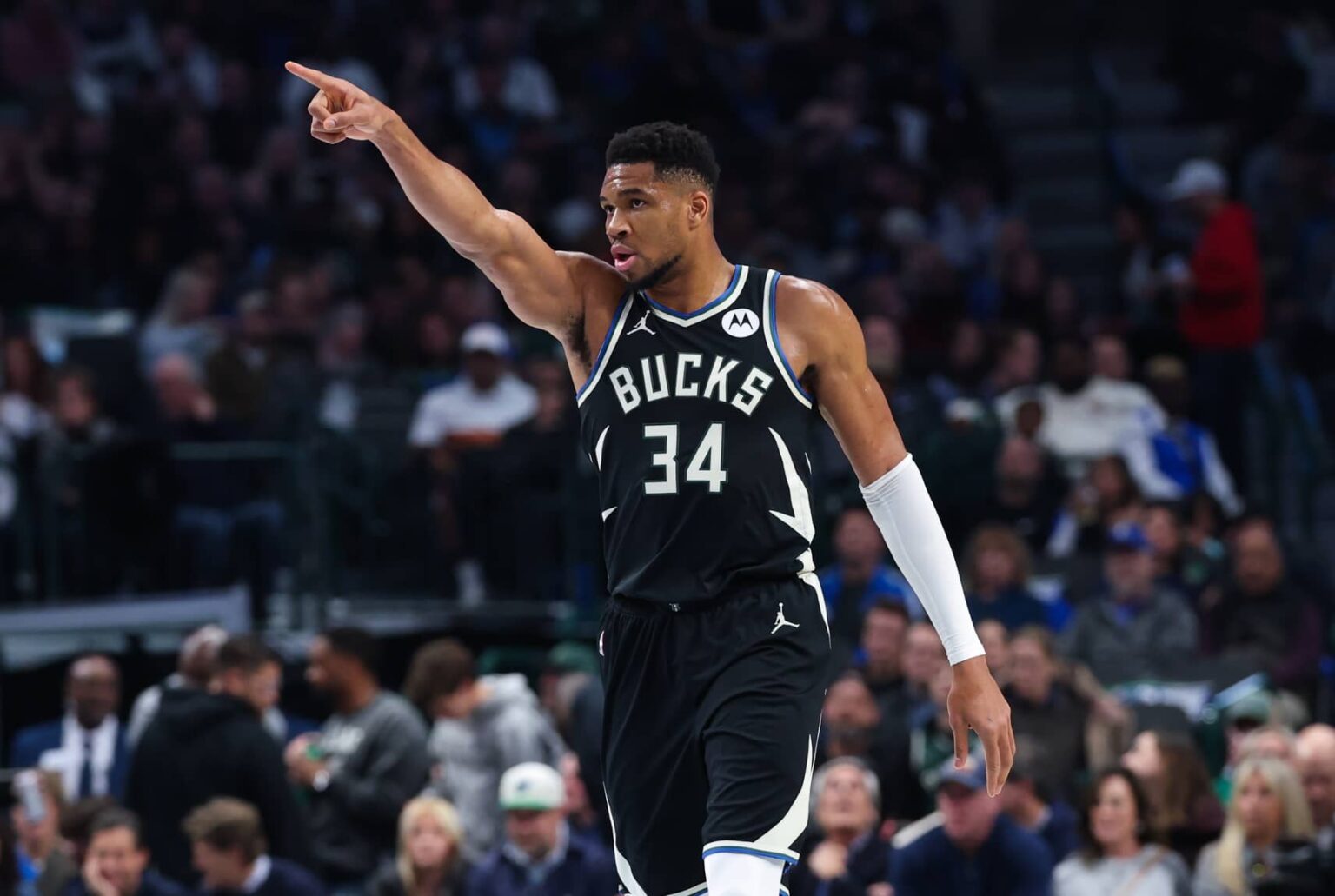
Keeping Giannis Antetokounmpo is the right call in a vacuum, but the Bucks still lost the deadline. The problem is everything around that decision. The Bucks kept their franchise player, but the deadline did not bring a meaningful upgrade, and the standings pressure is real.
Start with where they are right now. The Bucks are 20-29, 12th in the East. That is not “one piece away.” That is “you might miss the postseason if the next month goes sideways.” And the health situation is exactly what makes it risky. Giannis has a strained right calf, with no clear timetable and a possible extra 2-4 week window.
Giannis has played at an elite level when available: 28.0 points, 10.0 rebounds, and 5.6 assists in 30 games. But if he misses more time, the Bucks do not look built to tread water. That context is brutal for a team trying to survive the play-in race and convince their franchise star to stay put in the summer.
Now look at what they actually did at the deadline. Their only notable move was a smaller trade that brought in Nick Richards and Nigel Hayes-Davis (cut) while sending out Cole Anthony and Amir Coffey. That is not the type of move that changes your ceiling, especially when your main issue is creating offense and winning non-Giannis minutes.
If the team is 12th with him missing time, the deadline needed to be about survival pieces that actually move outcomes, not marginal depth.
So yes, keeping Giannis is a “win” in the headline sense, and the Bucks ultimately chose that path despite aggressive offers. But the Bucks still lose the broader deadline evaluation because they did not pair that decision with a clear roster fix. If Giannis is not back soon, this season can slip fast, and the front office will be staring at the same questions again in June, with less leverage and more noise.
3. Los Angeles Lakers
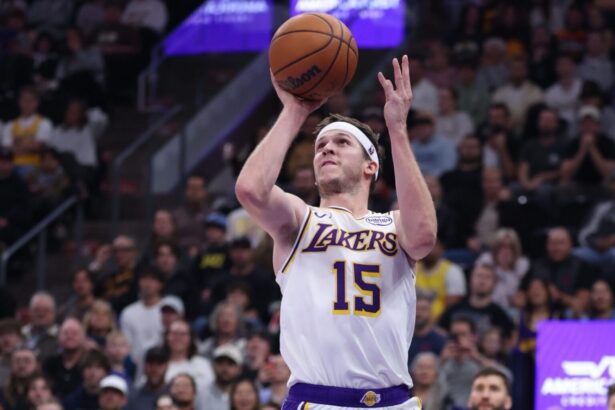
The Lakers lost a golden chance yesterday, because the deadline was a half-step. The move they did make was fine. They brought in Luke Kennard for Gabe Vincent, plus a future second-round pick going out. If you are just grading that trade, it is a clear upgrade in one specific area: shooting.
Kennard is averaging 7.9 points, 2.2 rebounds, and 2.1 assists this season. The bigger number is the shooting. He has hit 49.7% from three this season, and the Lakers badly needed a real movement shooter who is comfortable taking volume threes. Vincent was giving them 4.8 points and 1.3 assists in 29 games, and it never really clicked.
The contract part also mattered. Vincent was at $11.5 million in 2025-26, and Kennard is at $11.0 million. So the Lakers improved the roster and slightly improved the money sheet without touching their core.
The problem is what they did not do. This roster still needs a real 3-and-D wing, and they did not land one. Much Lakers-focused coverage framed this as a mostly disappointing deadline with just the Kennard deal. That is the part that hurts, because perimeter defense is still going to decide their ceiling.
The Lakers are 31-19, sixth in the West. They are good enough to make noise, which is why the holes stand out more. They allow a 36.9% opponent three-point percentage, and their defensive rating is 117.8.
If you are going to live in that range defensively, you need strong wing stoppers and clean point-of-attack defense every night. The Lakers still have too many games where guards get downhill, the help collapses, and the kick-out threes pile up.
So yes, Kennard helps. He will space the floor, make teams pay for loading up, and make life easier for the main creators. But the deadline was also their best chance to balance the roster. They had other contracts they could have moved in Maxi Kleber, the expiring Rui Hachimura, or Jarred Vanderbilt, and they did not turn them into a defensive wing. That means the same perimeter issues are still on the table, and they are the kind that show up loudly in a playoff series.
4. Sacramento Kings
This was the Kings’ cleanest moment to hit reset, and they did the opposite. They are 12-40 and 15th in the West. At that record, the optimal play is simple: turn expensive veterans into picks, open a real tank lane, and start building a new timeline.
Instead, they added De’Andre Hunter and gave up Keon Ellis in the three-team deal with the Cavaliers and Bulls. Hunter is a solid player, but the move does not match where the Kings are. He is averaging 13.8 points, 4.2 rebounds, and 2.0 assists this season. That helps a playoff team. It does not fix a team that is already buried in the standings.
The bigger issue is the money. Hunter makes $23.3 million in 2025-26. The Kings are already paying Zach LaVine $46.0 million, Domantas Sabonis $42.3 million, and DeMar DeRozan $24.8 million. That is star-level payroll without star-level results. Adding another mid-to-big contract without clearing the top end is how you stay expensive and stuck.
This was also the moment to move at least one of those big names for picks. DeRozan is 36 and still useful, but the value is in converting him into future assets, not in keeping him around a bottom-tier roster. LaVine’s contract is massive. Sabonis is the kind of player good teams will pay for, as the Raptors were reportedly engaged in talks. If you are serious about rebuilding, that trio is how you start the process.
And losing Ellis matters because he was the exact type of cheap, controllable guard every team wants. He is at 5.6 points per game in 2025-26, and even if the scoring is modest, the appeal is the role, the contract tier, and the defensive profile. The Kings moved that type of piece in a season where they should be collecting them, not spending them.
The bottom line: the Kings had a clear path. Strip it down, stack picks, and align the timeline with a top pick. Instead, they added salary and stayed on the treadmill. With a 12-40 record and a heavy cap sheet, that is a bad place to be.
5. New Orleans Pelicans
If you’re going to miss the playoffs, you at least want the upside of controlling your own draft. The Pelicans don’t have that. Their 2026 first-round pick is already in the Hawks’ hands from the Derik Queen move, which means every loss helps someone else more than it helps them. They are 13-40 and 14th in the West. And at the deadline, they mostly did nothing that changed the direction of the roster.
The pick problem is the starting point. The Pelicans do not have their own 2026 first-round pick. They sent their 2026 first to the Hawks on draft night to move up from No. 23 to No. 13 and take Derik Queen. That means “tank for a top-five pick” is not a clean plan. If the Pelicans keep losing, the Hawks benefit.
That is why the deadline should have been about converting real veterans into a draft haul. The Pelicans have two of the cleanest trade chips in the league for contenders: Herb Jones and Trey Murphy III. They are wings who fit modern playoff basketball. Jones is on a reasonable number and is the type teams want for defense and role acceptance.
Murphy is a high-value scorer and shooter who still fits a long timeline. If you are the Pelicans, that is how you rebuild without your own 2026 pick: you add more first-round picks and swaps so the next two summers are still productive.
Instead, the Pelicans kept everyone and left the deadline with the same structural problems. They are expensive, they are not winning, and they do not have the easy “bottom out and reset” option because the main pick is gone to the Hawks.
So this is why it is a bad deadline. They did not pick a lane. They did not cash in their best trade chips. And they did not create the pick inventory you need to rebuild when your own 2026 first is already someone else’s asset.