The 2026 NBA free-agent class could have several big names if players decide to decline their player options.
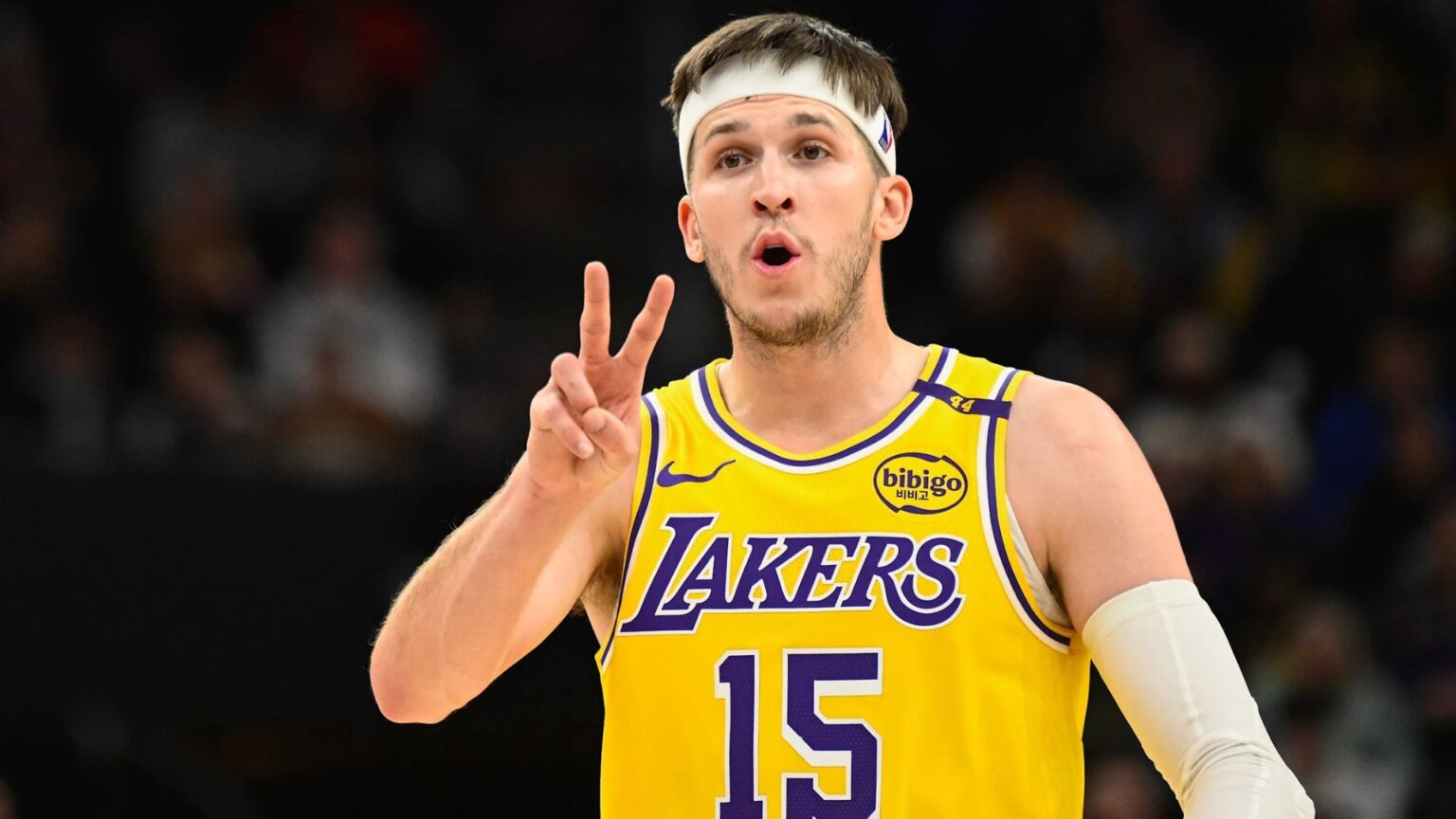
Austin Reaves is the obvious one. He has a $14.9 million player option, and he should decline it. He already turned down a four-year, $89.0 million extension from the Lakers, and his next deal could get close to $40.0 million per year if teams push the price. Reaves has played way above his current contract. Taking the option would make no sense unless something goes very wrong.
Trae Young is a different case. He has a $49.0 million player option, and that is a lot of money to leave on the table. The Hawks already moved him to the Wizards because they did not want to give him another max contract. He is expensive, small, has injury concerns, and teams may not want to build everything around him.
That is the main point of this list. Some players should decline and get paid. Some players should take the money and wait one more year. Not every player option is the same.
The 2026 free-agent class could become one of the best in recent years if enough players hit the open market. Here are all the NBA players facing a player option decision this offseason.
1. Trae Young – $49.0 Million Player Option
2025-26 Stats: 17.9 PPG, 2.0 RPG, 8.0 APG, 0.9 SPG, 0.1 BPG, 45.8% FG, 33.8% 3P
Trae Young is the biggest name here, but this should be one of the easiest decisions. He has a $49.0 million player option for 2026-27. After the season he just had, he should take it.
Young played only 15 games in 2025-26. He averaged 17.9 points and 8.0 assists, but the season never really got going. He started with the Hawks, was traded to the Wizards in January, then ended the year out because of a quad injury. That is not the type of platform a player wants before entering free agency.
The money also makes the answer clear. Young is still talented enough to run an offense. He can pass, shoot off the dribble, create in pick-and-roll, and put pressure on defenses from deep. But the market for small, expensive guards is not simple. His defense is still a major problem. His shooting was only 33.8% from three this season. He also did not have the healthy year needed to convince teams to offer a long-term max-level deal right now.
That is why declining the option would be a bad bet unless the Wizards already have a new contract ready. The Hawks had the chance to extend him before moving him, and they chose another direction. That matters. Young is not entering the market with the same leverage he had two or three years ago.
The best move is to pick up the $49.0 million, get healthy, play a full season with the Wizards, and try to rebuild his value before 2027. He can still get paid again. But this summer is not the right time to test the market. The option is too big, the season was too broken, and the risk is too high.
2. Zach LaVine – $49.0 Million Player Option
2025-26 Stats: 19.2 PPG, 2.8 RPG, 2.3 APG, 0.7 SPG, 0.3 BPG, 47.9% FG, 39.0% 3P
Zach LaVine should take the money. This is not complicated. He has a $49.0 million player option for 2026-27, and there is almost no chance he gets that type of salary per year on a new deal right now.
LaVine averaged 19.2 points, 2.8 rebounds, and 2.3 assists in 39 games with the Kings. He still shot the ball well. His 39.0% from three matters, and the 47.9% from the field is strong for a guard/wing scorer. But the full season was not strong enough to walk away from $49.0 million. He missed too much time, had season-ending surgery, and did not produce like a max-level star.
The Kings also do not look like a clean long-term home. Michael Scotto reported that LaVine is expected to exercise the option, and that makes sense for both money and timing. Once he opts in, he becomes a large expiring contract. That could keep him in trade talks instead of forcing him into a weak free-agent market.
The problem is not talent. LaVine can still score. He can shoot off the catch, attack closeouts, and give a team efficient perimeter offense. The problem is the price. At $49.0 million, teams are not paying him like a good scorer. They are paying him like a franchise player. He is not that right now.
3. James Harden – $42.3 Million Player Option
2025-26 Stats: 20.5 PPG, 4.8 RPG, 7.7 APG, 0.8 SPG, 0.5 BPG, 46.6% FG, 43.5% 3P
This one is more about team logic than player fear. James Harden has a $42.3 million player option, but the Cavaliers did not move Darius Garland for half a season of Harden and then nothing after that. That would make no sense. They made the trade to win now and to give Donovan Mitchell another high-level creator. So the expected outcome should be a new deal, not Harden simply taking the option and walking into one more expiring year.
Harden played well enough to justify it. With the Cavaliers, he averaged 20.5 points, 4.8 rebounds, and 7.7 assists while shooting 46.6% from the field and 43.5% from three. The three-point number is huge. He is not the same downhill scorer he was in Houston, but he can still run pick-and-roll, feed bigs, create corner threes, and punish switches. Next to Mitchell, that has value because the Cavaliers do not need Harden to be the whole offense every night. They need him to organize it.
The option is big, but a longer deal could make more sense for both sides. Harden could decline the $42.3 million and sign something like three years, $110.0 million to $120.0 million. That lowers the annual number a little, gives him security, and helps the Cavaliers keep the structure they traded for.
There is risk, of course. Harden is older, and the playoff questions are never going away. He also had a bad Game 1 against the Knicks, shooting 5-of-16 from the field in the Eastern Conference Finals opener. But one bad game does not change the full roster logic. The Cavaliers already chose Harden over Garland. The next step is probably making that choice last longer than one spring.
4. Andrew Wiggins – $30.2 Million Player Option
2025-26 Stats: 16.9 PPG, 4.6 RPG, 2.1 APG, 0.6 SPG, 1.0 BPG, 43.7% FG, 31.0% 3P
This should be a fast opt-in. Andrew Wiggins is not getting $30.2 million per year on the open market. He is still a useful wing, but not at that number. The Heat know it. Wiggins should know it, too.
He played all 82 games in 2025-26 and averaged 16.9 points, 4.6 rebounds, and 2.1 assists. The durability helps. The defense still has value. But the shooting was not strong enough, especially at 31.0% from three. That is the problem with testing free agency. Teams will like Wiggins as a starting-level wing. They just will not want to pay him like a top option.
The best move is to take the $30.2 million and become an expiring contract. That also helps the Heat. If they want to trade for a bigger piece before the season, Wiggins gives them a strong salary slot. He is easier to move as an expiring deal than as a new long-term contract.
That is probably where his value is highest. Not as a free agent asking for a new big deal, but as a veteran wing on one year of expensive money. The Heat can use him, or they can move him. Wiggins should not give up that control by declining the option.
5. Draymond Green – $27.7 Million Player Option
2025-26 Stats: 8.4 PPG, 5.5 RPG, 5.5 APG, 0.9 SPG, 0.6 BPG, 41.8% FG, 32.6% 3P
There is no real reason for Draymond Green to decline this option. The Warriors are not giving him a new deal at $27.7 million per year. No other team is giving him that either.
Green is still important to the Warriors, but the money is bigger than his current market value. He averaged 8.4 points, 5.5 rebounds, and 5.5 assists in 68 games while shooting 41.8% from the field and 32.6% from three. The defense, passing, and leadership are still real. The scoring and spacing are still hard to hide.
This is also about situation. Steve Kerr is back on a new two-year deal, and that makes it harder to see Green walking away now. The Warriors are still trying to compete with Stephen Curry. Green has been part of that whole run. If Kerr had left, maybe the conversation would feel different. With Kerr staying, the most likely outcome is simple: Green takes the option and stays.
He can think about a smaller extension later, maybe after the Warriors see what this roster becomes. But this summer, the choice should be easy. Take the $27.7 million. Stay with Curry and Kerr. Try to get one more run.
6. Fred VanVleet – $25.0 Million Player Option
2025-26 Stats: Did Not Play, Torn Right ACL
Fred VanVleet should take the $25.0 million. He missed the 2025-26 season because of a torn right ACL, and no team is giving him strong guaranteed money right now. That is not an insult. That is just the market after a major knee injury.
Before the injury, VanVleet had just signed a two-year, $50.0 million deal with the Rockets after they declined his $44.9 million team option. The new deal included the $25.0 million player option for 2026-27. Then the ACL tear changed everything for a Rockets team that visibly missed his veteran leadership and organization as a floor general in the postseason.
That makes the option the right move. VanVleet can use 2026-27 as a prove-it season. He gets paid, gets back on the floor, and tries to show teams he can still run an offense, defend at the point of attack, and shoot at a high enough level.
Declining would be too risky. A 32-year-old guard coming off an ACL tear is not getting a better deal than $25.0 million guaranteed. The smart play is to take the option, play one healthy season with the Rockets, and go back to free agency in 2027 with real games behind him.
7. Kentavious Caldwell-Pope – $21.6 Million Player Option
2025-26 Stats: 8.4 PPG, 2.5 RPG, 2.7 APG, 0.8 SPG, 0.2 BPG, 41.0% FG, 31.6% 3P
Kentavious Caldwell-Pope should opt in. That is the only logical move. He has a $21.6 million player option, and he is not getting that number again in free agency after this season.
The decline is clear. Caldwell-Pope averaged only 8.4 points in 21.3 minutes with the Grizzlies. The defense still has value, and he still understands how to play on serious teams, but the shooting was not good enough. He hit only 31.6% from three, which hurts his market because most teams would be signing him to be a low-usage 3-and-D guard. If the three is not reliable, the price drops fast.
There is also the age part. He is 33, and he had finger surgery that ended his season early. That does not mean he is finished, but it does make free agency risky. A team may still offer him a rotation role. Nobody is likely offering $21.6 million for one year.
The best move is to take the option and stay tradeable. As an expiring contract, Caldwell-Pope can still have value. The Grizzlies can keep him as a veteran guard, or they can use his salary in a trade before the deadline. For KCP, this should be simple: take the money, get healthy, and try to rebuild value during the 2026-27 season.
8. Austin Reaves – $14.9 Million Player Option
2025-26 Stats: 23.3 PPG, 4.7 RPG, 5.5 APG, 1.1 SPG, 0.2 BPG, 49.0% FG, 36.0% 3P
The decision should take about five seconds. A $14.9 million player option is not close to Austin Reaves’ current value, especially after the season he just had and the extension he already turned down.
The warning was already there last summer. Reaves turned down a four-year, $89.2 million extension from the Lakers because the number was below what he could get in 2026. That was the smart move. He then backed it up with the best scoring season of his career.
Reaves averaged 23.3 points, 4.7 rebounds, and 5.5 assists while shooting 49.0% from the field and 36.0% from three. That is not role-player production. He became a real offensive piece next to Luka Doncic and LeBron James, and his value is closer to $30.0 million to $40.0 million per year than $14.9 million.
The Lakers should still be the favorites to keep him. Letting a player like this walk would be bad asset management, especially after building so much of the offense around three creators. But the price will be heavy. Reaves is not going into free agency to take a small raise. He is going there to get the biggest contract of his career.
This is an easy decline. The only question is whether the Lakers pay him before another team forces the number higher.
9. Deandre Ayton – $8.1 Million Player Option
2025-26 Stats: 16.3 PPG, 10.3 RPG, 1.8 APG, 0.9 SPG, 0.9 BPG, 58.5% FG, 0.0% 3P
This is the first real 50-50 decision on the list. An $8.1 million option is low for a center who just averaged a double-double, but the open market may not love the full package as much as the box score does.
Deandre Ayton has an $8.1 million player option, and his raw production was easily worth more than that. He averaged 12.5 points, 8.0 rebounds, and 0.8 assists while shooting 67.1% from the field. The efficiency is strong, but the role was smaller than expected. He was not a high-usage center. He was not a defensive anchor. He was mostly a finisher, rebounder, and regular-season big man who still had nights where the tape felt underwhelming.
That makes his market tricky. A desperate team with cap space could offer him $10.0 million to $15.0 million per year. Maybe more if the center market gets thin. But that team probably is not a contender. Ayton can chase more money, but it may come from a team that is not playing meaningful April basketball.
The Lakers can give him a real role, Luka Doncic can make him look better, and the option is still cheap enough that he has a case to decline it. I would lean opt in, but not by a lot. If Ayton wants money, he should decline. If he wants the best basketball setting, staying with the Lakers or working out a new deal there makes more sense.
10. D’Angelo Russell – $6.0 Million Player Option
2025-26 Stats: 10.2 PPG, 2.4 RPG, 4.0 APG, 0.5 SPG, 0.1 BPG, 40.5% FG, 29.5% 3P
This is only a decline if D’Angelo Russell already has another job ready. That is the whole decision. He has a $6.0 million player option, and right now, even that number might be better than what the open market gives him.
Russell’s season did not help him. He averaged 10.2 points and 4.0 assists, shot 40.5% from the field, and made only 29.5% from three. The Wizards also did not treat him like a real part of the future after the Anthony Davis move. He was not expected to report to the team, and that is usually the clearest sign that a veteran is just salary.
The only reason to opt in is if the Wizards promise to trade him. At $6.0 million, he is movable. A team needing backup guard creation could take him during the season. But if there is no trade plan, he may prefer to decline and choose his own situation, even for less money.
11. Al Horford – $6.0 Million Player Option
2025-26 Stats: 8.3 PPG, 4.9 RPG, 2.6 APG, 0.7 SPG, 1.1 BPG, 42.6% FG, 36.1% 3P
This is probably opt-in or retire. Al Horford has a $6.0 million player option, and at this stage of his career, there is no reason to chase the market just to chase it.
Horford is 39. He still gave the Warriors useful minutes: 8.3 points, 4.9 rebounds, 2.6 assists, and 1.1 blocks while shooting 36.1% from three. That is still a playable backup big. He can space the floor, pass, defend with positioning, and survive in a smart system.
If Steve Kerr had left, maybe Horford would have thought harder about retirement or a different ending. But Kerr stayed, and reports already suggested Horford would strongly consider opting in if Kerr remained the coach.
He is not getting a better role somewhere else. He is not getting much more money either. The move is to take the $6.0 million, play one more season in a familiar structure, and then decide after 2026-27.
12. Bradley Beal – $5.6 Million Player Option
2025-26 Stats: 8.2 PPG, 0.8 RPG, 1.7 APG, 0.5 SPG, 0.0 BPG, 37.5% FG, 36.8% 3P
This should be an easy opt-in. Bradley Beal has a $5.6 million player option, and after another lost season, he should take any guaranteed money in front of him.
Beal barely played for the Clippers. He appeared in six games, averaged 8.2 points, 0.8 rebounds, and 1.7 assists, then needed season-ending surgery for a left hip fracture. That is brutal timing for a player who is already 32 and has not played 60 games in a season since 2020-21.
The name still has value, but the market does not pay for the name anymore. Teams have seen too many injuries, too many missed games, and too much decline from his peak. The Clippers got him after a buyout on a two-year, $11.0 million deal with the second-year player option, and even that now looks like money he should not give back.
There is no reason to decline. Take the $5.6 million, rehab, and try to show he can still help in a smaller role. If he gets healthy, he can look for another short deal in 2027. If not, at least he did not walk away from guaranteed money.
13. Kevin Porter Jr. – $5.4 Million Player Option
2025-26 Stats: 17.4 PPG, 5.2 RPG, 7.4 APG, 2.2 SPG, 0.5 BPG, 46.5% FG, 32.2% 3P
The $5.4 million option is too low after the season Kevin Porter Jr. just had. He should decline it and look for a real multi-year deal.
Porter averaged 17.4 points, 5.2 rebounds, and 7.4 assists in 38 games for the Bucks. He also averaged 2.2 steals, which was one of the strongest defensive playmaking numbers in the league. The shooting from three was not great at 32.2%, but the rest of the line is strong enough to give him a market. He played like more than a minimum guard.
The injury history and off-court history will still affect his price. That is why he probably will not get a huge deal. But he is 26, can handle the ball, create shots, pass, and defend passing lanes. Teams pay for that if the number is reasonable.
The best move is to decline and look for something in the three-year, $24.0 million to $30.0 million range. Maybe the Bucks bring him back. Maybe another team offers a bigger role. Either way, taking $5.4 million after this season would be too conservative.
14. Marcus Smart – $5.4 Million Player Option
2025-26 Stats: 9.3 PPG, 2.8 RPG, 3.0 APG, 1.4 SPG, 0.4 BPG, 39.5% FG, 33.1% 3P
Marcus Smart should opt out, but not to leave the Lakers. He should opt out to get a new deal from them.
The $5.4 million option is low for what he gave them. Smart averaged 9.3 points, 2.8 rebounds, 3.0 assists, and 1.4 steals in 28.5 minutes. The shooting was still limited, 39.5% from the field and 33.1% from three, but that is not why the Lakers need him. They need his defense, pressure, and playoff experience.
His playoff role only helped his case. The Lakers used him as a lockdown matchup defender, including times where he shut down Shai Gilgeous-Alexander to keep him from even catching the ball. That type of guard defense is hard to find at $5.4 million.
The best outcome is simple: decline the option and re-sign with the Lakers on a bigger short deal. Something like two years, $16.0 million to $20.0 million makes sense. He should not chase a random team for a little more money. His best value is in the same place, next to Luka Doncic, LeBron James, Austin Reaves, and a team that already trusts him.
15. Jose Alvarado – $4.5 Million Player Option
2025-26 Stats: 7.4 PPG, 2.5 RPG, 3.4 APG, 1.0 SPG, 0.1 BPG, 41.6% FG, 35.2% 3P
This is a good time for Jose Alvarado to opt out. The $4.5 million option is safe, but his Knicks stint gave him a better case than that.
Alvarado averaged 6.6 points, 2.0 rebounds, 3.8 assists, and 1.0 steals in 28 regular-season games for the Knicks. The shooting was not special at 33.0% from three, but the role was clear. He’s giving them ball pressure, energy, backup creation, and a guard who can bother teams for short bursts.
The best example came fast. Alvarado had 26 points, eight threes, and five steals off the bench against the 76ers. He became the first player in Knicks history with 25-plus points, five-plus threes, and five-plus steals off the bench. That game showed how he can swing a night for a contender.
The Knicks gave up Dalen Terry, two second-round picks, and cash to get him from the Pelicans. That says they saw value, not just filler.
I would decline the option and look for a raise. Maybe he gets $8.0 million to $9.0 million per year. Maybe a team goes into double digits if it needs a backup guard with defense and playoff edge. He is not a starter, and the shooting limits the ceiling. But $4.5 million is low for a guard who can help a serious team.
16. Gary Trent Jr. – $3.9 Million Player Option
2025-26 Stats: 11.1 PPG, 2.3 RPG, 1.7 APG, 1.0 SPG, 0.1 BPG, 43.1% FG, 41.6% 3P
This should be an opt-out. A $3.9 million player option is too low for a shooter who just made 180 threes at 41.6% from deep. Gary Trent Jr. is not a complete player, but shooting still gets paid, and he gave the Bucks real volume.
The role is easy to sell. He can space the floor, take bench scoring minutes, and play next to bigger creators. He is not getting a huge deal, but he should be able to beat $3.9 million. Something around $7.0 million to $10.0 million per year feels more realistic if teams need shooting.
17. Taurean Prince – $3.8 Million Player Option
2025-26 Stats: 9.2 PPG, 3.1 RPG, 1.8 APG, 0.6 SPG, 0.4 BPG, 45.0% FG, 43.6% 3P
This is close, but Taurean Prince should probably opt out. His $3.8 million option is basically minimum money, and he shot well enough to ask for a little more. He averaged 9.2 points in 23.5 minutes and hit 43.6% from three. That is useful wing shooting.
The market will not be huge because he is 32 and does not bring much creation. But he can help a playoff team as a ninth man. If he can get two years and around $10.0 million to $12.0 million total, opting out is worth it. If that market is not there, taking the $3.8 million is fine.
18. Gary Harris – $3.8 Million Player Option
2025-26 Stats: 2.7 PPG, 1.3 RPG, 1.1 APG, 0.6 SPG, 0.2 BPG, 44.2% FG, 41.2% 3P
Gary Harris is the opposite case in the Bucks franchise. The shooting number looks good at 41.2% from three, but the role was tiny. He played 48 games, averaged only 13.8 minutes, and scored 2.7 points per game. That is not enough volume to create a strong market.
He could opt out because the option is close to a new veteran minimum anyway. But if the question is pure security, taking the $3.8 million is safer. At this point, Harris is a deep rotation guard, not a real free-agent target for teams with bigger money.
19. De’Anthony Melton – $3.5 Million Player Option
2025-26 Stats: 11.1 PPG, 3.7 RPG, 3.0 APG, 1.6 SPG, 0.4 BPG, 38.6% FG, 36.0% 3P
This should be an opt-out. A $3.5 million option is too low for De’Anthony Melton after he gave the Warriors real rotation minutes again.
The efficiency was not perfect, but the role was valuable. He averaged 11.1 points, 3.7 rebounds, 3.0 assists, and 1.6 steals in 26.9 minutes. That is a useful guard profile. He can defend, shoot enough, handle a little, and play next to better creators. After the ACL issue, just proving he could stay on the floor again was important. He should be able to beat $3.5 million, even if it is only on a short deal.
20. Sandro Mamukelashvili – $2.8 Million Player Option
2025-26 Stats: 10.8 PPG, 6.8 RPG, 2.4 APG, 0.5 SPG, 0.4 BPG, 45.3% FG, 34.3% 3P
Sandro Mamukelashvili should probably decline. The option is only $2.8 million, and he showed enough with the Raptors to look for a better deal.
He averaged 10.8 points, 6.8 rebounds, and 2.4 assists in 23.3 minutes. The shooting was not elite, but 34.3% from three is enough for a backup big man who can pass and keep the offense moving. He is not a starting center, and he is not a defensive anchor. But a big man who can rebound, move the ball, and shoot a little should get more than $2.8 million. Something around $5.0 million to $7.0 million per year is realistic if the market is normal.
21. Jericho Sims – $2.8 Million Player Option
2025-26 Stats: 5.0 PPG, 5.5 RPG, 1.6 APG, 0.3 SPG, 0.3 BPG, 78.4% FG, 0.0% 3P
Jericho Sims is closer to an opt-in than the other two. The $2.8 million option is not big, but his market is also not guaranteed to be much better.
Sims averaged 5.0 points, 5.5 rebounds, and 1.6 assists in 19.7 minutes for the Bucks. The 78.4% from the field looks great, but it is mostly because his shots are dunks, rolls, and putbacks. He is an athletic backup center, not a big-money free agent. If another team offers two years, he can decline. If not, taking the $2.8 million and staying in a known role is the safer move.