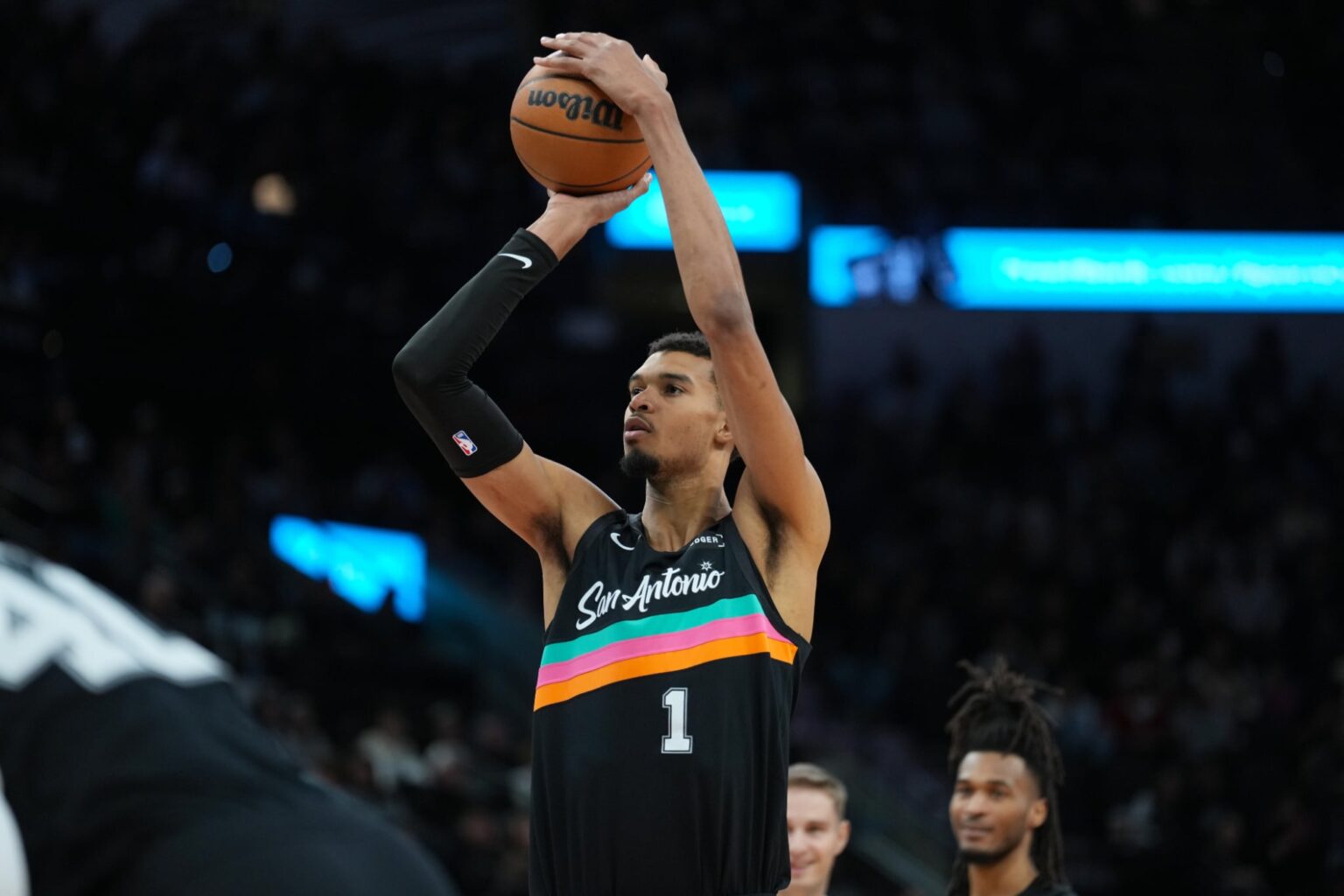
On paper, the San Antonio Spurs look like one of the NBA’s best teams. At 23-9 and sitting second in the Western Conference, they’ve vaulted from long-term rebuild to legitimate contender faster than almost anyone expected. Victor Wembanyama has already established himself as the franchise cornerstone, leading the entire organization to act quickly by surrounding him with talented pieces and future stars.
But as impressive as the Spurs’ record is, the numbers reveal a growing concern hiding beneath the surface. San Antonio is winning despite a noticeable offensive limitation. That problem starts and ends at the three-point line.
Very Average Three-Point Shooting Team, And Stats Prove It
For the season, the Spurs rank 16th in the NBA in three-point percentage at 35.8%. League average shooting isn’t a death sentence, especially for a team that defends and runs the floor as well as San Antonio does. However, over the last three games, the Spurs have plummeted to 30th in the league, hitting just 26.9% from three-point range.
That downturn isn’t just a temporary slump; it’s a trend that has begun to affect how defenses guard them. When the threes aren’t falling, the Spurs’ offense will be a little tougher moving forward. Wembanyama sees extra defenders. Ball movement slows. And suddenly, a top-two team in the West looks beatable.
The last two games have been especially revealing. San Antonio has gone 17-for-75 from three (22.7%), a brutal stretch that underscores just how fragile their spacing can be when shots don’t fall.
Here’s how it’s broken down:
Keldon Johnson: 5-for-7 (71.4%)
Victor Wembanyama: 2-for-10 (20.0%)
Devin Vassell: 3-for-15 (20.0%)
Harrison Barnes: 2-for-11 (18.2%)
Ron Harper Jr.: 1-for-6 (16.7%)
De’Aaron Fox: 1-for-6 (16.7%)
Julian Champagnie: 1-for-9 (11.1%)
Stephon Castle: 1-for-11 (9.0%)
That is a little concerning. Outside of Johnson, the Spurs have collectively struggled to even approach league-average efficiency. When seven rotation players are shooting below 20% over multiple games, that won’t work in the stacked Western Conference.
Keldon Johnson Can’t Be The Only Reliable Shooter
Keldon Johnson is the only Spur in the rotation shooting above 40% from three this season. Johnson has been excellent, knocking down 41.8% from deep while continuing to provide physicality and downhill pressure.
His 5-for-7 performance over the last two games stands in stark contrast to the rest of the roster. The problem? One shooter isn’t enough in today’s NBA.
Harrison Barnes, despite his reputation, is sitting at 39.4% on the season and just 2-for-11 (18.2%) in the last two games. De’Aaron Fox, shooting a respectable 38.4% overall, went 1-for-6 from three in the loss to Cleveland. And that’s where San Antonio’s problem truly begins.
Who Can The Spurs Target?
San Antonio has the assets to fix their issue without disrupting its core. A realistic trade framework could include Jeremy Sochan, Kelly Olynyk’s expiring contract, a first-round pick, and a second-round pick. For higher-end targets, the Spurs may need to add another first-rounder or include Julian Champagnie to get a deal done. We have five major targets that the Spurs should focus on.
1. Malik Monk
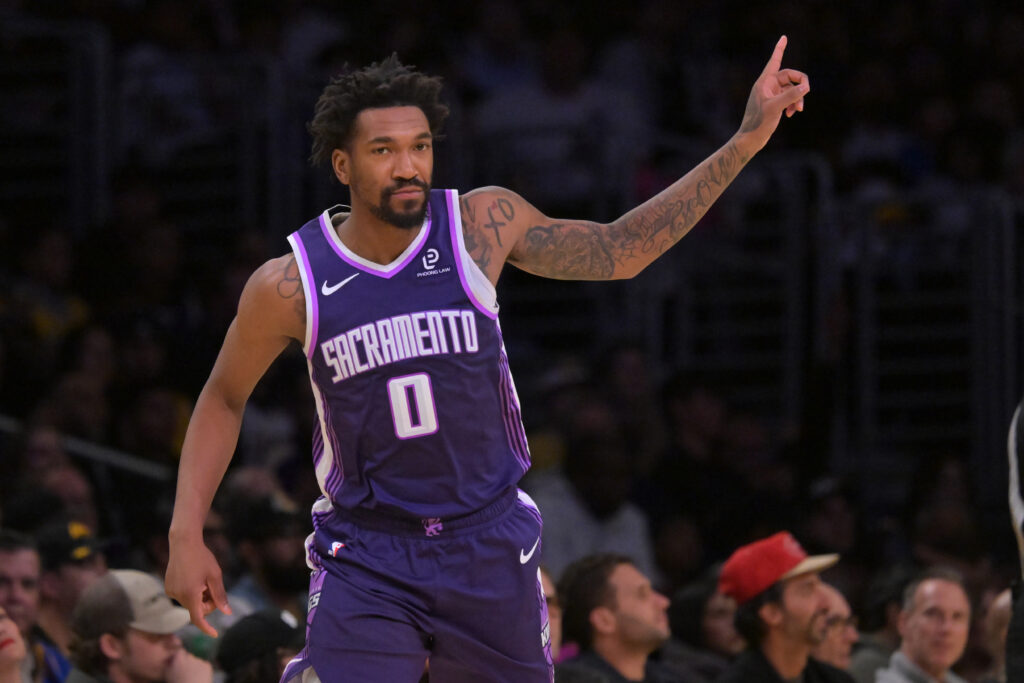
Malik Monk is the most dynamic offensive option on this list and the one who would immediately change how defenses guard San Antonio. This season, Monk is averaging 12.1 points per game while shooting 40.7& from three on 4.6 attempts per game, knocking down about 1.9 threes per night.
He’s comfortable shooting off the catch, off movement, and, most importantly, off the dribble, which separates him from most of the Spurs’ current perimeter options. The fit next to Wembanyama, Castle, and Fox is obvious.
With Fox collapsing the paint and Wembanyama drawing double-teams at the nail or on the block, Monk becomes the option San Antonio currently lacks. He also gives the Spurs a microwave scorer who can tilt playoff games in short stretches.
2. Max Christie
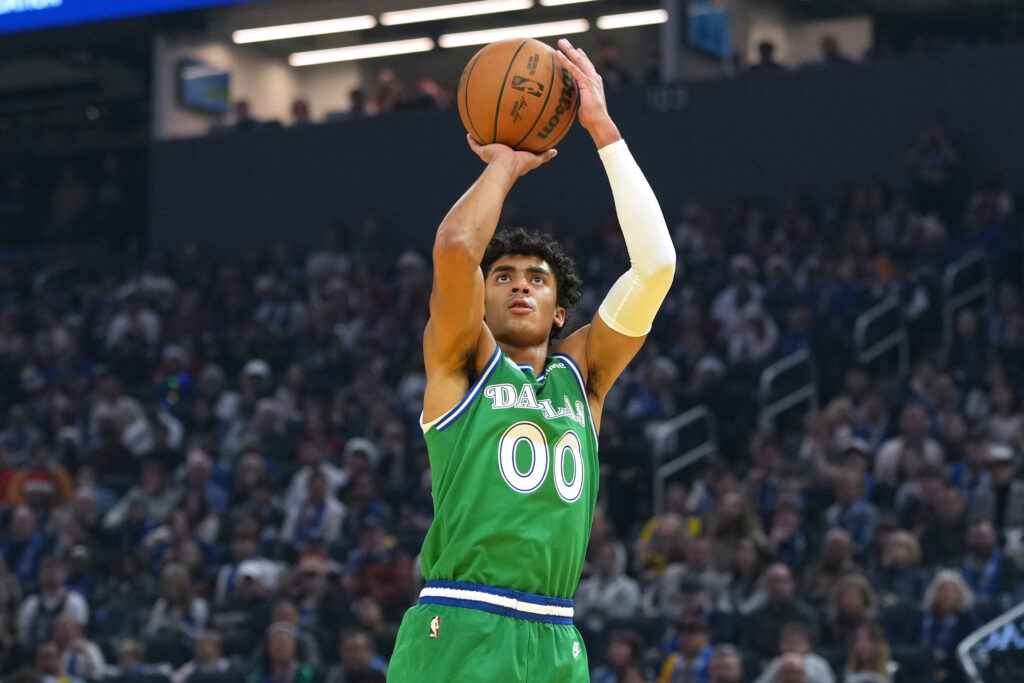
Max Christie represents a younger swing, but one that still addresses the Spurs’ immediate need. Christie is shooting 46.6% from three this season on roughly 5.1 attempts per game, averaging 2.4 made threes while steadily increasing his confidence and defensive reliability.
He’s not an established volume shooter yet, but the efficiency is real, and his mechanics are clean. For San Antonio, Christie fits the timeline with Wembanyama and Castle while still helping now.
He spaces the floor, defends wings, and doesn’t need the ball, an ideal complementary piece next to Fox. Given his age (22 years old) and upside, it would be reasonable for the Spurs to offer Julian Champagne, two first-round picks, and one second-round pick to pry him away.
3. Ayo Dosunmu
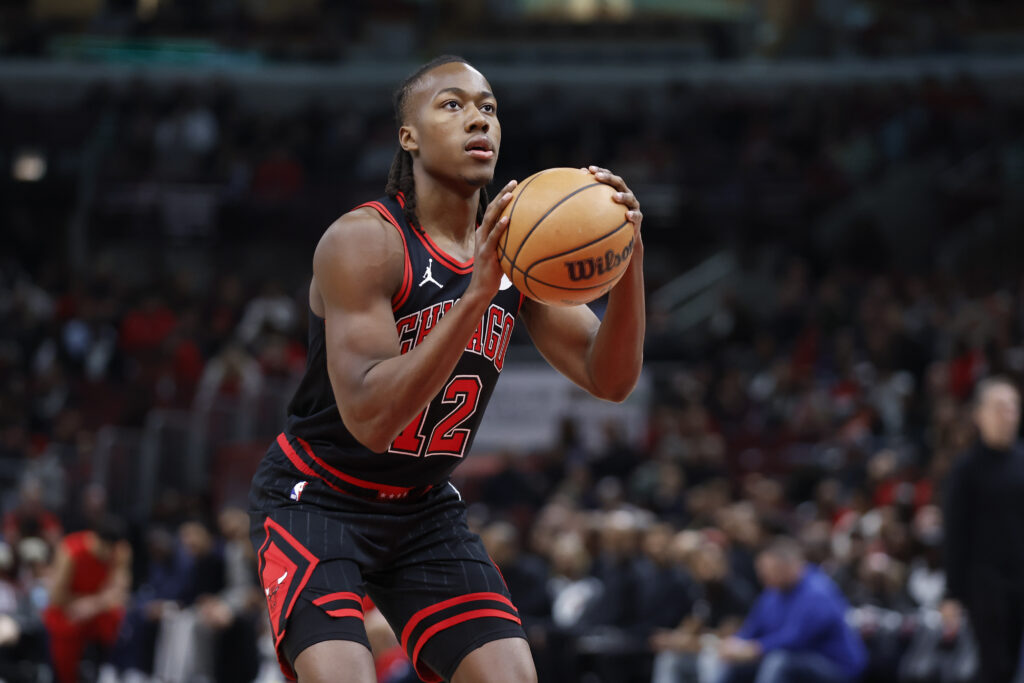
Ayo Dosunmu may not be a recognized gunner, but he’s one of the most efficient, mistake-free perimeter players in the league. This season, he’s shooting 42.6% from three on approximately 3.9 attempts per game, averaging about 1.7 made threes while also contributing 13.8 points, strong point-of-attack defense, and secondary playmaking (3.1 assists per game).
He thrives without the ball, which is critical on a Spurs team built around Wembanyama. He spaces the floor for Wembanyama, defends opposing guards to lighten Fox’s workload, and keeps the offense flowing when Castle is developing on the ball.
For Chicago, a deal centered around Julian Champagne, two first-round picks, and one second-round pick makes sense since Dosunmu is a plug-and-play winning piece, and San Antonio can afford to pay that price.
4. Grayson Allen
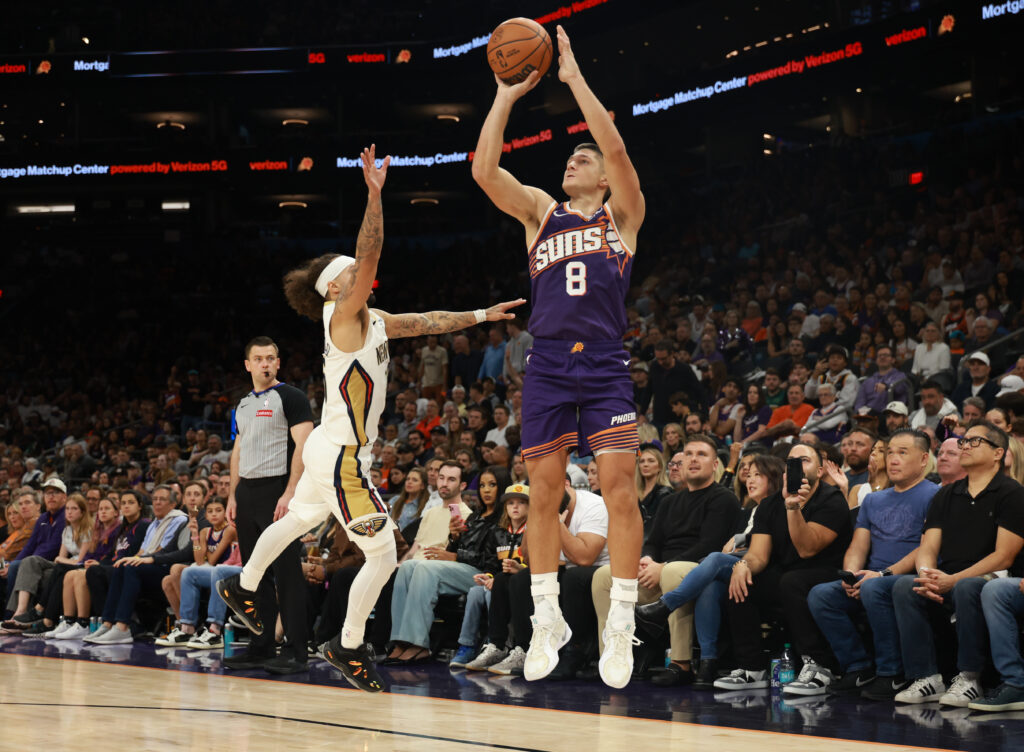
If the Spurs want the cleanest solution to their spacing issue, Grayson Allen might be it. Allen is having another elite shooting season, hitting 39.2% from three on about 8.2 attempts per game, good for 3.2 makes per night.
He’s one of the league’s most consistent corner shooters and has proven he can sustain efficiency deep into the playoffs. Allen’s fit next to Wembanyama is nearly perfect, and adding veteran experience is always a plus.
Defenders simply cannot leave him to tag the roll or double the post, which opens the floor for Wemby to operate as both a scorer and passer. He doesn’t need touches, doesn’t halt possessions, and improves the spacing of every lineup he’s in.
5. Cam Spencer
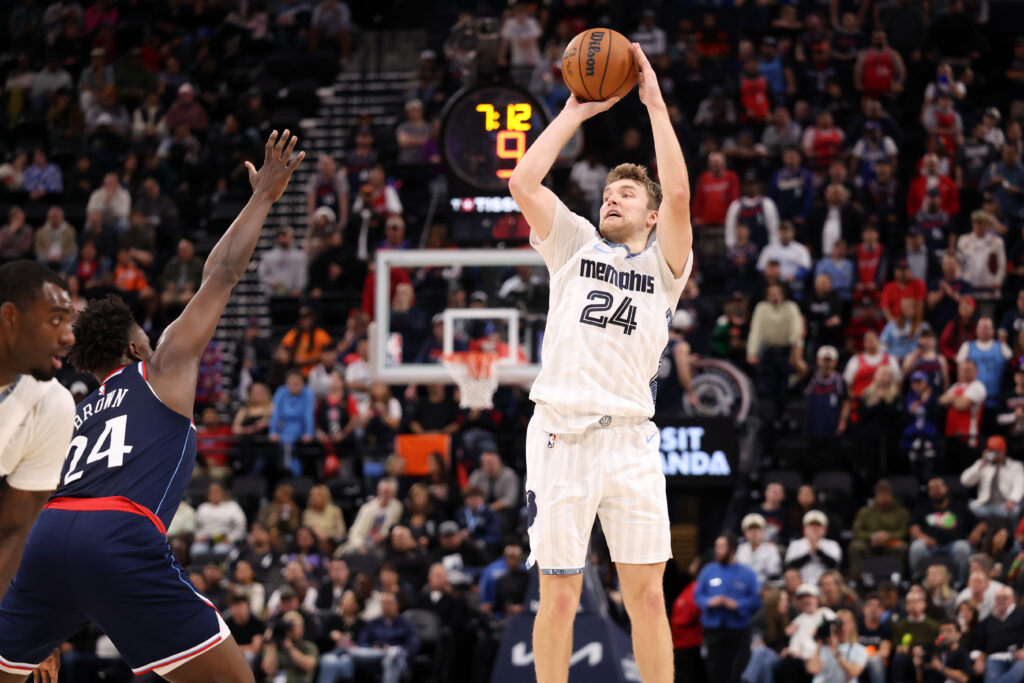
Cam Spencer is the wild card and arguably the purest shooter on this list. As a second-year player, Spencer is shooting an incredible 48.1% from three on 5.2 attempts per game, averaging 2.5 made threes in 23.3 minutes per game. His confidence, quick release, and willingness to fire immediately separate him from many young shooters.
The appeal for the Spurs is simple: Spencer bends defenses the moment he steps on the floor. With Wembanyama drawing attention everywhere, Spencer would feast on clean looks, while Fox and Castle would benefit from the extra space he provides. He’s not a defensive stopper, but San Antonio’s infrastructure can cover for that.