The Boston Celtics had a golden opportunity to shut the door, but instead left it wide open. In a Game 6 that demanded urgency and precision, Boston came up flat, falling 106-93 to the Philadelphia 76ers and allowing the series to shift back to Philadelphia with all the pressure shifting.
From the opening minutes, the Celtics never looked like a team ready to close. Shots weren’t falling, execution was inconsistent, and the energy simply wasn’t there.
Meanwhile, the Sixers played with desperation, controlling the game for nearly its entirety and exposing cracks in Boston’s offense that could loom large heading into a now decisive Game 7.
1. The Celtics’ Offense Died Down
The Boston Celtics didn’t just have an off night – they looked disconnected offensively from the opening quarter. They shot just 36-86 (41.9%) overall and an even uglier 12-41 (29.3%) from three, settling for jumpers instead of attacking a defense that was daring them to be aggressive.
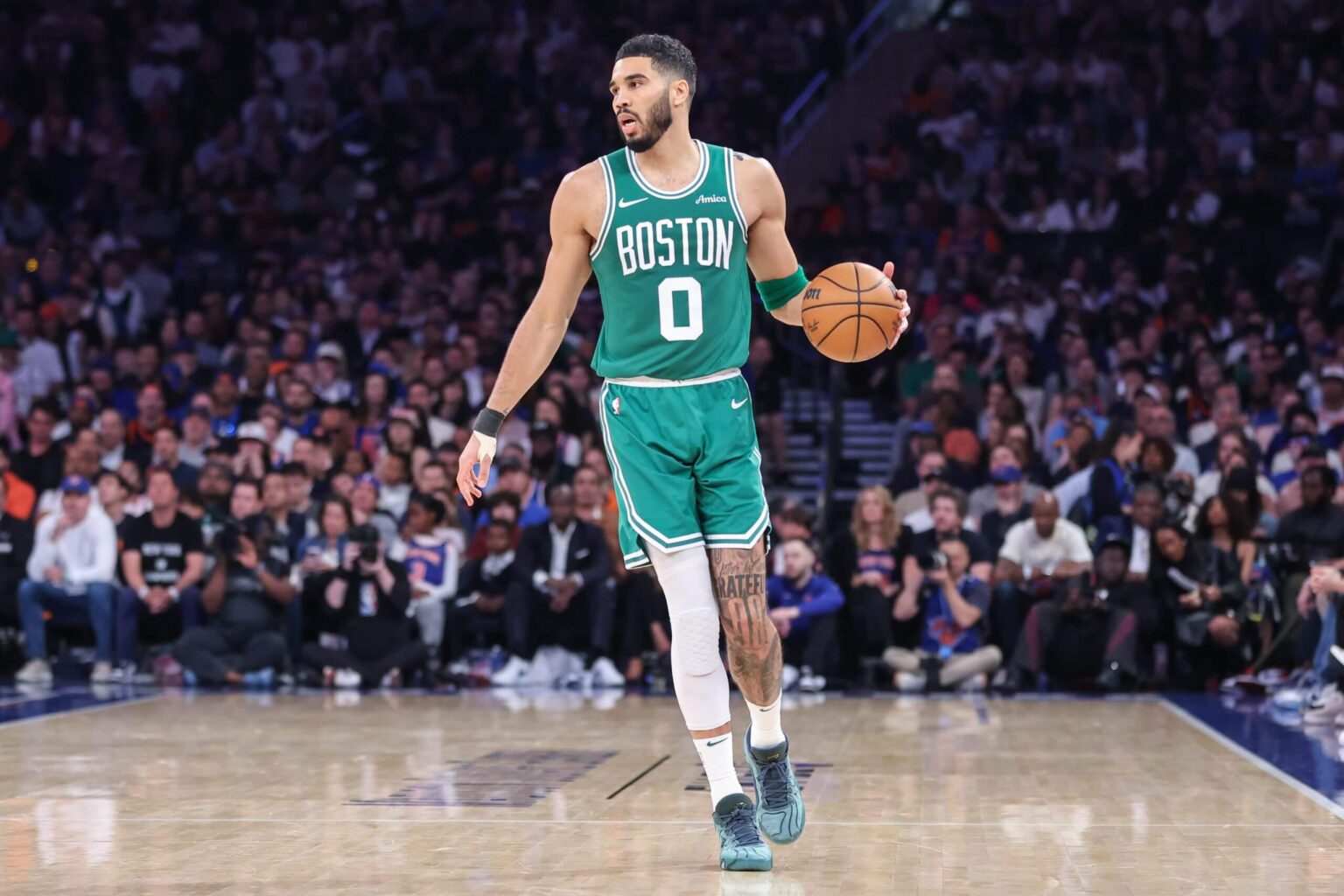
Jayson Tatum finished with 17 points on 6-13 shooting, but never imposed himself, while Jaylen Brown added 18 points on 7-17 and committed 5 turnovers. That’s not star production in a closeout game – that’s survival mode.
The bigger issue was how stagnant everything felt. Boston managed just 18 assists on 36 made field goals, a clear sign the ball wasn’t moving with purpose.
Possessions turned into isolation bailouts or late-clock threes, and the Sixers were more than happy to live with that. When your offense becomes predictable in the playoffs, especially on the road, you’re not just making it harder – you’re playing directly into your opponent’s hands.
2. Free-Throw Disparity Was Very Important
This game wasn’t just about shot-making; it was about points left on the table. The Celtics went a brutal 9-16 from the line (56.3%), while the Philadelphia 76ers were nearly perfect at 17-19 (89.5%).
That’s an eight-point swing in a game that never felt completely out of reach early, but slowly slipped away as Boston failed to capitalize on easy opportunities.
It’s even more frustrating when you consider who was missing. Brown alone went 2-6 at the line, and Tatum left points there as well (3-5). Meanwhile, Tyrese Maxey and Joel Embiid combined to go 11-12 from the stripe, punishing every defensive mistake. In playoff basketball, where margins shrink, giving away free points like this is basically self-sabotage.
3. Tyrese Maxey Completely Took Over
There are games where stars show up, and then there are games where they take over. Maxey lived in that second category. He dropped 30 points on 11-22 shooting, including 3-5 from deep and a perfect 5-5 from the line.
But beyond the scoring, it was his control of tempo that broke Boston. Every time the Celtics threatened to make a push, Maxey responded with a big shot or a drive that collapsed the defense.
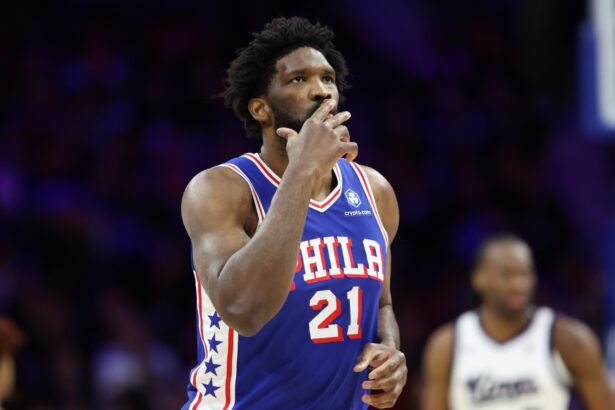
And he wasn’t alone. Paul George added 23 points on 5-9 from three, stretching the floor and punishing rotations, while Embiid anchored everything with 19 points, 10 rebounds, and 8 assists. The Sixers had five starters in double figures and shot a more efficient 43.8% overall.
It wasn’t just one player beating Boston; it was a coordinated offensive attack that the Celtics never solved.
4. Boston Never Matched Philly’s Intensity
The most telling stat might be this: the Philadelphia 76ers led for 86% of the game. That’s not a late collapse – that’s a team getting outplayed from start to finish. The Sixers jumped on Boston early, built a lead that stretched as high as 23, and never really let the door open. Meanwhile, the Celtics’ largest lead was just five points, and even that felt temporary.
You could see it in the energy plays. Philadelphia outworked Boston on loose balls, rotated harder defensively, and played with a clear sense of desperation.
Kelly Oubre Jr. (14 points, 9 rebounds, +23) and VJ Edgecombe (14 points, 8 rebounds, +18) brought physicality and effort that Boston struggled to match. In a closeout game, one team played like its season was on the line; the other played like it expected another chance.