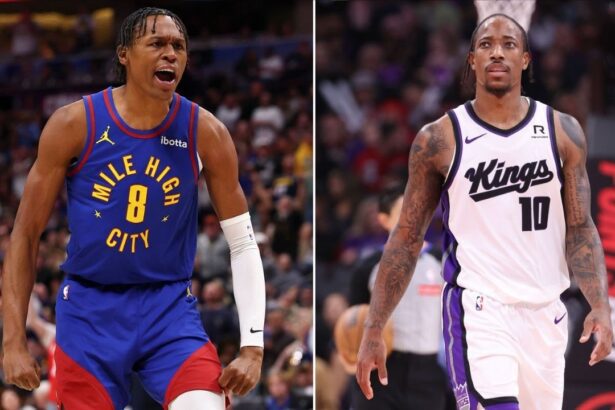
The shooting guard spot is not just “shooting” anymore. In 2025-26, the best twos are doing a bit of everything: carrying scoring, creating offense late in games, defending bigger wings, and still hitting threes when defenses load up.
This pyramid is based on what players have actually done this season, not what their résumé says. The top tier is simple: elite volume scorers who also drive winning. The next tier is where it gets fun, because production can look like stardom even if the role is unusual, or the team context is messy. Then you have the “Exceptional” group: high-level starters who can swing games with shooting, defense, or secondary playmaking. And the last tier is about reliability.
Some of these guys used to be All-Stars. Some still play like it in short bursts. But over the full season, they land here because efficiency, availability, or consistency has not matched the top tiers.
This is the second part of our Pyramid rankings, after starting the series with the point guards tier list, and following with our Defensive Player of the Year rankings. So, here are the best shooting guards of the 2025-26 NBA season.
The Best
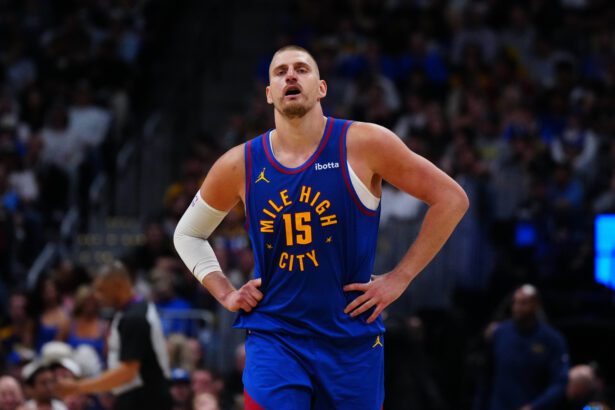
Jaylen Brown, Anthony Edwards, Donovan Mitchell
Jaylen Brown has been a full-time offensive engine for the Celtics without Jayson Tatum, and the numbers match the eye test. He’s at 29.3 points, 6.9 rebounds, and 4.7 assists, with 48.3% from the field and 34.8% from three.
What pushes Brown into this tier is the combination of volume and control. He’s not just scoring off clean looks. He’s creating advantages, getting to the line, and punishing mismatches when teams switch. That matters on a Celtics team sitting second in the East at 35-19, with a profile that looks like a real contender again.
The other piece is that his usage is not empty. The Celtics can play through him without the offense turning into a turnover festival, and still keep their spacing and tempo. Brown’s jumper has not been perfect this season, but when he’s putting pressure on the rim and living in the midrange spots, he forces defenses to bend. That’s what separates “big scorer” from “top-tier guard-wing.”
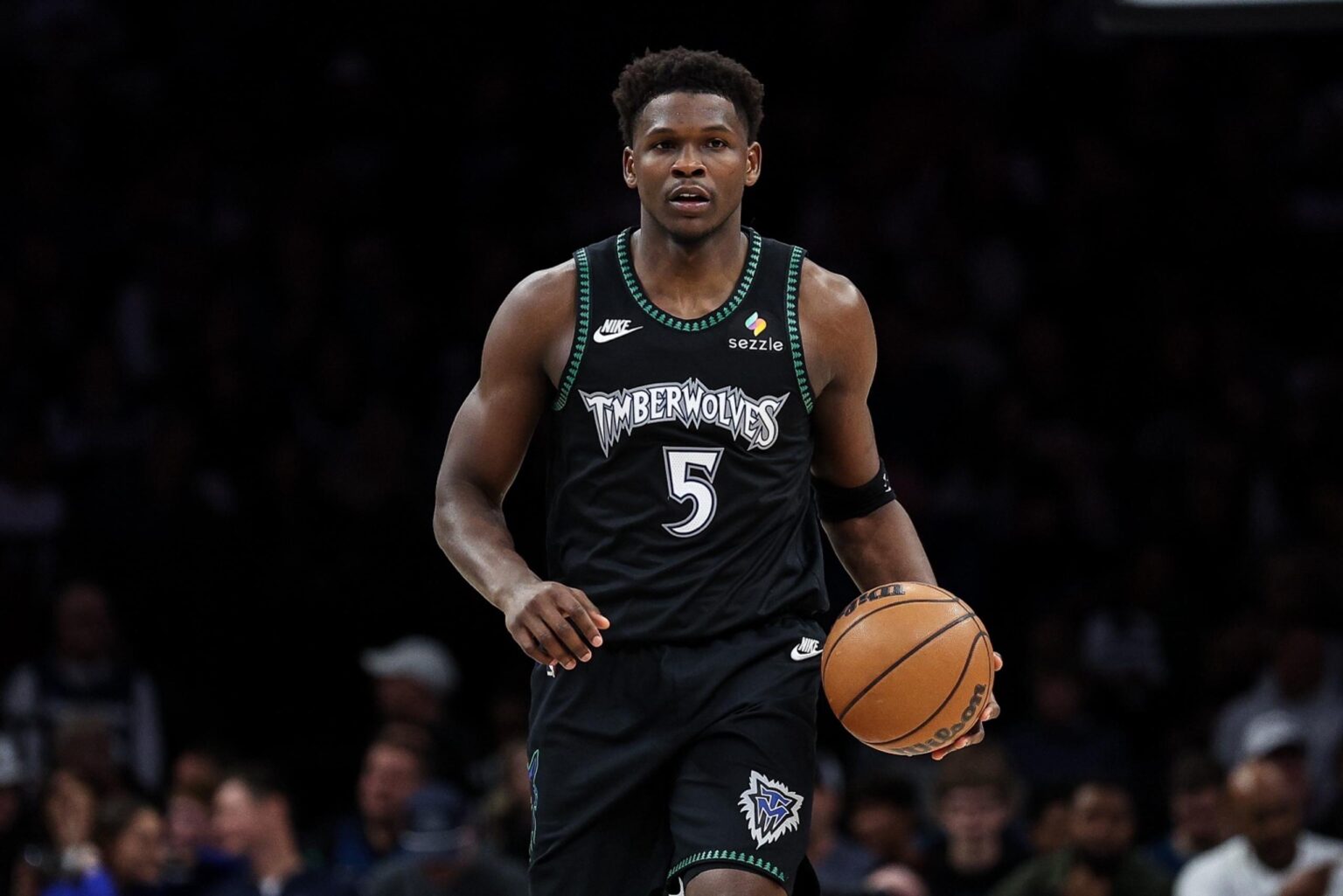
Anthony Edwards is in that rare zone where the shot diet is brutal, but the efficiency still holds. He’s at 29.3 points, 5.2 rebounds, and 3.7 assists, hitting 49.3% from the field and 40.2% from three.
That three-point number changes the geometry of his scoring. Defenses can’t sit in the paint or cheat off screens. Edwards is pulling with confidence, and it’s creating easier driving lanes, not only for him but for everyone around him. The Timberwolves are sixth in the West at 34-22, and that record fits the idea that Edwards has become the nightly “we’re fine” option when the offense gets stuck.
I also like him in this tier because he can win different kinds of games. If the matchup gives him downhill lanes, he attacks. If teams load up, he punishes with pull-ups and deep threes. The defensive effort still comes and goes, but the physical tools show up in the big moments. This season has looked less like “future superstar” and more like “this is a superstar right now.”
Donovan Mitchell has been one of the cleanest high-volume scorers in the league this season. He’s at 29.0 points, 4.5 rebounds, and 5.9 assists, with 48.7% from the field and 37.6% from three, plus strong free-throw efficiency.
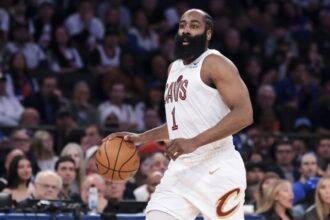
Mitchell’s case gets even stronger because the Cavaliers are winning. They’re fourth in the East at 34-21, and they’ve looked like a real playoff problem since James Harden arrived. The Cavs can run their sets, but when things break down, Mitchell can still create a good shot against a set defense, which is the hardest thing to buy in the NBA.
He also belongs here because he’s not just a scorer. The assist number is real, and his gravity is creating easier finishing chances for bigs and corner shooters. Mitchell has always had the microwave label, but this season has been more steady than streaky. That’s top-tier guard play.
Elite Stars
Devin Booker, Austin Reaves, Norman Powell
Devin Booker’s season has been a little weird in one obvious way: the three-point shot has not been there at his normal level. He’s at 25.2 points, 4.0 rebounds, and 6.3 assists, hitting 45.5% from the field but only 31.1% from three.
Even with that dip, Booker stays in this tier because he still controls possessions. He’s creating offense like a lead guard, not a pure two. The Suns are seventh in the West at 32-23, and that context matters because he’s carrying a lot of the creation workload. When defenses run him off the line, he’s living in the midrange and making the correct pass more often than not.
If the three-ball normalizes even a little, his line starts looking like a “Best” tier season. But right now, the gap is that the very top guys are scoring at the same level with more consistent perimeter efficiency. Booker is still elite. It’s just not his cleanest shooting year.
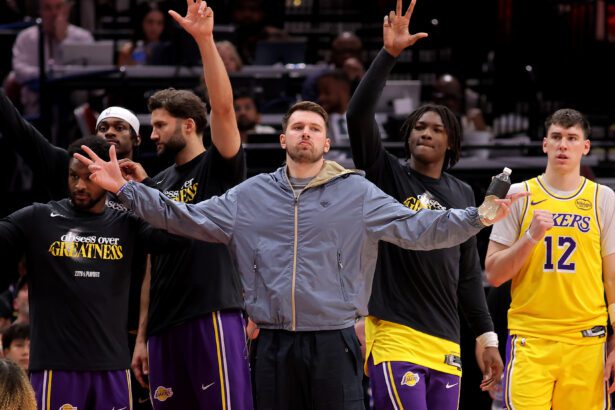
Austin Reaves is one of the biggest “this season is real” stories in the league. He’s putting up 25.4 points, 5.0 rebounds, and 6.0 assists on 50.8% from the field and 36.3% from three. That’s star-level production, period.
Reaves lands in Elite Stars instead of The Best mostly because of team context and availability. The Lakers are fifth in the West at 33-21, which is strong, and his creation has helped them survive stretches where lineups have changed constantly. But he also dealt with a significant calf issue this season, and injuries like that always raise the “how much can you rely on this every night?” question.
On the court, he’s been a real offense organizer. He’s not just scoring off someone else’s gravity. He’s running pick-and-roll, getting to the line, and making the simple reads that keep the ball moving. If you’re building a playoff offense, that skill set plays.
Norman Powell is basically living the dream season that role scorers chase for a decade. He’s at 23.0 points with 47.4% from the field and 39.6% from three, and he’s doing it while still playing like a complete guard, not a pure spot-up.
Powell is in this tier because the scoring is not fluff. He’s creating separation, hitting movement threes, and punishing teams for helping off him. The Heat are eighth in the East at 29-27, and they have needed every bit of his shot-making just to stay afloat in the middle of the conference.
He’s also had moments where he clearly looks like the best scorer on the floor for long stretches, which is the separator for this tier. You can argue he’s not a “classic” star, but if you’re producing like this and bending defensive coverage, you’re a star in the only way that matters: you change game plans.
Exceptional
Tyler Herro, Shaedon Sharpe, Dillon Brooks, Nickeil Alexander-Walker
Tyler Herro’s season is hard to judge cleanly because the sample is smaller than the others, but the production has stayed strong: 21.9 points, 4.7 rebounds, and 2.7 assists, with 49.7% from the field, 35.8% from three, and 90.2% at the line.
Herro is still a tough cover because he can score in multiple ways without needing elite burst. He can pull up, he can hit contested catch-and-shoot looks, and he can get to that floater area when bigs drop. The Heat’s overall record is middling, but his shot creation is still one of the cleanest things they can generate.
He’s in “Exceptional” instead of “Elite Stars” because the playmaking load is lighter and the defensive impact is still the swing point. When Herro’s jumper is hot, he looks like a top-tier guard. When it isn’t, you can feel the limits. Still, this is a high-level starter with real scoring gravity.
Shaedon Sharpe has taken a real leap as a scorer. He’s at 21.4 points, 4.4 rebounds, and 2.6 assists, with 45.6% from the field and 34.0% from three. That is legit shot-making growth, not just “more shots.”
The part that keeps him in this tier is the team context and the availability questions. The Trail Blazers are ninth in the West at 27-29, and Sharpe has had to carry a lot of tough possessions. He also dealt with a calf issue recently, which matters when your game is built around explosion and lift.
But the upside is obvious. Sharpe can score at all three levels, and he’s starting to look more comfortable creating in the halfcourt instead of only living in transition highlights. If his handle and passing tighten up over the next year, this is the type of player who jumps tiers fast.
Dillon Brooks being here is a hilarious sentence if you’re thinking about old versions of Brooks. But this season’s production is real: 21.2 points, 3.7 rebounds, 1.8 assists, and 34.3% from three. That scoring is career-best territory.
He’s still Dillon Brooks, though. The technical fouls and chaos come with it, and he was suspended after hitting the automatic 16th technical threshold. That’s part of the evaluation. You can’t ignore availability and volatility when you’re ranking.
The Suns are seventh in the West at 32-23, and Brooks has been a big part of their edge because he plays with aggression every night. When he’s locked in, he brings real two-way value. When he tilts too far into the act, he hurts them. That’s “Exceptional” in a nutshell.
Nickeil Alexander-Walker has turned into one of the most surprising high-usage guards of the season. He’s at 20.1 points, 3.6 rebounds, and 3.7 assists, shooting 43.3% from the field and 37.3% from three, plus 88.5% at the line.
That is big production for a guy most people still think of as a defense-first role guard. And the defense is still there. Even if the Hawks’ season has been messy, his size and activity matter on the perimeter. The Hawks are 10th in the East at 26-30, and he’s been one of the few consistent levers they can pull nightly.
I’m not putting him in Elite Stars because I need to see this level over a full season with teams game-planning for him as a primary option. But as a 2025-26 story, he belongs on the pyramid, and he belongs above the “solid starter” line.
Quality Starters
Desmond Bane, Zach LaVine, CJ McCollum, RJ Barrett, Derrick White
Desmond Bane has stayed very steady: 19.6 PPG, 4.2 RPG, 4.2 APG, hitting 47.2% from the field and 37.2% from three, with an elite 93.0% at the line. The reason he’s not higher is not talent. Its role and ceiling. Bane is a strong offensive player, but he’s not carrying the same shot creation burden as the top tiers, and his value shows best when he’s a high-end second or third option. The Magic are seventh in the East at 28-25, which is solid, and his shooting is a big reason they can play real half-court offense.
He’s also still adapting to a new environment after that major move last summer, and you can feel the team still figuring out its pecking order. As a starter, though, Bane is exactly what “Quality” means: reliable scoring, reliable spacing, and enough playmaking to keep the ball alive.
Zach LaVine’s season basically got cut in half by health, and that’s why he drops into this tier. In his games, he’s been productive: 19.2 PPG on 47.9% from the field and 39.0% from three. But he’s now set to miss the rest of the season due to right-hand surgery, tied to a tendon injury in his pinkie.
That matters because availability is part of ranking “best of this season.” It’s not a career list. It’s a 2025-26 list. And the Kings’ season has been a disaster, sitting 15th in the West at 12-44.
LaVine can still score with ease. The problem is that the season never stabilized for him or for the Kings. The defense, the continuity, the nightly impact, it never matched his talent. On a different roster next season, he might jump tiers again. This season, he can’t.
CJ McCollum is still good. He’s just not overpowering games the way the top tiers do anymore. He’s at 18.8 PPG, 3.4 RPG, 3.6 APG, shooting 45.5% from the field and 38.2% from three.
That’s strong starter production, especially because the shot-making is still there. The context is rough, though. The Hawks are 10th in the East at 26-30, and McCollum has been asked to steady things after coming from the Wizards (last in the East) in January, following the Trae Young move.
He fits the “Quality” tier because you know what you’re getting: pull-up shooting, smart decisions, and enough creation to run second-unit offense. But he’s not bending defenses like Edwards or Mitchell, and he’s not dropping 25-plus with efficiency the way Reaves and Powell have. That’s the line.
RJ Barrett has been a productive starter for the Raptors: 18.5 PPG, 5.2 RPG, 3.6 APG, hitting 48.1% from the field and 34.2% from three.
Barrett’s value is that he can do a bit of everything without being a specialist. He can attack closeouts, he can bully smaller guards, and he can make simple reads as a secondary creator. This Raptors team is fifth in the East at 32-23, so this isn’t “good stats on a bad team” production.
He stays in this tier because the efficiency swings, and the perimeter shooting still does not scare defenses the way it needs to for a higher jump. But as a starter, he’s solid. If the Raptors are going to win a playoff series, they need Barrett to be the guy who makes defenses pay when the top option draws two.
Derrick White is the most “quality starter” player on this list, and I mean that as a compliment. He’s at 17.2 PPG, 4.4 RPG, 5.6 APG, with 38.9% from the field and 32.5% from three, but he’s also giving you 1.4 blocks per game as a guard.
That block number sounds fake until you watch him. He’s one of the best help defenders at the guard spot, and he’s constantly making winning plays that don’t show up as points. The Celtics being second in the East at 35-19 is not just about Jaylen Brown’s scoring. It’s also about guys like White holding the whole structure together.
If the shooting was closer to his better seasons, he’d have a real argument for “Exceptional.” But for 2025-26, the offense has been a little inefficient compared to the top tiers. The impact is still huge. The scoring profile just keeps him here.