Most NBA attention goes to stars, top picks, and major market storylines. Every season, a smaller group of young players produces real value without the same visibility. They defend, space the floor, rebound, limit mistakes, and hold roles that matter to team results, even if the box score does not pop.
This list focuses on under-the-radar young players from the 2025-26 season. It is not a ranking of the best prospects. It is a snapshot of players whose impact is being overlooked because of role, minutes, team context, or lack of hype.
The point is simple: these players are contributing now, and their progress is ahead of the public narrative.
1. Kyshawn George
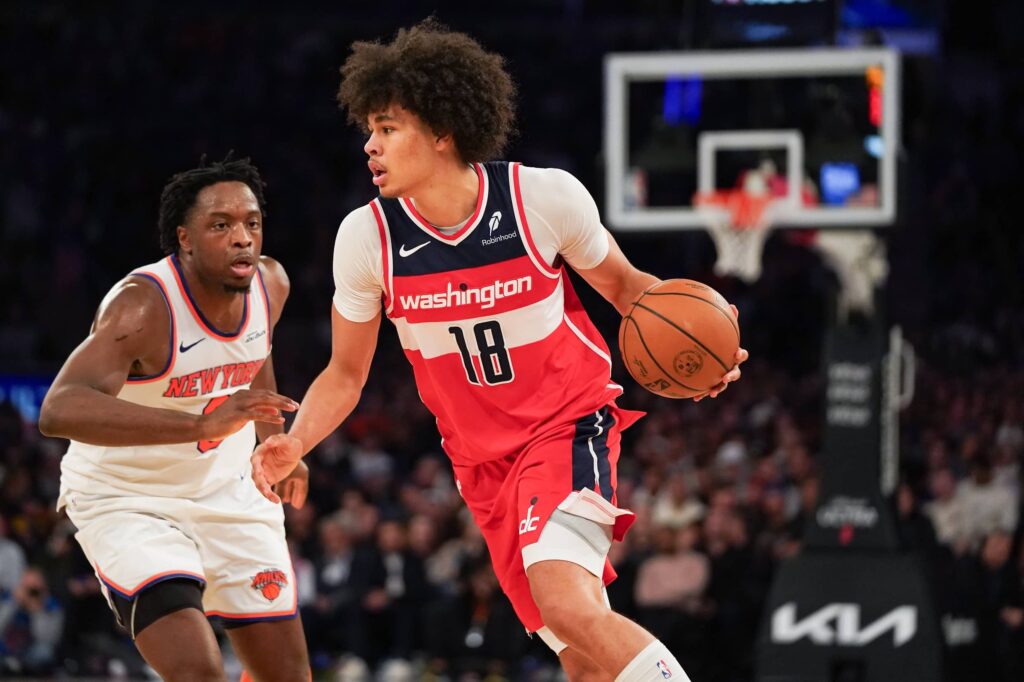
Kyshawn George has made one of the cleaner second-year jumps in the league, and it is happening on a Wizards team that does not get many nationally watched games. He is no longer just a long wing trying to survive possessions. He is playing bigger minutes, taking on more creation, and producing with real efficiency.
Through 46 games in 2025-26, George is at 14.8 points, 5.2 rebounds, and 4.6 assists per game in 29.4 minutes. He is shooting 43.6% from the field, 37.1% from three, and 80.8% at the line.
That production matters more when you line it up with his rookie baseline. As a first-year player, he was closer to a low-usage connector: 8.7 points in 26.5 minutes, 37.2% from the field, and 32.2% from three. The sophomore version is taking roughly four more shots a game, hitting them at a much higher rate, and getting to the line more often.
The biggest change is the role. George is being trusted to handle and pass, not just spot up. The assist jump is the tell. Wings do not reach the mid-4s in assists by accident. It usually means they are running secondary actions, attacking closeouts, and making reads against rotating defenses. On a rebuilding roster, that responsibility is valuable because it speeds up development and forces him to play through mistakes.
There is also real top-end output already on the record. Early in the season, he had a 34-point game with 11 rebounds while going 7-for-9 from three vs. the Mavericks, the type of eruption that signals actual shot-making upside, not just volume scoring.
If you are building a short list of under-the-radar young players this season, George fits because the improvement is not theoretical. The numbers, the efficiency, and the expanded workload all say the same thing: he is progressing fast.
2. Ajay Mitchell
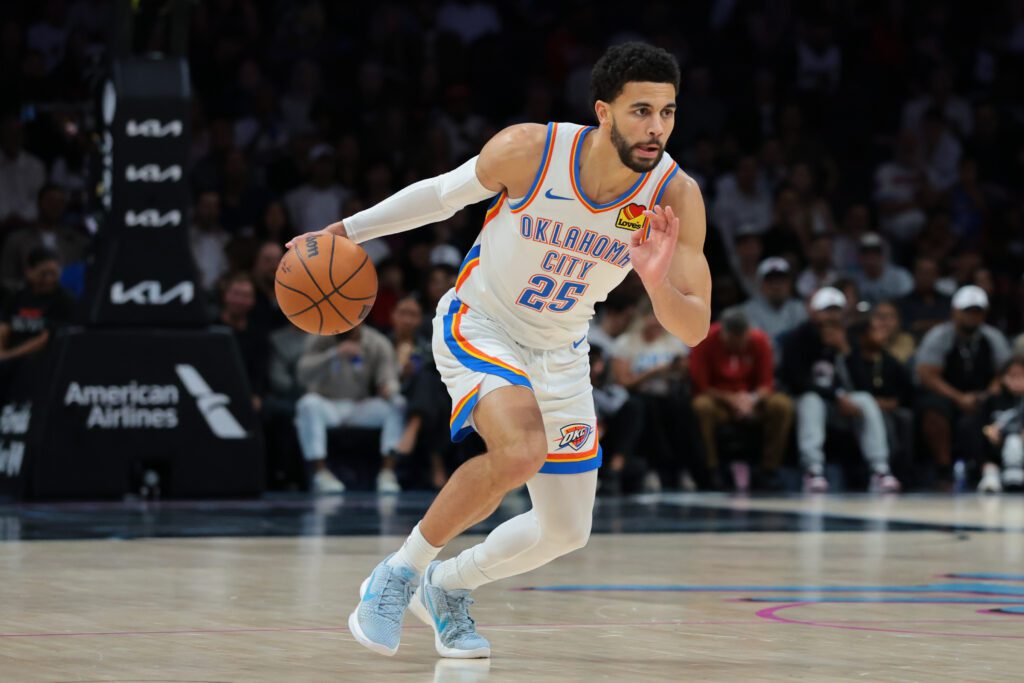
Ajay Mitchell is 23, and his breakout is not being marketed like a typical “young star” leap. It is still one of the most meaningful under-the-radar developments of the 2025-26 season because it is happening on a team with real stakes.
Mitchell has moved from end-of-rotation status to a clear sixth man. The Thunder started using him as the primary organizer for bench units and, in many lineups, as the second guard who keeps the offense functional when the starters sit. That role is not cosmetic. It requires ball security, shot selection, and the ability to create a decent possession late in the clock.
His season line reflects that workload. Mitchell is averaging 14.1 points, 3.5 rebounds, and 3.7 assists per game. The efficiency is solid for a bench lead: 48.7% from the field, with enough three-point volume to keep defenses honest, and strong free-throw finishing.
The context matters. Mitchell is doing this on a Thunder team that has the No. 1 seed in the West, where minutes are earned, and mistakes get punished. His path also explains why he stays under the radar: he was a second-round pick, he is older than most “prospect” breakouts, and he plays a role that is easier to feel than to hype.
The Thunder also treated him like a real piece early. In late June 2025, Shams Charania reported the Thunder declined his team option and moved quickly to a new three-year deal worth nearly $9.0 million. That is not a courtesy contract. It is a roster decision tied to trust.
This is the profile of a complete sixth man season: real minutes, real usage, and production that holds up over time, not a short hot stretch.
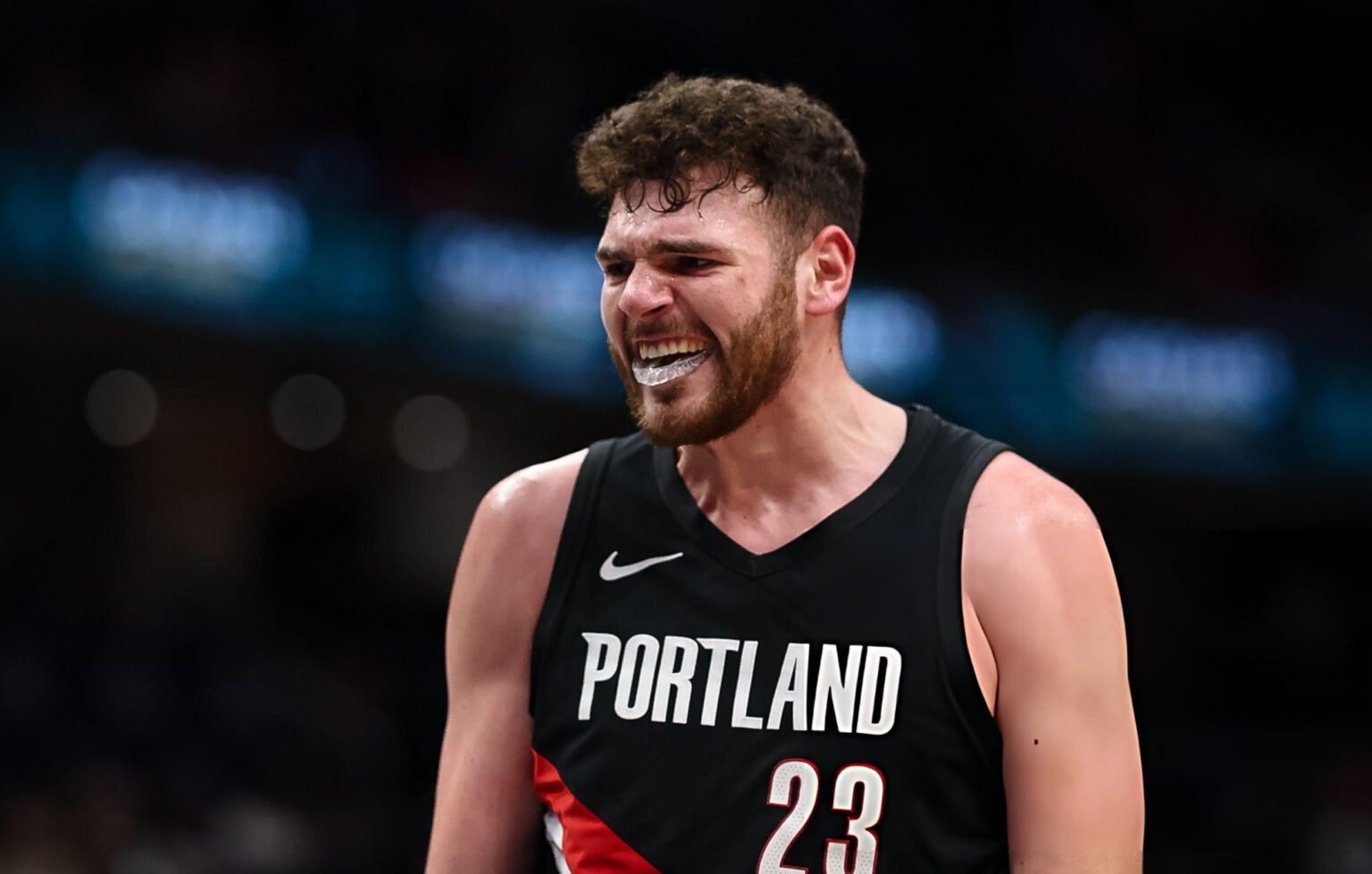
3. Donovan Clingan
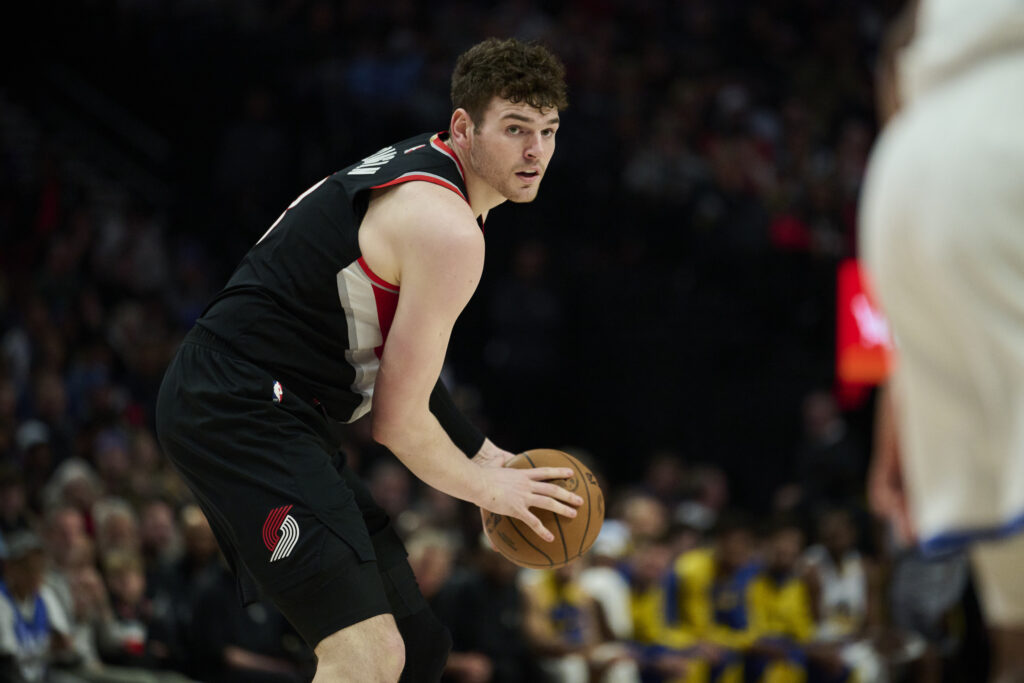
Donovan Clingan has turned his second season into a clear statement: he is already producing starter-level impact at the most repeatable parts of the center position. The scoring is fine. The value is in the possession game.
Clingan is averaging 11.9 points, 11.5 rebounds, and 2.1 assists, with 1.5 blocks per game while shooting 53.0% from the field. He is third in the league in rebounds per game, which is not a “nice for a young big” number. It is elite volume.
The separator is offensive rebounding. Clingan is at 4.7 offensive rebounds per game, and he sits at the top of the league in offensive rebounding share. That production is not empty. It creates extra shots for a Trail Blazers offense that has been inconsistent from the floor (14th in PPG), and it is the kind of advantage that travels because it does not depend on jump shooting. Clingan’s offensive rebounding has been their most reliable way to manufacture second chances, and his team-leading gap over the next rebounders is substantial.
He also is not a zero on offense. He finishes plays, runs to the rim, and he has shown flashes as a passer and short-roll decision-maker, reflected in the assist number for a traditional center. The defense remains the baseline. He is protecting the rim at starter minutes, and the Trail Blazers’ management has consistently framed him as a boards-and-rim anchor rather than a developmental project.
The reason he still qualifies as under the radar is simple: the Trail Blazers are not a nightly national team as the 9th seed, and Clingan’s best skill is not highlight-friendly. But the season profile is already strong: double-double production, top-tier rebounding, and a role that directly changes possessions.
4. Isaiah Collier
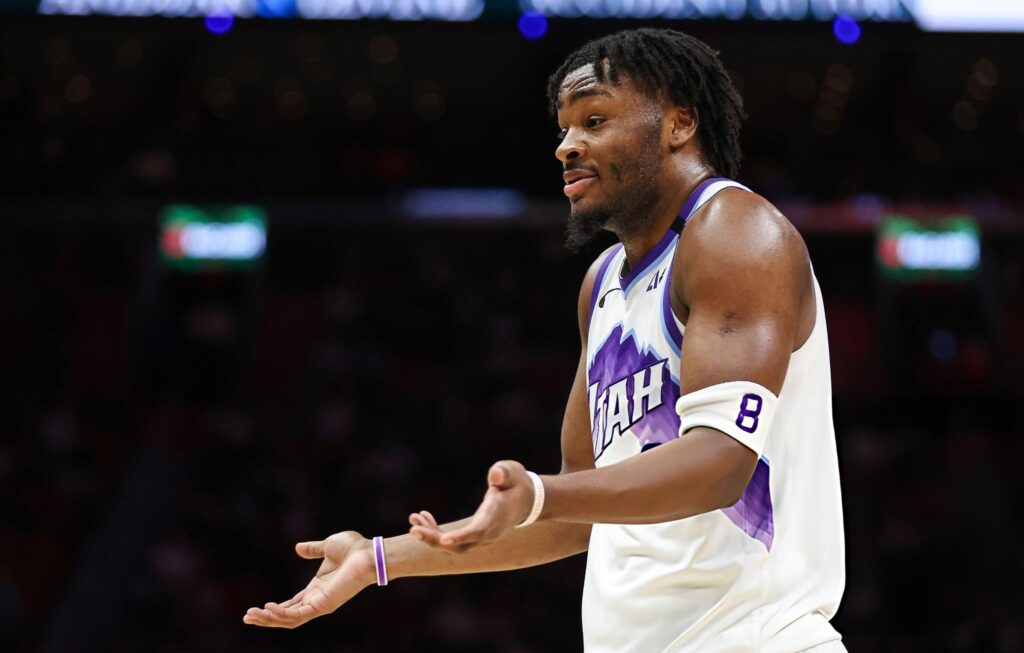
Isaiah Collier is not a headline player, but his second season has already produced a clear NBA skill: he is a high-volume table-setter who can run an offense for long stretches. For a Jazz team leaning into development, that matters more than raw scoring.
Collier is averaging 10.8 points, 2.6 rebounds, and 7.3 assists in 25.6 minutes per game. He is shooting 50.1% from the field. The three-point shot is still a work in progress at 28.2%, and he is at 70.2% at the line. He also averages 2.5 turnovers, which is a manageable number relative to his passing load.
The assist number is the separator. Collier ranks ninth in the NBA in assists per game, despite playing starter minutes only part of the time. That is not typical for a 21-year-old guard in his second season. It reflects real on-ball reps, real read-making, and a coaching staff that is comfortable putting the ball in his hands.
His game-to-game profile supports the idea that the playmaking is sustainable. In February, he posted 14 assists in a win over the Kings, then followed it with a nine-assist start against the Trail Blazers. He also has nights where the scoring pops, including a 24-point game against the Grizzlies on February 20.
That combination is why he fits this list. Collier is not being discussed as a breakout because he does not have a polished jumper yet, and the Jazz are not operating in the center of the league’s attention. But guards who can generate this level of assist volume with efficient two-point finishing usually stick. If the shooting moves from “below average” to “credible,” the role scales quickly from developmental starter to long-term lead guard.
5. Egor Demin
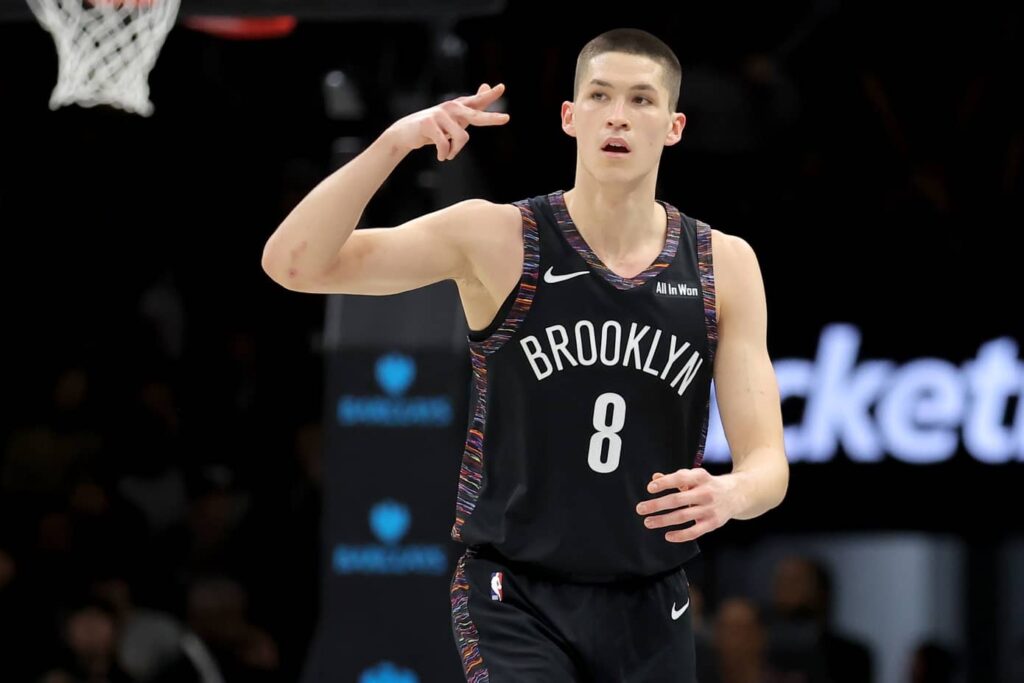
Egor Demin is a rookie, but he already fits the “under the radar” label because the conversation around him is still stuck on draft-night skepticism. The actual season has been more concrete: the Nets have given him a real role, and he has produced like a functional rotation guard with size.
Demin is averaging 10.5 points, 3.2 rebounds, and 3.2 assists per game. The efficiency is mixed, but not empty: 38.6% from three with workable shot volume is great for a rookie guard, and he has had enough shooting gravity to stay in the offense even when he is not initiating.
The swing skill has been the jumper relative to what he showed before the league. He has lifted his three-point accuracy significantly compared with his college season, while still flashing the same passing feel that made him a first-round bet in the first place. That matters because his NBA pathway is not built on burst. It is built on size, vision, and whether defenders have to respect the catch.
The other reason his season is real, not theoretical, is that he has already produced high-end nights that translate to the role the Nets want. He had a career-high 26 points against the Magic in early February, including six made threes, in a game where his shooting carried the offense for long stretches. That is the type of game that forces defenses to treat him differently the next time, even if the baseline efficiency is still developing.
The overall profile is not finished. He still has to get stronger, handle contact, and add rim pressure to avoid becoming only a shooter-pass connector. But for this list, the case is simple: Demin is producing rotation offense as a 6-foot-8 guard, and the shooting progress has already changed his floor.
6. Maxime Raynaud
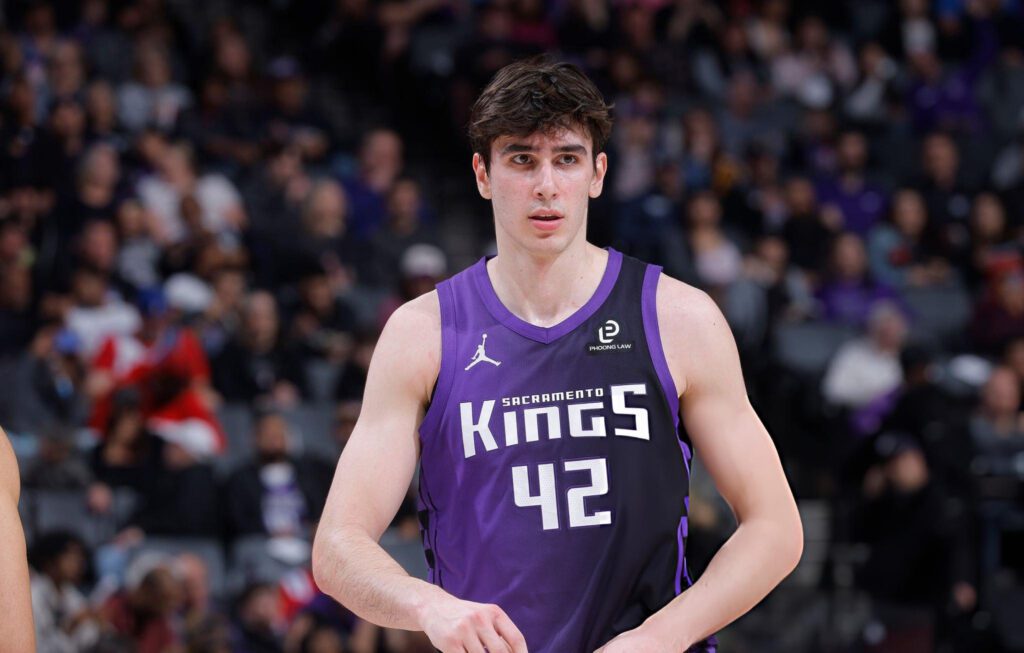
Maxime Raynaud has been productive in a way that usually gets noticed, but the context has kept him quiet nationally. He is a second-round rookie on a Kings team that ranks 15th in the Western Conference, and is openly tanking since losing Zach LaVine and Domantas Sabonis for the season.
The result is that his season has been treated like background noise, even though the underlying output is real, and one of the only bright spots for the Kings in a lackluster campaign.
Raynaud is averaging 10.1 points, 7.0 rebounds, and 1.1 assists per game while shooting 55.0% from the field. For a rookie center, that is immediate rotation-level production, and it is coming with one bankable skill: consistent rebounding.
The best case for his impact is the recent sample. Over the last 10 games, Raynaud has averaged 9.9 rebounds (99 total), a level of volume that changes games regardless of opponent. He has also produced multiple double-doubles in high-minute games. In a February 20 loss to the Magic, he finished with 17 points and 14 rebounds in 39 minutes. Two nights later, against the Spurs, he had 16 points and 12 rebounds. When the Kings finally snapped their franchise-worst 16-game losing streak on Monday, Raynaud added another double-double (10 points, 13 rebounds).
This is not a “stretch big” profile yet. The value is straightforward: size, rim finishing, and control of the glass. That role scales because it does not depend on shot-making variance. If the Kings stabilize and his minutes become more consistent, the counting stats should rise without needing a skill leap.
Raynaud also fits the under-the-radar theme because of draft status and expectations. The Kings took him 42nd in the 2025 draft, then signed him to a three-year, $5.9 million deal, a commitment that signals they view him as more than a two-way flier.
7. Danny Wolf
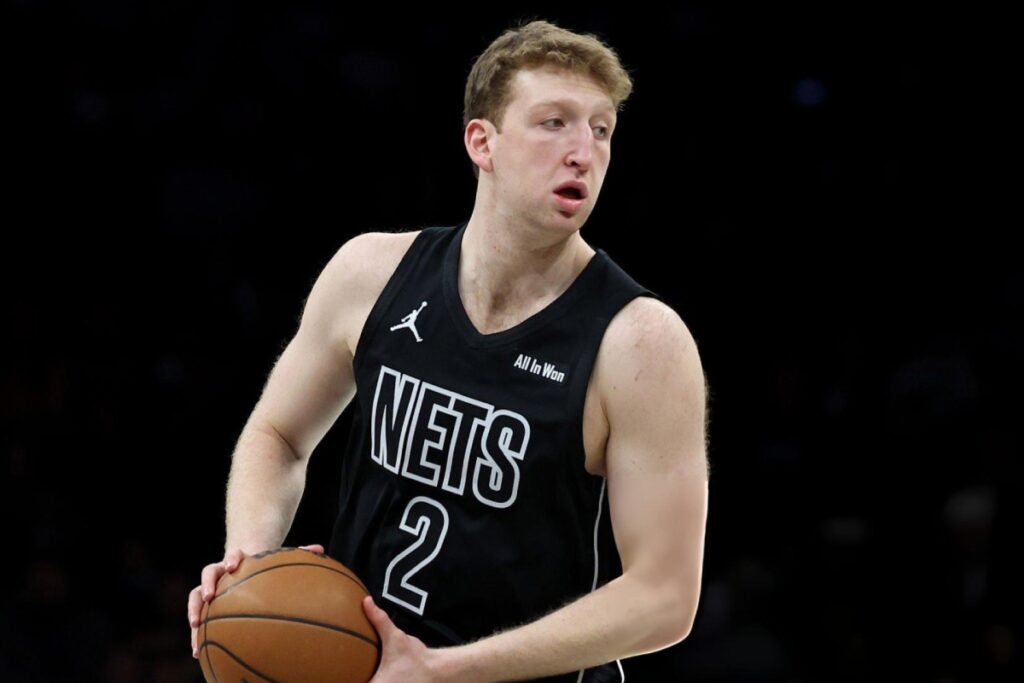
Danny Wolf has been productive in a role that usually gets ignored: a rookie big who keeps the offense organized without needing plays called for him. On a rebuilding Nets team that has a 15-42 record, ranking 14th in the East, his minutes have still mattered because he plays a connective style that reduces empty half-court sets.
Wolf is averaging 8.3 points, 4.7 rebounds, and 2.1 assists in 20.2 minutes per game. He is shooting 40.0% from the field, 31.6% from three, and 74.2% at the line. Those are modest scoring numbers, but the assist rate is the indicator. Bigs who can pass at that level as rookies usually earn lineup flexibility, because it lets a team run offense through dribble handoffs, short rolls, and high-post actions without stalling.
His best stretches show why the profile is real. On February 19, he posted 11 points, 6 rebounds, 7 assists, 2 blocks, and a steal in 28 minutes. Earlier in the month, he had 16 points, 7 rebounds, and 6 assists in 20 minutes against the Wizards, which is the cleanest snapshot of his value: quick decisions, efficient finishing, and passing that creates shots without forcing them.
There have also been flashes of legitimate scoring ceiling for a player whose primary job is to connect. He scored 22 against the Bucks on November 29, including 5-for-9 from three. That does not mean he is a shooter yet, but it supports the idea that he can punish defenses when they leave him.
Wolf fits this list because the role is clear and the pathway is stable. He was the No. 27 pick in the 2025 draft, and the Nets selected him for his Sabonis-like skills at Michigan. The production is not loud, but it is functional, and that is usually the fastest way for a rookie big to become a long-term rotation piece.