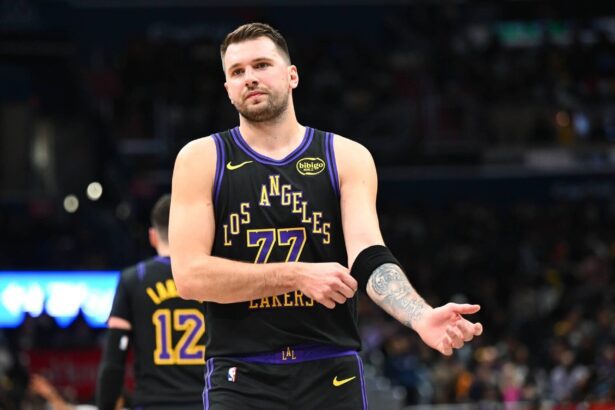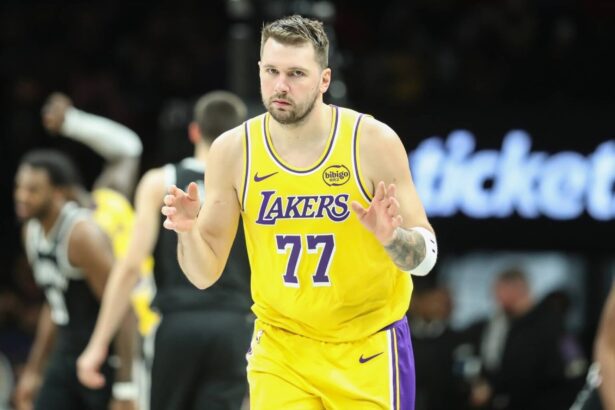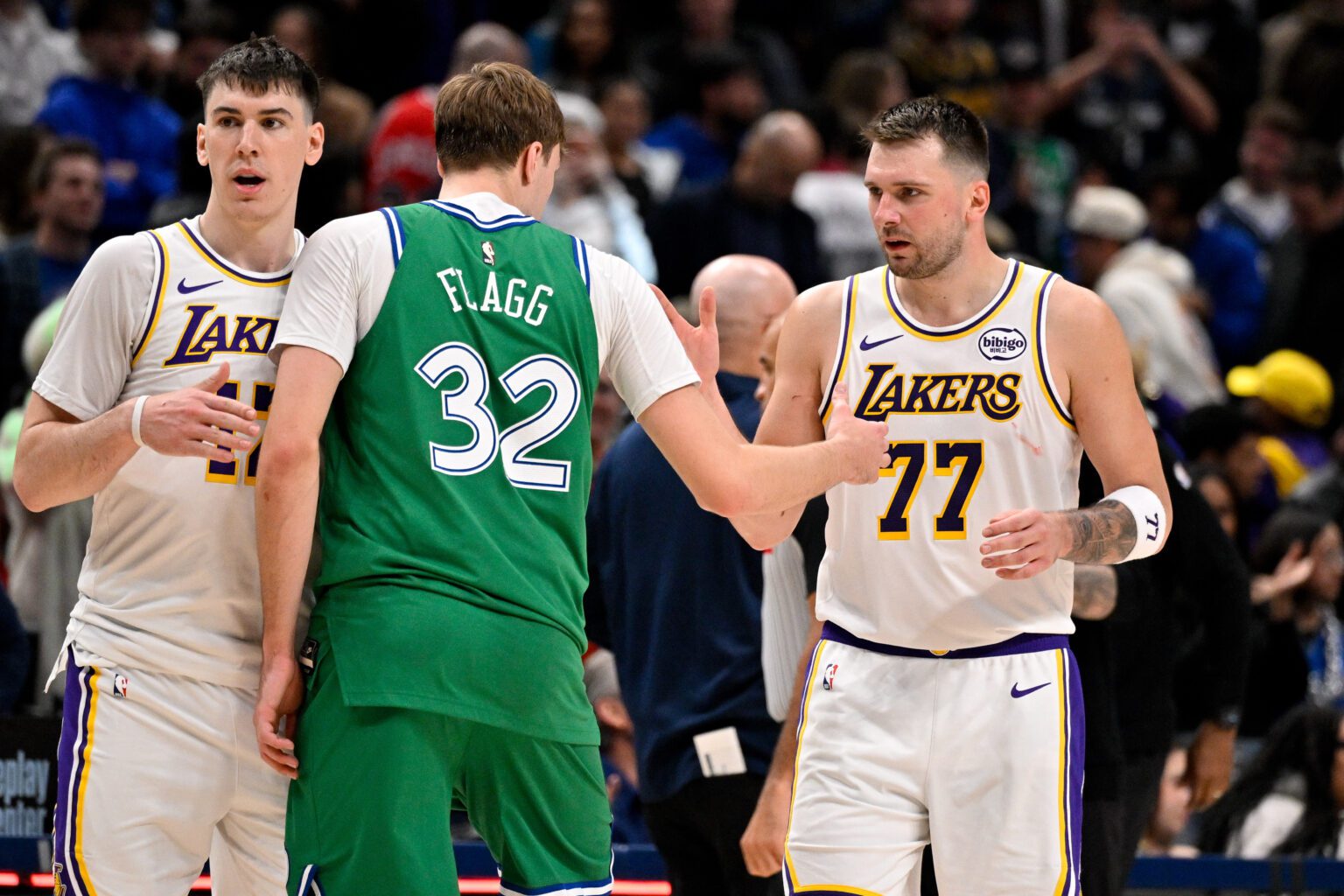
The Mavericks opened this decade in a slow rebuild around the final seasons of Dirk Nowitzki, then hit the accelerator with aggressive draft swings. Some worked. Luka Doncic was the franchise-changing one, acquired on draft night in 2018. Some did not. Dennis Smith Jr. was a high-lottery bet that never became a long-term answer.
Now the Mavericks are back in a reset. They are 21-42 and 12th in the West, with the season shifting away from wins and toward development. Cooper Flagg is the new face of the franchise and the clearest reason the timeline still has upside. In a rebuild like this, the first round becomes the center of the plan again: starters on rookie deals, real trade assets, and the only reliable path to a new core.
This is the same grading exercise from the Lakers, Warriors, Bulls, Kings, and 76ers. The standard stays strict: what the Mavericks actually got in a Mavericks uniform, and whether the pick produced real on-court value or real asset value.
2016 NBA Draft
No First-Round Pick
The Mavericks did not make a first-round pick in 2016 because the selection was owed to the Celtics from the Rajon Rondo trade. The pick landed at No. 16, and the Celtics used it on Guerschon Yabusele.
For this series, there is no Mavericks first-round player to grade in 2016. The year is simply a missing development cycle, and the receipt is Yabusele becoming the name attached to the surrendered first-round slot.
Rating: N/A
2017 NBA Draft
Dennis Smith Jr. – 9th Pick
Stats: 14.5 PTS, 3.5 REB, 4.9 AST, 0.3 BLK, 1.0 STL, 39.9% FG, 31.6% 3PT
Dennis Smith Jr. was the Mavericks’ trying to draft a lead guard during the final transition out of the Dirk Nowitzki era. The bet was athletic creation and downhill pressure, with enough passing feel to grow into a long-term starter. The production came early. Smith put up real counting numbers right away, including a strong rookie volume profile, but the efficiency never stabilized, and the half-court decision-making did not tighten fast enough to match the expectations of a top-10 pick.
The bigger issue was trajectory. By his second season, the fit with the roster timeline was already shaky, and the Mavericks did not treat him like an untouchable development piece. His role became unstable, the team pivoted toward a different primary direction, and his value shifted from “future guard” to “trade chip.” That is the difference between a pick that becomes a foundation and a pick that becomes a bridge to the next idea.
That pivot ended in January 2019, when Smith was traded to the Knicks in the Kristaps Porzingis deal. The Knicks received Smith, DeAndre Jordan, Wesley Matthews, and two future first-round picks, while the Mavericks brought in Porzingis to add an instant star next to their new franchise player.
In this format, the pick is judged on the Mavericks’ return. Smith gave the Mavericks volume minutes and production, but he did not become the long-term answer at the slot, and the chapter ended before the second contract.
Rating: Bust
2018 NBA Draft
Luka Doncic – 3rd Pick
Stats: 28.6 PTS, 8.7 REB, 8.3 AST, 0.5 BLK, 1.2 STL, 47.0% FG, 34.8% 3PT
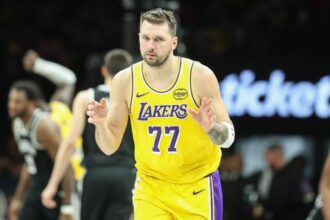
Luka Doncic is the pick that rewrote the Mavericks’ modern history, even though the name was called by another team first. The Mavericks moved up for him on draft night, sending the rights to Trae Young and a protected 2019 first-round pick to the Hawks for the No. 3 selection. That is not a minor trade. It is a franchise decision, the clearest example of the Mavericks choosing a long-term primary engine over a normal rebuild timeline.
The on-court return matched the price. Doncic became a full offensive system in a Mavericks uniform: elite usage, elite playmaking, elite shot creation, and year-over-year production that stayed at the top of the league. The career line is the cleanest summary of the value. He gave the Mavericks star-level scoring and star-level creation at the same time, with efficiency that held despite extreme volume. This is what “great” looks like because it is not just numbers. He was the identity.
In 2022, Doncic led the Mavericks to their first Conference Finals appearance since the 2011 title run, returning to the NBA Finals later in 2024, when they fell against the Celtics. Doncic became an icon, a superstar poised for jersey retirement, a statue, and a lengthy 15-year tenure as potentially the greatest Maverick in history.
The rest is all but known to the public. Doncic was shockingly traded on February 6, 2025, to the Lakers in the Anthony Davis deal (now with the Wizards). Whatever happened with the fallout, the draft outcome itself was a franchise-altering hit in a Mavericks uniform.
Rating: Great
2019 NBA Draft
No First-Round Pick (Conveyed as No. 10 overall to the Hawks)
The Mavericks did not make a first-round selection in 2019 because the pick was owed to the Hawks as part of the Luka Doncic draft-night trade. The pick was top-five protected, but it landed at No. 10 after the lottery and conveyed.
The Hawks used the No. 10 pick to select Cam Reddish. That is the direct receipt for the Mavericks’ missing first-round slot in 2019. For this series format, there is no Mavericks first-round player to grade for 2019, because the first-round development year and the first-round asset were already spent to secure Doncic.
Rating: N/A
2020 NBA Draft
Josh Green – 18th Pick
Stats: 6.4 PTS, 2.7 REB, 1.5 AST, 0.1 BLK, 0.6 STL, 46.3% FG, 35.9% 3PT
Josh Green was a development pick that turned into a real rotation wing. The early seasons were small-minute reps, but the pathway was clear: defend, run, hit open threes, and do not disrupt the offense. For the Mavericks, that archetype mattered because it fits next to a high-usage creator without forcing touches, and it is the type of player contenders need when the payroll tightens.
Green did become usable, which already clears the main bar for pick No. 18. He played 223 games for the Mavericks, held a steady role across multiple roster versions, and gave them functional two-way minutes as a low-usage wing. He was not a creator, and he was not a high-end starter, but he was a real piece who could survive in a playoff rotation when the matchup was right.
The ending shows the pick retained league value. On July 6, 2024, the Mavericks sent Green to the Hornets as part of the multi-team sign-and-trade that brought in Klay Thompson. That is not a “cut bait” exit. It is an asset conversion. The Mavericks used a mid-first pick to develop a rotation wing, then later used that same player to help facilitate a major roster move.
This is not a “great” pick because the player did not become a core-level piece in a Mavericks uniform. But it is clearly a positive first-round outcome: real minutes, real playoff utility, and a clean trade value exit.
Rating: Good
2021 NBA Draft
No First-Round Pick
The Mavericks did not make a first-round selection in 2021 because the pick was owed to the Knicks from the Kristaps Porzingis trade. The Mavericks entered draft night with no picks, which removed another full year of first-round development from a roster that was already leaning heavily on veterans.
The pick landed at No. 21 and was controlled by the Knicks. The Knicks then traded that selection to the Clippers, and the pick turned into Keon Johnson as the player attached to the Mavericks’ surrendered first-round slot.
Rating: N/A
2022 NBA Draft
Wendell Moore Jr. – 26th Pick (traded on draft night)
Wendell Moore Jr. was selected at No. 26 by the Mavericks, but the pick was always a mechanism. The Mavericks had already lined up the Christian Wood trade with the Rockets and used the selection to complete it after the draft.
The Mavericks sent Moore’s draft rights plus Boban Marjanovic, Sterling Brown, Trey Burke, and Marquese Chriss to the Rockets in exchange for Wood. The 2022 first-round pick can’t be graded in this format because he never actually suited up for the team.
Rating: N/A
2023 NBA Draft
Dereck Lively II – 12th Pick
Stats: 8.4 PTS, 7.0 REB, 1.6 AST, 1.5 BLK, 0.6 STL, 72.5% FG, 0.0% 3PT
Dereck Lively II was the Mavericks’ correcting a roster flaw with one decision. They needed a real rim-running center who could finish, rebound, and protect the basket without demanding touches. They traded down from No. 10 to No. 12 with the Thunder, took Lively, and treated him like an immediate rotation answer, not a long-term stash.
The early return justified the process. Lively became a starter-level big quickly, and the efficiency number tells you what his role was: screens, dives, lobs, and simple finishes created by the guards. The defensive value showed up in blocks and rim deterrence, which is exactly the job description for a young center on a team trying to stay competitive.
The complication is durability. A right foot issue limited him to 36 games in 2024-25, then the Mavericks announced season-ending right foot surgery in December 2025 after he played only seven games in 2025-26. Availability is part of value, especially for a center whose impact is tied to physicality and rim coverage.
This still grades as a positive first-round outcome because the Mavericks got a real starter-profile center and a clear positional solution for their 2024 Finals run. The risk is that the best version has not been consistently on the floor.
Rating: Good
Olivier-Maxence Prosper – 24th Pick
Stats: 3.5 PTS, 2.2 REB, 0.7 AST, 0.1 BLK, 0.2 STL, 38.5% FG, 28.9% 3PT
Olivier-Maxence Prosper was a secondary swing that night, acquired via trade with the Kings as part of a deal that also brought in Richaun Holmes. The idea was straightforward: a defense-first wing-forward who could grow into a low-usage rotation role.
That role never became stable. Prosper’s minutes stayed limited, the shooting never became reliable enough to force playing time, and he did not establish one bankable skill that demanded a nightly spot. For a late first, the baseline is not stardom. It is becoming playable or becoming an asset. He did neither for the Mavericks.
The ending is the clearest receipt. The Mavericks waived him in August 2025 using the waive-and-stretch provision after two seasons without a real rotation foothold. When a first-rounder is removed from the roster that quickly, the evaluation is already decided in this format.
Rating: Bust
2024 NBA Draft
No First-Round Pick
The Mavericks did not make a first-round selection in 2024 because their pick was conveyed to the Knicks as the final condition of the Kristaps Porzingis trade. The pick landed at No. 24 overall, which removed another full first-round development cycle from the Mavericks pipeline. The Knicks used that selection on Kyshawn George, then immediately moved him to the Wizards on draft night.
Rating: N/A
2025 NBA Draft
Cooper Flagg – 1st Pick
Stats: 20.3 PTS, 6.5 REB, 4.2 AST, 0.9 BLK, 1.2 STL, 47.8% FG, 30.1% 3PT
Cooper Flagg is already a “good” first-round outcome for the Mavericks, and that is the conservative grading after only 51 games with the franchise. A No. 1 pick is supposed to look like a foundational player immediately. Flagg has done that. He is producing at a lead-scorer level, rebounding well for his position, creating for others, and generating real defensive impact. The workload is not protected as he is carrying the team entirely on his back, and the production has held anyway.
The early profile also matches why he was treated as a generational-level prospect. Flagg is not just a scorer. He is already impacting possessions in multiple ways, which is what separates “rookie numbers” from “future franchise engine.” The passing is ahead of schedule for a forward with his scoring responsibilities, and the defensive activity is the type that typically translates even when the offense has a bad night. The three-point percentage is the obvious swing area, but the rest of the skill package is already strong enough that the floor is high.
The only real pause is availability. A left midfoot sprain cost him time and forced a minutes restriction on return in early March. That is not a verdict, but it is relevant because the Mavericks rebuild now runs through one player, and the roster margin is thin.
If this is the baseline, “great” is absolutely on the table for next season when he most likely earns an All-Star spot. The pathway is straightforward: the three-point shot becomes more stable, and his half-court scoring efficiency rises as the roster improves around him. If that happens, this is not just a good pick. It becomes one of the defining players of the era.
Rating: Good
Final Thoughts
The Mavericks’ last 10 years in the first round are basically one clear story: a franchise that hit the biggest pick of the era, then spent too many years bleeding first-round equity and missing on the few chances it had to reload.
The “great” tier is simple. Luka Doncic is the defining first-round outcome. The Mavericks paid to acquire him on draft night, then built an entire identity around him. Whatever the current reset looks like, the pick itself was a franchise-changing success in a Mavericks uniform. That is the standard.
The rest of the decade is a mix of gaps, trades, and uneven returns. Dennis Smith Jr. is the clearest bust because the Mavericks used a top-10 pick on a lead guard and never got a long-term answer or a stable development arc. Josh Green is a clean “good” because he became a real rotation wing and later held enough league value to be used in a major transaction. Dereck Lively II is also “good,” with the important note that injuries have interrupted the story. When he has been available, he has looked like a real starting center solution, which is a high-value outcome for a mid-lottery pick.
A lot of the damage is in the empty years. But the recent reset changes the tone of the entire outlook. Cooper Flagg is already a “good” outcome as a rookie, and the ceiling is the reason the Mavericks can justify a full rebuild. The early production says the floor is All-NBA level. The profile says “great” is realistic in the immediate future. If that happens, the Mavericks will have two defining first-round hits in one era, which is rare. If it does not, the missing years and missed picks become even louder.